Want to improve your website rankings and attract more visitors from search engines? Following a practical SEO checklist is one of the best ways to build a strong search engine optimization strategy. Whether you manage a personal blog, business website, or online store, the right SEO practices can help your pages become easier to find.
However, SEO involves more than adding keywords to your content. You also need to optimize your website structure, improve page speed, publish useful content, and build trust with your audience. Each element plays an important role in your overall search performance.
In this guide, you will discover a complete SEO checklist covering keyword research, on-page optimization, technical SEO, content quality, link building, and performance tracking. Follow these actionable steps to improve your website and create a foundation for long-term organic growth.
1. Start with Keyword Research
Keyword research is the foundation of every successful SEO strategy. It helps you understand what people search for and how to create content that matches their needs. Therefore, start by identifying relevant keywords before writing or optimizing a page.
Find Relevant Primary and Secondary Keywords
Choose one primary keyword for each page. Then, identify related keywords and search phrases that support the main topic. For example, a page targeting “SEO Checklist” may also include phrases such as website SEO tips, on-page SEO checklist, technical SEO guide, and SEO best practices.
Use keyword research tools to evaluate search volume, competition, and search intent. More importantly, understand why users search for a particular phrase. Some want information, while others are looking for products or services.
- Identify a relevant primary keyword.
- Research secondary and long-tail keywords.
- Analyze search intent behind each keyword.
- Review competitor pages for useful content ideas.
- Avoid targeting the same primary keyword with multiple competing pages.
2. Optimize Your On-Page SEO
On-page SEO helps search engines understand your content. It also makes your pages easier for visitors to read and navigate. Once you have selected your keywords, optimize the important elements on every page.
Write SEO-Friendly Title Tags
Your title tag tells search engines and visitors what a page is about. Include your primary keyword naturally and make the title appealing. Keep it descriptive and avoid unnecessary repetition.
Create Compelling Meta Descriptions
A meta description summarizes your page in search results. Although it is not a direct Google ranking factor, a clear and relevant description can encourage more clicks. Explain what readers will learn and include your main keyword naturally.
Use Proper Heading Structure
Organize your content with a logical heading hierarchy. Use one clear H1 for the main topic, followed by H2 headings for major sections and H3 headings for supporting topics. This structure improves readability and helps search engines understand the relationship between sections.
- Include the primary keyword in the H1.
- Use relevant keywords in selected H2 headings.
- Write descriptive and useful subheadings.
- Keep paragraphs focused on one main idea.
- Add internal links to relevant pages.
- Optimize image file names and alternative text.
3. Improve Technical SEO
Technical SEO ensures that search engines can access, crawl, and understand your website. Even excellent content may struggle to perform if your website has serious technical problems. For this reason, review your technical setup regularly.
Make Your Website Mobile-Friendly
Many people browse the internet using smartphones. Your website should adapt to different screen sizes without creating navigation or reading problems. Use responsive design, readable fonts, and buttons that are easy to tap.
Improve Website Loading Speed
Slow pages can frustrate visitors and affect user experience. Compress images, reduce unnecessary scripts, enable browser caching, and use reliable hosting. You can also use Google PageSpeed Insights to identify performance opportunities.
Check Indexing and Website Security
Make sure important pages can be crawled and indexed. Create an XML sitemap and submit it through Google Search Console. Review your robots.txt file carefully so that important content is not accidentally blocked.
- Use HTTPS across your website.
- Check for broken links and 404 errors.
- Fix duplicate content and incorrect canonical tags.
- Ensure important pages are indexable.
- Use a logical URL structure.
- Check Core Web Vitals and mobile usability.
- Maintain a valid XML sitemap.
4. Create High-Quality SEO Content
Content is one of the most important parts of a sustainable SEO strategy. Search engines aim to provide helpful results that satisfy user needs. Therefore, focus on publishing accurate, original, and valuable information rather than simply producing content around keywords.
Understand What Your Audience Needs
Before creating an article, identify the questions your audience wants answered. Review relevant search results and consider what information existing pages may be missing. Then, create content that provides clear explanations and practical solutions.
Improve Content Readability
Well-organized content makes information easier to understand. Use short paragraphs, descriptive headings, bullet points, and relevant examples. In addition, avoid complicated language when a simpler explanation works better.
Update Existing Content
Publishing new articles is useful, but maintaining existing content is equally important. Review older pages to identify outdated information, broken links, missing sections, and opportunities to improve accuracy.
- Provide original and useful information.
- Answer the main search query early in the article.
- Include relevant examples and practical advice.
- Use natural keyword variations and related phrases.
- Add helpful images, charts, or illustrations.
- Update outdated facts and recommendations.
- Review content for grammar and accuracy.
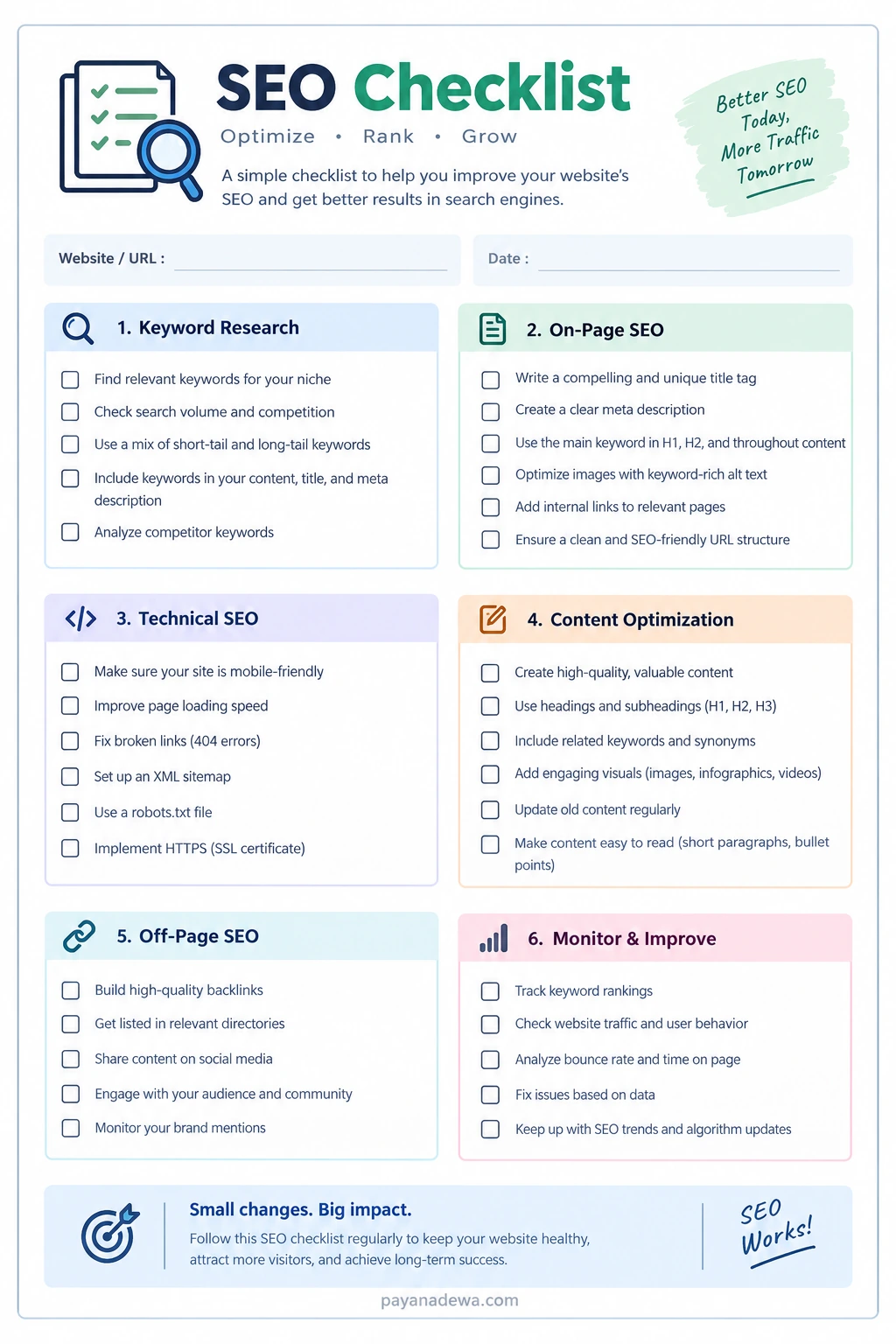
5. Build a Strong Off-Page SEO Strategy
Off-page SEO includes activities outside your website that can strengthen your online reputation and authority. One important part of this strategy is earning high-quality backlinks from relevant and trustworthy websites.
Earn Relevant Backlinks
Backlinks can help search engines discover your content and understand its reputation. However, quality matters more than quantity. Focus on earning natural links from websites that are relevant to your industry.
You can create useful resources, publish original research, contribute expert insights, and build relationships with publishers in your niche. Avoid buying manipulative links or participating in link schemes that violate search engine guidelines.
Strengthen Your Online Presence
Share useful content through appropriate social media channels and participate in relevant online communities. Although social media engagement is not a direct Google ranking factor, it can increase content exposure and create opportunities for people to discover and link to your website.
- Create content that other websites want to reference.
- Build relationships with relevant publishers.
- Find legitimate guest contribution opportunities.
- Monitor your backlink profile.
- Maintain consistent business information across relevant directories.
6. Track SEO Performance and Improve Results
SEO is an ongoing process. After implementing your optimization tasks, monitor performance to understand what works and where improvements are needed. Use reliable analytics tools instead of relying on assumptions.
Use Google Search Console
Google Search Console helps you monitor search performance, impressions, clicks, average search positions, and indexing issues. It also provides useful information about how Google discovers and processes your website pages.
Monitor Website Traffic
Use Google Analytics 4 or another analytics platform to understand visitor behavior. Review organic traffic, landing pages, engagement, and conversions. These insights can help you identify which pages attract valuable visitors.
Review and Improve Your Strategy
Check your important SEO metrics regularly. If a page receives impressions but few clicks, consider improving its title and meta description. If visitors leave without finding useful information, review the content and page experience.
- Track primary keyword performance.
- Monitor organic traffic and conversions.
- Review indexing and crawling issues.
- Identify pages with declining performance.
- Update content based on user needs.
- Compare results over meaningful time periods.
7. How Often Should You Use an SEO Checklist?
The best approach is to use your SEO checklist throughout the website management process. Some tasks require attention whenever you publish a new page, while others should be reviewed periodically.
For example, check title tags, headings, internal links, and image alt text whenever you publish content. Review website speed, indexing, and technical errors regularly. Meanwhile, evaluate organic traffic and keyword performance monthly or quarterly.
Consistency is more important than trying to complete every SEO task at once. Start with important technical issues, improve your existing content, and gradually build a stronger optimization strategy.
Conclusion: Follow This SEO Checklist for Better Rankings
Improving your website’s visibility takes time, planning, and consistent effort. A complete SEO checklist helps you organize important tasks and avoid overlooking essential optimization opportunities.
Start with keyword research, optimize your on-page elements, improve technical performance, and publish helpful content. Next, build a trustworthy online presence and monitor your results using reliable analytics tools.
Remember that SEO is not a one-time activity. Search behavior, technology, and search engine systems continue to evolve. By reviewing your website regularly and focusing on genuine user value, you can build a stronger online presence and create more opportunities for long-term organic traffic.