An equipment checklist is a simple but effective tool for making sure you have everything you need before starting a project, attending an event, traveling, or completing a work assignment. Whether you are preparing tools for a construction site, packing technology for a business trip, or organizing supplies for an outdoor adventure, a well-planned checklist can save time and reduce unnecessary stress.
Forgetting essential equipment can lead to delays, additional expenses, safety concerns, and unexpected problems. Fortunately, an organized equipment checklist helps you identify required items, track their condition, and confirm that everything is ready before you begin.
In this guide, you will learn how to create an effective equipment checklist, which items to include, and how to adapt a checklist to different situations. You can also use the printable Equipment Checklist Template to organize your supplies and prepare for your next task with confidence.
What Is an Equipment Checklist?
An equipment checklist is a structured list of tools, devices, supplies, and other essential items needed for a particular activity. It allows individuals and teams to verify that each item is available, functional, and ready for use.
A checklist can be used in many environments, including offices, warehouses, construction sites, workshops, schools, hospitals, production facilities, and outdoor activities. The exact items will vary depending on the task, but the main purpose remains the same: to make preparation more consistent and reliable.
A useful equipment inventory checklist typically includes item names, required quantities, condition notes, and checkboxes for tracking completion. More detailed versions may also include serial numbers, inspection dates, maintenance records, and the names of responsible team members.
Why Is an Equipment Checklist Important?
Using an equipment checklist provides several practical benefits. It creates a repeatable preparation process instead of relying entirely on memory.
Prevents Missing Equipment
A checklist helps you identify essential items before leaving a location or beginning a task. This is especially useful when equipment is shared among several people or stored in different places.
Saves Time and Money
Searching for missing tools or purchasing forgotten supplies can waste valuable time. Checking everything in advance reduces unnecessary trips, last-minute purchases, and avoidable project delays.
Improves Safety
Some equipment is essential for protecting people and property. A checklist can remind workers to verify personal protective equipment, emergency supplies, and required safety devices before beginning work. However, a checklist should support, not replace, formal safety inspections and applicable regulations.
Supports Accountability
When each item has a clear status and an assigned person, teams can identify missing equipment and resolve problems more efficiently. A completed checklist also provides a useful record of preparation and inspection activities.
Essential Items to Include in an Equipment Checklist
The best equipment checklist depends on your specific activity. However, several categories provide a practical starting point for most projects, work assignments, and trips.
1. Electronics and Technology
Electronic devices are important for communication, documentation, navigation, and productivity. Before leaving, confirm that your devices are available and adequately charged.
- Laptop, tablet, or other required computing device
- Mobile phone and charger
- Power bank and charging cables
- Camera and accessories, if needed
- Headphones or communication equipment
- Portable Wi-Fi device or network accessories
- Required storage devices and presentation adapters
Check that important files are accessible and that any required software or device updates have been completed before departure.
2. Tools and Hardware
Projects involving repairs, installation, assembly, or maintenance often require specific tools. Review the task requirements and select equipment appropriate for the job.
- Screwdriver set
- Hammer and pliers
- Measuring tape or measuring device
- Utility knife and cutting accessories
- Drill and compatible bits, when required
- Toolbox or equipment storage case
- Fasteners, spare parts, and consumable supplies
Inspect tools for visible damage, wear, and missing components. Confirm that powered equipment is suitable for the task and that any required guards or protective features are in place.
3. Personal Gear and Supplies
Personal gear helps you remain comfortable and prepared throughout your activity. The required items may differ significantly between a business trip, a field assignment, and an outdoor excursion.
- Backpack, travel bag, or equipment carrier
- Water bottle and appropriate food supplies
- Weather-appropriate clothing and extra layers
- Hat, sunscreen, or rain protection when appropriate
- Personal medication and necessary health supplies
- Basic first aid kit
- Personal identification and essential documents
Check the weather, destination, expected duration, and specific activity requirements before finalizing this section.
4. Transportation and Travel Equipment
Transportation items are particularly important for road trips, fieldwork, deliveries, and assignments that require travel between locations.
- Vehicle, bicycle, or other required transportation
- Driver’s license and relevant identification
- Fuel arrangements or charging access
- Maps, GPS device, or navigation application
- Travel documents and accommodation details
- Insurance information, where applicable
- Emergency contact details
For vehicle-based activities, check tires, lights, brakes, fuel or battery levels, and other maintenance requirements before departure. Follow the manufacturer’s guidance and local transportation regulations.
5. Safety and Emergency Supplies
Safety equipment should be selected according to the hazards associated with the activity. Some environments require specialized protective equipment, training, or emergency procedures.
- Safety helmet or hard hat, when required
- Appropriate protective gloves
- Safety glasses or face protection
- Suitable footwear and high-visibility clothing
- Flashlight and spare batteries
- Emergency blanket and whistle, when appropriate
- Fire extinguisher or other required emergency equipment
- First aid supplies and emergency contact information
Verify that safety equipment is in good condition, appropriate for the identified risks, and within any applicable inspection or expiration requirements. Make sure users know how to use it correctly.
How to Create an Effective Equipment Checklist
Creating a reliable equipment checklist does not need to be complicated. Follow these steps to build a practical list that fits your needs.
Step 1: Define the Purpose
Start by identifying the activity, project, event, or destination. A construction equipment checklist will differ from an office equipment checklist or a camping packing list. A clear purpose prevents unnecessary items from cluttering the document.
Step 2: List All Required Items
Review the task requirements and identify every essential tool, device, supply, and safety item. Consult relevant instructions, project plans, equipment manuals, or team members when necessary. Group similar items into categories to make the list easier to scan.
Step 3: Add Quantities and Item Details
Specify the quantity or configuration required for each item. For example, writing “two spare batteries” is more useful than simply listing “batteries.” For valuable or specialized equipment, include model numbers, serial numbers, or other identifying information when appropriate.
Step 4: Inspect Equipment Condition
Confirm that each item is present and ready for use. Check batteries, cables, moving parts, protective components, and accessories as applicable. Record damaged, missing, or unserviceable equipment so it can be repaired or replaced before the activity begins.
Step 5: Assign Responsibility
For team projects, assign responsibility for collecting, inspecting, and returning equipment. Clear ownership reduces confusion and helps prevent important items from being overlooked.
Step 6: Complete a Final Review
Review the checklist shortly before departure or project commencement. Confirm that all critical items are accounted for, outstanding issues have been addressed, and equipment is packed or stored securely.
How to Use a Printable Equipment Checklist Template
A printable equipment checklist template provides a convenient starting point for organizing your supplies. Instead of creating a new document every time, you can reuse a standard format and adjust the item list to match each activity.
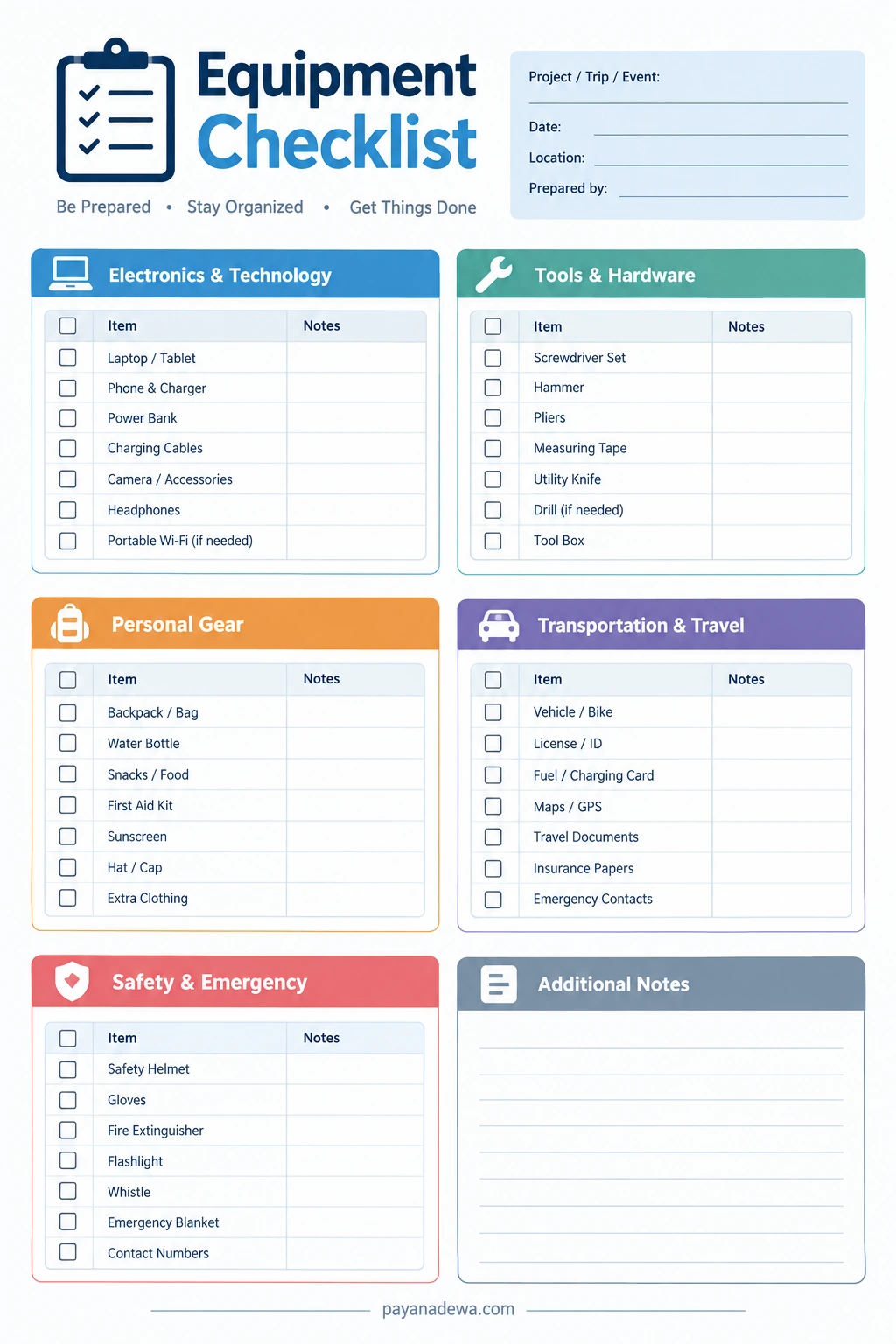
Use the following Equipment Checklist Template to record your project details and review common equipment categories before you begin.
Tips for Getting the Most from Your Template
- Fill in the details: Record the project, trip, or event name, date, location, and person responsible for preparation.
- Customize the categories: Remove irrelevant items and add equipment specific to your task.
- Check each item physically: Mark an item only after confirming that it is present and ready for use.
- Use the notes section: Record missing accessories, maintenance needs, quantities, or replacement requirements.
- Keep a master copy: Save a blank version so you can prepare future checklists without starting from scratch.
- Review the completed list: Resolve critical gaps before the equipment is transported or the activity begins.
For repeated activities, maintain separate versions for different projects or equipment types. This makes it easier to preserve useful item lists while keeping each checklist relevant.
Equipment Checklist Examples for Different Situations
Different activities require different levels of detail. Use these examples to adapt your equipment inventory checklist to common situations.
Construction and Maintenance
A construction or maintenance checklist may include power tools, hand tools, measuring equipment, fasteners, personal protective equipment, barriers, and task-specific inspection records. Confirm that equipment meets workplace requirements before use.
Office and Business Travel
An office or business travel checklist may cover a laptop, phone, chargers, presentation adapters, identification, travel documents, work files, and essential personal supplies. Test important technology before leaving for a meeting or event.
Camping and Outdoor Activities
An outdoor equipment checklist may include a tent, sleeping bag, weather-appropriate clothing, food, water, navigation tools, lighting, first aid supplies, and emergency communication devices. Adapt the list to the route, weather forecast, trip duration, and available facilities.
Events and Photography
Event preparation may require cameras, lenses, memory cards, tripods, lighting equipment, microphones, extension cables, batteries, and backup storage. Test equipment before the event and keep critical accessories together in clearly labeled cases.
Common Equipment Checklist Mistakes to Avoid
Even a detailed checklist can be ineffective if it is poorly maintained. Avoid these common mistakes to improve preparation and reliability.
- Making the list too general: Use specific item names and quantities so users know exactly what to prepare.
- Ignoring equipment condition: Presence alone does not mean an item is safe or functional.
- Forgetting task-specific requirements: Generic lists should always be reviewed against the actual activity.
- Failing to update the document: Remove obsolete items and add new equipment when procedures or requirements change.
- Marking items without checking them: Verify each item physically instead of relying on memory or assumptions.
- Overlooking return and storage: For shared equipment, include a process for counting, cleaning, storing, and reporting missing items after use.
Best Practices for Maintaining an Equipment Checklist
A checklist becomes more useful when it is treated as part of a consistent preparation process. Establish a routine that keeps the document accurate and easy to use.
- Review the checklist before each activity and after any significant change in requirements.
- Keep frequently used equipment in labeled storage locations.
- Record maintenance issues and remove defective items from service when necessary.
- Use digital copies when teams need to share updates, and print copies when a paper record is more practical.
- Store completed checklists when they are needed for inventory control, maintenance tracking, or internal procedures.
- Periodically review the list with the people who use the equipment to identify missing items or unnecessary steps.
For critical equipment, a general checklist may need to be supported by a formal inspection log, maintenance schedule, calibration record, or sign-off procedure. Choose the documentation method that matches the equipment and the risks involved.
Conclusion
An equipment checklist is a practical way to stay organized, reduce preparation errors, and make sure essential supplies are ready when you need them. By grouping items into clear categories, checking equipment condition, assigning responsibility, and reviewing the list before each activity, you can create a more dependable preparation routine.
Whether you need a construction equipment checklist, an office packing list, a travel equipment inventory, or a safety supplies checklist, the key is to tailor the document to your specific requirements and keep it updated.
Start with the printable Equipment Checklist Template, customize it for your next project, and use it consistently. With a clear and reusable checklist, you can spend less time searching for missing items and more time focusing on the work that matters.