A face chart is an essential tool for makeup artists, beauty students, and anyone who wants to plan a makeup look before applying products to the skin. It provides a visual space to experiment with colors, map out techniques, and record the products used to create a specific look. Whether you are preparing for a wedding, fashion shoot, editorial project, or everyday makeup routine, a face chart can make the entire process more organized and creative.
With a printable face chart template, you can test different eyeshadow combinations, compare lipstick shades, plan contour placement, and document your favorite beauty products. Instead of relying on memory, you have a visual reference that you can revisit whenever you want to recreate a look. In this guide, you will learn what a face chart is, how to use one, and how to get the best results from your makeup planning process.
What Is a Face Chart?
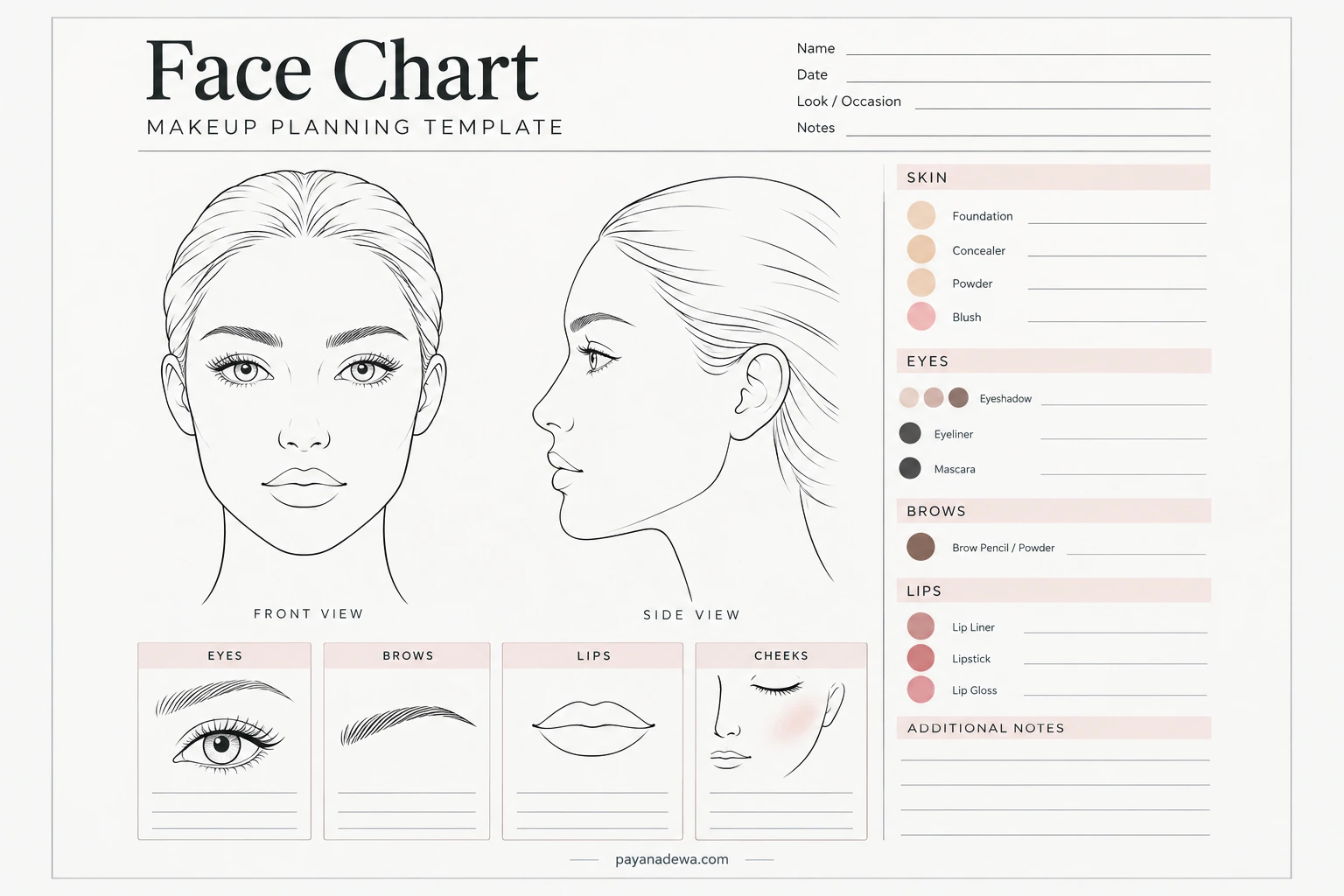
A face chart is a drawing or printable template of a human face used to plan and document makeup designs. It usually includes a front-facing illustration, and some templates also feature a side profile, close-up sections, or dedicated areas for product notes and color swatches.
Makeup artists often use face charts before working with a real client or model. They can sketch eyeliner shapes, experiment with blush placement, and select complementary colors without applying products immediately. This makes it easier to communicate creative ideas and maintain consistency throughout a project.
A professional makeup face chart may also include fields for the client’s name, event details, product brands, shade names, and application notes. These details turn a simple drawing into a practical makeup reference sheet.
Why Use a Face Chart for Makeup Planning?
Planning a makeup look on paper offers several advantages. It helps you organize your ideas, avoid unnecessary product changes, and communicate your vision clearly. A face chart is especially useful when a makeup look needs to be repeated or adjusted for different occasions.
Experiment With Colors Before Application
One of the biggest benefits of a makeup face chart is the freedom to experiment. You can compare warm and cool eyeshadows, test bold lip colors, and explore different blush shades before deciding which combination works best.
Color planning is particularly valuable for editorial makeup, creative beauty looks, and special events where the final result needs to complement a specific outfit, lighting setup, or visual theme.
Keep Your Favorite Products Organized
A face chart can become a personal record of the products used to create a successful look. Write down foundation shades, concealers, powders, lipsticks, and eyeshadow palettes alongside your sketches.
- Record product names and shade numbers.
- Document color combinations that work well together.
- Note the brushes and application techniques you used.
- Save successful designs for future appointments or projects.
Improve Communication With Clients
For professional makeup artists, a face chart provides a simple way to discuss a proposed look with a client. It can illustrate the general placement of eyeshadow, eyeliner, blush, contour, and lipstick before the makeup session begins.
The chart should be treated as a planning reference rather than an exact prediction of the finished result. Skin tone, facial features, product texture, and lighting can all influence the final appearance.
How to Use a Face Chart Template Step by Step
You do not need advanced drawing skills to create a useful face chart. Start with a clean template and build your design gradually. The following steps will help you organize your makeup ideas and produce a clear visual plan.
Step 1: Choose Your Makeup Theme
Begin by identifying the purpose of your look. You might be planning natural bridal makeup, glamorous evening makeup, soft everyday beauty, or an artistic editorial design.
Write a few descriptive words at the top of your template. Terms such as soft glam, dewy skin, warm neutral, or dramatic smoky eyes will help guide your color choices.
Step 2: Plan the Base Makeup
Start with the complexion. Consider the intended foundation finish, concealer coverage, setting powder, blush, bronzer, and contour. Use the face illustration to indicate where each product should be applied.
Choose shades that suit the intended model or client. A face chart is a planning tool, so record actual product names and shades whenever possible instead of relying only on colored pencil marks.
Step 3: Design the Eyes and Brows
Eyes are often the most detailed part of a makeup design. Sketch the placement of transition shades, deeper outer-corner colors, shimmer, eyeliner, and mascara. You can also indicate whether the look requires a winged liner, soft definition, or a dramatic smoky effect.
For brows, note the intended shape, color, and finish. Small annotations can help you remember whether you planned a natural feathered brow or a more defined, sculpted appearance.
Step 4: Select Lip Colors
Choose a lip liner, lipstick, and optional gloss that complement the rest of the makeup. For a balanced look, consider whether the eyes or lips should be the main focal point.
Record the product shades next to the lip illustration. This makes it easier to compare combinations and recreate the selected lip look later.
Step 5: Add Notes and Product Details
Complete your chart by recording the products, application methods, and any special instructions. Include details such as the desired skin finish, blending technique, or adjustments needed for photography.
Before using the chart again, review your notes and update them if you discover a better product combination or a more effective technique.
Printable Face Chart Template: What Should It Include?
A good printable face chart template should be easy to read, simple to customize, and spacious enough for useful notes. The best layout depends on whether you are a beginner practicing makeup or a professional documenting client looks.
For a practical makeup planning sheet, look for the following elements:
- Front-view face illustration: Provides space to map the overall makeup design.
- Side-profile illustration: Helps visualize contour, highlight, and other placement details.
- Eye and brow sections: Allow closer planning of detailed techniques.
- Lip and cheek sections: Make it easier to compare colors and finishes.
- Product information fields: Provide space for brands, shade names, and formulas.
- Notes area: Stores application tips and important adjustments.
Choose a high-resolution template with clear outlines and enough white space for handwritten notes. A simple design is often more useful than a heavily decorated sheet because it keeps the focus on the makeup itself.
Tips for Creating a Professional Makeup Face Chart
A face chart becomes more useful when you keep the design clear and the information consistent. You do not need to make every sketch perfect. Focus on details that will help you understand and reproduce the look.
Use Consistent Color Swatches
Apply small swatches beside the relevant product notes. Whenever possible, use the actual makeup product to create the swatch on paper. Printed colors and digital screens may not accurately represent the shade in real life, so always check the product under suitable lighting.
Label Products Clearly
Write the product name, shade, and finish in a consistent format. For example, note whether a blush is matte or shimmery, or whether a lipstick has a satin or glossy finish. These details can make a significant difference when recreating a look.
Keep the Design Easy to Read
Use arrows and short labels rather than filling the entire page with long explanations. Separate the face sketch from the product list, and leave enough room to make changes during the planning process.
Save a Separate Chart for Each Look
Create a new chart for each client, occasion, or creative concept. Give each sheet a descriptive name and date. If you work digitally, organize your files into folders so you can find previous designs quickly.
Digital Face Charts vs. Printable Templates
Both digital and printable face charts can help you plan makeup effectively. The right choice depends on your workflow, preferred tools, and the level of detail you need.
Benefits of Printable Face Charts
- Easy to use with pencils, markers, and real makeup swatches.
- Useful for hands-on practice and classroom exercises.
- Convenient for client consultations and makeup kits.
- Simple to file in a physical portfolio or notebook.
Benefits of Digital Face Charts
- Colors can be changed without starting over.
- Multiple versions can be saved and compared.
- Product notes and reference images can be added quickly.
- Files can be shared with team members or clients.
You can also combine both methods. Plan your design digitally, then print the final version for a makeup kit or client file. Alternatively, sketch by hand and photograph the completed chart for your digital portfolio.
Common Face Chart Mistakes to Avoid
Even a simple makeup planning sheet can become difficult to use if important details are missing. Avoid these common mistakes to make your charts more practical.
- Choosing colors without considering the skin tone: Use the intended client’s complexion as a reference when selecting shades.
- Forgetting product details: Record exact shade names and brands instead of relying on memory.
- Adding too many notes: Keep descriptions short and easy to scan.
- Ignoring lighting conditions: Consider whether the makeup is intended for daylight, studio photography, or evening events.
- Treating the sketch as an exact result: Remember that real skin, facial structure, and product formulas affect the final appearance.
- Failing to save successful designs: Store completed charts so you can reuse and improve your ideas.
Who Can Benefit From a Face Chart?
A face chart is useful for more than professional makeup artists. Beginners can use it to learn where products belong, compare color combinations, and develop a better understanding of makeup techniques.
Beauty students can use face charts as practice sheets to document lessons and build a portfolio. Content creators can plan themed makeup tutorials before filming, while photographers and creative teams can use them to communicate a visual concept.
Professional artists may also find them valuable for bridal trials, fashion shoots, theater productions, and other projects that require consistent makeup results. With regular use, a collection of completed charts can become a useful reference library of tested ideas.
Conclusion: Make Makeup Planning Easier With a Face Chart
A face chart is a practical way to plan, visualize, and document makeup looks before applying products. It helps you experiment with colors, organize product details, communicate with clients, and recreate successful designs more consistently.
Whether you prefer a printable makeup face chart or a digital template, the key is to keep your notes clear and your layout easy to use. Start with a simple design, record the products you choose, and refine your approach as you gain experience.
Use the Face Chart Template from payanadewa.com as a starting point for your next beauty project. With thoughtful planning and consistent documentation, you can turn creative inspiration into a more organized and repeatable makeup routine.