A feelings chart is a simple, visual tool that helps children and adults recognize, name, and understand their emotions. Whether you are a parent, teacher, counselor, or caregiver, using a feelings chart can make conversations about emotions easier and more meaningful. Instead of struggling to explain a complicated feeling, a person can look at different facial expressions, identify an emotion, and begin expressing what is happening inside.
Learning to recognize emotions is an important part of emotional development. Children may know when they feel upset or excited without understanding exactly why. A feelings chart gives them a starting point for exploring these experiences in a safe and supportive way. Adults can also use an emotion chart to reflect on their feelings, communicate more clearly, and develop healthier coping strategies.
In this guide, you will learn what a feelings chart is, how to use one effectively, which emotions to include, and how to choose the right printable feelings chart for your needs. You will also discover practical activities that help children build emotional awareness at home, in the classroom, or during counseling sessions.
What Is a Feelings Chart?
A feelings chart is a visual reference that displays different emotions, often alongside facial expressions, colors, or simple descriptions. It helps people connect what they feel internally with words they can use to describe their experiences.
Many feelings charts are designed for young children, but they can also support teenagers and adults. Some charts feature basic emotions, while others include a wider range of feelings, such as frustration, embarrassment, disappointment, pride, and gratitude.
A typical emotions chart may include:
- Emotion labels: Words such as happy, sad, angry, worried, and calm.
- Facial expressions: Illustrations that demonstrate how different emotions might look.
- Color-coded sections: Colors that make emotions easier to identify and remember.
- Reflection prompts: Questions that encourage users to describe how they feel.
- Coping strategies: Suggestions for responding to difficult emotions in healthy ways.
The purpose is not to classify feelings as good or bad. Instead, a feelings chart helps people understand that every emotion provides information about their experiences, needs, or surroundings.
Why Is a Feelings Chart Important?
Understanding emotions is a skill that develops over time. Children especially benefit from clear examples and repeated opportunities to practice identifying feelings. A visual emotions chart makes this learning process more accessible and engaging.
1. Builds Emotional Awareness
A feelings chart encourages people to pause and notice their emotional experiences. For example, a child who feels uncomfortable before a school presentation might discover that the feeling is nervousness rather than sadness. Recognizing the emotion is the first step toward understanding it.
2. Improves Communication Skills
It can be difficult to explain an emotion without knowing the right word. A feelings chart provides useful vocabulary and gives children a way to communicate their needs. Instead of crying or becoming frustrated when they cannot explain themselves, they can point to a picture or choose an emotion label.
3. Supports Emotional Regulation
Emotional regulation means recognizing emotions and choosing appropriate ways to respond to them. A chart can help someone identify when they need a break, a calming activity, or support from a trusted person. Over time, regular practice may help children respond to challenging situations more thoughtfully.
4. Encourages Empathy and Understanding
When children learn that people experience different emotions in different situations, they can begin to understand other perspectives. Discussing how a character in a story might feel, for example, can encourage empathy and respectful communication.
5. Creates Opportunities for Meaningful Conversations
Parents and teachers can use an emotion chart to start conversations without putting pressure on children to explain everything immediately. A simple question such as “Which feeling matches your day?” can open the door to a helpful discussion.
Common Emotions to Include in a Feelings Chart
A useful feelings chart includes a variety of emotional experiences. Start with familiar emotions and gradually introduce more specific words as children become comfortable identifying their feelings.
Basic and Positive Emotions
- Happy: Feeling pleased, cheerful, or satisfied.
- Calm: Feeling relaxed, settled, and comfortable.
- Excited: Feeling enthusiastic or eager about something.
- Peaceful: Experiencing a sense of quiet or ease.
- Content: Feeling comfortable or satisfied with the present moment.
Challenging or Uncomfortable Emotions
- Sad: Feeling unhappy, disappointed, or affected by a loss.
- Angry: Feeling upset when something seems unfair, frustrating, or hurtful.
- Worried: Feeling concerned about something that might happen.
- Lonely: Wanting connection, companionship, or understanding.
- Tired: Feeling low in energy or needing rest.
- Shy: Feeling hesitant or uncomfortable in certain social situations.
- Surprised: Reacting to something unexpected.
Remember that these labels are starting points, not fixed definitions. People may experience the same emotion differently, and facial expressions do not always reveal exactly how someone feels. Encourage children to describe their own experiences rather than assuming their feelings based on appearance alone.
How to Use a Feelings Chart
Using a feelings chart does not need to involve a complicated routine. A few minutes of relaxed practice each day can help children become more familiar with emotional vocabulary.
Step 1: Introduce the Chart
Show the chart when everyone is calm. Explain that it contains different feelings and that every emotion is allowed. Let children explore the pictures and ask questions without expecting them to memorize every label.
Step 2: Ask an Open-Ended Question
Invite the child to choose a feeling that matches their current experience. You might ask, “How are you feeling right now?” or “Which face looks most like your feeling today?” Allow them to point, speak, draw, or choose more than one emotion.
Step 3: Explore What Happened
If the child wants to talk, ask a gentle follow-up question. For example, “What happened that made you feel worried?” or “What was the happiest part of your day?” Listen carefully and avoid correcting their emotional experience.
Step 4: Identify What They Need
Once the feeling has been identified, discuss what might help. A worried child may appreciate reassurance, while an angry child may need space to calm down. Sometimes, the most helpful response is simply listening without immediately trying to solve the problem.
Step 5: Practice a Helpful Response
Encourage children to choose an appropriate coping strategy. Options might include taking slow breaths, drawing a picture, stretching, talking to a trusted adult, or spending a few quiet minutes in a comfortable space.
Printable Feelings Chart for Kids
A printable feelings chart provides an easy way to make emotional learning part of everyday life. You can place it somewhere children can see it regularly, such as a classroom wall, bedroom, reading corner, or family activity area.
For younger children, choose a chart with clear illustrations, simple emotion words, and a limited number of feelings. Older children may prefer charts with more detailed vocabulary and space to write reflections about their experiences.
Here is a printable-style feelings chart designed to help children identify emotions and explore helpful coping strategies.
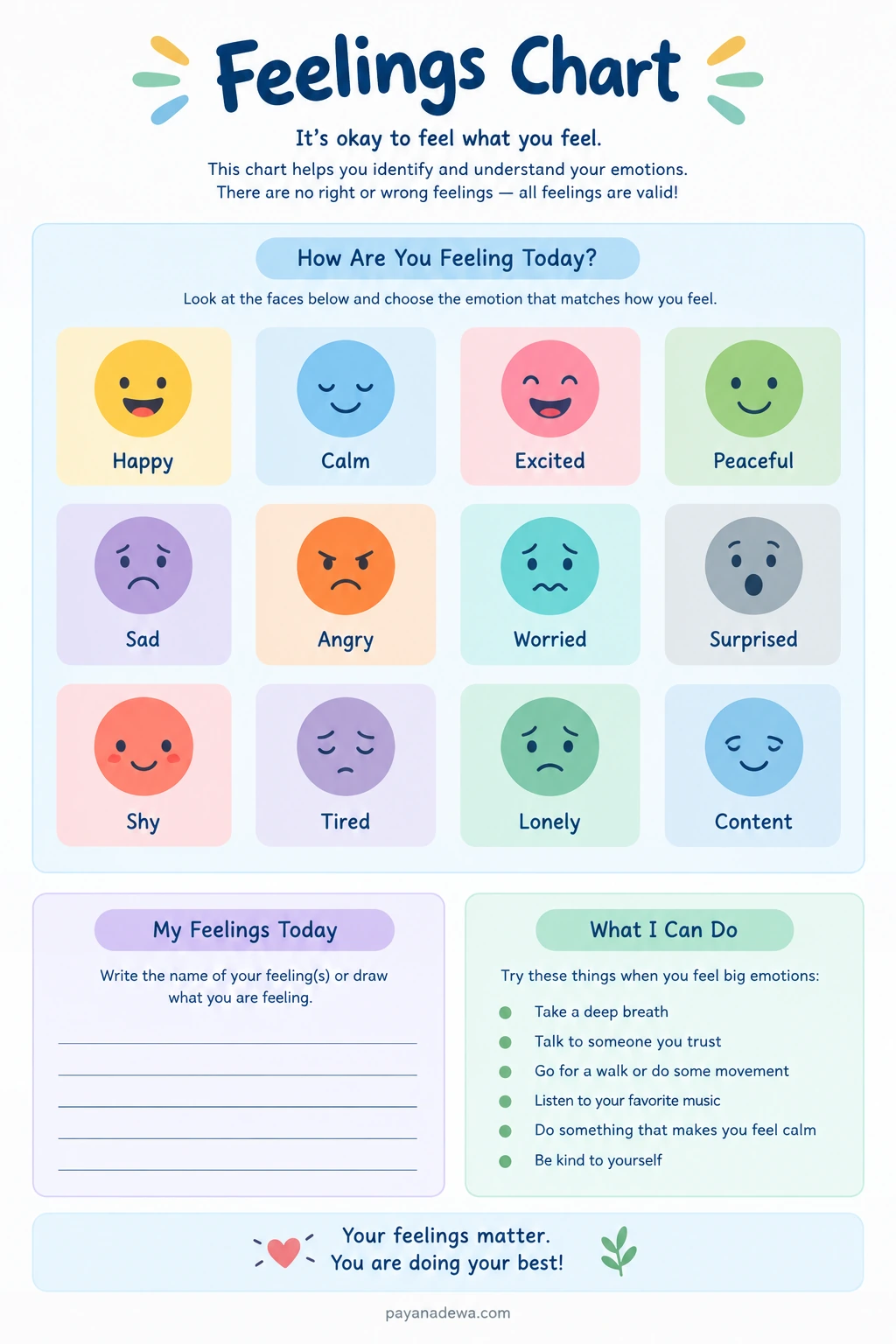
When printing the chart, choose a paper size that keeps the emotion labels easy to read. Standard letter or A4 paper works well for many home and classroom activities. You can also place the chart in a plastic sleeve or laminate it for repeated use with dry-erase markers, provided the printed surface supports them.
Fun Feelings Chart Activities for Home and School
Children often learn emotional skills more naturally through play and familiar routines. Try these simple activities to make a feelings chart part of everyday learning.
Daily Feelings Check-In
Begin the morning or end the day by asking each child to choose an emotion from the chart. Invite them to share one sentence about their choice if they feel comfortable. Adults can participate, too, showing that identifying emotions is a useful skill for everyone.
Match the Emotion to a Situation
Describe a simple situation and ask which feelings someone might experience. For example, “How might you feel if your friend invited you to play?” or “What might you feel if your favorite toy broke?” Explain that more than one answer can be reasonable because people respond differently to the same event.
Draw Your Feelings
Give children paper and coloring materials, then invite them to draw what a particular emotion looks like to them. They might use colors, shapes, facial expressions, or pictures of situations. This activity can help children communicate when they do not yet have the words to explain their experiences.
Choose a Coping Strategy
Pair the feelings chart with a list of calming activities. Ask children to select one strategy they could try when they feel overwhelmed. Practice these strategies during calm moments so they are easier to remember when emotions become intense.
Read and Discuss Stories
After reading a picture book or listening to a story, ask how the characters might feel at different points. Encourage children to look for clues in the story and consider what the characters might need. This approach connects emotional awareness with reading comprehension and social learning.
Tips for Parents and Teachers
To get the most from a feelings chart, create an environment where children feel safe expressing themselves. The goal is to understand emotions, not to force children to display a particular feeling.
- Validate emotions: Let children know that their feelings matter, even when you need to set limits on their behavior.
- Model emotional vocabulary: Share appropriate examples, such as “I feel frustrated because my plans changed.”
- Avoid judgment: Do not describe emotions as bad or embarrassing. Focus on choosing safe and respectful actions.
- Be patient: Children may need time before they can identify or discuss a feeling.
- Respect their choices: Let children point to a picture, write a word, draw, or choose not to talk yet.
- Use the chart consistently: Brief, regular check-ins are often more practical than occasional lengthy conversations.
- Adapt to developmental needs: Use simple words and large pictures for younger children, and introduce more nuanced emotions as they grow.
If a child repeatedly experiences intense distress or has difficulty functioning at home or school, a feelings chart may be a useful conversation aid, but it is not a substitute for individualized support from a qualified professional.
How to Choose the Best Emotion Chart
The right emotion chart depends on the age of the user, the setting, and the purpose of the activity. Consider these factors before selecting or printing a chart.
- Age appropriateness: Younger children generally benefit from recognizable faces and straightforward labels.
- Visual clarity: Choose illustrations and text that are easy to distinguish at the intended printing size.
- Emotion variety: A basic chart is suitable for beginners, while a detailed feelings wheel or emotion vocabulary chart may suit older children.
- Practical use: Look for printable layouts that fit your wall, desk, notebook, or daily routine.
- Reflection space: Writing lines or drawing areas can help users express feelings in their own words.
- Inclusive design: Choose a chart that encourages children to identify their own emotions without suggesting that every person expresses feelings in the same way.
You can also combine a simple feelings chart with a journal, classroom check-in board, or social-emotional learning activity. The best option is one that people can use comfortably and consistently.
Frequently Asked Questions About Feelings Charts
What is the purpose of a feelings chart?
A feelings chart helps people identify, name, and communicate emotions. It can support emotional awareness, communication, empathy, and the development of healthy coping strategies.
At what age can children start using a feelings chart?
Children can begin exploring simple emotion pictures during the toddler and preschool years, depending on their developmental stage. Start with a few familiar feelings and introduce additional words as their understanding grows.
What is the difference between a feelings chart and a feelings wheel?
A feelings chart typically presents emotions through pictures, labels, or a simple grid. A feelings wheel organizes emotions into related groups and may include more specific words, helping users explore subtle differences between feelings.
How often should children use an emotions chart?
Children can use an emotions chart whenever it is helpful, including during daily check-ins, after challenging situations, or while discussing stories. Short, voluntary conversations are a good starting point.
Can adults use a printable feelings chart?
Yes. Adults can use a feelings chart to build emotional awareness, reflect on stressful experiences, and communicate their needs more clearly. A chart with more nuanced emotion words may be especially useful for older users.
Conclusion
A feelings chart is a practical tool for helping children and adults understand their emotions and communicate more effectively. By connecting emotion words with visual examples, it makes emotional learning easier to approach in everyday situations.
Whether you use a printable feelings chart at home, in a classroom, or during a counseling activity, remember to keep the experience supportive and pressure-free. Encourage honest expression, listen without judgment, and help children discover healthy ways to respond to challenging feelings.
With regular practice, a simple emotion chart can become a valuable part of building emotional awareness, empathy, and stronger communication skills. Every feeling deserves to be understood, and learning to recognize emotions is an important step toward emotional well-being.