A successful fundraising campaign starts with a clear goal, a practical plan, and an effective way to measure progress. Whether you are organizing a charity event, supporting a nonprofit organization, raising money for a school, or managing a community project, a fundraising chart can help you stay organized and focused.
A fundraising chart provides a visual overview of donations, fundraising targets, donor contributions, and campaign performance. As a result, you can quickly identify how much money you have collected and how much remains to reach your goal.
Instead of relying on scattered notes or complicated spreadsheets, you can use a simple fundraising tracker to monitor every contribution. This approach saves time, improves accuracy, and helps your fundraising team make better decisions.
In this guide, you will learn what a fundraising chart is, how to create one, which information to include, and how to use it to improve your fundraising results.
What Is a Fundraising Chart?
A fundraising chart is a visual tool that tracks financial contributions toward a specific fundraising goal. It organizes important information, such as donations received, donor names, campaign targets, and remaining balances, in an easy-to-understand format.
Fundraising charts can be used by individuals, schools, nonprofit organizations, charities, sports teams, religious communities, and local groups. They are suitable for both small fundraising activities and larger campaigns.
For example, a community organization might set a fundraising target of $10,000 to purchase supplies for a local shelter. Its chart can show the total amount collected, the percentage of the target achieved, and the amount still needed.
Why Is a Fundraising Chart Important?
A well-organized fundraising chart makes financial progress easier to understand. It also helps teams stay accountable throughout a campaign.
- Clear goals: Everyone can see the fundraising target and current progress.
- Better organization: Donation records remain organized in one place.
- Improved motivation: Visible progress encourages continued participation.
- Accurate reporting: Teams can review donations and identify outstanding contributions.
- Smarter decisions: Campaign organizers can adjust their strategies when progress slows.
What Should a Fundraising Chart Include?
The best fundraising chart contains enough information to support effective campaign management without becoming difficult to read. Choose fields that match your fundraising activities and the needs of your team.
1. Fundraising Goal
Start by defining the total amount you want to raise. Make the target specific and realistic. For instance, a school fundraiser might aim to collect $5,000 for classroom equipment.
A clear target provides direction and makes it easier to measure success. You can also include a deadline to help your team plan its activities.
2. Donor Information
Record donor names or organization names when appropriate. This information helps you track contributions and prepare thank-you messages.
However, protect donor privacy. Keep personal contact details in a secure record rather than displaying them on a publicly shared fundraising chart.
3. Donation Amounts and Dates
Enter each donation amount and the date it was received. These details help you calculate the total collected and review fundraising activity over time.
For campaigns that accept cash, bank transfers, checks, and online payments, you can also add a donation method column.
4. Total Collected and Remaining Balance
The total collected shows how much money your campaign has received. The remaining balance indicates the difference between your fundraising goal and the total collected.
For example, if your target is $10,000 and you have collected $6,000, you have reached 60% of your goal. You still need $4,000 to complete the campaign.
5. Campaign Status
A status column helps you identify whether a donation is pending, received, or requires verification. This feature is especially useful when managing pledges and expected contributions.
Only count confirmed donations as collected funds. Keep pledges separate so your progress report reflects the money actually received.
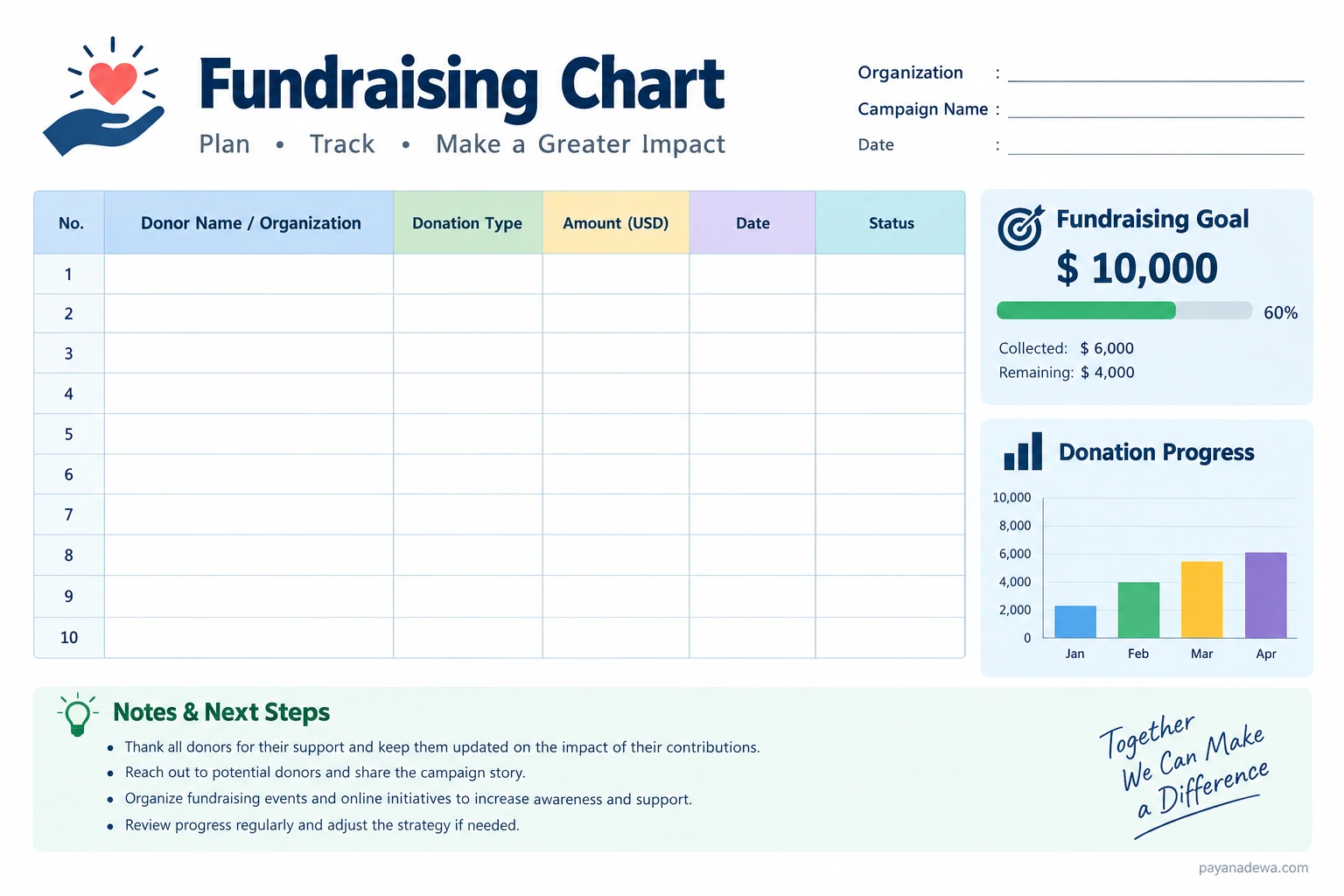
The Fundraising Chart Template below illustrates how a donation tracker can combine donor records, fundraising targets, progress indicators, and campaign notes in one printable document. Use it as a starting point for organizing your own fundraising activities.
How to Create a Fundraising Chart Step by Step
Creating a fundraising chart does not require advanced financial skills. With a clear plan and consistent recordkeeping, you can build a practical tracker for almost any campaign.
Step 1: Define Your Fundraising Purpose
First, identify why you are raising money. A specific purpose makes your campaign easier to explain and helps potential donors understand the impact of their contributions.
For example, your goal might be to fund a community garden, support medical assistance, purchase school supplies, or organize a charity event.
Step 2: Set a Realistic Target
Estimate the total amount required to achieve your objective. Include expected expenses and any additional costs associated with the campaign.
Next, establish a deadline. A clear target and timeline will help you evaluate whether your fundraising strategy is working.
Step 3: Choose a Chart Format
Select a format that suits your campaign. A printable fundraising chart works well for meetings, community events, and office noticeboards. Meanwhile, a digital spreadsheet is useful when several people need to update donation records.
You can also use a fundraising thermometer, bar chart, or progress dashboard to make campaign results easier to understand.
Step 4: Record Every Donation
Enter each confirmed contribution as soon as possible. Include the donation date, amount, and any additional details needed for reconciliation.
After recording a donation, verify the entry against your payment records. Regular checks reduce errors and help maintain accurate financial information.
Step 5: Update Your Progress Regularly
Review your chart daily or weekly, depending on the campaign’s activity. Update the total collected, percentage completed, and remaining balance.
Finally, share suitable progress updates with your fundraising team. Consistent communication helps everyone understand what has been achieved and what needs attention next.
Popular Types of Fundraising Charts
Different fundraising campaigns require different tracking methods. Choosing the right chart makes your records easier to maintain and your results easier to communicate.
Fundraising Thermometer Chart
A fundraising thermometer displays progress toward a financial target using a vertical or horizontal scale. As donations increase, the indicator moves closer to the goal.
This format works particularly well for school fundraisers, charity drives, community projects, and public donation campaigns. It provides a quick visual reminder of how close the campaign is to reaching its target.
Donation Tracking Spreadsheet
A donation tracking spreadsheet organizes donor records, contribution amounts, payment dates, and campaign totals in rows and columns. It is ideal for teams that need detailed records and automatic calculations.
Spreadsheet formulas can calculate totals, remaining balances, and the percentage of the goal achieved. You can also filter records by date, payment status, or donation type.
Fundraising Progress Bar Chart
A progress bar chart compares fundraising results across different periods or activities. For example, you can compare weekly donations or the performance of several fundraising events.
This format helps organizers recognize trends and identify which activities generate the most contributions.
Printable Fundraising Chart
A printable fundraising chart is a convenient choice for groups that prefer paper records or want to display progress in a shared space. You can print a blank template and complete it by hand.
It is especially useful during meetings, school activities, local events, and volunteer coordination sessions. For better accuracy, transfer important financial records to a secure digital file when necessary.
Practical Tips for Improving Fundraising Results
A fundraising chart is most effective when it supports a well-planned campaign. Use the following strategies to turn your records into meaningful action.
Set Small Milestones
Divide your main fundraising target into smaller milestones. For example, a $10,000 campaign could aim to collect $2,500 during each stage.
These milestones make a large goal feel more achievable. They also give your team opportunities to celebrate progress and maintain enthusiasm.
Share Progress Updates
Provide regular updates through appropriate channels, such as email newsletters, community meetings, or social media. Explain how much has been raised and how the money will support your project.
Whenever possible, connect fundraising progress to tangible results. Donors are more likely to stay engaged when they understand the difference their contributions can make.
Thank Your Donors
Express appreciation after receiving a donation. A thoughtful thank-you message shows respect and strengthens relationships with supporters.
With appropriate permission, you can also recognize donors publicly. However, always respect people who prefer to remain anonymous.
Review Campaign Performance
Use your fundraising chart to identify patterns in donations. Compare results across different weeks, events, or outreach activities.
If donations slow down, consider adjusting your communication strategy, reaching new audiences, or organizing an additional fundraising activity. Base these decisions on reliable records rather than assumptions.
Maintain Accurate Financial Records
Reconcile donation records with bank statements, payment platforms, and cash receipts. Keep supporting documents organized and restrict access to sensitive financial information.
For larger campaigns, assign clear responsibilities for recording, reviewing, and approving transactions. This process improves accountability and reduces the risk of mistakes.
Common Fundraising Chart Mistakes to Avoid
Even a simple tracking tool can become unreliable if it is not maintained properly. Fortunately, a few basic practices can prevent common problems.
- Setting unclear targets: Always define the fundraising purpose, target amount, and deadline.
- Counting unconfirmed pledges: Separate promised donations from funds actually received.
- Forgetting to update records: Establish a regular schedule for recording contributions.
- Using confusing layouts: Keep labels clear and organize information into logical sections.
- Ignoring donor privacy: Avoid publishing confidential details without permission.
- Failing to verify totals: Check calculations and reconcile records regularly.
By addressing these issues early, you can maintain a reliable fundraising chart and make better decisions throughout the campaign.
Frequently Asked Questions About Fundraising Charts
What Is the Best Fundraising Chart for Beginners?
A simple printable chart or spreadsheet is usually a good starting point. Include the fundraising target, donation dates, amounts received, total collected, and remaining balance. Add more fields only when your campaign requires them.
Can I Use a Fundraising Chart for a School Project?
Yes. A fundraising chart can help students, teachers, and parent groups track donations for educational activities, classroom supplies, sports equipment, and school improvement projects. Ensure that financial records are supervised and handled appropriately.
How Often Should I Update My Fundraising Chart?
Update your chart whenever practical after receiving a donation. For active campaigns, daily updates may be helpful. For smaller projects, a weekly review may be sufficient, provided that all transactions are recorded accurately.
Can a Fundraising Chart Help Reach a Donation Goal Faster?
A chart cannot guarantee fundraising success. However, it can make progress visible, highlight areas that need improvement, and help organizers communicate more effectively with donors. These benefits can support better campaign management.
Should I Use a Printable Template or a Digital Chart?
Choose a printable template when you need a simple paper-based tracker or a visual display for an event. Choose a digital chart when you need automatic calculations, frequent updates, or collaboration between team members. You can also use both formats together.
Conclusion
A fundraising chart is a practical tool for organizing donations, measuring campaign progress, and keeping fundraising activities focused on clear goals. By tracking contributions, monitoring balances, and reviewing results regularly, you can make more informed decisions throughout your campaign.
Start with a simple layout that includes your target amount, donor records, donation dates, and progress indicators. Then, update the chart consistently and use the information to guide your next steps.
Whether you are raising money for a school, charity, nonprofit organization, or community project, the right fundraising tracker can make your work more organized and transparent. Use the Fundraising Chart Template from payanadewa.com as a starting point and adapt it to your needs.
Have you used a fundraising chart for a donation campaign? Share your experiences and practical tips to help other organizers plan more effective fundraising activities.