A body temperature chart is a useful tool for monitoring changes in body temperature, identifying possible signs of fever, and keeping accurate health records. Whether you are tracking your own temperature, caring for a child, or recording symptoms during an illness, understanding normal temperature ranges can help you make informed decisions about your health.
Although 98.6°F (37°C) is often described as the average normal body temperature, a healthy temperature can vary from person to person. Age, activity, time of day, and the method used to measure temperature can all affect the reading. This guide explains how to read a body temperature chart, recognize fever levels, record measurements accurately, and understand when to seek medical advice.
What Is a Body Temperature Chart?
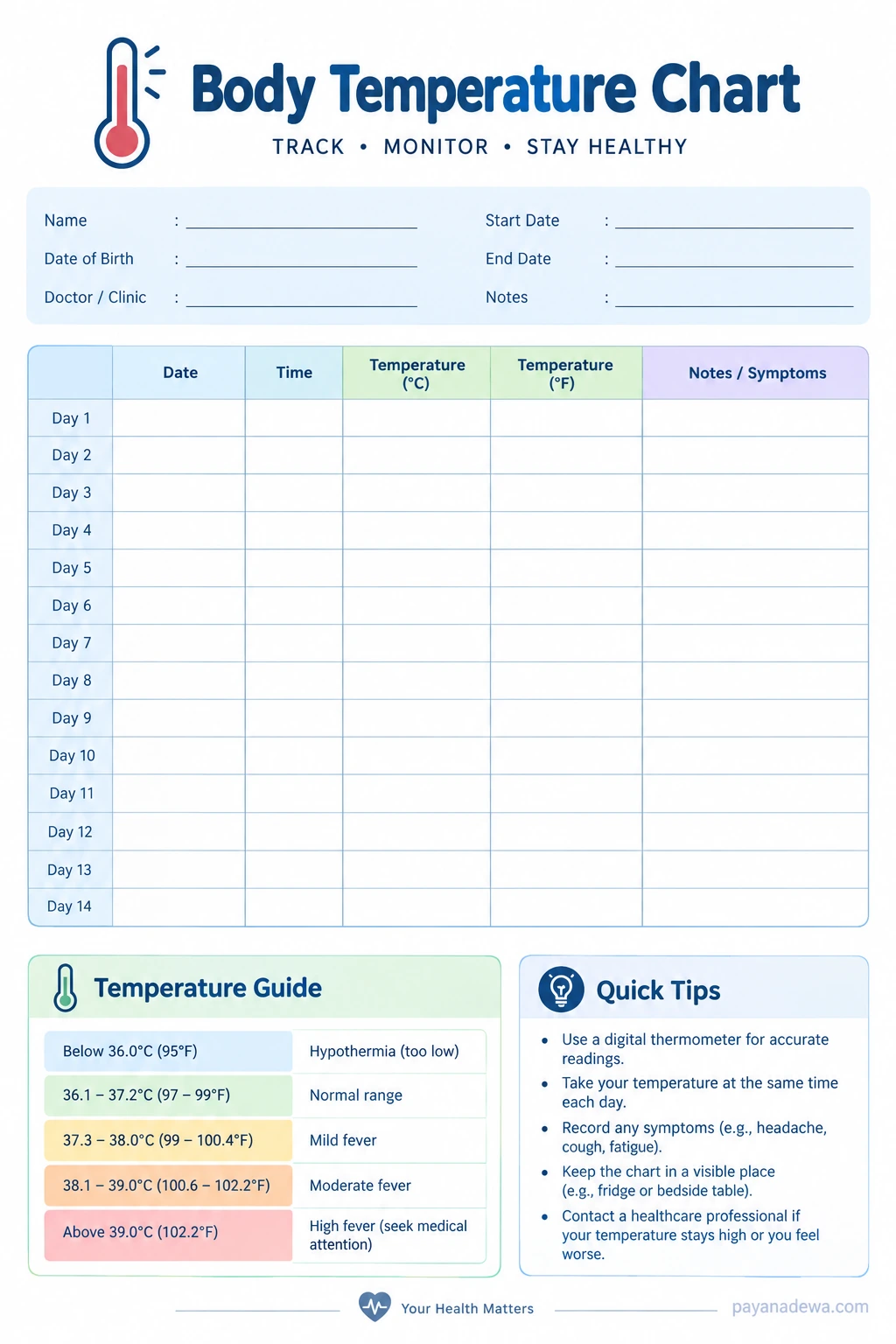
A body temperature chart is a tracking sheet used to record temperature measurements over time. It typically includes the date, time, temperature reading, and any symptoms or observations. Some charts also provide reference ranges to help users understand whether a measurement may be lower or higher than expected.
Keeping a temperature log can be especially helpful during an illness. Instead of relying on memory, you can review changes throughout the day and share accurate information with a healthcare professional.
A printable body temperature chart may be useful for:
- Monitoring fever during a cold, flu, or other illness.
- Recording temperature readings for children or older adults.
- Tracking symptoms alongside temperature changes.
- Preparing a clear health record for a medical appointment.
- Observing temperature patterns over several days.
A temperature chart is a monitoring tool, not a diagnostic test. A single reading cannot identify the cause of a fever or confirm that someone is healthy.
Normal Body Temperature Chart in Fahrenheit and Celsius
Normal body temperature does not have one universal value. For many adults, readings around 97°F to 99°F (36.1°C to 37.2°C) can be normal, although individual readings may fall outside this range without necessarily indicating illness.
The following table provides general adult reference points. These values are approximate and should not replace age-specific medical guidance or instructions from a healthcare professional.
- Below 95°F (35°C): Potentially dangerous low body temperature. A reading in this range may indicate hypothermia and requires urgent medical attention.
- 97°F to 99°F (36.1°C to 37.2°C): A common range for normal adult temperature, depending on the individual and measurement method.
- 100.4°F (38°C) or higher: Commonly used as a fever threshold in adults, although interpretation depends on where and how the temperature is measured.
- Very high or rapidly rising temperature: May require urgent medical assessment, particularly when accompanied by confusion, breathing difficulties, or other serious symptoms.
These categories are not absolute. For example, an oral temperature, an armpit reading, and an ear thermometer reading may differ. Do not automatically add or subtract a fixed amount to convert one measurement method into another.
Body Temperature Chart by Age
Age is an important factor when interpreting a temperature reading. Infants, children, adults, and older people may require different guidance, especially when fever occurs alongside other symptoms.
Normal Body Temperature in Babies
Babies can have temperature readings that vary with their age, activity, clothing, and measurement method. A digital thermometer used according to the manufacturer’s instructions is important for obtaining a reliable result.
A temperature of 100.4°F (38°C) or higher in a baby younger than three months requires immediate medical evaluation, even if the baby appears otherwise well. Do not delay seeking care to repeat measurements if doing so would postpone medical attention.
Normal Body Temperature in Children
Children’s temperatures naturally fluctuate throughout the day. Running around, wearing heavy clothing, or being in a warm environment may affect a reading temporarily.
A temperature of 100.4°F (38°C) or higher is commonly considered a fever, but the child’s age, behavior, hydration, and other symptoms matter too. Seek medical advice if a child is unusually sleepy, has difficulty breathing, shows signs of dehydration, or appears seriously unwell.
Normal Body Temperature in Adults
Many healthy adults have temperatures around 97°F to 99°F (36.1°C to 37.2°C), but individual baselines differ. Body temperature is often lower in the early morning and higher later in the day.
For adults, a temperature of 100.4°F (38°C) or higher commonly indicates fever. However, some infections can occur without a high temperature, and symptoms should always be considered alongside the reading.
Body Temperature in Older Adults
Older adults may have a lower baseline temperature and may not develop a pronounced fever during an infection. A noticeable change from their usual temperature, particularly with new confusion, weakness, reduced appetite, or functional decline, deserves medical attention.
How to Read and Use a Body Temperature Chart
A temperature tracking chart works best when measurements are recorded consistently. Follow these steps to create a useful and accurate record.
1. Record the Date and Time
Write down when each measurement is taken. Temperature naturally changes during the day, so recording the time helps you compare readings fairly.
2. Enter the Temperature Reading
Record the exact result shown by the thermometer. If your chart has separate Celsius and Fahrenheit columns, make sure you enter the reading in the correct unit. You can convert between the two using these formulas:
- Celsius to Fahrenheit: Multiply the Celsius reading by 9/5, then add 32.
- Fahrenheit to Celsius: Subtract 32 from the Fahrenheit reading, then multiply by 5/9.
For example, 38°C equals 100.4°F.
3. Add Symptoms and Relevant Notes
Record symptoms such as chills, headache, cough, sore throat, fatigue, vomiting, or reduced fluid intake. You can also note medication times, recent physical activity, and any other relevant observations.
4. Look for Changes Over Time
Review the pattern rather than focusing on one number alone. Note whether the temperature is rising, falling, returning to normal, or repeatedly increasing. Share the chart with a healthcare professional when seeking advice.
5. Follow Medical Advice
A temperature chart should support, not delay, medical care. If the person is seriously unwell or has warning signs, seek appropriate medical assistance even when the temperature appears normal.
How to Measure Body Temperature Accurately
Accurate measurements make your temperature chart more useful. The best method depends on the person’s age, the thermometer available, and the manufacturer’s instructions.
- Use a reliable thermometer. A digital thermometer is suitable for many routine temperature checks.
- Follow the instructions. Position the thermometer correctly and wait for the indicated result.
- Use a consistent method. Avoid directly comparing readings from different body sites as though they were identical.
- Allow for recent activity. Exercise, a hot bath, or exposure to extreme temperatures can temporarily affect readings. Follow thermometer guidance about when to measure.
- Clean the thermometer. Follow the manufacturer’s cleaning and storage recommendations.
- Record unusual circumstances. Note anything that might help explain a measurement or a change in symptoms.
Common measurement methods include oral, ear, forehead, and armpit measurements. Rectal measurements may be recommended in certain clinical situations, particularly for young infants, but the appropriate method should be determined by age, circumstances, and professional guidance.
What Causes a High or Low Body Temperature?
Body temperature can change for many reasons. A higher reading may result from an infection, inflammatory condition, heat exposure, physical activity, or certain medications. A fever is part of the body’s response to illness, but the reading alone does not identify its cause.
A lower-than-expected temperature can occur after cold exposure or from measurement error. More serious causes include hypothermia and certain medical conditions. A confirmed temperature below 95°F (35°C) is a medical emergency and requires immediate assistance.
Hormonal changes, including those associated with the menstrual cycle, can also affect baseline temperature. In addition, readings vary with the time of day and the location where the thermometer is used.
When Should You Seek Medical Attention?
Knowing when to seek help is more important than relying on a temperature number alone. Consider the person’s age, medical history, symptoms, and how quickly their condition is changing.
- Babies younger than three months: Seek immediate medical evaluation for a temperature of 100.4°F (38°C) or higher.
- Possible hypothermia: A body temperature below 95°F (35°C) requires emergency medical attention.
- Serious warning signs: Seek emergency help for difficulty breathing, chest pain, confusion, seizures, a stiff neck with severe illness, or difficulty waking.
- Persistent or worsening fever: Contact a healthcare professional if fever continues, symptoms worsen, or you are concerned about the person’s condition.
- Higher-risk individuals: People with weakened immune systems or significant underlying medical conditions may need earlier medical assessment.
Do not wait for a particular temperature threshold if the person appears seriously ill. If you are unsure how to interpret a reading, contact a qualified healthcare professional for guidance.
Tips for Maintaining a Useful Temperature Log
A simple routine can make your body temperature chart easier to understand and share.
- Keep the chart in an accessible place and store it securely.
- Record the date, time, measurement method, and result for each reading.
- Use the same thermometer and body site when practical.
- Document symptoms and relevant medication use without changing prescribed treatment on your own.
- Avoid checking excessively unless recommended by a healthcare professional.
- Bring the completed chart to medical appointments when it may help explain the illness.
A printable 14-day chart can provide a convenient overview of changes. However, you do not need to fill every row if frequent measurements are unnecessary. Follow the monitoring schedule recommended for your particular situation.
Frequently Asked Questions About Body Temperature Charts
Is 98.6°F (37°C) always a normal body temperature?
No. It is a commonly cited average, not a universal standard. Normal readings vary with age, time of day, individual baseline, and measurement method.
What temperature is considered a fever?
A temperature of 100.4°F (38°C) or higher is commonly used as a fever threshold in adults. Interpretation may differ depending on age, measurement site, and clinical circumstances.
Can I use a body temperature chart for my baby?
Yes, a chart can help organize readings, but infants require special care. A temperature of 100.4°F (38°C) or higher in a baby younger than three months requires immediate medical evaluation. Do not rely on a printable chart instead of medical advice.
How often should I record my temperature?
The appropriate frequency depends on your symptoms and medical advice. During an illness, record readings at reasonable intervals or as directed by a healthcare professional rather than checking continuously.
Should I record symptoms as well as temperature?
Yes. Symptoms, measurement times, and other relevant observations help provide a more complete picture than temperature readings alone.
Conclusion
A body temperature chart is a practical way to monitor temperature changes, record symptoms, and prepare useful information for a healthcare appointment. Understanding normal body temperature ranges in Celsius and Fahrenheit can help you interpret readings more confidently, but no single number tells the whole story.
Use a reliable thermometer, measure consistently, and keep accurate records. Pay particular attention to age-specific guidance and serious symptoms, and seek medical care when necessary. With a clear temperature log and appropriate medical advice, you can monitor changes more effectively and make better-informed decisions about your health.
Medical disclaimer: This article is for general educational purposes only and is not a substitute for professional medical advice, diagnosis, or treatment.