A course certificate is a useful way to show that you have completed a learning program and developed knowledge in a particular subject. Whether you study online, attend a professional workshop, or take a short training course, a certificate can provide a clear record of your effort and achievement. It may also help you explain your skills to employers, clients, schools, or professional networks.
However, not every certificate has the same value. Its usefulness depends on the course provider, the skills you learned, the way your achievement was assessed, and the goals you want to reach. Understanding these differences can help you choose the right course and present your certificate with confidence.
This guide explains what a course certificate is, what information it should contain, how to earn one, and how to use it effectively in your career or education.
What Is a Course Certificate?
A course certificate is a document issued by a school, training provider, online learning platform, employer, or professional organization. It confirms that a learner has completed a specific course or met the requirements set by the provider. Depending on the program, those requirements may include watching lessons, attending classes, submitting assignments, passing a test, or completing a practical project.
Certificates are available in many fields, including business, technology, design, languages, marketing, healthcare training, and personal development. Some are awarded after a short introductory class, while others represent substantial study and assessment.
Course Certificate vs. Professional Certification
These terms sound similar, but they do not always mean the same thing. A course certificate usually confirms completion of a learning experience. A professional certification often verifies that a person meets defined industry or occupational standards, sometimes through an independent examination and renewal process.
Before enrolling, check exactly what the provider awards. If a job requires a license or recognized professional certification, a course completion certificate may not meet that requirement.
Why Is a Course Certificate Important?
A certificate can make learning easier to document. It does not guarantee a job or promotion, but it can support your application when it is relevant to the role or project.
- Shows commitment: It provides evidence that you invested time in learning a subject.
- Highlights specific skills: A relevant certificate can help explain your knowledge of a tool, method, or topic.
- Supports career development: Short courses can help you explore a new field or build skills for your current role.
- Records personal progress: Certificates create a simple record of completed training and learning milestones.
- Encourages continued learning: Completing one course can motivate you to develop more advanced skills.
The strongest results come when a certificate is paired with practical evidence. For example, a digital marketing course becomes more persuasive when you can also show a campaign plan, performance report, or portfolio project.
What Should a Course Certificate Include?
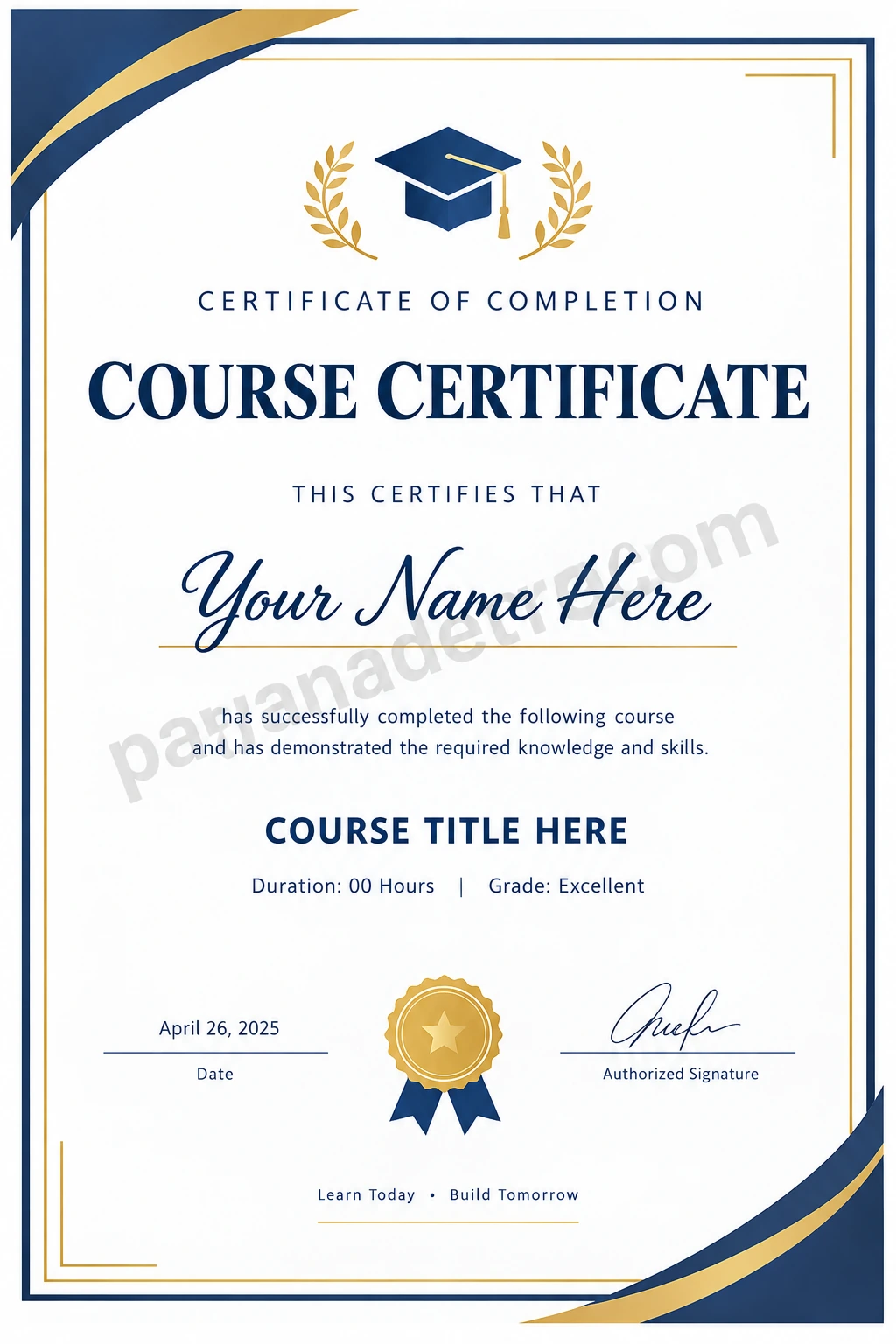
A well-designed certificate should be professional, readable, and easy to verify. The exact format will vary, but most certificates include the following details:
- Learner’s full name: Use the name the learner wants recorded for professional purposes.
- Course title: State the name of the completed course clearly.
- Issuing organization: Identify the school, instructor, company, or learning platform.
- Completion date: Show when the course requirements were completed.
- Certificate ID or verification link: Include one when the provider offers a way to confirm authenticity.
- Authorized signature or seal: Add these when appropriate for the issuing organization.
- Learning hours or assessment details: Include them only when they are accurate and relevant.
A certificate should never imply accreditation, licensing, grades, or professional status that the learner has not earned. Accurate details protect the credibility of both the recipient and the issuer.
How to Get a Course Certificate
The process is usually straightforward, although requirements differ between providers. Use these steps to choose a suitable course and complete it successfully.
1. Choose a Relevant Course
Start with your goal. You might want to learn a new software tool, strengthen a workplace skill, explore a career path, or meet a training requirement. Compare course descriptions, instructor experience, learner reviews, syllabus details, cost, and the reputation of the provider. Make sure the course teaches skills you can use.
2. Check the Certificate Requirements
Read the completion rules before paying or enrolling. Some courses issue a certificate after all lessons are completed. Others require a passing score, attendance threshold, assignment, or final project. Check whether the certificate is included in the course price and whether you can access it after the course ends.
3. Complete the Lessons and Assessments
Set aside regular study time and take notes on the main concepts. Complete quizzes and assignments honestly, and use practice exercises to test your understanding. If the course includes a project, keep a copy of your work when the provider’s rules allow it. A project can later serve as evidence of your skills.
4. Download and Review Your Certificate
After meeting the requirements, follow the provider’s instructions to download or access the certificate. Check your name, course title, completion date, and any verification information. Contact the provider if you notice an error. Save a digital copy in a secure folder and keep a backup.
Free and Paid Course Certificates: What Is the Difference?
Free courses can be an excellent way to explore a topic without a large financial commitment. Some provide a free certificate, while others offer free learning but charge for the certificate or graded assessment. Paid programs may include instructor feedback, structured projects, career services, or a more detailed assessment, but a higher price does not automatically mean better quality.
Compare the learning outcomes rather than focusing on price alone. Ask yourself:
- Does the course teach a skill I actually need?
- Is the provider transparent about who issues the certificate?
- Are the course materials current and well organized?
- Does the program include practice or meaningful assessment?
- Can I verify the certificate if an employer asks?
- Are there extra fees for exams, downloads, or continued access?
Choose a program that fits your budget, learning style, and objective. A low-cost course with useful exercises may be more valuable to you than an expensive course that covers material you already know.
How to Use a Course Certificate on Your Resume or Profile
When a certificate is relevant to your target role, add it to the certifications, professional development, or education section of your resume. Include the course title, issuing organization, and completion date when useful. Keep the description concise and avoid listing every short course you have ever taken.
Share Evidence, Not Just the Certificate
Employers often want to understand what you can do, not only what you have completed. Add a short explanation of the skill you gained, then link to a project, portfolio, or practical example if appropriate. On a professional networking profile, use the platform’s credential section when available and include the verification link or credential ID provided by the issuer.
Be accurate about the credential. Do not describe a course completion certificate as a degree, license, or professional certification unless the issuing organization explicitly grants that status. Clear wording builds trust and helps others understand the achievement.
Tips for Choosing a High-Quality Course Certificate Program
Before you enroll, evaluate the program carefully. A little research can help you avoid certificates that look impressive but offer limited learning value.
- Review the syllabus: Look for clear learning objectives and practical topics.
- Research the provider: Check its official website, instructor credentials, and reputation.
- Look for assessment: Quizzes, assignments, and projects can help confirm that you learned the material.
- Check the date: In fast-changing fields, recent content may matter more than an older course.
- Understand recognition: If an employer or institution requires a specific credential, confirm acceptance with them directly.
- Read the terms: Verify certificate fees, refund rules, access periods, and privacy practices.
Be cautious of providers that promise guaranteed employment, claim universal recognition without evidence, or offer credentials without explaining their requirements. A trustworthy provider makes its course content and certificate conditions easy to understand.
How to Create a Printable Course Certificate Template
If you organize workshops, teach a class, or run a training program, a printable course certificate template can help you recognize learners consistently. Start with a clean layout that leaves enough space for the recipient’s name, course title, completion date, and authorized signature. Use readable fonts, strong contrast, and a simple color palette.
Include the name of the issuing organization and only add a logo, seal, certificate number, or verification link if you are authorized to use it and can keep the information accurate. Before printing a batch, test one copy on the intended paper size. Check that borders, signatures, and text remain inside the printable area.
A template should be easy to customize without making the final document cluttered. Keep decorative elements subtle so that the learner’s name and course information remain the focus.
Frequently Asked Questions About Course Certificates
Does a course certificate expire?
It depends on the provider and the subject. A certificate documenting course completion may not have an expiration date. However, some industry credentials require renewal, continuing education, or a new assessment. Check the issuer’s terms and any requirements that apply to your profession.
Can a course certificate help me get a job?
It can support a job application when the course is relevant to the position and the skills are useful. It is most effective alongside experience, practical projects, and clear examples of what you can do. A certificate alone does not guarantee employment.
Are online course certificates valid?
Many online course certificates are legitimate records of completion. Their value depends on the provider, the course requirements, and the purpose for which you want to use them. If an employer or institution needs a particular credential, confirm its acceptance before enrolling.
Conclusion
A course certificate is a practical way to document learning, recognize progress, and communicate relevant skills. To get the most from one, choose a reputable course, understand the completion requirements, and focus on skills you can apply in real situations. Review your certificate for accuracy, store it safely, and include it in your resume or professional profile when it supports your goals.
Whether you are learning online or issuing certificates for a training program, the best approach is to keep the information accurate, the design clear, and the achievement meaningful. A certificate is most useful when it represents genuine learning and can be supported by practical evidence.