An Excellence Certificate is a meaningful way to recognize outstanding performance, dedication, and achievements in school, the workplace, or the community. Whether you want to celebrate a high-performing student, appreciate a hardworking employee, or honor someone who consistently exceeds expectations, a well-designed certificate makes the recognition memorable.
With a professional certificate of excellence template, you can create an attractive award without spending hours designing everything from scratch. Choose a suitable layout, personalize the recipient’s name, add a short recognition message, and include the date and authorized signature. The result is a professional document that can be printed, framed, or shared digitally.
In this guide, you will learn what an excellence certificate is, when to use one, what information to include, and how to customize a certificate template for different occasions. You will also discover practical design tips to help you create an award that looks polished and meaningful.
What Is an Excellence Certificate?
An excellence certificate is an award document presented to an individual or group to acknowledge exceptional performance, valuable contributions, or remarkable achievements. It communicates appreciation and provides a tangible reminder of someone’s effort and success.
These certificates are commonly used by schools, universities, businesses, nonprofit organizations, training centers, and community groups. Unlike a simple thank-you note, a formal certificate usually includes the recipient’s name, the reason for recognition, the issuing organization, and the date of presentation.
The meaning of excellence can vary depending on the situation. For students, it might represent academic achievement or positive behavior. For employees, it may recognize leadership, teamwork, productivity, or outstanding customer service.
Although an excellence certificate can look formal and prestigious, it does not always need an elaborate design. A clean layout, thoughtful wording, and accurate information are often enough to make the award special.
When Should You Give a Certificate of Excellence?
A certificate of excellence can be used in many situations where recognizing achievement helps motivate people and celebrate progress. The key is to connect the award to a specific accomplishment or behavior.
1. Academic Excellence
Schools and educational institutions can present academic excellence certificates to students who demonstrate outstanding academic performance, consistent improvement, strong study habits, or dedication to learning.
Teachers may also use these awards to recognize achievements in mathematics, science, language learning, research projects, and other subjects. A personalized certificate helps students feel appreciated and encourages them to continue developing their skills.
2. Employee Recognition
Businesses can use employee excellence certificates to celebrate exceptional work, professional growth, leadership, teamwork, and commitment to company goals. These awards can be presented during annual meetings, staff appreciation events, performance reviews, or company celebrations.
For the greatest impact, describe the achievement clearly. For example, recognizing an employee for improving a customer support process is more meaningful than presenting a certificate with no explanation of the accomplishment.
3. Training and Professional Development
Training providers and professional organizations can award certificates of excellence to participants who demonstrate outstanding performance during workshops, seminars, certification preparation, or skills development programs.
If the certificate represents completion of a formal course or qualification, make sure its wording accurately reflects the program requirements. An excellence award should not imply professional accreditation unless the issuing organization is authorized to provide it.
4. Community and Volunteer Contributions
Community groups, charities, and nonprofit organizations can recognize volunteers who contribute time, energy, and expertise to meaningful projects. A certificate can acknowledge leadership, reliability, compassion, and positive community impact.
These awards are especially useful during volunteer appreciation events, fundraising celebrations, and annual recognition ceremonies.
What Should an Excellence Certificate Include?
A professional excellence certificate should communicate its purpose immediately while remaining visually balanced and easy to read. Before printing or sharing your design, make sure it contains the essential details.
- Certificate title: Use a clear heading such as Certificate of Excellence or Award of Excellence.
- Recipient’s name: Include the person’s full name and check the spelling carefully.
- Recognition statement: Explain why the recipient is receiving the award.
- Issuing organization: Add the school, company, institution, or group presenting the certificate.
- Date of presentation: Include the date when the award is issued.
- Authorized signature: Provide space for a teacher, manager, director, or other authorized representative.
- Visual elements: Consider a border, logo, seal, or simple decorative accents that complement the design.
Some organizations may also include an award category, certificate number, department name, or verification details. These additions are optional and should be included only when they serve a clear purpose.
Excellence Certificate Template: Design Inspiration
A printable excellence certificate template makes it easier to create a consistent and professional award. Rather than building a layout from the beginning, you can start with a prepared design and customize the details to suit your needs.
For example, a navy blue and gold certificate design can communicate professionalism and achievement. A white background keeps the document clean, while a decorative border, laurel branches, and a medal emblem add a traditional award-style appearance.
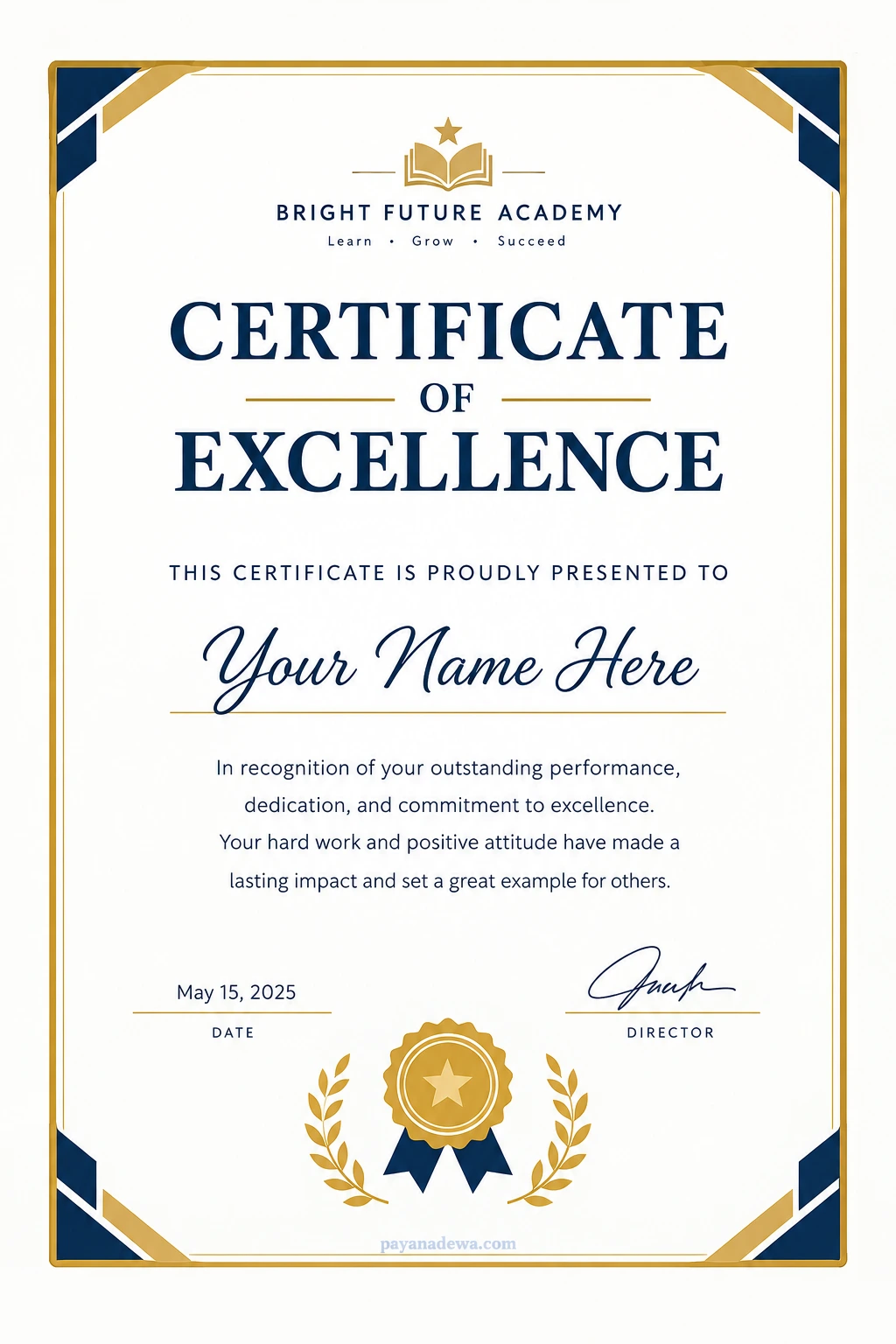
When choosing a template, consider the audience and the purpose of the award. A school certificate may benefit from friendly colors and simple illustrations, while a corporate award may look better with restrained typography and a more formal layout.
How to Create an Excellence Certificate
Creating an attractive certificate does not require advanced graphic design skills. Follow these steps to produce an award that is easy to personalize and ready to print.
Step 1: Choose the Right Template
Start with a certificate layout that matches the occasion. Look for a design with enough space for the recipient’s name, recognition message, date, and signature. Avoid templates that use too many decorative elements or make the text difficult to read.
A landscape layout is a popular option for formal awards because it provides plenty of room for the main title and recipient’s name. A portrait layout can also work well when the design is balanced and the information fits comfortably on the page.
Step 2: Add the Recipient’s Information
Enter the recipient’s full name and verify its spelling before finalizing the document. If you are creating certificates for multiple people, keep the layout consistent so every recipient receives an equally professional award.
You should also include the name of the issuing organization and the relevant award category. These details help recipients understand where the recognition came from and what it represents.
Step 3: Write a Meaningful Award Message
The recognition statement should be concise, positive, and relevant to the achievement. Instead of relying on generic wording alone, mention the quality or accomplishment being recognized.
For example, you could write: “In recognition of your outstanding performance, dedication, and commitment to excellence. Your hard work and positive attitude have made a valuable contribution to our community.”
Adjust the message to suit the recipient. An academic award might emphasize learning and perseverance, while an employee recognition certificate might highlight leadership, collaboration, or professional achievement.
Step 4: Customize the Design
Choose two or three complementary colors and use readable fonts. A traditional serif font can make the title feel formal, while a simple sans-serif font works well for supporting text.
Keep the recipient’s name prominent, use sufficient white space, and ensure that decorative elements do not compete with the main message. If you include an organizational logo, use a high-quality version and position it consistently.
Step 5: Review and Print
Check the certificate for spelling errors, incorrect dates, missing signatures, and inconsistent formatting. Preview the design before printing to confirm that the text and borders fit within the page margins.
For a traditional presentation, use high-quality paper or light cardstock. If you plan to distribute the certificate digitally, export it as a PDF to help preserve the layout across devices.
Examples of Excellence Certificate Wording
The wording you choose should reflect the reason for recognition. The following examples can help you create a certificate message that sounds professional and appropriate.
Academic Excellence Certificate
“This certificate is presented in recognition of outstanding academic achievement, dedication to learning, and consistent commitment to educational excellence. Your perseverance and enthusiasm set an inspiring example for others.”
Employee Excellence Certificate
“Presented in recognition of exceptional performance, professionalism, and dedication to organizational success. Your contributions, teamwork, and commitment to high standards are sincerely appreciated.”
Student Achievement Certificate
“Awarded in recognition of remarkable effort, positive attitude, and commitment to personal growth. Your determination and willingness to learn demonstrate the true meaning of excellence.”
Volunteer Excellence Certificate
“Presented with appreciation for outstanding volunteer service, generosity, and dedication to the community. Your efforts have made a meaningful difference and inspired those around you.”
You can personalize any of these examples by adding the recipient’s name, award category, organization, and presentation date. Whenever possible, connect the message to a specific achievement to make the recognition more authentic.
Tips for Making Your Certificate Look Professional
A good certificate design balances appearance with readability. These practical tips can help you achieve a polished result without making the layout unnecessarily complicated.
- Prioritize readability: Make the certificate title and recipient’s name easy to identify at a glance.
- Use consistent spacing: Leave enough room between the title, message, date, and signature lines.
- Limit your color palette: Two or three complementary colors usually create a more cohesive appearance.
- Choose appropriate fonts: Decorative lettering can work for the recipient’s name, but body text should remain clear.
- Use high-quality graphics: Avoid blurry logos, pixelated seals, and low-resolution decorative elements.
- Check the print settings: Select the correct paper size and review the print preview before producing multiple copies.
- Keep the message specific: Explain the achievement or contribution instead of using vague praise alone.
- Protect personal information: Share certificates publicly only when the recipient has appropriate permission, especially when children are involved.
Remember that a certificate’s value comes primarily from the recognition it represents. A simple, well-written award can be more meaningful than an elaborate design with little personal relevance.
Digital vs. Printable Excellence Certificates
Both digital and printed certificates can be effective. The best format depends on how the award will be presented, stored, and shared.
Printable certificates are ideal for award ceremonies, classroom celebrations, employee appreciation events, and formal presentations. They can be signed by hand, displayed in a frame, or kept as a physical reminder of an accomplishment.
Digital certificates are convenient for remote teams, online courses, virtual events, and organizations that need to distribute awards quickly. A PDF file can be emailed to recipients, stored electronically, or printed later if necessary.
For digital distribution, use a clear file name and check that the recipient’s information remains legible when viewed on a phone or computer. If authenticity matters, consider including a certificate identification number or a verification method supported by your organization.
Frequently Asked Questions About Excellence Certificates
What is the difference between a certificate of excellence and a certificate of achievement?
A certificate of excellence generally recognizes exceptional performance or a high standard of work. A certificate of achievement acknowledges the completion of a goal, task, milestone, or specific accomplishment. Organizations may use the terms differently depending on their award policies.
Can I create an excellence certificate for free?
Yes. You can use a free certificate template in a compatible document editor or design application. Add the recipient’s details, adjust the colors and wording, and export the finished design for printing or digital distribution. Check the template’s usage terms if you plan to use it commercially.
What paper size is best for printing an excellence certificate?
US Letter and A4 are common choices. The best option depends on your location, printer, and intended presentation. Choose the page size before adjusting the layout so that the text and decorative borders fit correctly.
Who can issue a certificate of excellence?
Schools, employers, training providers, nonprofit organizations, clubs, and other groups can issue certificates to recognize accomplishments within their activities. However, an ordinary award certificate should not be presented as a legally recognized qualification or accredited credential unless it meets the applicable requirements.
What should I write on an excellence certificate?
Include a clear title, the recipient’s name, a statement explaining the recognition, the issuing organization, the date, and an authorized signature. Keep the message concise and make sure it reflects the achievement being celebrated.
Conclusion
An Excellence Certificate is a practical and meaningful way to celebrate exceptional performance, encourage continued growth, and recognize valuable contributions. Whether you are preparing an academic award, an employee recognition certificate, or a community appreciation document, the right template can make the process simple and professional.
Start with a clean layout, include accurate recipient information, and write a message that explains why the person deserves recognition. Pay attention to typography, spacing, colors, and print quality to create a certificate that looks polished and is easy to read.
With a customizable excellence certificate template, you can prepare attractive awards for different occasions while maintaining a consistent design. Most importantly, make each certificate personal and sincere so that the recognition feels meaningful to the person receiving it.