A diploma certificate is an important document that recognizes the successful completion of an educational program, professional course, or specialized training. It serves as evidence of the knowledge and skills a person has gained in a particular field. Whether you are finishing high school, pursuing a vocational qualification, or developing professional skills, understanding diploma certificates can help you make informed decisions about your education and career.
Diploma certificates are available in many fields, including business, information technology, healthcare, engineering, hospitality, and creative arts. Depending on the institution and program, earning a diploma may take several months to a few years. Some qualifications prepare students for immediate employment, while others provide a foundation for further education.
In this guide, you will learn what a diploma certificate is, the different types available, its benefits, how to obtain one, and how to choose the right program. You will also discover what to look for in a diploma certificate template and how to verify whether an educational credential is legitimate.
What Is a Diploma Certificate?
A diploma certificate is an official document issued by an educational institution, training provider, or authorized organization to recognize the successful completion of a specific course or program. It typically identifies the recipient, the qualification earned, and the institution that awarded it.
The exact meaning of a diploma certificate depends on the country, education system, and institution. In some countries, a diploma represents a vocational or postsecondary qualification. In others, it may refer to a secondary school completion credential or a specialized professional award.
A typical diploma certificate may include the following information:
- Recipient’s full name: The name of the person receiving the qualification.
- Institution name: The school, college, university, or training organization issuing the document.
- Qualification title: The name of the diploma or completed program.
- Field of study: The subject or specialization completed by the recipient.
- Date of completion: The date the requirements were fulfilled or the credential was awarded.
- Authorized signatures: Signatures from designated institutional representatives.
- Official seal or identification number: Details that may help verify the document’s authenticity.
Not every diploma certificate contains all these elements. Requirements vary depending on the issuing institution and the purpose of the credential.
Types of Diploma Certificates
Diploma certificates cover a wide range of educational and professional pathways. Understanding the main types can help you identify which qualification best matches your goals.
1. High School Diploma Certificate
A high school diploma certificate confirms that a student has completed the required secondary education curriculum. It may be needed when applying for college, university, vocational training, or certain entry-level jobs.
Graduation requirements vary by country, state, and school system. Some institutions also offer alternative pathways for students who complete equivalent educational requirements.
2. Vocational Diploma Certificate
A vocational diploma certificate recognizes practical training in a specific occupation or industry. These programs emphasize job-related knowledge and hands-on experience rather than focusing exclusively on academic theory.
Common vocational diploma fields include automotive technology, electrical installation, culinary arts, construction, hospitality, and beauty services. Depending on local regulations, additional licensing or certification may be required before graduates can work in certain occupations.
3. Academic Diploma Certificate
An academic diploma certificate is awarded after completing a structured educational program offered by a recognized school, college, or other educational institution. The curriculum may combine theoretical learning, practical assignments, examinations, and research projects.
Academic diplomas can provide a pathway to employment or further study. However, their transferability and admission value depend on the receiving institution and the education system involved.
4. Professional Diploma Certificate
A professional diploma certificate demonstrates that an individual has completed specialized training relevant to a profession or industry. These qualifications are often designed for people who want to improve their skills, change careers, or strengthen their professional credentials.
Examples include diplomas in project management, digital marketing, human resources, accounting, and information technology. Before enrolling, check whether the program is recognized by relevant employers or professional bodies.
5. Online Diploma Certificate
An online diploma certificate is earned through a program delivered partly or entirely over the internet. Students may access recorded lessons, attend virtual classes, complete assignments, and take online assessments.
Online learning offers flexibility for working professionals and people with busy schedules. Nevertheless, the value of an online diploma depends on the quality of the education, the credibility of the provider, and whether the qualification meets your intended employment or academic requirements.
What Is the Difference Between a Diploma and a Certificate?
Although the terms are sometimes used interchangeably, a diploma and a certificate may represent different levels of study or different learning objectives. Their precise meanings depend on the institution and country.
A diploma program often involves a broader curriculum and a longer period of study. A certificate program may focus on a narrower skill set or a shorter course of training. However, some professional certificates require extensive study, while certain diplomas can be completed relatively quickly.
Consider these general differences:
- Study duration: Diploma programs often take longer, although the duration varies considerably.
- Curriculum: Diplomas may cover multiple subjects, while certificates may concentrate on a specific skill or competency.
- Career objectives: Both qualifications can support career development, depending on the occupation and employer requirements.
- Academic progression: Some diplomas provide pathways to further education, but credit transfer is not automatic.
- Recognition: The credibility of either qualification depends on the issuing organization and applicable accreditation or regulatory standards.
Before choosing a program, compare its learning outcomes, entry requirements, total cost, recognition, and relevance to your career plans rather than relying on the qualification title alone.
Benefits of Earning a Diploma Certificate
Earning a diploma certificate can offer several advantages for students, job seekers, and professionals. The benefits depend on the subject studied and the recognition of the qualification.
Improved Employment Opportunities
A diploma can demonstrate that you have completed structured training in a relevant field. Employers may use this information when assessing applicants for positions that require specific educational backgrounds or practical skills.
Practical Knowledge and Skills
Many diploma programs include practical exercises, projects, workshops, or workplace experience. These activities can help students apply what they learn and prepare for real-world responsibilities.
Career Advancement
Professionals may pursue a diploma to develop new competencies, qualify for additional responsibilities, or transition into a different industry. Before enrolling, confirm that the qualification aligns with the requirements of your target role.
A Foundation for Further Education
Some diploma programs allow graduates to apply for advanced courses or degree programs. However, admission requirements and credit recognition differ between institutions, so it is important to confirm these details before making a decision.
How to Get a Diploma Certificate
The process of obtaining a legitimate diploma certificate usually involves selecting a suitable program, meeting its requirements, completing the coursework, and receiving the award from the issuing institution.
Step 1: Choose Your Field of Study
Start by identifying your career interests and educational goals. Consider whether you want to enter a new profession, improve your current skills, meet an employment requirement, or continue your education.
Step 2: Research Recognized Institutions
Compare schools, colleges, universities, and training providers that offer the qualification you need. Check their official websites and verify their recognition through the relevant education authority or accreditation body.
Be cautious of providers that promise an official diploma without meaningful study, assessment, or verification. A professional-looking website or certificate design does not prove that a qualification is legitimate.
Step 3: Review the Admission Requirements
Some programs require previous academic qualifications, relevant work experience, language proficiency, or specific prerequisite courses. Review the entry criteria carefully and prepare the required documents before applying.
Step 4: Complete the Program
Attend classes, complete assignments, participate in practical activities, and meet the required assessment standards. Keep copies of important academic records in case you need them for future applications.
Step 5: Request and Verify Your Diploma
After successfully completing the program, follow the institution’s procedures for receiving your diploma certificate. Check that your name, qualification title, award date, and other relevant information are correct.
If you need the document for employment, immigration, or further study, confirm whether the recipient requires an original certificate, a certified copy, a digital credential, an official transcript, or an independent credential evaluation.
What Is a Diploma Certificate Template?
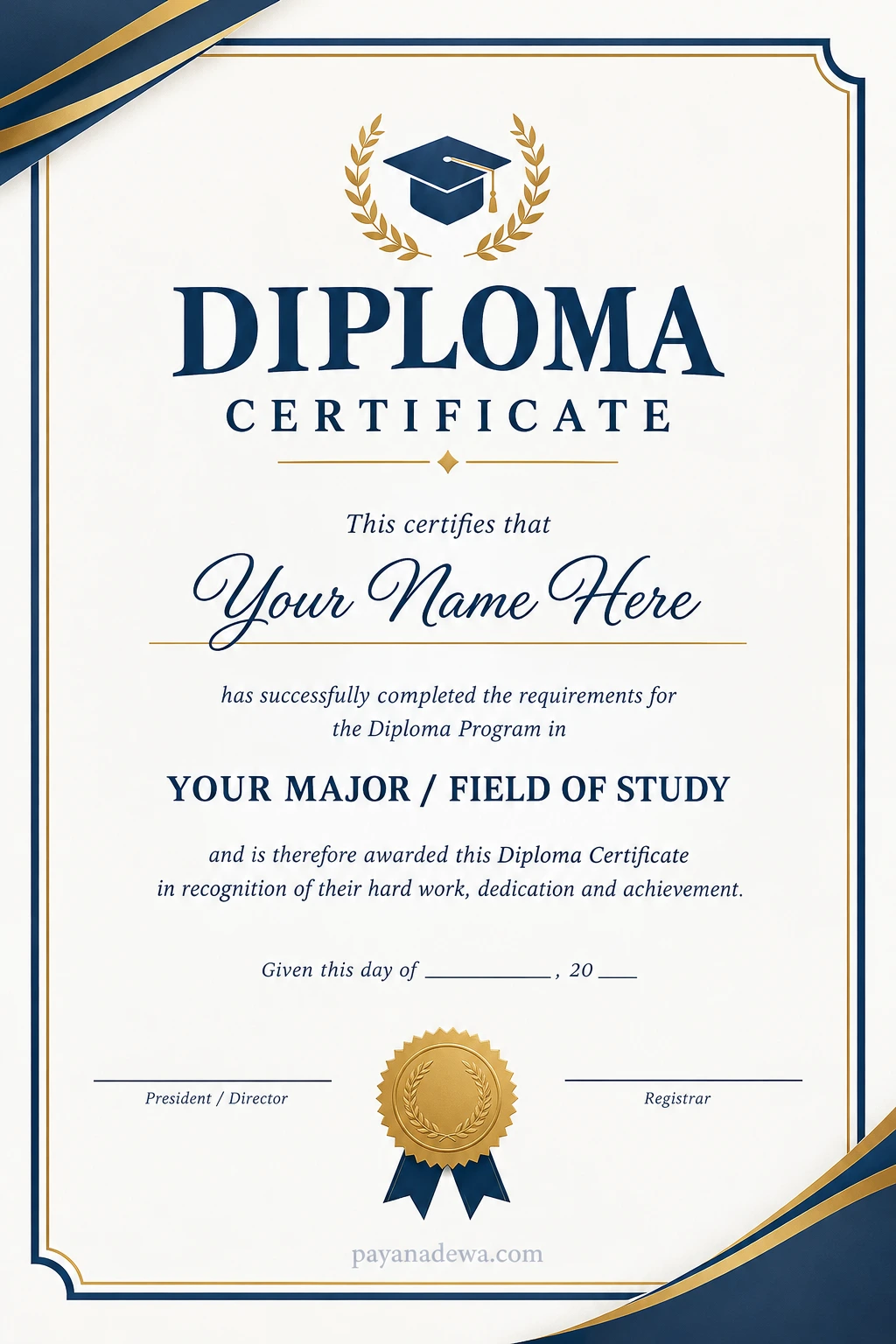
A diploma certificate template is a pre-designed document layout that can be customized for an educational award, training achievement, workshop, or non-academic recognition. It provides a consistent structure for presenting the recipient’s name, program title, date, signatures, and other details.
A well-designed diploma certificate template typically includes:
- A clear and prominent certificate heading.
- Space for the recipient’s full name.
- The name of the course, program, or achievement.
- The issuing organization’s name and authorized branding.
- Completion or award date fields.
- Signature lines for authorized representatives.
- A balanced border, readable typography, and optional decorative elements.
For personal projects, classroom activities, practice designs, or informal awards, a printable diploma template can save time and help create a polished document. You can customize the colors, fonts, layout, and wording to match the occasion.
However, a template alone does not create an accredited academic qualification. Official educational credentials must be issued by an authorized institution according to its rules. Never present a self-created or modified template as an authentic diploma from a school or university that did not award it.
For a professional result, use high-resolution artwork, maintain sufficient space around text, choose legible fonts, and proofread every field before printing. If the document is intended for official use, follow the issuing institution’s approved design and security requirements.
How to Verify a Diploma Certificate
Verifying a diploma certificate is important when applying for employment, enrolling in another institution, or assessing an educational credential. A document’s appearance alone cannot establish its authenticity.
Use these practical verification steps:
- Contact the issuing institution: Use its official contact information to confirm whether the credential was awarded.
- Check institutional recognition: Consult the relevant government education authority or recognized accreditation organization.
- Review identifying details: Look for inconsistencies in the recipient’s name, award date, qualification title, or institution information.
- Confirm digital verification: If available, use the institution’s official credential verification portal or secure digital credential system.
- Check additional requirements: Employers, universities, and government agencies may require transcripts, certified copies, translations, or credential evaluations.
Verification procedures vary by country and institution. When in doubt, contact the organization responsible for issuing or evaluating the qualification rather than relying on third-party claims.
Tips for Choosing the Right Diploma Program
Selecting the right diploma program requires more than comparing tuition fees or course duration. The best choice should match your goals and provide a credible learning experience.
- Define your objective: Decide whether you need job-specific skills, academic progression, professional development, or a formal educational qualification.
- Check recognition: Confirm that the institution and program meet the requirements of your intended employer, university, or professional regulator.
- Compare total costs: Include tuition, examination fees, learning materials, transportation, and any additional charges.
- Review the curriculum: Make sure the subjects and practical activities match the skills you want to develop.
- Understand the time commitment: Check the expected duration, attendance requirements, and assessment schedule.
- Ask about graduate outcomes: Look for credible information about employment opportunities, further study options, and graduate support.
- Read the award conditions: Understand exactly what qualification you will receive after meeting the requirements.
Taking time to research these factors can help you avoid unsuitable programs and invest in education that supports your long-term plans.
Frequently Asked Questions About Diploma Certificates
Can I get a diploma certificate online?
Yes. Many legitimate institutions offer online diploma programs. Before enrolling, verify the provider’s recognition, the course requirements, and whether the resulting qualification will be accepted for your intended purpose.
How long does it take to earn a diploma certificate?
The duration varies by program, study level, and country. Some short professional diplomas take several months, while other academic or vocational programs may require one or more years.
Can I use a diploma certificate to apply for a job?
Yes, if the qualification is relevant to the position and meets the employer’s requirements. Some jobs also require professional licenses, additional certifications, or specific levels of education.
Is a diploma certificate the same as a degree?
No. A diploma and a degree are generally different types of qualifications, although their exact levels and recognition vary across education systems. Check the relevant institution’s admission rules and qualification framework to understand how they compare.
Can I edit and print a diploma certificate template?
Yes, for personal, educational, practice, or authorized award purposes. Ensure that you have permission to use any included logos or branding, and never alter an official credential or use a template to misrepresent academic achievements.
Conclusion
A diploma certificate can represent an important educational achievement, demonstrate specialized skills, and support career development. Its value depends on the program’s quality, the issuing institution’s credibility, and whether the qualification meets the requirements of employers or educational organizations.
Before enrolling in a diploma program, research the institution, review the curriculum, compare costs, and confirm recognition. If you need a diploma certificate template for an authorized award or personal project, choose a clear, professional design and ensure that every detail is accurate.
By understanding the different types of diploma certificates and how to evaluate them, you can make more confident decisions about your education, professional development, and future opportunities.