Whether you are disposing of sensitive documents, outdated electronic equipment, damaged inventory, or confidential business records, a destruction certificate provides written evidence of what was destroyed, when the destruction occurred, and who was responsible for the process. A properly completed certificate can also help prevent misunderstandings and support future audits.
In this guide, you will learn what a destruction certificate is, what information it should contain, how to complete one, and when to use a printable destruction certificate template.
What Is a Destruction Certificate?
A destruction certificate is a formal record confirming that certain items have been destroyed, disposed of, or processed according to an established procedure. It typically identifies the materials involved, the destruction date, the method used, and the person or organization responsible for verifying the destruction.
The document may also be called a certificate of destruction, destruction record, or proof of destruction. Although these terms are often used interchangeably, the exact document requirements depend on the industry, the type of material, and the applicable policies or regulations.
A destruction certificate is not simply a statement that something has been thrown away. It creates a documented record of an activity that may have legal, operational, environmental, or security implications.
Why Is a Destruction Certificate Important?
Organizations often manage information and physical assets that should not remain in circulation indefinitely. Keeping unnecessary records or outdated equipment can create security risks, increase storage costs, and complicate inventory management.
A destruction certificate helps address these concerns in several ways.
- Accountability: It identifies the person or department responsible for the destruction process.
- Recordkeeping: It provides a written history of disposed materials and their destruction dates.
- Data protection: It supports documentation of efforts to securely dispose of confidential information.
- Audit preparation: It helps organizations locate evidence of completed disposal activities.
- Inventory management: It records the removal of damaged, expired, or obsolete items from inventory.
- Operational consistency: It encourages employees to follow a standard destruction procedure.
However, a certificate alone does not automatically establish regulatory compliance. The destruction method, authorization process, and supporting evidence must also meet the requirements that apply to the organization and the materials being destroyed.
What Information Should a Destruction Certificate Include?
A useful destruction certificate should be clear, complete, and easy to verify. While the required fields vary, most documents include the following information.
1. Certificate Number
Assign a unique identification number to each certificate. A consistent numbering system makes it easier to retrieve the document, connect it to other records, and avoid duplicate entries.
2. Date of Destruction
Record the actual date when the destruction took place. If the destruction occurred over several days or in separate batches, identify the relevant dates or attach a detailed record.
3. Description of Items
Describe the materials being destroyed with enough detail to identify them. Depending on the situation, this may include document categories, equipment descriptions, serial numbers, inventory references, quantities, or storage locations.
Avoid including unnecessary confidential information in the certificate itself. For sensitive records, a secure reference number or inventory identifier may be more appropriate than reproducing the original information.
4. Method of Destruction
Specify how the materials were destroyed. Common methods include:
- Shredding confidential paper documents.
- Secure wiping or physical destruction of electronic storage media.
- Approved recycling or processing of electronic waste.
- Incineration or another authorized disposal method for applicable materials.
- Other methods approved by the organization’s procedures.
The method should be suitable for the type of material and the level of security required. For example, deleting a file from a computer may not be sufficient when secure data sanitization is required.
5. Verification and Authorization
Include the name, position, or department of the person who verified the destruction. Depending on organizational policy, a witness or authorized manager may also need to sign the certificate.
Finally, provide signature and date fields for the responsible parties. A digital signature may be acceptable where the relevant policies and requirements permit it.
Free Printable Destruction Certificate Template
Use the destruction certificate template below as a starting point for documenting the disposal of records, materials, or equipment. The template is designed for printing and can be adapted to suit different organizational procedures.
Before using it, review the fields and make sure they are appropriate for your specific destruction activity. Add your company name, logo, document reference, or additional verification fields if necessary.
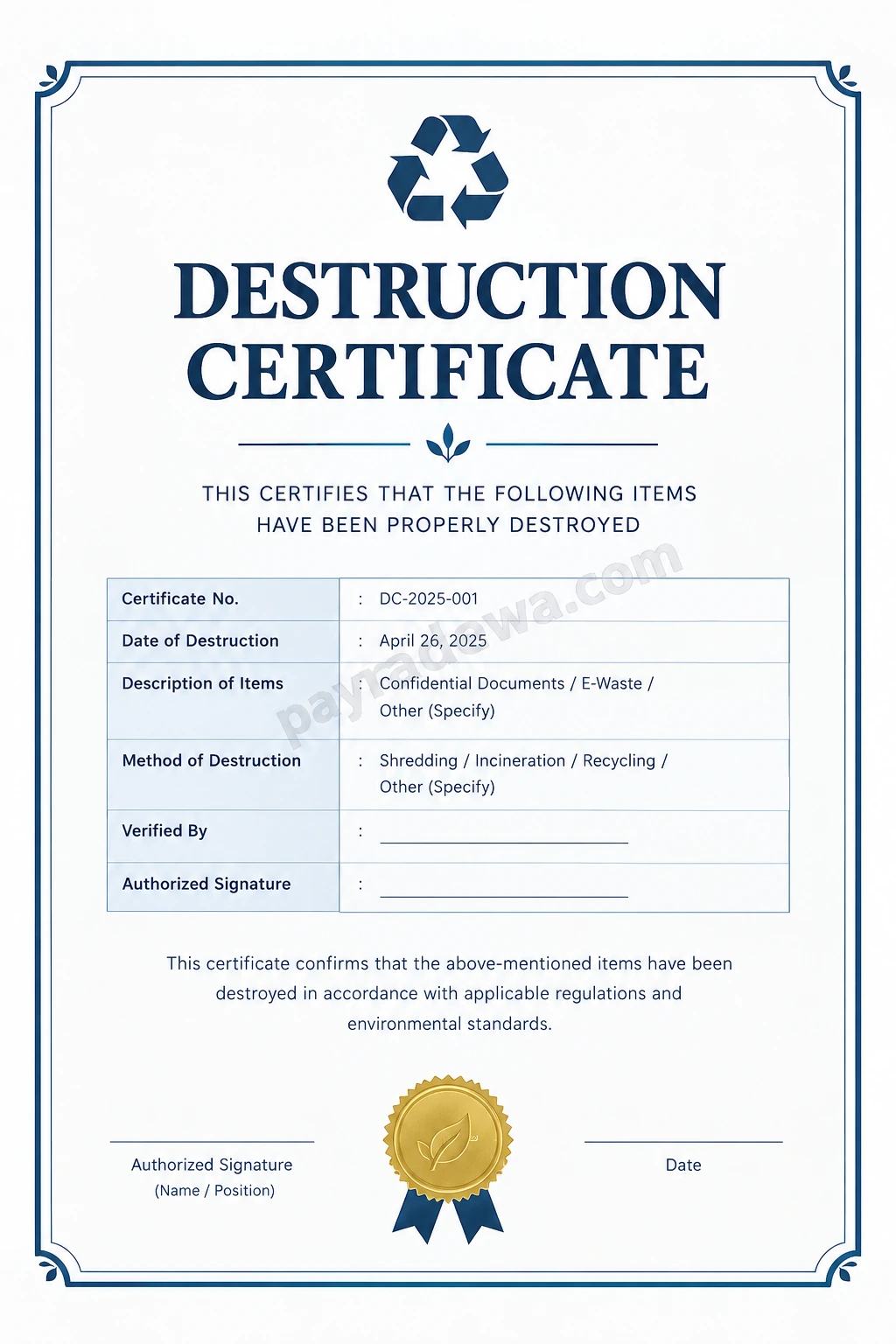
The template can be printed and completed manually or used as a visual reference when creating a digital certificate. Keep the original certificate and any supporting documentation in a secure location that authorized personnel can access when needed.
How to Complete a Destruction Certificate
Completing a destruction certificate correctly helps ensure that the record accurately reflects the disposal activity. Follow these practical steps.
Step 1: Identify the Materials
Determine exactly which items are scheduled for destruction. Check inventory lists, storage records, retention schedules, or disposal requests to confirm that the materials are eligible for destruction.
Do not destroy records that are subject to a legal hold, investigation, contractual requirement, or mandatory retention period.
Step 2: Obtain the Necessary Approval
Confirm that the destruction has been authorized by the appropriate manager, records officer, data protection team, or other responsible person. The required approval process depends on the organization and the type of materials involved.
Step 3: Perform the Destruction
Use an appropriate destruction method and follow established safety, security, and environmental procedures. If an external destruction service is involved, obtain its documentation and verify that the service covers the materials listed in your records.
Step 4: Record and Verify the Details
Complete the certificate using the actual destruction date, item descriptions, quantities, and method. Check that the details match the disposal request and any supporting records.
If a witness or independent verification is required, make sure that person reviews the relevant information before signing.
Step 5: Store the Certificate Securely
Save the completed certificate in the organization’s designated records system. Use a consistent filename or certificate number so it can be found later.
Retain the document for the period required by your records retention policy, contract, or applicable regulations. The certificate should be accessible for legitimate verification while remaining protected from unauthorized access.
Different Uses of a Destruction Certificate
Although the basic structure remains similar, destruction certificates can serve several different purposes.
Document and Records Destruction
Businesses may use a certificate of destruction to record the disposal of paper files, financial records, customer documents, or confidential correspondence. The certificate can identify the records by category, retention reference, or destruction batch.
Electronic Data and IT Equipment
Organizations disposing of computers, hard drives, servers, and other storage devices may need documentation of data sanitization or physical destruction. In these situations, the certificate should identify the relevant devices and describe the method used to make stored information inaccessible.
For high-security environments, supporting evidence may include device serial numbers, service-provider records, or verification reports.
Inventory and Product Disposal
A destruction certificate may also document the disposal of damaged products, expired stock, defective materials, or items that cannot be sold or reused. Include relevant inventory references, quantities, reasons for disposal, and the authorized person responsible for the activity.
Best Practices for Using a Destruction Certificate
To make your certificate more reliable and useful, keep these recommendations in mind:
- Use a consistent certificate format across departments.
- Record actual destruction details rather than estimated information.
- Make item descriptions specific enough to support verification.
- Keep sensitive information out of the certificate unless it is necessary.
- Require authorization before destroying materials.
- Use destruction methods appropriate to the material and security requirements.
- Keep certificates and supporting records organized and protected.
- Review your retention policy before destroying any documents.
For organizations that regularly destroy confidential records, consider maintaining a destruction register. A register can track certificate numbers, dates, responsible departments, and links to supporting documentation, making it easier to manage large volumes of disposal records.
Frequently Asked Questions
Is a destruction certificate the same as a certificate of destruction?
In many contexts, yes. Both terms generally refer to a document that records the destruction or disposal of identified materials. However, some industries or service providers may use specific formats or terminology, so always check the applicable requirements.
Who can issue a destruction certificate?
The certificate may be issued by the organization carrying out the destruction, an authorized internal department, or an external destruction service provider. The appropriate issuer depends on the procedure and the evidence required for the particular activity.
Can I use a printable destruction certificate template?
Yes. A printable template can be useful for routine disposal activities when it includes the necessary information and meets your organization’s documentation requirements. More complex or regulated destruction activities may require additional records or an industry-specific form.
Does a destruction certificate prove that an item was destroyed?
A signed certificate provides documented confirmation from the responsible party, but its reliability depends on the accuracy of the information and the verification process. Additional evidence may be necessary for certain materials, contracts, audits, or regulatory requirements.
Conclusion
A destruction certificate is a practical document for recording the secure and appropriate disposal of confidential records, electronic equipment, inventory, and other materials. It helps establish accountability, maintain accurate records, and provide evidence of completed destruction activities.
By using a clear destruction certificate template, documenting the correct details, obtaining the required authorization, and keeping supporting records securely, organizations can make their disposal procedures more consistent and easier to verify.
Download the printable destruction certificate template provided in this guide and customize it to match your organization’s recordkeeping and destruction requirements.