A completion certificate is a simple yet meaningful way to recognize someone’s effort, progress, and achievement. Whether you organize an online course, professional training session, workshop, or educational program, a well-designed certificate helps participants celebrate their accomplishments and keep a record of what they have learned.
Today, completion certificates are widely used by schools, businesses, training providers, online educators, and organizations. They offer a professional way to acknowledge participation and successful completion. In addition, a printable certificate template makes it easier to create attractive documents without starting from scratch.
In this guide, you will learn what a completion certificate is, why it matters, what information to include, and how to create a professional design. You will also discover practical tips for choosing the right template for your needs.
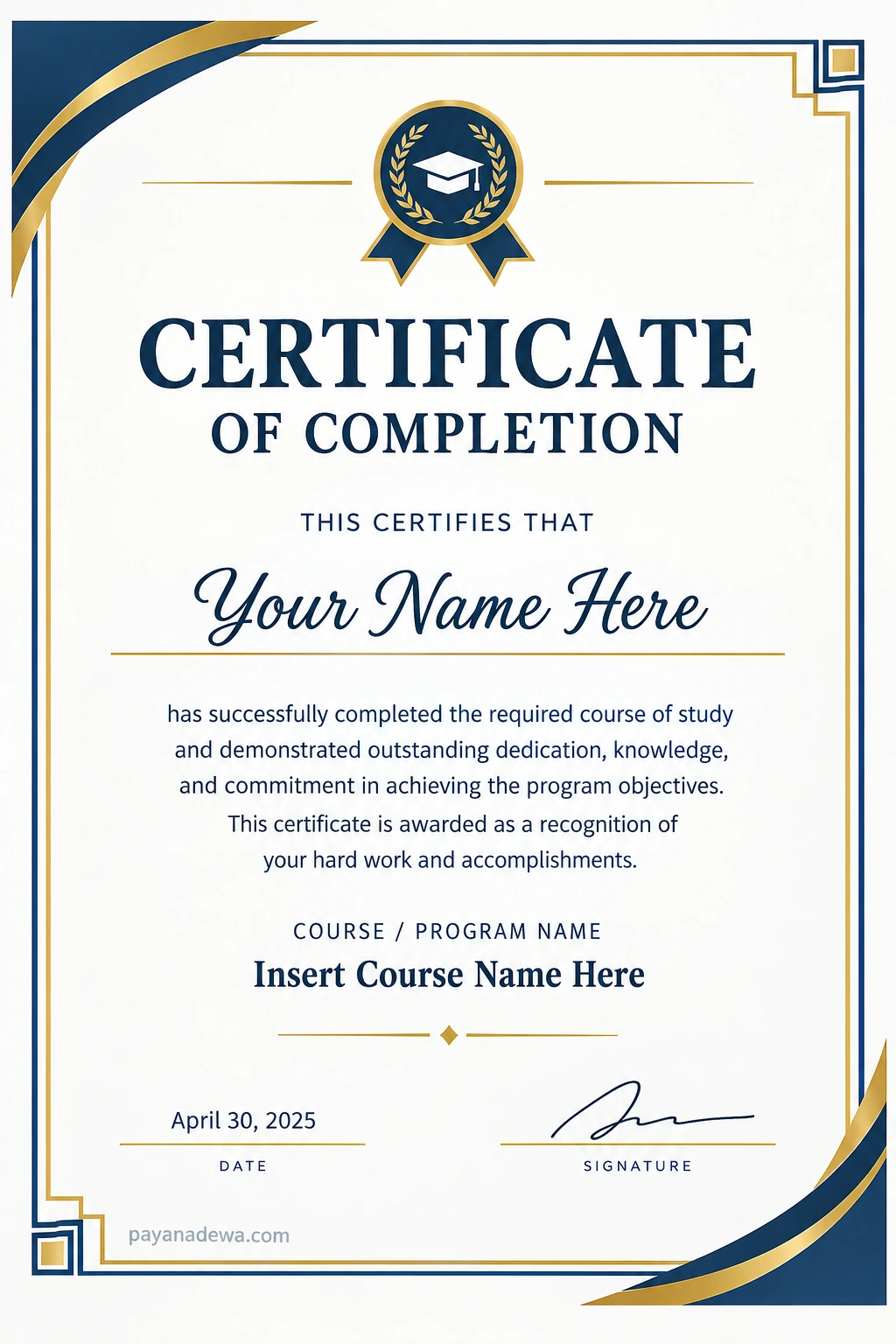
What Is a Completion Certificate?
A completion certificate is a document that confirms an individual has successfully finished a course, training session, workshop, project, or other organized program. It usually includes the recipient’s name, the program title, the completion date, and the name or signature of the issuing organization.
Unlike a diploma or professional license, a completion certificate does not automatically prove that someone holds an accredited qualification. Instead, it records the completion of a specific learning activity or program. Therefore, its value depends on the program, the issuer, and the standards used to award it.
For example, an online instructor may provide a certificate after a student finishes a digital marketing course. Similarly, a company may issue certificates to employees who complete workplace training. Both documents recognize achievement while providing a useful record for future reference.
Completion Certificate vs Certificate of Achievement
Although these terms sometimes overlap, they can communicate different things. A completion certificate generally confirms that a person has fulfilled the requirements of a program. A certificate of achievement may emphasize outstanding performance, specific results, or exceptional skills.
When selecting a title, consider the purpose of your program. Use a completion certificate when the main goal is to confirm successful participation or course completion. Choose a certificate of achievement when you want to highlight measurable accomplishments or exceptional performance.
Why Is a Completion Certificate Important?
A completion certificate offers several benefits for both recipients and organizations. Although it may be a single page, it can represent hours of learning, practice, and dedication.
1. It Recognizes Effort and Progress
Completing a course or training program often requires time, discipline, and persistence. A certificate gives participants a tangible reminder of their efforts. It can also motivate them to continue learning and pursue new goals.
2. It Creates a Professional Record
Recipients can save their certificates as part of a personal learning portfolio. They may also include relevant certificates in a resume, professional profile, or job application when appropriate. However, they should describe the credential accurately and avoid presenting it as an accredited qualification unless that status is verified.
3. It Strengthens Organizational Credibility
Businesses, schools, and training providers can use consistent certificate designs to create a more professional experience. Clear wording, accurate details, and recognizable branding help recipients understand who issued the document and what it represents.
4. It Encourages Continued Learning
Recognizing completed milestones can help learners stay engaged. For online courses and employee development programs, certificates provide a simple way to celebrate progress and encourage participants to take the next step in their learning journey.
What Should a Completion Certificate Include?
A professional completion certificate should communicate its purpose clearly. While the exact layout depends on the program, the following elements are useful for most designs.
- Certificate title: Use a clear heading such as Certificate of Completion.
- Recipient’s full name: Display the name prominently and check its spelling carefully.
- Program or course name: Identify the training, workshop, class, or activity completed.
- Recognition statement: Explain that the recipient has successfully completed the stated requirements.
- Completion date: Include the date the program was completed or the certificate was awarded.
- Issuing organization: Add the name and, where appropriate, the logo of the school, business, or training provider.
- Authorized signature: Include a signature or authorized signatory’s name when relevant.
- Certificate ID: Add a unique identification number if verification or recordkeeping is necessary.
Not every certificate needs every element. For a small workshop, a title, recipient name, program name, and date may be enough. By contrast, a corporate training certificate may require additional details, such as training hours, an instructor’s name, or a verification reference.
How to Create a Professional Completion Certificate
Creating a completion certificate does not have to be complicated. With a suitable template and accurate information, you can produce a polished document that is easy to read and print.
Step 1: Choose the Right Template
Start with a layout that matches the purpose of the program. A formal training course may benefit from a classic design with a border, elegant typography, and a signature area. Meanwhile, a creative workshop may use a modern layout with simple shapes and a more relaxed style.
A ready-made completion certificate template saves time because the main design elements are already arranged. You only need to customize the text, colors, logo, and other relevant details.
Step 2: Add Accurate Recipient Information
Enter the recipient’s full name and the correct program title. Next, confirm the completion date and the issuing organization’s name. These details matter because errors can reduce the document’s usefulness and require you to create a replacement.
Step 3: Write a Clear Recognition Statement
Keep the wording professional and direct. For example, you can write, “This certificate is awarded to [Recipient Name] in recognition of successfully completing [Course Name].” This statement identifies the recipient, the achievement, and the reason for the award.
If the program requires a final assessment, make sure the wording accurately reflects that requirement. Do not claim that a recipient passed an examination or earned a qualification unless the relevant conditions have been met.
Step 4: Use Consistent Design Elements
Choose two or three complementary colors and use readable fonts. Make the certificate title the most prominent element, followed by the recipient’s name. Keep supporting information smaller without making it difficult to read.
In addition, leave enough white space around the text. A clean layout looks professional and helps the important details stand out. Decorative borders, seals, and icons can add visual interest, but they should never distract from the certificate’s main purpose.
Step 5: Review and Export the Certificate
Before issuing the document, proofread every field and confirm that the design looks correct. Check the spelling, date, signature, and organization name. If you plan to print the certificate, use a high-quality PDF export when available and select the appropriate paper size.
For digital distribution, make sure the text remains readable on a computer screen and mobile device. Save a final copy for your records, especially if you issue certificates to many participants.
Completion Certificate Template: Design Tips for Better Results
A good template balances visual appeal with practical usability. The following tips can help you create a document that looks professional and works well in both digital and printed formats.
- Keep the layout simple: Avoid unnecessary graphics, excessive colors, and crowded text.
- Use readable typography: Combine a decorative heading font with a clear body font.
- Choose suitable colors: Navy, black, white, and gold can create a formal appearance, while brighter colors may suit informal learning programs.
- Leave space for signatures: Make sure names and signature lines are large enough to use comfortably.
- Check print margins: Keep important text away from the edges to prevent unwanted cropping.
- Maintain consistent branding: Use the same logo, color palette, and formatting across certificates issued by your organization.
- Protect sensitive information: Include only the personal information needed for the certificate’s intended purpose.
For online distribution, consider adding a unique certificate number or verification link. These features can help an organization confirm that a certificate is genuine. However, they should only be included when a reliable verification process is available.
When Should You Use a Completion Certificate?
Completion certificates are suitable for many educational, professional, and community activities. Their flexibility makes them useful for programs of different sizes and purposes.
Education and Online Courses
Teachers, tutors, and online course creators can award certificates to students who finish lessons or meet course requirements. These documents recognize progress and help learners organize records of their educational activities.
Employee Training and Professional Development
Companies can use completion certificates for onboarding, software training, safety instruction, communication workshops, and other internal learning activities. A consistent design also helps human resources teams maintain organized training records.
Workshops, Seminars, and Community Programs
Event organizers may provide certificates to participants who complete a workshop or fulfill attendance requirements. The certificate should accurately describe whether it recognizes attendance, participation, or successful completion.
Personal Projects and Creative Learning
Individuals and community groups can also use certificates to celebrate completed projects, creative classes, and informal learning activities. In these cases, a simple and attractive design may be more suitable than a highly formal layout.
Common Mistakes to Avoid
Even a visually appealing certificate can look unprofessional if important details are missing. Fortunately, most problems are easy to prevent with a short review.
- Using vague wording: State exactly which course, activity, or program the recipient completed.
- Adding unsupported claims: Do not imply accreditation, licensing, or professional certification without proper authorization.
- Using poor-quality images: Select clear logos and graphics that remain sharp when printed.
- Overcrowding the page: Keep the content focused and provide sufficient spacing.
- Forgetting to proofread: Verify names, dates, signatures, and program details before distribution.
- Ignoring print settings: Preview the final document to make sure no text or decorative elements are cut off.
By avoiding these mistakes, you can create a completion certificate that is clear, accurate, attractive, and appropriate for its intended use.
Frequently Asked Questions About Completion Certificates
Is a completion certificate the same as a diploma?
No. A completion certificate generally confirms that someone has finished a particular program or activity. A diploma is typically associated with a formal educational qualification. The exact meaning and recognition of each document depend on the issuing institution and applicable rules.
Can I create a completion certificate for free?
Yes. You can use a free certificate template and customize it with a document editor or graphic design application. Check the template’s license and usage terms before using it commercially or distributing it widely.
Can a completion certificate be used on a resume?
Yes, when the course or training is relevant to the position. Include the course name, issuing organization, and completion date when appropriate. Describe the certificate accurately and do not present it as a formal qualification if it does not provide one.
What is the best format for printing a completion certificate?
PDF is generally a practical choice because it helps preserve the document’s layout across devices. Use a high-resolution design, check the page dimensions, and preview the print output before producing multiple copies.
Does a completion certificate need a signature?
Not always. A signature can add formality and identify the authorized person responsible for issuing the document. Whether it is necessary depends on the organization’s policies and the purpose of the certificate.
Conclusion
A completion certificate is a practical way to recognize learning, participation, and achievement. When designed carefully, it gives recipients a useful record of their progress while helping organizations present their programs professionally.
To create an effective certificate, choose an appropriate template, include accurate information, use readable typography, and review the final document before sharing it. Also, make sure the wording reflects the achievement honestly and does not suggest qualifications or accreditation that the recipient has not earned.
Whether you need a certificate for an online course, employee training session, workshop, or educational activity, a well-organized template can save time and simplify the process. Start with a clean design, personalize the details, and create a completion certificate that recipients will be pleased to keep.
What type of completion certificate are you planning to create? Share your ideas and experiences to help others discover useful certificate designs and best practices.