If you are planning an event or considering hiring a caterer, understanding the available services, menu options, pricing factors, and preparation process can help you make informed decisions. This guide explains how catering works, what to look for in a provider, and how to plan a successful event within your budget.
What Is Catering?
Catering is a food service that prepares and supplies meals, beverages, and sometimes additional hospitality services for events or gatherings. Depending on the provider and package, catering may include menu planning, food preparation, transportation, setup, serving staff, table arrangements, and cleanup.
Unlike ordering food for everyday meals, event catering is usually organized around a specific occasion, guest count, schedule, and budget. A professional caterer works with the host to create a suitable dining experience, from simple boxed lunches to elaborate multi-course dinners.
Catering services are available for private celebrations, business functions, weddings, conferences, festivals, and many other occasions. Some providers specialize in particular cuisines or events, while others offer flexible packages for different needs.
Types of Catering Services
Understanding the different catering styles helps you select a service that matches your event, venue, and guests. Each option offers different advantages in terms of presentation, convenience, and cost.
1. Corporate Catering
Corporate catering provides food for business meetings, training sessions, conferences, office celebrations, and employee gatherings. Popular choices include sandwich platters, buffet lunches, pastries, coffee, and individually packaged meals.
When arranging business catering, consider the meeting schedule, serving space, dietary requirements, and ease of cleanup. For short meetings, individually portioned meals may be practical. Larger corporate events may benefit from a buffet or staffed food station.
2. Wedding Catering
Wedding catering focuses on creating a dining experience that complements the celebration. Services may include menu consultations, food tastings, cocktail-hour refreshments, plated dinners, buffets, desserts, and beverage service.
Before booking a wedding caterer, confirm the guest count, reception timeline, service style, staffing arrangements, and venue requirements. Ask for a written proposal that explains what is included in the package and which services cost extra.
3. Private Party Catering
Private party catering is suitable for birthdays, anniversaries, family reunions, graduations, and holiday gatherings. Depending on the occasion, hosts can choose finger foods, shared platters, barbecue menus, buffet meals, or formal dining.
For a relaxed celebration, choose food that is easy to serve and eat. For a more formal gathering, consider a coordinated menu with appetizers, main courses, side dishes, and desserts.
4. Buffet and Boxed Meal Catering
Buffet catering allows guests to select food from a shared serving area. It offers variety and can work well for large gatherings with different preferences. However, the venue needs enough room for guests to move comfortably through the buffet line.
Boxed meal catering provides individually packed portions, making it convenient for workshops, outdoor events, school activities, and meetings with limited dining space. It can also simplify portion planning and distribution.
How to Choose the Right Catering Menu
A successful catering menu should suit the event, satisfy guests, and fit the available budget. Instead of selecting dishes based only on personal preference, consider the occasion and practical serving requirements.
Understand Your Guests
Estimate the number of attendees and identify any dietary needs before finalizing the menu. Ask about vegetarian preferences, food allergies, religious dietary requirements, and other restrictions when appropriate.
Provide clear ingredient information where possible, and discuss allergy prevention with your caterer. A separate dish does not automatically guarantee that it is free from cross-contact with allergens.
Balance Variety and Practicality
A balanced menu usually includes a suitable main dish, complementary side dishes, and optional appetizers or desserts. Include variety without ordering so many different items that preparation and service become unnecessarily complicated.
Consider how well each dish travels and holds its quality. Foods that become soggy quickly may not suit long transportation times, while temperature-sensitive dishes require appropriate equipment and handling.
Match the Menu to the Event
- Business meetings: Choose convenient meals, sandwiches, salads, and refreshments.
- Weddings: Consider a coordinated menu that reflects the formality and schedule of the reception.
- Outdoor parties: Select dishes that suit the weather, venue facilities, and available serving equipment.
- Family gatherings: Shared platters and buffet meals can encourage a relaxed atmosphere.
- Formal dinners: Plated courses may provide a more structured and polished dining experience.
Whenever possible, arrange a tasting before confirming a large order. It gives you an opportunity to evaluate flavor, presentation, portion sizes, and ingredient quality.
How Much Does Catering Cost?
Catering costs vary depending on the location, menu, number of guests, service style, and complexity of the event. A simple drop-off meal generally requires fewer services than a full-service reception with servers, equipment, and elaborate presentation.
Common pricing factors include:
- Menu selection: Premium ingredients and complex dishes may increase the price.
- Guest count: More guests usually require additional ingredients, preparation, and service resources.
- Service style: Buffets, plated meals, and food stations have different staffing and equipment needs.
- Staffing: Servers, chefs, bartenders, and event coordinators may be charged separately.
- Equipment and rentals: Tables, chairs, linens, serving utensils, and tableware can affect the total.
- Transportation: Delivery distance, access restrictions, and setup requirements may add fees.
To compare catering quotes accurately, request an itemized estimate. Check whether the price includes taxes, delivery, setup, service charges, overtime, and cleanup. Ask about deposit requirements, cancellation policies, and the deadline for changing the guest count.
For better budget control, establish a maximum spending limit before selecting the menu. Prioritize the items that matter most to your guests, and ask the caterer whether seasonal ingredients or a simpler service format could reduce costs without compromising quality.
How to Plan a Catering Order Step by Step
Organized planning reduces last-minute problems and helps your caterer deliver the service you expect. Start early, particularly for weddings, holiday celebrations, and large corporate events.
Step 1: Define Your Event Requirements
Write down the event date, location, estimated guest count, serving time, and type of occasion. Identify whether you need food delivery only or a complete service package with staff and equipment.
Step 2: Set a Realistic Budget
Determine how much you can spend on food, beverages, staffing, rentals, and transportation. Keep a contingency amount for unexpected requirements, and communicate your budget clearly when requesting proposals.
Step 3: Compare Catering Providers
Review menus, sample packages, customer feedback, food safety practices, and experience with similar events. Contact several suitable providers and request written quotes based on the same guest count and service requirements.
Step 4: Confirm the Menu and Services
Finalize dishes, portion sizes, dietary accommodations, beverages, serving equipment, and staffing. Confirm who will manage setup, replenishment, waste disposal, and cleanup so responsibilities are clear.
Step 5: Review the Agreement
Read the contract carefully before paying a deposit. Check payment deadlines, cancellation terms, minimum order requirements, final guest-count deadlines, and procedures for handling unexpected changes.
Step 6: Confirm the Details Before the Event
Contact the caterer several days before the event to reconfirm arrival time, venue access, menu quantities, contact information, and setup arrangements. Make sure the venue has the necessary power, water, refrigeration, and serving space.
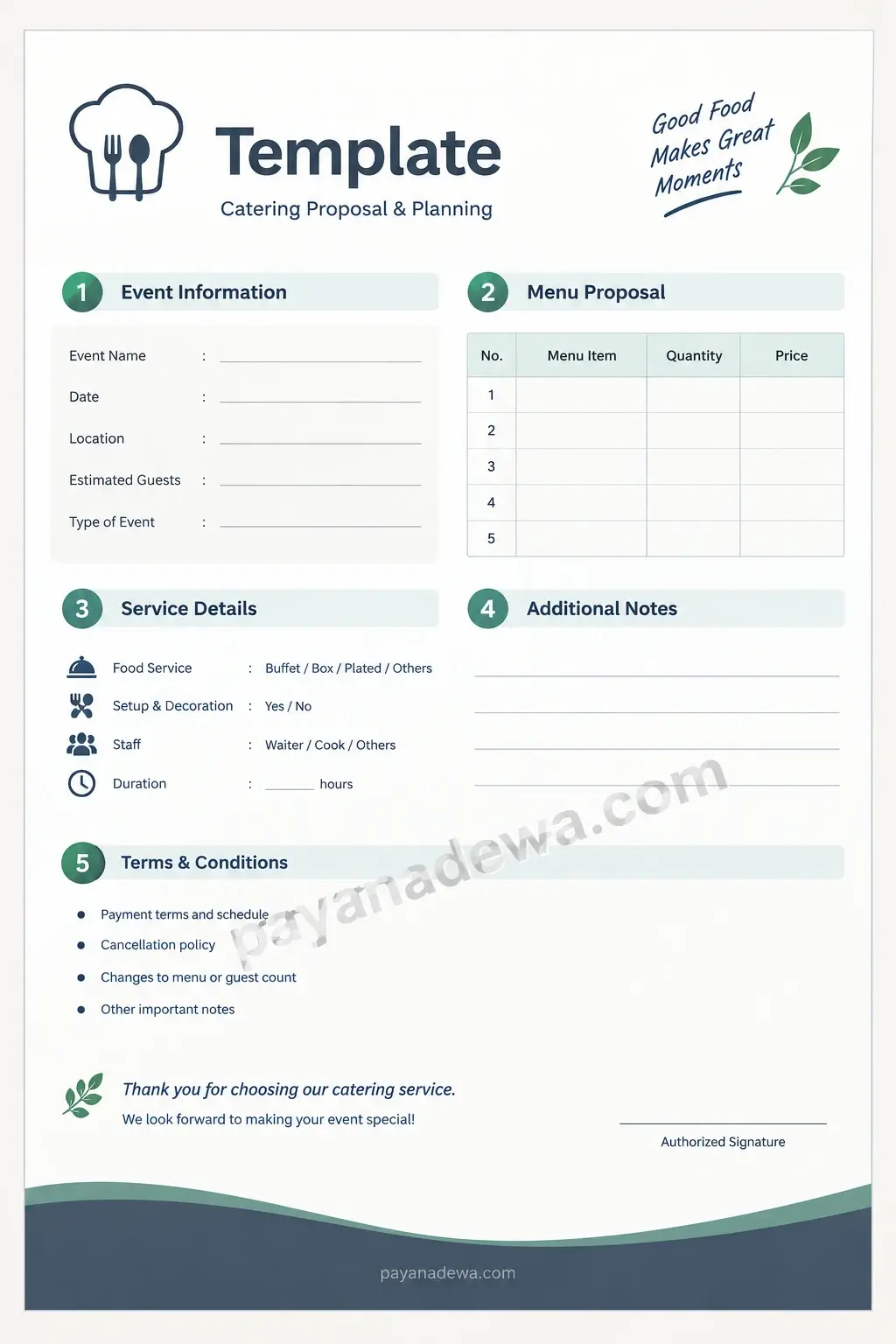
For easy organization, use a catering planning template to record event information, menu selections, estimated quantities, service details, special requests, and agreed terms.
What to Look for in a Professional Caterer
The right catering provider should deliver more than appealing food. Reliability, communication, safe food handling, and transparent pricing are equally important.
- Relevant experience: Look for experience with events similar in size and style to yours.
- Food quality: Review sample menus, ingredient information, and tasting options.
- Food safety: Ask about hygiene practices, temperature control, allergen management, and applicable local requirements.
- Clear communication: Choose a provider who answers questions and documents important arrangements.
- Flexible options: Confirm whether the caterer can accommodate reasonable menu changes and dietary needs.
- Transparent contracts: Make sure fees, deadlines, responsibilities, and cancellation terms are clearly explained.
References and independent reviews can provide useful context, but consider them alongside written terms and direct communication. A professional proposal should explain exactly what you will receive and who is responsible for each part of the service.
Common Catering Mistakes to Avoid
Even a well-planned event can encounter problems when important details are overlooked. Avoid these common mistakes to make your catering arrangements more dependable.
- Underestimating guest numbers: Confirm attendance and establish a deadline for the final headcount.
- Ignoring dietary needs: Collect relevant information early and agree on appropriate alternatives.
- Choosing a menu without considering logistics: Match dishes to transportation time, available equipment, and serving conditions.
- Overlooking extra charges: Review the full quote rather than comparing food prices alone.
- Booking too late: Contact suitable providers early, especially during busy event seasons.
- Failing to confirm responsibilities: Document delivery, setup, serving, cleanup, and contingency arrangements.
Good communication helps prevent misunderstandings. Keep the proposal, contract, final menu, payment records, and important contact details together so you can find them quickly when needed.
Conclusion
Catering can transform an ordinary gathering into a well-organized and enjoyable event. By understanding the available catering services, choosing an appropriate menu, comparing transparent quotes, and planning logistics carefully, you can create a positive dining experience for your guests.
Start by defining your event requirements, setting a realistic budget, and selecting a reliable caterer. Confirm dietary needs, review the agreement, and check every important detail before the event. A simple catering planning template can help you keep the process organized from the first menu discussion to the final service arrangements.
Whether you are arranging a business lunch, wedding reception, birthday celebration, or family gathering, thoughtful planning makes it easier to serve good food and give your guests an experience worth remembering.