A professional catering letterhead helps your business make a strong first impression. Whether you send catering proposals, event quotations, invoices, or business correspondence, a well-designed letterhead communicates professionalism and builds trust with potential clients. It also gives your brand a consistent appearance across printed documents and digital communications.
If you are looking for a catering letterhead template, this guide explains what to include, how to choose the right design, and how to create stationery that reflects your catering services. You will also discover practical formatting tips to help your business stand out in a competitive market.
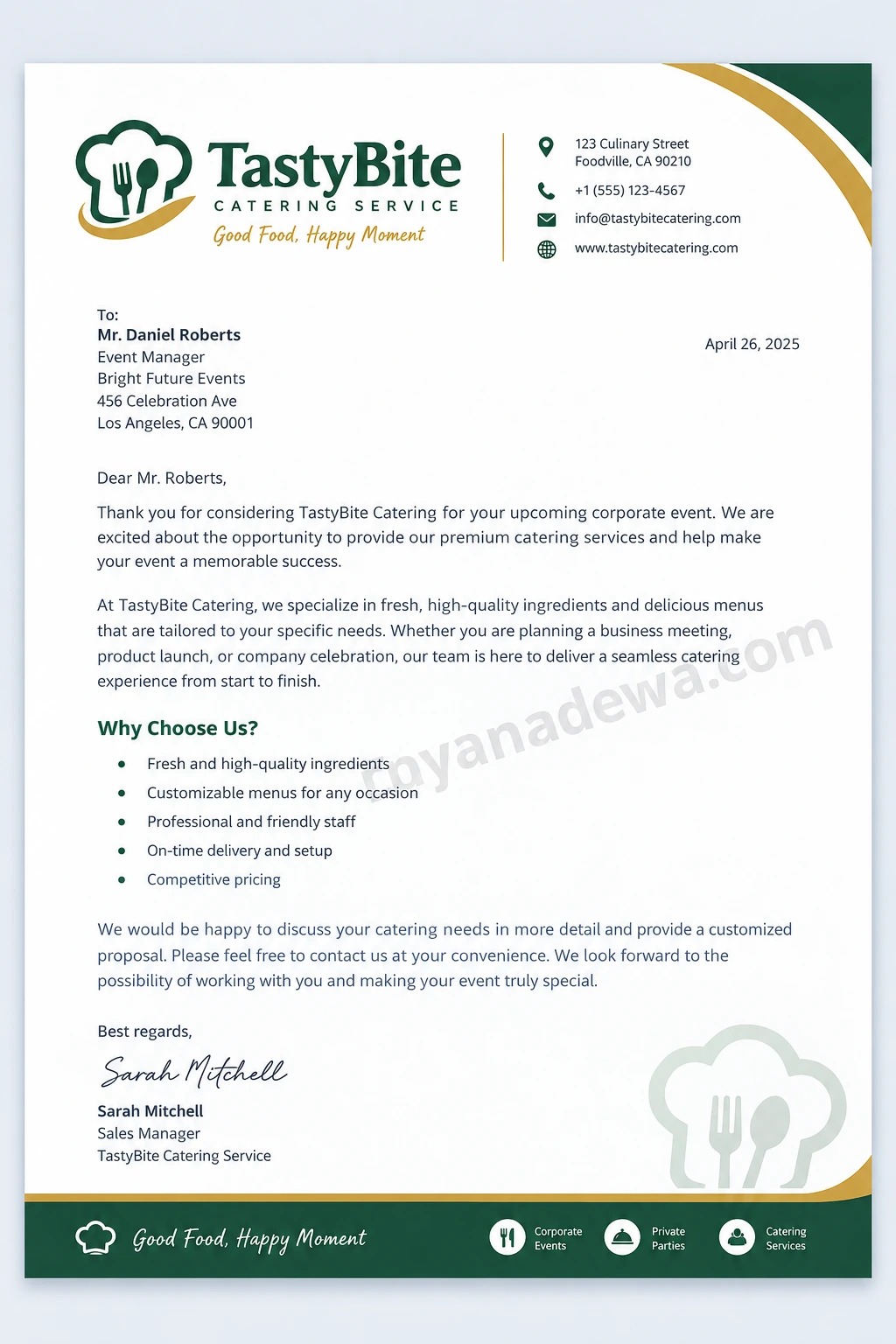
What Is a Catering Letterhead?
A catering letterhead is a branded document header used by catering companies, food service businesses, event caterers, and private chefs. It typically displays the business name, logo, contact information, and other identifying details at the top of a letter or document.
Unlike a plain document, a customized letterhead presents your business in a polished and recognizable way. It can be used for formal client communication, wedding catering proposals, corporate event quotations, menu presentations, and supplier correspondence.
A well-designed letterhead does more than make a document look attractive. It helps customers identify your business, reinforces your brand identity, and creates a consistent experience from the first inquiry to the final event.
Why Does Your Catering Business Need a Professional Letterhead?
Professional stationery can make a meaningful difference in how customers perceive your catering services. When clients compare several businesses, small details can influence their confidence in your ability to deliver a high-quality experience.
Build a Strong Brand Identity
Your logo, colors, typography, and business name help customers recognize your company. Using the same visual elements across your letterhead, website, menus, and invoices creates a consistent brand identity.
Establish Trust With Potential Clients
Customers often expect professional communication when booking catering for weddings, business meetings, private parties, and other important occasions. A well-organized letterhead makes your proposals and quotations appear more credible and carefully prepared.
Improve Business Communication
A catering letterhead provides a convenient place for your business contact details. Clients can quickly find your phone number, email address, website, or business location without searching through previous messages.
Make Your Documents More Memorable
A distinctive design helps your correspondence stand out from generic emails and plain documents. Consistent branding also makes it easier for customers to remember your business when they need catering services again.
Essential Elements of a Catering Letterhead
Before choosing a catering company letterhead template, identify the information your customers need. The best design balances useful business details with a clean, professional appearance.
Business Name and Logo
Place your business name and logo prominently near the top of the page. Your logo might feature a chef’s hat, serving tray, plate, fork, spoon, or another symbol associated with food and hospitality. Choose a clear logo that remains recognizable when printed at a smaller size.
Contact Information
Include the details customers need to contact your business. Depending on your communication preferences, these may include:
- Business telephone number.
- Professional email address.
- Official website URL.
- Business address or service area.
- Relevant social media profile, if appropriate.
Avoid overcrowding the header with unnecessary information. If you operate from a home kitchen or serve clients at different venues, you can list your service area instead of displaying a full street address.
Brand Colors and Typography
Choose colors that match the personality of your catering business. Deep green and gold can communicate elegance and premium service, while warm beige and brown can suggest a natural, rustic style. Black and white offer a versatile option for formal business correspondence.
Use one or two easy-to-read fonts. A decorative font can work well for a logo or short slogan, but the main letter content should remain clear and readable.
Letter Body and Footer
Leave enough space beneath the header for the date, recipient information, subject line, greeting, and message. A simple footer can display your website, business slogan, or service categories without distracting readers from the main content.
Popular Catering Letterhead Template Styles
Your letterhead should reflect the type of catering experience you provide. Consider the following design approaches before selecting a template.
Elegant Catering Letterhead
An elegant design is suitable for wedding caterers, luxury dining services, and high-end private events. Use a restrained color palette, refined typography, and subtle decorative elements. Gold accents, generous white space, and a sophisticated logo can create an upscale appearance.
Modern Minimalist Letterhead
A minimalist catering letterhead uses clean lines, simple typography, and carefully arranged information. This style works particularly well for corporate catering, office lunches, and professional food service companies. Its uncluttered layout also makes documents easier to read and print.
Rustic and Organic Letterhead
Rustic designs suit farm-to-table caterers, outdoor events, local food businesses, and companies that emphasize fresh ingredients. Earthy colors, understated botanical details, and natural-looking typography can support this brand identity.
Creative and Colorful Letterhead
Bright colors and playful graphic elements may be appropriate for party catering, children’s events, food trucks, or casual buffet services. Keep the design organized so that your brand personality does not interfere with readability.
How to Create a Catering Letterhead Template
You do not need advanced graphic design skills to create attractive catering stationery. Follow these practical steps to build a template that works for everyday business communication.
Step 1: Define Your Brand Style
Decide whether your business should look elegant, modern, traditional, rustic, or playful. Use your existing logo, website, and menu design as references to maintain consistency.
Step 2: Choose a Suitable Page Size
Select a page size that matches your main audience. US Letter, measuring 8.5 by 11 inches, is common in the United States, while A4 is widely used in many other countries. Keep important text within the printer’s safe margins.
Step 3: Arrange the Header
Place the logo and business name at the top, then organize your contact details beside or beneath them. Make sure the information remains readable without taking up too much vertical space.
Step 4: Leave Room for the Message
Keep the central page area relatively uncluttered. Your letterhead should support the message rather than compete with it. Use consistent spacing for the recipient’s address, date, greeting, paragraphs, and signature.
Step 5: Add a Simple Footer
If necessary, include your website, slogan, or a short list of catering services in the footer. Decorative lines and small icons can add visual interest, but they should remain subtle.
Step 6: Save and Test the Template
Save an editable copy in a format supported by your chosen design software. Export a PDF for consistent document sharing, and use a high-quality image format such as WEBP for compatible website graphics. Before printing, check the alignment, spelling, logo quality, and contrast.
Tips for Designing a Printable Catering Letterhead
A beautiful screen design does not always produce a good printed document. Use these recommendations to ensure your catering letterhead works in both digital and print formats.
- Prioritize readability: Use a comfortable font size and sufficient contrast between text and background.
- Keep the layout balanced: Align the logo, contact details, and decorative elements consistently.
- Use high-resolution artwork: Avoid blurry logos or low-quality graphics when preparing files for print.
- Limit decorative elements: Excessive patterns, borders, and illustrations can make a letterhead look crowded.
- Consider printing costs: Large areas of dark color may consume more ink, so use colored accents strategically.
- Check grayscale output: Ensure important information remains readable when printed without color.
- Maintain editable fields: Keep names, dates, addresses, and message content easy to update.
- Proofread every detail: Verify your contact information, website address, logo, and business name before distributing the template.
What Should You Write on a Catering Business Letterhead?
A letterhead provides the visual framework for your correspondence, but the message itself should remain clear, courteous, and relevant to the recipient. The wording will depend on the purpose of the document.
Catering Proposal
When sending a proposal, introduce your catering company, summarize the client’s requirements, and explain the services you can provide. Include the proposed menu, estimated guest count, pricing, and next steps in the main document or an attached quotation.
Event Catering Quotation
For a quotation, state the event date, location, number of guests, selected menu, service fees, and applicable terms. Explain what the price includes so customers can understand the offer before confirming their booking.
Client Follow-Up Letter
After an inquiry or consultation, thank the client for their interest and confirm any agreed details. A professional follow-up should make it easy for the customer to ask questions, review the proposal, or proceed with the booking.
Business Partnership Letter
When contacting event planners, venues, suppliers, or corporate clients, explain your catering services and the value of working together. Keep the introduction concise and include a clear way to arrange a conversation.
Common Catering Letterhead Design Mistakes to Avoid
Even a visually attractive template can lose its effectiveness if it contains too much information or inconsistent formatting. Avoid these common mistakes when preparing your business stationery.
- Overcrowding the header: Too many contact details and graphics can reduce the space available for the letter.
- Using too many fonts: Multiple decorative typefaces make documents look inconsistent.
- Choosing poor color contrast: Pale text on a white background can be difficult to read.
- Stretching the logo: Always preserve the original proportions of your brand artwork.
- Ignoring mobile readability: Digital letters should remain legible on smaller screens.
- Forgetting to update details: Outdated phone numbers, websites, and addresses can create unnecessary confusion.
Frequently Asked Questions About Catering Letterhead
Can I use a free catering letterhead template?
Yes. A free catering letterhead template can provide a practical starting point for small businesses, independent caterers, and new food service companies. Customize the branding and business information, and check the template’s licensing terms before using it commercially.
What is the best format for a catering letterhead?
An editable document is useful for preparing letters and quotations, while PDF is generally suitable for sharing finished documents and preserving their layout. Website images can use formats such as WEBP, but an image alone is not a substitute for an editable letter template.
Should a catering letterhead include a menu?
Usually, a letterhead should focus on your branding and contact information. A menu is better presented as a separate attachment or branded document, especially when it contains multiple dishes, prices, and package options.
Can I use the same letterhead for invoices and proposals?
Yes. You can use the same branding across invoices, proposals, quotations, and formal letters. However, each document should have its own appropriate structure and required information.
How can I make my catering letterhead look professional?
Use a clear logo, consistent brand colors, readable typography, accurate contact information, and generous white space. Test the design on screen and in print to make sure it remains attractive and practical.
Conclusion
A professional catering letterhead is a simple but valuable tool for building brand recognition and improving business communication. With the right logo, colors, contact details, and page layout, your stationery can help present your catering company as organized, trustworthy, and attentive to detail.
Whether you operate a wedding catering service, a corporate food business, or a small event catering company, choose a template that reflects your brand and supports your everyday workflow. Keep the design readable, test it before printing, and use consistent branding across your proposals, quotations, invoices, and client correspondence. These practical steps will help you create a catering letterhead that looks professional and serves your business well.