A well-organized stationery catalog helps you discover the right products for school, work, business, and creative projects. From everyday pens and notebooks to office organizers and art materials, a comprehensive catalog makes it easier to compare products and choose supplies that suit your needs.
Whether you are a student, teacher, office worker, business owner, or stationery enthusiast, finding the right supplies can improve productivity and organization. However, choosing from hundreds of available products can sometimes feel overwhelming.
This guide explores the essential categories in a stationery catalog, explains how to choose quality products, and shares practical tips for finding affordable stationery supplies. You will also learn how businesses can organize an effective product catalog for customers.
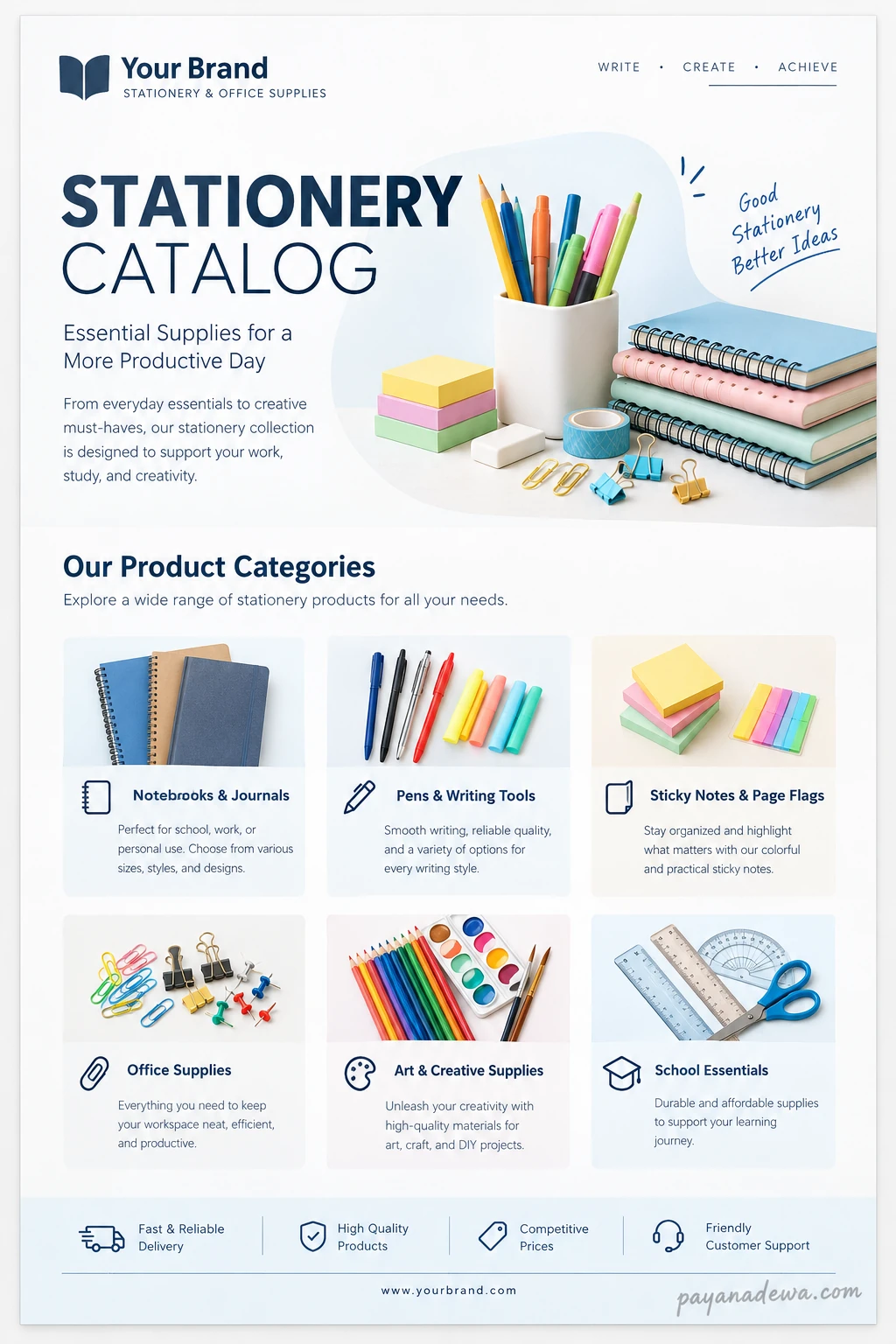
What Is a Stationery Catalog?
A stationery catalog is an organized collection of stationery products displayed in a printed document, downloadable PDF, or online store. It allows customers to browse available items, review product descriptions, compare features, and find suitable supplies without searching through unrelated products.
A typical stationery product catalog includes product names, photographs, descriptions, sizes, prices, and ordering information. Depending on the supplier, it may also contain product codes, brand details, bulk discounts, and delivery information.
For retailers and wholesalers, a catalog is an effective tool for presenting products and attracting potential buyers. For individual customers, it provides a convenient way to identify essential supplies and plan purchases.
Today, many businesses use digital stationery catalogs because they are easy to update and accessible from computers, tablets, and smartphones. Printed catalogs remain useful for sales meetings, school supply planning, and customers who prefer physical product references.
Essential Categories in a Stationery Catalog
A useful stationery catalog organizes products into clear categories. This structure makes browsing easier and helps customers quickly identify the supplies they need.
1. Notebooks, Journals, and Paper Products
Paper products are essential for taking notes, planning schedules, recording information, and completing everyday tasks. They are widely used in schools, offices, homes, and creative workspaces.
- Spiral notebooks and composition books.
- Personal journals and hardcover notebooks.
- Loose-leaf paper and refill sheets.
- Sticky notes and memo pads.
- Printer paper and copy paper.
- Planners, diaries, and calendars.
- Sketchbooks and specialty paper.
When choosing paper products, consider the paper size, thickness, binding, and number of pages. Students may prefer lightweight notebooks for daily lessons, while professionals might choose hardcover journals for meetings and long-term reference.
2. Pens, Pencils, and Writing Instruments
Writing instruments are among the most frequently purchased items in any stationery catalog. Although many pens and pencils serve similar purposes, their design and performance can vary significantly.
- Ballpoint pens and gel pens.
- Fountain pens and rollerball pens.
- Mechanical pencils and wooden pencils.
- Highlighters and permanent markers.
- Whiteboard markers and correction pens.
- Erasers, sharpeners, and pencil leads.
For everyday writing, look for comfortable grips, consistent ink flow, and reliable performance. Students often benefit from affordable multipacks, while professionals may prefer premium pens for frequent writing and business meetings.
3. Office Supplies and Desk Accessories
Office stationery supports daily administrative tasks and helps maintain an organized workspace. Simple accessories can make document handling, filing, and desk management more efficient.
- Staplers, staples, and staple removers.
- Paper clips, binder clips, and push pins.
- Folders, binders, and document wallets.
- Scissors, rulers, and adhesive tape.
- Desk organizers and storage trays.
- Envelopes, labels, and filing supplies.
When selecting office accessories, prioritize durability, practicality, and ease of use. For busy workplaces, sturdy folders and reliable staplers may provide better long-term value than cheaper products that need frequent replacement.
4. Art and Creative Stationery
Creative stationery supplies help artists, students, designers, and hobbyists express their ideas. A dedicated catalog category allows customers to find materials suitable for drawing, painting, crafting, and other creative activities.
- Colored pencils and sketching pencils.
- Watercolor paints and paintbrushes.
- Drawing pads and mixed-media paper.
- Markers, crayons, and pastels.
- Decorative tapes and craft scissors.
- Glue sticks and basic craft materials.
Before buying creative supplies, consider your experience level and the type of project you plan to complete. Beginners may prefer starter kits, while experienced artists often choose individual products based on their preferred techniques and materials.
5. School and Educational Supplies
School stationery helps students prepare for lessons, complete assignments, and keep their learning materials organized. Parents and teachers can use a stationery catalog to create shopping lists before the school term begins.
- Exercise books and subject notebooks.
- Pencil cases and school bags.
- Rulers, protractors, and geometry sets.
- Glue, scissors, and coloring materials.
- Flashcards and revision cards.
- Folders and assignment organizers.
For school purchases, look for age-appropriate designs, durable materials, and practical features. Buying essential supplies together can also help families save time and avoid purchasing duplicate items.
How to Choose the Best Stationery Products
A large selection of stationery is useful only when you know which products meet your needs. Before making a purchase, evaluate the intended purpose, quality, price, and long-term usefulness of each item.
Identify Your Needs
Start by listing the tasks you perform regularly. Office workers may need folders, pens, and filing accessories, whereas students often require notebooks, pencils, and geometry tools. Artists may prioritize sketchbooks, colored pencils, and specialized paper.
Once you understand your requirements, use the stationery catalog to find suitable products. This simple step helps you avoid unnecessary purchases and focus on essential supplies.
Compare Quality and Durability
Product quality influences both performance and replacement costs. A durable binder can last through multiple projects, while a comfortable pen can make long writing sessions more enjoyable.
Check product specifications, materials, and customer reviews when available. If you are purchasing supplies for a school or business, test frequently used items before ordering large quantities.
Set a Realistic Budget
Stationery prices depend on product type, material, brand, and package size. Therefore, compare the cost per item instead of focusing only on the total package price.
Multipacks may offer savings on frequently used supplies. However, bulk purchases are not always economical if the items are rarely needed or may remain unused.
Consider Eco-Friendly Options
Sustainable stationery is worth considering if you want to reduce waste. Recycled paper, refillable pens, reusable notebooks, and durable storage products can support more responsible purchasing habits.
Read product descriptions carefully before choosing environmentally friendly alternatives. The best option is one that meets your needs, performs reliably, and can be used consistently.
Benefits of Using a Stationery Product Catalog
A well-designed stationery catalog offers several advantages for individual shoppers, retailers, schools, and businesses.
- Easy product discovery: Organized categories help customers find specific supplies quickly.
- Convenient comparison: Product descriptions make it easier to compare sizes, features, and prices.
- Better purchasing decisions: Accurate information helps customers select suitable products.
- Improved inventory management: Businesses can organize product listings and monitor stock levels.
- Simpler bulk ordering: Schools and offices can prepare supply lists and request quotations.
- Professional presentation: Consistent layouts and clear product images create a more trustworthy shopping experience.
For online retailers, a digital catalog can also include search filters, product links, shopping carts, and checkout options. These features help customers move from browsing to purchasing with fewer steps.
Tips for Creating an Effective Stationery Catalog
If you operate a stationery store or supply business, your catalog should be attractive, informative, and easy to navigate. The following practices can help you create a better experience for potential customers.
Use Clear Product Images
Choose well-lit product photographs with clean backgrounds. Show important details, such as colors, dimensions, packaging, and textures, whenever they affect purchasing decisions.
Keep image quality consistent throughout the catalog. This creates a professional appearance and helps customers compare similar products more easily.
Write Useful Product Descriptions
Every product description should explain what the item is, how it is used, and which features make it suitable for a particular purpose.
For example, instead of describing an item simply as a quality notebook, include its available size, page count, binding style, and paper type when that information is available. Specific details make product comparisons more meaningful.
Organize Products into Logical Categories
Group related items together and use familiar category names. Separate writing instruments, paper products, office accessories, school supplies, and creative materials to simplify navigation.
Avoid creating too many overlapping categories. A clear structure helps customers understand where to look without browsing the same products in several sections.
Display Accurate Prices and Product Details
Keep prices, product codes, stock information, and specifications accurate. If prices vary according to order quantity, explain the applicable terms clearly.
For wholesale stationery catalogs, include a straightforward process for requesting bulk quotations. Clear purchasing information can reduce confusion and make repeat orders easier.
Make the Catalog Mobile-Friendly
Many customers browse stationery products on smartphones. For an online catalog, use readable text, responsive images, clear navigation, and fast-loading pages.
If you offer a printable PDF, ensure that the text remains readable on smaller screens and when printed. A simple layout with sufficient spacing usually works better than a crowded design.
Stationery Shopping Checklist for Everyday Needs
A shopping checklist helps you prepare for school, office work, or personal projects without overspending. Use the following list as a starting point and adjust it to your requirements.
- Writing tools: Pens, pencils, erasers, sharpeners, and highlighters.
- Paper products: Notebooks, printer paper, sticky notes, and memo pads.
- Organization: Folders, binders, labels, and desk organizers.
- Office tools: Scissors, rulers, staplers, and adhesive tape.
- Creative materials: Colored pencils, markers, sketchbooks, and paints.
- Storage solutions: Pencil cases, document boxes, and supply containers.
Before purchasing anything, check the supplies you already own. Separate essential items from optional extras, then compare suitable products in your stationery catalog. This approach makes budgeting easier and reduces unnecessary spending.
Digital vs. Printed Stationery Catalogs
Digital and printed stationery catalogs both serve useful purposes. However, the best format depends on how customers browse products and place orders.
Advantages of a Digital Catalog
A digital stationery catalog can be updated quickly when prices, products, or stock levels change. Customers can browse from almost anywhere, search for specific items, and follow links to product pages.
Digital catalogs can also include interactive filters, downloadable product sheets, and direct ordering features. These functions are especially useful for online stores and wholesale suppliers.
Advantages of a Printed Catalog
A printed catalog provides a physical reference for sales meetings, purchasing discussions, and offline planning. Customers can mark products, compare options on paper, and review selections without using a device.
Printed catalogs are less convenient to update, so businesses should review product details before printing new editions. A combination of printed and digital formats can offer greater flexibility.
Frequently Asked Questions About Stationery Catalogs
What products are included in a stationery catalog?
A typical stationery catalog includes notebooks, paper, pens, pencils, office accessories, school supplies, filing products, and creative materials. Some suppliers also offer printer consumables, packaging materials, and specialized business stationery.
How can I find affordable stationery supplies?
Compare prices, package quantities, product quality, and shipping costs. Multipacks can save money on frequently used items, but always check the product specifications before purchasing in bulk.
Can businesses use a stationery catalog for bulk orders?
Yes. Businesses can use a stationery catalog to compare suppliers, standardize office supplies, prepare purchase orders, and request wholesale pricing. Product codes and accurate descriptions make repeat orders easier to manage.
Is a digital stationery catalog better than a printed catalog?
Neither format is ideal for every situation. Digital catalogs are easier to search and update, while printed catalogs provide convenient physical references. The right choice depends on customer preferences, budget, and ordering requirements.
How often should a stationery catalog be updated?
Update a catalog whenever important information changes, including product availability, prices, specifications, or discontinued items. Online catalogs can be updated as needed, while printed editions should be reviewed before each new printing.
Conclusion
A comprehensive stationery catalog makes it easier to discover office supplies, school essentials, writing instruments, paper products, and creative materials. By organizing items into clear categories and providing accurate descriptions, a catalog helps customers compare options and make informed decisions.
Whether you are preparing a school shopping list, organizing an office, managing a stationery store, or looking for art materials, start with your needs and budget. Compare product quality, review specifications, and choose supplies that offer practical value.
With a well-organized stationery catalog, finding everyday essentials becomes simpler and more efficient. Use these tips to plan your purchases, improve your workspace, and find the stationery products that support productivity and creativity.