A successful career rarely happens by accident. Whether you are a student preparing for your first job, a professional looking for a promotion, or someone considering a career change, having a clear career plan can help you make informed decisions and move toward your goals with confidence. Instead of wondering what to do next, you can follow a practical roadmap that connects your interests, skills, and ambitions with achievable actions.
A career plan is more than a list of job titles you hope to achieve. It is a structured approach to understanding your strengths, identifying opportunities, developing relevant skills, and measuring your progress over time. Although your professional interests may change, a well-designed plan gives you direction while allowing you to adapt to new circumstances.
In this guide, you will learn what a career plan is, why it matters, how to create one step by step, and how to use a career planning template to organize your professional goals.
What Is a Career Plan?
A career plan is a written strategy that outlines your professional goals and the actions required to achieve them. It typically includes your current position, desired career path, skill development needs, target dates, and milestones for measuring progress.
For example, an entry-level marketing assistant might create a three-year career plan to become a marketing specialist. The plan could include completing a digital marketing course, managing a small campaign, learning analytics tools, and applying for positions with greater responsibility.
A career plan can cover a few months, several years, or an entire professional journey. The most effective approach is to establish a long-term vision and break it into smaller, manageable steps.
Why Is Career Planning Important?
Career planning helps you take responsibility for your professional development instead of relying entirely on circumstances or opportunities that happen to appear. It also makes it easier to evaluate whether your current activities support your long-term ambitions.
1. Provides Clear Direction
When you understand what you want to achieve, you can prioritize opportunities that support your goals. A clear career direction helps you decide which projects to accept, which skills to learn, and which positions to pursue.
2. Identifies Skill Gaps
Many career goals require qualifications, technical knowledge, or interpersonal skills that you have not yet developed. Career planning helps you identify these gaps and create a realistic learning strategy.
3. Improves Motivation and Confidence
Large professional ambitions can feel overwhelming when you do not know where to begin. Dividing them into smaller milestones makes progress easier to recognize and can help you maintain motivation during challenging periods.
4. Supports Better Career Decisions
A career plan provides a framework for comparing job offers, further education, promotions, and career changes. You can assess each opportunity according to your priorities, values, financial needs, and long-term objectives.
5. Encourages Long-Term Growth
Industries, technologies, and workplace expectations continue to evolve. Regular career planning encourages you to update your knowledge, expand your professional network, and remain prepared for new opportunities.
How to Create a Career Plan Step by Step
Creating an effective career development plan does not require complicated software or extensive paperwork. Start with a few essential steps, then refine your plan as your experience and priorities develop.
Step 1: Assess Your Interests, Strengths, and Values
Begin by evaluating your current abilities and the type of work you find meaningful. Think about the activities that energize you, the tasks you perform well, and the working conditions in which you are most productive.
Consider the following questions:
- Which subjects, activities, or professional tasks interest me most?
- What technical skills and transferable skills do I already possess?
- Do I prefer independent work, collaboration, leadership, or problem-solving?
- Which values matter most to me, such as flexibility, stability, creativity, or meaningful impact?
- What kind of lifestyle and work environment do I want?
You can also review previous projects, performance feedback, academic experiences, and achievements to identify recurring strengths. This self-assessment creates a useful foundation for choosing a realistic career direction.
Step 2: Define Your Career Vision
Your career vision describes what you want your professional life to look like in the future. It does not need to identify every detail of your working life. Instead, focus on the responsibilities, industry, lifestyle, and level of expertise you would like to achieve.
For example, your vision might be to become a skilled software developer who leads collaborative projects, solves meaningful problems, and maintains a healthy work-life balance.
A clear vision helps you connect short-term decisions with long-term aspirations. If your goals change, you can revise your vision without treating your previous efforts as wasted progress.
Step 3: Set SMART Career Goals
Once you have a general direction, translate it into specific career goals. The SMART framework can help you make each goal more actionable. SMART goals are specific, measurable, achievable, relevant, and time-bound.
Instead of writing, “I want to improve my leadership skills,” create a more concrete objective: “I will complete a leadership course and lead at least one team project within the next six months.”
Organize your goals into two categories:
- Short-term goals: Objectives you can reasonably pursue within the next few months to two years, such as earning a certification, improving your resume, or gaining experience with a new tool.
- Long-term goals: Larger ambitions that may require three to ten years or more, such as becoming a department manager, starting a business, or entering a specialized profession.
Choose a manageable number of goals so that you can focus your time and energy on meaningful progress.
Step 4: Research Your Desired Career Path
Before committing to a particular direction, investigate the responsibilities, qualifications, working conditions, and advancement opportunities associated with your target role.
Review job descriptions, industry publications, professional associations, and reliable labor market information. Speak with people who already work in the field to learn about their experiences and the challenges they encounter.
During your research, identify common requirements such as:
- Education, licenses, or professional certifications.
- Technical skills and industry-specific knowledge.
- Communication, teamwork, and problem-solving abilities.
- Relevant work experience or a professional portfolio.
- Typical career progression and opportunities for specialization.
Understanding these requirements allows you to make better decisions about which skills to develop and which opportunities deserve your attention.
Step 5: Identify Skills You Need to Develop
Compare your current abilities with the requirements of your desired position. This comparison reveals the gaps you need to address before reaching your next career milestone.
For example, an aspiring project manager may need to strengthen budgeting, scheduling, stakeholder communication, and risk management skills. A professional pursuing a data analyst position might prioritize spreadsheet proficiency, SQL, data visualization, and statistical reasoning.
Choose learning activities that directly support your goals. These may include online courses, workshops, mentoring, volunteer projects, professional certifications, or assignments at your current workplace.
Whenever possible, combine learning with practical experience. Applying a new skill to a real project helps you demonstrate your capabilities to employers and build evidence of your progress.
Step 6: Build an Action Plan
A career goal becomes more achievable when you define the specific actions required to reach it. Your action plan should identify each task, its deadline, the resources you need, and the result you expect to produce.
For example, a professional who wants to move into a supervisory role might create this action plan:
- Month 1: Review job descriptions and identify leadership skill gaps.
- Month 2: Enroll in a relevant leadership or management course.
- Months 3–4: Volunteer to coordinate a small team project.
- Month 5: Request feedback from a manager or mentor.
- Month 6: Update the resume with measurable leadership achievements and explore suitable internal opportunities.
Adjust these steps to your schedule and circumstances. The objective is to create a plan that is challenging enough to encourage growth but realistic enough to maintain consistently.
Step 7: Set a Timeline and Track Progress
Deadlines help you turn intentions into commitments. Assign target dates to your major goals and divide longer projects into smaller milestones. A timeline also helps you recognize when a goal requires more time or a different approach.
You can track progress using a spreadsheet, calendar, notebook, or career planning template. Record completed tasks, newly acquired skills, feedback received, and challenges that need attention.
Review your progress at least once a month. For larger career goals, a quarterly review can help you evaluate results, adjust deadlines, and decide which actions should receive priority next.
Career Plan Template: What Should You Include?
A career planning template gives you a simple structure for documenting your professional direction and turning ideas into practical tasks. You can use a printable worksheet or create your own digital version.
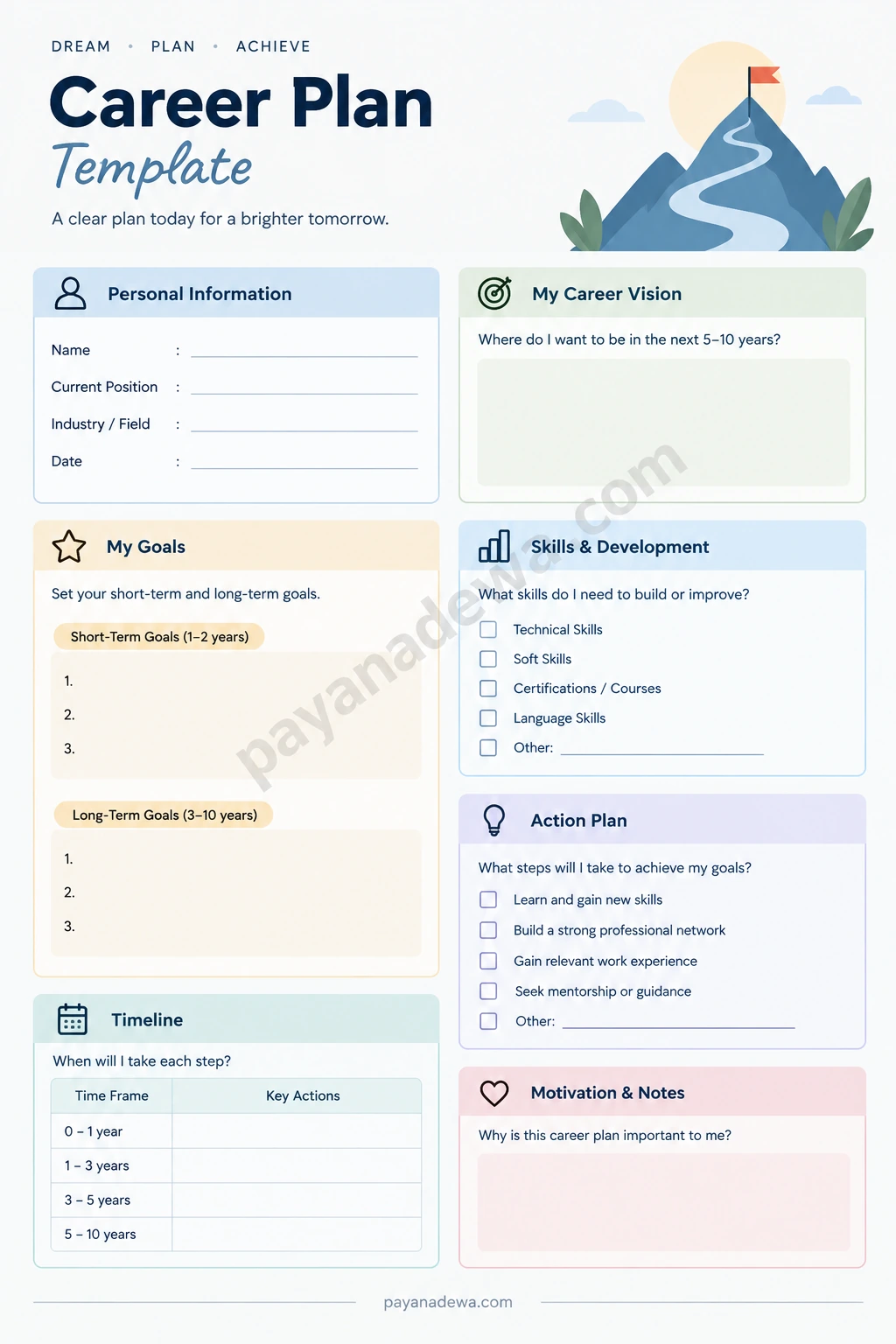
For the best results, include the following sections in your career plan template:
- Personal information: Record your name, current position, industry, and the date you created the plan.
- Career vision: Describe where you want to be professionally in the next five to ten years.
- Short-term goals: List immediate objectives that support your professional development.
- Long-term goals: Identify the major career milestones you hope to achieve.
- Skills and development: Document technical skills, communication abilities, certifications, and other competencies you need to strengthen.
- Action plan: Specify the tasks, resources, and activities required to make progress.
- Timeline: Assign target dates to your goals and important milestones.
- Motivation and notes: Write down why your career goals matter and record useful observations or lessons.
Keep your template simple enough to update regularly. A practical plan that you review consistently is more valuable than a detailed document that you rarely use.
Career Plan Examples for Different Professional Stages
Your ideal career strategy depends on your experience, interests, and current responsibilities. The following examples demonstrate how career planning can work in different situations.
Career Plan for Students and Recent Graduates
A student may want to transition from education into a full-time position in a chosen industry. The immediate priorities could include gaining practical experience, developing job-ready skills, and building professional connections.
- Short-term goal: Complete an internship or relevant practical project within six months.
- Development activity: Improve communication skills and learn industry-standard software.
- Long-term goal: Secure an entry-level position and develop expertise in the chosen field within two years.
Career Plan for Working Professionals
An experienced employee may want to earn a promotion, increase their responsibilities, or move into a specialized role. Their plan should focus on measurable achievements and the capabilities expected at the next level.
- Short-term goal: Identify promotion requirements and discuss development opportunities with a manager.
- Development activity: Lead a project, strengthen relevant technical skills, and seek constructive feedback.
- Long-term goal: Qualify for a senior or leadership position within three years.
Career Plan for a Career Change
Someone changing careers may need to transfer existing skills into a different industry while developing new qualifications. A gradual transition can help reduce uncertainty and protect financial stability.
- Short-term goal: Research the target industry and speak with at least three professionals in the field.
- Development activity: Complete a foundational course and build a portfolio of relevant projects.
- Long-term goal: Apply for suitable entry-level or transitional positions after meeting essential job requirements.
These examples are starting points rather than fixed formulas. Adjust your goals according to your circumstances, resources, and the opportunities available in your chosen field.
Common Career Planning Mistakes to Avoid
Even a well-intentioned career plan can become ineffective if it is too rigid or disconnected from real opportunities. Watch out for these common mistakes:
- Setting vague goals: Replace general ambitions with specific outcomes and measurable milestones.
- Ignoring skill gaps: Research job requirements before deciding which qualifications or courses to pursue.
- Creating unrealistic deadlines: Account for your existing responsibilities, finances, and available learning time.
- Focusing only on job titles: Consider responsibilities, working conditions, personal values, and opportunities for growth.
- Neglecting professional relationships: Build genuine connections with colleagues, mentors, and people in your industry.
- Refusing to adapt: Update your plan when your priorities, interests, or circumstances change.
- Failing to review progress: Schedule regular check-ins so that unfinished tasks do not disappear from your attention.
Remember that a career plan is a flexible guide, not a guarantee of a particular outcome. Unexpected opportunities and setbacks are normal parts of professional development.
How Often Should You Review Your Career Plan?
Review your career plan monthly to monitor smaller tasks and quarterly to assess your overall progress. You should also revisit it whenever you experience a major change, such as a new job, promotion, relocation, industry shift, or change in personal priorities.
During each review, ask yourself whether your goals remain relevant, which actions have produced results, what obstacles are slowing you down, and what you should do next.
If you consistently miss a deadline, determine whether the problem is insufficient time, a lack of resources, an unrealistic target, or a need for additional support. Revise your approach instead of automatically abandoning the goal.
Career growth is rarely a perfectly straight path. Regular reflection helps you remain focused while making room for better opportunities and changing ambitions.
Conclusion
A career plan helps you turn professional ambitions into achievable goals by combining self-assessment, career research, skill development, and consistent action. Whether you are starting your first job, preparing for a promotion, or exploring a new industry, a structured plan can make your next steps clearer and more manageable.
Start by defining your career vision, setting SMART goals, identifying skill gaps, and creating a realistic timeline. Use a career plan template to organize your ideas, track milestones, and review your progress regularly. Most importantly, remain flexible as you gain experience and discover new opportunities.
You do not need to have your entire future figured out before you begin. Choose one meaningful career goal, identify the first action you can take today, and build your professional future one step at a time.