Whether you want to learn about carnival traditions, attend a local festival, or organize your own event, understanding what makes a carnival special can help you make the most of the experience. This guide explores the meaning of carnival, popular activities, cultural celebrations, and practical tips for planning a successful carnival event.
What Is a Carnival?
A carnival is a festive gathering that typically features entertainment, games, food stalls, performances, and attractions. Depending on the location and occasion, a carnival can be a large public festival, a traveling fair, a cultural celebration, or a small community event.
The word also refers to celebrations that take place before Lent in several Christian traditions. Some of the world’s best-known carnival festivals include elaborate costumes, dancing, live music, and colorful street parades. Other carnivals focus on family entertainment, fundraising, seasonal festivities, or neighborhood activities.
Although carnival traditions vary around the world, they often share several characteristics:
- Entertainment: Live music, dancing, theatrical performances, and interactive shows.
- Games and attractions: Ring tosses, prize booths, rides, and skill-based challenges.
- Food and refreshments: Sweet treats, savory snacks, and regional specialties.
- Decorations: Bright banners, balloons, themed displays, and colorful lights.
- Community participation: Opportunities for families, friends, schools, and local organizations to celebrate together.
Popular Types of Carnival Celebrations
Carnivals take many forms, and each offers a different experience. Choosing the right type of carnival depends on the audience, cultural background, budget, and purpose of the celebration.
Traditional Cultural Carnivals
Cultural carnivals celebrate local heritage through music, costumes, dance, food, and public performances. The Carnival in Rio de Janeiro, for example, is internationally recognized for samba school parades, elaborate costumes, and large-scale festivities. Venice Carnival is famous for its distinctive masks and historical atmosphere, while Trinidad and Tobago Carnival showcases vibrant costumes, calypso, soca music, and energetic street celebrations.
These festivals demonstrate how carnival traditions can reflect a community’s history, creativity, and cultural identity. Visitors should research local customs, event schedules, and appropriate behavior before attending a cultural celebration.
School and Community Carnivals
School carnivals and community fairs are popular ways to bring people together in a welcoming environment. They often include simple games, student performances, food stands, craft tables, raffles where permitted, and activities for children.
These events can also support fundraising goals. Schools may use carnival ticket sales, sponsored activities, or food booths to raise money for educational programs, playground improvements, and extracurricular projects.
Traveling Carnivals and Fairgrounds
Traveling carnivals bring temporary attractions to different towns and cities. They may feature amusement rides, midway games, food vendors, prize booths, and live entertainment. Fairgrounds often provide a similar atmosphere, sometimes combining carnival attractions with agricultural exhibitions, competitions, and local product displays.
Before visiting, check operating hours, ticket prices, ride restrictions, accessibility information, and weather updates. Planning ahead can help you avoid long queues and make better use of your time.
Fun Carnival Activities and Attractions
Choosing engaging activities is one of the most important parts of creating a memorable carnival. A good event offers a mixture of entertainment, interactive games, creative experiences, and relaxing spaces.
Classic Carnival Games
Traditional carnival games are easy to understand and can accommodate different age groups. Consider adding these options to your event:
- Ring toss: Participants throw rings toward bottles, pegs, or designated targets.
- Beanbag toss: Players aim beanbags at numbered holes to earn points.
- Duck pond game: Children select floating ducks to reveal a color, number, or prize.
- Lucky dip: Participants choose a wrapped item or mystery prize.
- Basketball challenge: Guests try to score a basket within a set number of attempts.
- Treasure hunt: Visitors follow clues to discover hidden objects around the venue.
Keep rules simple, display instructions clearly, and offer prizes that suit the intended audience. For inclusive participation, provide games with different difficulty levels and options for visitors with varying abilities.
Creative and Interactive Attractions
Not every carnival activity needs to involve competition. Craft stations, face painting, temporary tattoo booths, balloon art, photo backdrops, and costume contests can appeal to visitors who prefer creative experiences.
For school or family events, consider a coloring corner, friendship bracelet workshop, or simple science demonstration. These activities encourage participation while giving younger guests a break from noisy games and busy attractions.
Music, Performances, and Entertainment
Live entertainment adds energy to a carnival. Depending on the venue and budget, organizers can schedule local musicians, dance groups, magicians, puppeteers, or short talent performances.
Prepare a performance timetable and allow enough space between attractions to prevent crowding. Sound levels should remain comfortable, especially near quiet areas and activities designed for young children.
How to Plan a Successful Carnival Event
Organizing a carnival requires thoughtful preparation, clear responsibilities, and realistic budgeting. A written plan helps keep the event organized and makes it easier to identify problems before they occur.
1. Define Your Goals and Audience
Start by deciding why you are organizing the carnival. Your goal might be to raise funds, celebrate a school anniversary, promote a business, support a charity, or create a neighborhood gathering.
Identify your target audience, estimate attendance, and consider the needs of families, children, older adults, and visitors with disabilities. These decisions will guide your choice of activities, venue, schedule, and budget.
2. Choose a Suitable Venue and Date
Select a location that can accommodate your expected crowd, activity stations, food vendors, equipment, and emergency access. Check whether the venue has accessible entrances, suitable restrooms, reliable electricity, and adequate parking or public transport connections.
Compare potential dates with local holidays, school calendars, and competing events. For outdoor carnivals, prepare a weather contingency plan that identifies sheltered areas or an alternative date.
3. Create a Realistic Budget
List anticipated expenses before purchasing supplies or confirming vendors. Your budget may include:
- Venue rental and permits.
- Decorations, signage, and printed materials.
- Games, prizes, and activity supplies.
- Entertainment, performers, and equipment rental.
- Food service, waste collection, and cleaning.
- First aid, security, insurance, and other safety requirements.
Estimate potential income from tickets, sponsorships, vendor fees, donations, or merchandise where appropriate. Keep a record of estimated and actual costs, and reserve a contingency fund for unexpected expenses.
4. Organize Activities and Assign Responsibilities
Prepare a list of attractions and assign each one a location, operating time, equipment requirements, and responsible team member. Recruit volunteers early and explain their duties before the event begins.
Useful volunteer roles include registration, ticket sales, activity supervision, guest assistance, food service, setup, cleanup, and crowd management. Provide a contact list and a clear method for reporting problems.
5. Prepare Supplies and Safety Measures
Use a checklist to track the items required for each activity. Common supplies include tables, chairs, extension cables approved for the setting, signs, bins, stationery, prizes, first aid materials, and cleaning products.
Keep walkways clear and establish visible entrances, exits, and emergency routes. Use qualified operators for amusement rides and follow applicable safety regulations. If food is served, arrange appropriate food handling, handwashing, temperature control, and allergen information.
For events involving children, establish supervision procedures, lost-child arrangements, and clear pickup rules. Make sure volunteers know whom to contact if an accident or other emergency occurs.
6. Promote the Carnival
Begin promoting the event several weeks in advance when possible. Share the date, location, opening hours, ticket information, featured activities, and accessibility details through school newsletters, community groups, posters, email, and social media.
Use clear images and concise announcements to help people understand what the event offers. Send reminders shortly before the carnival and communicate any changes caused by weather or other unexpected circumstances.
Using a Carnival Planning Template
A carnival planning template can turn a long list of tasks into a manageable event plan. Instead of keeping information in separate notes, organizers can use one printable worksheet to track important details and monitor progress.
A useful carnival template should include the following sections:
- Event overview: Event name, date, venue, and estimated attendance.
- Goals and objectives: Main priorities and measurable outcomes.
- Activities and attractions: Game names, performance times, and special requirements.
- Budget plan: Estimated expenses, actual costs, and total spending.
- Supplies and equipment: Materials to purchase, borrow, prepare, or check.
- Team and responsibilities: Volunteer names, assigned roles, and contact details.
- Notes and reminders: Deadlines, follow-up tasks, and important instructions.
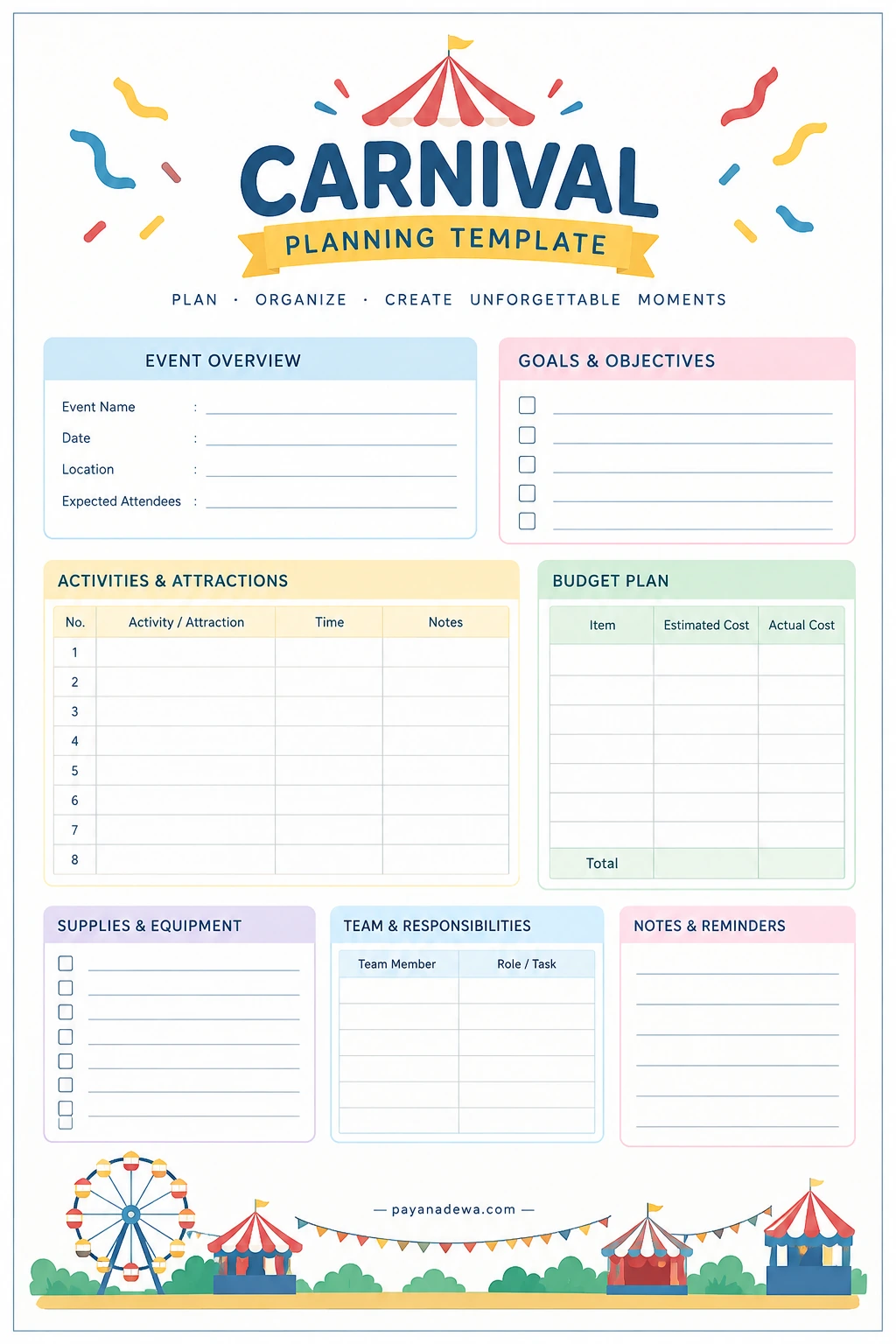
To use the template effectively, complete the event overview first, then list your activities and estimate their costs. Assign a person to each major task and update the worksheet as plans change. Before opening day, review every section to confirm that supplies, schedules, staffing, and safety arrangements are ready.
Practical Tips for a Better Carnival Experience
Small details can make a significant difference to the comfort and enjoyment of guests. Use these practical tips when attending or organizing a carnival.
- Plan your schedule: Check opening times and prioritize attractions that may have long queues.
- Set a spending limit: Decide how much to spend on admission, food, games, and souvenirs.
- Dress comfortably: Choose suitable footwear and clothing for the weather and venue.
- Stay hydrated: Provide drinking water and shaded rest areas, particularly during outdoor events.
- Make the event accessible: Consider step-free routes, clear signage, seating, and alternative ways to participate.
- Reduce waste: Use clearly labeled recycling and waste stations, and avoid unnecessary single-use materials where practical.
- Collect feedback: Ask visitors and volunteers what worked well and what should improve next time.
For organizers, a short post-event review is especially valuable. Compare actual attendance and spending with your original estimates, record any incidents or delays, and document successful activities. These notes will make future carnival planning more efficient.
Frequently Asked Questions About Carnival
What is the main purpose of a carnival?
A carnival can provide entertainment, celebrate cultural traditions, strengthen community relationships, or raise funds for a cause. Its specific purpose depends on the event and the people organizing it.
What activities should a carnival include?
Popular choices include ring toss, beanbag games, craft stations, face painting, food stalls, music, performances, and photo areas. Select activities that match your audience, venue, budget, and safety requirements.
How do you plan a small carnival?
Choose a clear objective, set a budget, secure a suitable venue, select a manageable number of activities, recruit volunteers, and prepare a safety checklist. A printable carnival planning template can help you coordinate these tasks.
How can a carnival raise money?
Depending on local rules, organizers may raise funds through admission tickets, activity tickets, food sales, sponsorships, donations, or vendor fees. Track revenue and expenses carefully to understand the event’s final financial results.
What should be included in a carnival planning checklist?
Include the event date and venue, estimated attendance, activity schedule, budget, supplies, team assignments, promotion plan, emergency arrangements, and cleanup responsibilities. Review the checklist before, during, and after the event.
Conclusion
A carnival brings people together through entertainment, games, food, creativity, and shared experiences. Whether you are exploring a famous cultural festival, attending a local fair, or organizing a school carnival, thoughtful preparation can make the celebration more enjoyable and accessible.
Start with a clear goal, choose activities suited to your audience, establish a realistic budget, and give every team member defined responsibilities. Use a carnival planning template to keep schedules, supplies, and expenses organized. With practical planning and attention to safety, you can create a lively carnival that guests remember for all the right reasons.