A Training Agreement is an important document that defines the terms and conditions between an employer, organization, training provider, and trainee. It helps both parties understand their responsibilities, training expectations, costs, duration, confidentiality requirements, and what happens if the training arrangement ends early.
Whether you are an employer creating a professional development program, a business sponsoring employee training, or a trainee participating in a structured learning program, a well-written training agreement can provide clarity and reduce misunderstandings. This guide explains what a Training Agreement is, what it should include, and how to create one that is practical and easy to use.
What Is a Training Agreement?
A Training Agreement is a written agreement that establishes the rules and expectations for a training or professional development program. It can be used for employee training, internships, apprenticeships, vocational programs, certification courses, or other structured learning arrangements.
The agreement typically identifies the parties involved, describes the training program, establishes the training period, and explains the rights and obligations of everyone involved. Depending on the circumstances, it may also address training fees, reimbursement, confidentiality, intellectual property, performance expectations, and termination.
Having these details in writing gives both the organization and trainee a clear reference throughout the training period.
Why Is a Training Agreement Important?
A training arrangement can involve significant investments of time, money, resources, and professional support. A Training Agreement helps establish a common understanding before the program begins.
Some of the main benefits include:
- Clear expectations: Both parties understand what the training involves and what is expected from them.
- Defined responsibilities: The employer, trainee, and training provider can have clearly documented duties.
- Training cost clarity: The agreement can explain who pays for tuition, materials, travel, certification, or other expenses.
- Better accountability: Written requirements can encourage participants to complete assignments, attend sessions, and meet training standards.
- Reduced misunderstandings: Important terms are documented rather than relying solely on verbal discussions.
- Professional documentation: A signed agreement provides a formal record of the training arrangement.
The exact legal effect of a Training Agreement depends on the applicable law, the wording of the agreement, and the circumstances of the relationship. For important employment or financial arrangements, professional legal advice may be appropriate.
What Should a Training Agreement Include?
A useful Training Agreement should contain enough information to explain the training relationship without making the document unnecessarily complicated. The following sections are commonly useful.
1. Identification of the Parties
The agreement should clearly identify everyone participating in the arrangement. This may include the employer or organization, the trainee, and a third-party training provider.
Relevant information can include:
- Company or organization name
- Registered or business address
- Trainee’s full name and address
- Representative or supervisor name
- Training provider details, when applicable
Clearly identifying the parties helps prevent confusion about who is responsible for each obligation.
2. Training Program Details
The agreement should describe the training program in enough detail for the trainee to understand what they will be learning and how the program will be delivered.
Consider including the training title, objectives, location, delivery method, training provider, expected learning outcomes, and any required certification or assessment.
3. Training Period
The start and end dates should be clearly stated. If the training consists of multiple stages, the agreement can also specify the duration of each stage.
For ongoing programs, it may be useful to explain how extensions, schedule changes, or interruptions will be handled.
4. Responsibilities of the Employer
If an employer is sponsoring the training, the Training Agreement can outline the organization’s responsibilities. These may include providing learning resources, assigning a qualified trainer or mentor, paying agreed training costs, and providing a safe learning environment.
5. Responsibilities of the Trainee
The trainee should also understand their obligations. Common requirements include attending scheduled sessions, completing assignments, following training rules, participating actively, meeting assessment requirements, and maintaining confidentiality.
Training Agreement Costs and Reimbursement
Some training programs are completely funded by the employer, while others involve shared expenses. A Training Agreement can make financial responsibilities clear from the beginning.
Depending on the program, costs may include:
- Course or tuition fees
- Training materials and equipment
- Professional certification fees
- Travel and accommodation
- Examination or assessment fees
- Online learning platform fees
If the employer expects reimbursement under specific circumstances, those conditions should be stated clearly and reviewed for compliance with applicable employment laws. Avoid vague language that could create uncertainty about when repayment is required.
Confidentiality and Company Information
Training programs sometimes expose trainees to confidential business information, customer data, internal procedures, software, financial information, or proprietary processes.
A Training Agreement may therefore include a confidentiality section explaining how sensitive information should be handled. The clause should identify the types of information considered confidential and explain the trainee’s obligations during and, where appropriate, after the training period.
For organizations dealing with highly sensitive information, confidentiality terms should be reviewed carefully and coordinated with any separate confidentiality or non-disclosure agreement.
Training Agreement Termination
A good agreement should explain what happens if the training program ends before the scheduled completion date. Termination provisions can establish how either party may end the agreement and whether written notice is required.
Common Reasons for Early Termination
- The trainee voluntarily leaves the program.
- The trainee fails to meet important training requirements.
- The employer or organization restructures the program.
- The training provider becomes unavailable.
- The parties mutually agree to end the arrangement.
- A serious breach of the agreement occurs.
The agreement should also explain any applicable consequences, such as outstanding training costs, return of company property, completion records, or other obligations. These provisions should comply with applicable laws and employment regulations.
Training Agreement vs. Employment Contract
A Training Agreement and an employment contract are not necessarily the same document. An employment contract generally establishes the terms of an employment relationship, while a Training Agreement focuses on training, development, learning obligations, and related responsibilities.
In some situations, both documents may exist at the same time. For example, an employee may have an employment contract and separately sign a Training Agreement for a specialized certification program.
It is important to avoid using a Training Agreement as a substitute for legally required employment documentation.
How to Create a Professional Training Agreement
Step 1: Define the Purpose
Start by determining why the agreement is being created. Is it for employee development, an internship, an apprenticeship, certification training, or another learning program?
Step 2: Identify the Parties
Write the full legal or business names of the organization and trainee. Include relevant contact or address information where appropriate.
Step 3: Describe the Training
Explain the program, objectives, duration, location, provider, and expected outcomes. The description should be specific enough to avoid confusion.
Step 4: Define Responsibilities
Separate the employer’s responsibilities from the trainee’s responsibilities. Clear bullet points can make this section easier to understand.
Step 5: Address Financial Terms
If training costs are involved, specify who is responsible for each cost and explain any reimbursement conditions clearly.
Step 6: Add Termination and General Provisions
Include provisions covering termination, amendments, confidentiality, applicable law, and other terms relevant to the particular training arrangement.
Step 7: Review and Sign
Before signing, both parties should read the entire document and make sure the information is accurate. Each party should receive a copy of the signed agreement for their records.
Free Training Agreement Template
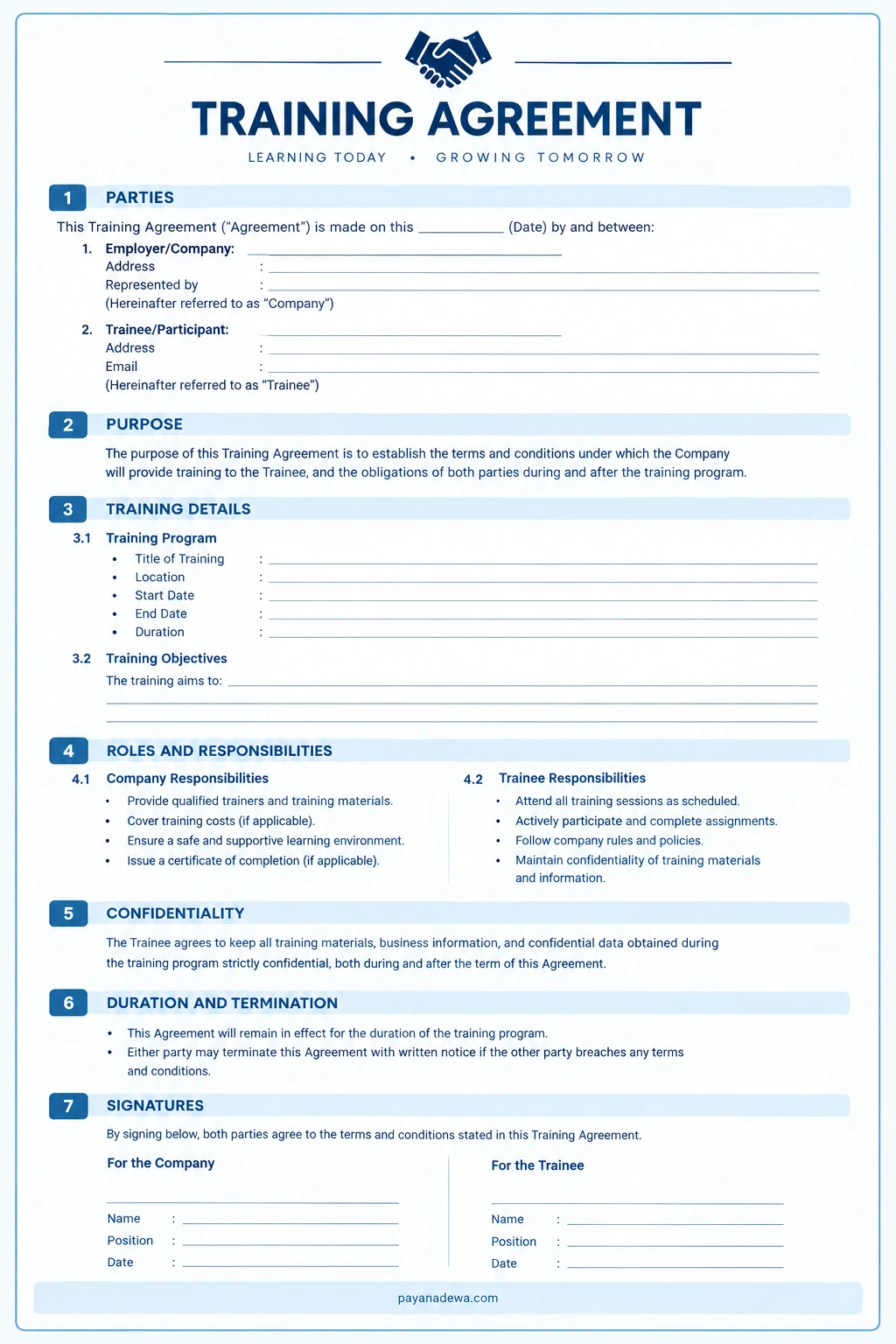
For organizations that need a simple starting point, a basic Training Agreement template can provide a useful structure. The template below is designed around common sections such as parties, training details, responsibilities, termination, general provisions, and signatures.
It can be adapted to suit employee training, professional development programs, apprenticeships, internships, or other structured training arrangements.
Tips for Writing an Effective Training Agreement
A Training Agreement does not need to be unnecessarily long to be useful. The most important goal is clarity. Consider the following practical tips when preparing your document:
- Use simple language: Avoid unnecessary legal jargon when a plain-English explanation is sufficient.
- Be specific: Include dates, responsibilities, costs, and requirements rather than relying on general statements.
- Keep responsibilities balanced: Clearly explain what the organization provides and what the trainee must do.
- Review financial clauses carefully: Make reimbursement obligations clear and ensure they comply with applicable laws.
- Include important deadlines: Specify training dates, assessment deadlines, and notice periods when relevant.
- Keep signed copies: Both parties should retain an accessible copy of the final agreement.
- Update the agreement when necessary: Significant changes should be documented in writing and approved by the relevant parties.
Common Mistakes to Avoid
Even a simple training document can create problems if important details are missing or unclear. Avoid these common mistakes:
- Leaving the training period undefined.
- Failing to identify the responsible parties.
- Using unclear language about training expenses.
- Not explaining attendance or completion requirements.
- Ignoring confidentiality obligations when sensitive information is involved.
- Including reimbursement terms without considering applicable employment laws.
- Failing to provide signature and date fields.
- Using the same template for every situation without adapting it to the actual training program.
Frequently Asked Questions About Training Agreements
Is a Training Agreement legally binding?
A Training Agreement may be legally binding when it satisfies the applicable requirements for a contract, but this depends on the jurisdiction, the parties, and the specific terms. A template should therefore be customized for the particular situation rather than treated as universal legal advice.
Who should sign a Training Agreement?
Typically, the trainee and an authorized representative of the employer or organization sign the agreement. A training provider may also sign when it is a formal party to the arrangement.
Can a Training Agreement include training repayment terms?
It can include financial provisions where appropriate, but repayment requirements should be written clearly and reviewed against applicable employment and contract laws. Requirements that are unlawful or improperly drafted may not be enforceable.
Can a Training Agreement be used for an internship?
Yes. A Training Agreement can be adapted for internships, apprenticeships, workplace learning, and other structured educational programs. However, additional documents may be required depending on the legal and employment status of the participant.
Should a Training Agreement include an end date?
Generally, specifying the training period or an applicable end date helps establish clear expectations. If the program is ongoing, the agreement can instead explain how continuation, renewal, or termination will work.
Conclusion
A well-prepared Training Agreement gives employers and trainees a clear framework for a structured learning relationship. By documenting the parties, training objectives, duration, responsibilities, financial arrangements, confidentiality requirements, termination provisions, and signatures, the agreement can reduce uncertainty and create a more organized training experience.
The best Training Agreement is one that reflects the actual program rather than relying on generic wording. Use a template as a starting point, customize it to the specific circumstances, and obtain appropriate professional advice when the agreement involves significant employment, financial, or legal obligations.