A graduation is more than a ceremony or a diploma. It marks the effort, growth, late nights, and determination that helped someone reach an important milestone. A thoughtful graduation card is a simple way to recognize that achievement and remind the graduate that their hard work matters. Whether you are celebrating a high school senior, a college graduate, a friend, a family member, or a coworker, the right message can make the occasion feel personal.
You do not need to write a long speech to make your card memorable. A few sincere sentences, a warm wish for the future, and a design that suits the recipient can say a great deal. This guide explains how to choose a graduation card, what to write inside it, and how to personalize a printable design for the graduate in your life.
Why a Graduation Card Is Worth Giving
A graduation card gives you a lasting way to celebrate a meaningful accomplishment. Unlike a quick text message, a handwritten card can be kept, displayed, or revisited when the graduate needs encouragement. It also gives you room to acknowledge the work behind the achievement, from exams and assignments to personal challenges and new responsibilities.
The best cards feel specific to the person receiving them. Mention a quality you admire, a moment you remember, or a goal you hope they pursue. Even a simple line such as “I’m proud of how determined you have been” can feel more genuine than a generic congratulation.
How to Choose the Right Graduation Card
Start by thinking about the graduate’s personality and your relationship with them. A formal design may suit a colleague or a family friend, while a playful card may be ideal for a close friend or younger graduate. If you are making a card at home, choose a layout that leaves enough space for a personal note.
Match the card to the graduate
- For a high school graduate: Choose an upbeat design that celebrates the next chapter, whether it involves college, training, work, or travel.
- For a college or university graduate: A clean, elegant card can recognize years of commitment and the opportunities ahead.
- For a friend: Use a warm, conversational tone and include a shared memory or an inside joke if appropriate.
- For a family member: Make the message personal by recognizing their growth and the effort you have seen firsthand.
- For a coworker or professional contact: Keep the wording gracious and encouraging, with a focus on achievement and future success.
Consider the design and format
Classic graduation imagery includes mortarboards, diplomas, stars, laurel branches, and celebratory lettering. Navy, black, white, and gold are popular choices because they feel timeless and work for many recipients. For a printable card, check that the text is legible, the margins are wide enough for printing, and the design still looks balanced on ordinary paper or cardstock.
What to Write in a Graduation Card
A useful graduation message usually has three parts: congratulate the graduate, recognize their effort, and offer a positive wish for what comes next. You can keep it brief or add a personal memory depending on how well you know the recipient. Aim for warmth and honesty rather than trying to sound overly formal.
Short and sweet graduation wishes
- Congratulations on this wonderful achievement. Wishing you every success in your next chapter!
- You worked hard for this moment, and you deserve to celebrate it. Well done!
- Here’s to new opportunities, exciting adventures, and a future full of possibility.
- Be proud of how far you have come, and stay excited about where you are going.
- Congratulations, graduate! Keep believing in yourself and reaching for your dreams.
Heartfelt messages for family and close friends
- I have loved watching you grow, learn, and work toward this goal. I hope you take a moment to feel proud of everything you have accomplished.
- Your determination has brought you to this milestone, and I know it will help you through whatever comes next. Congratulations on a well-earned success.
- This achievement is yours, and so is the future ahead of you. Keep being curious, courageous, and true to yourself. I’m cheering you on always.
Professional graduation messages
- Congratulations on your graduation. May this achievement open the door to rewarding opportunities and continued growth.
- Wishing you confidence and success as you take the next step in your professional journey. Congratulations on this important milestone.
- Your commitment and hard work are worth celebrating. Best wishes for all that lies ahead.
Tips for Making Your Message More Personal
Personal details make a graduation card feel meaningful. Before writing, think about what the graduate overcame, what you admire about them, or what makes their next step exciting. You do not have to mention grades or academic awards; persistence, kindness, creativity, and courage are also worth celebrating.
- Use their name. A name at the beginning or end makes the card feel written specifically for them.
- Recognize a real strength. Mention their patience, determination, humor, leadership, or willingness to learn.
- Include a memory. A short reference to a proud or funny moment can make the message unique.
- Look ahead. Offer encouragement for the graduate’s next goal without assuming everyone follows the same path.
- Keep your voice natural. Write as you would speak to the person, and avoid phrases that do not sound like you.
If you are unsure what the future holds for the graduate, choose an open-ended wish. “I hope the next chapter brings exciting opportunities” works whether they plan to continue studying, start a job, take time to explore, or change direction.
How to Personalize and Print a Graduation Card Template
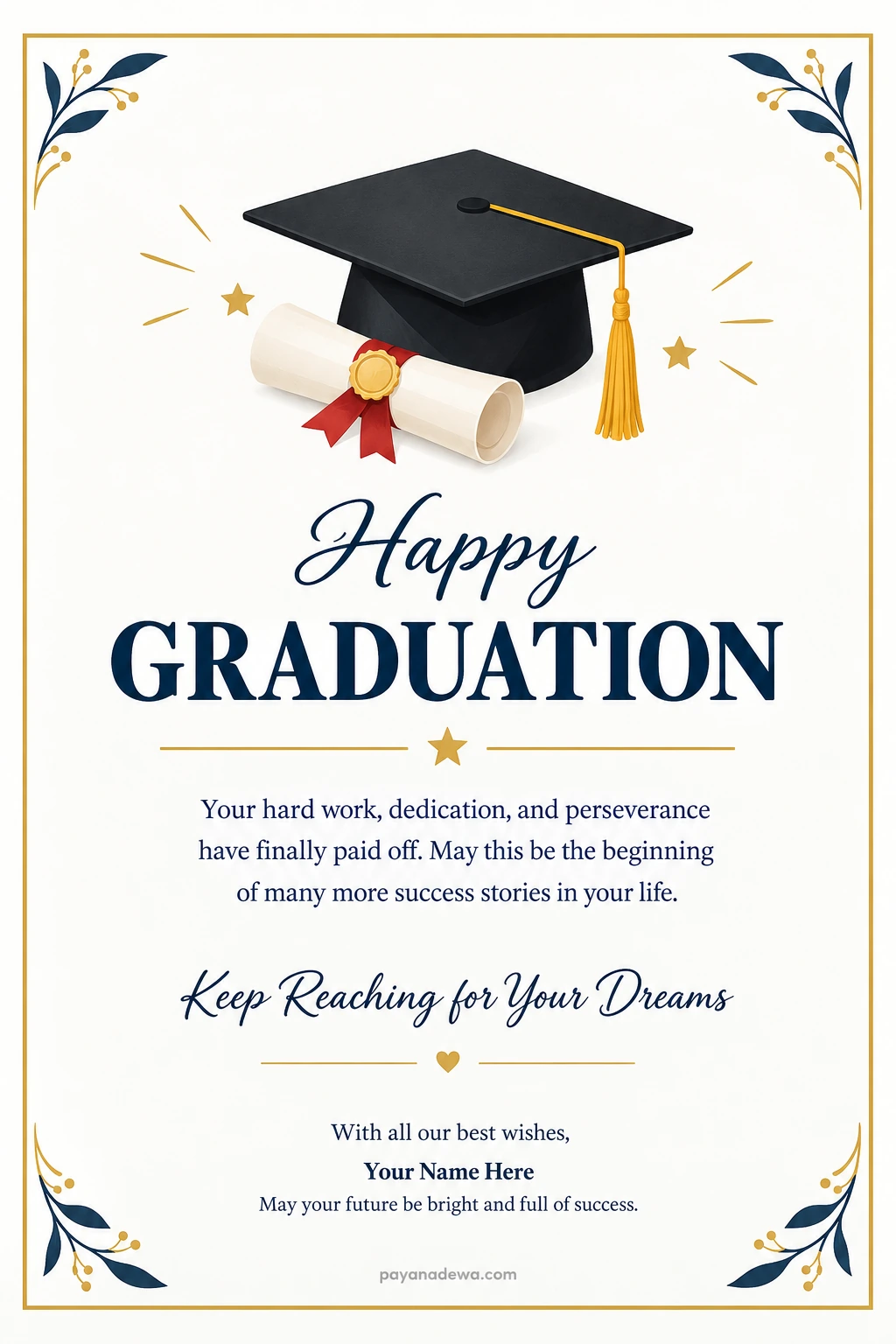
A printable graduation card template is a convenient option when you want a polished design without starting from a blank page. The navy-and-gold design shown here uses a graduation cap, diploma, and decorative details to create a classic celebratory look. You can use the message as written or adapt the wording to suit the recipient.
Personalization steps
- Choose the greeting. Keep “Happy Graduation” for a versatile card, or add the graduate’s name for a more personal touch.
- Replace the name placeholder. Add your name or a family sign-off where the design allows.
- Add a handwritten note. Use the blank space inside or on the back to share a memory or specific congratulations.
- Select suitable paper. Matte cardstock often gives a sturdy, professional finish. Standard printer paper can work for a quick note.
- Preview before printing. Check the page orientation, print scale, margins, and text clarity. Print a test copy if the card will be used for a special occasion.
For the best result, follow your printer’s paper guidance and choose a print-quality setting that keeps fine lines and small text clear. If you plan to fold the card, check the layout first so the front design appears in the correct position. A digital version can also be shared by email or messaging when you cannot deliver a printed card in person.
When Should You Give a Graduation Card?
Graduation cards are commonly given at the ceremony, at a graduation party, or shortly before or after the event. If you are attending a celebration, bring the card with you and write the recipient’s name clearly on the envelope. If you are sending it by mail, allow enough time for delivery around the ceremony date.
There is no need to worry if your card arrives a little later. A sincere message is still welcome after the event, especially when it recognizes the graduate’s achievement and wishes them well. If you are sending a digital card, a short note alongside it can make the gesture feel more personal.
Common Graduation Card Mistakes to Avoid
- Writing only a generic line. “Congrats” is fine, but adding one specific sentence makes the card more memorable.
- Making assumptions about the future. Not every graduate plans to attend university or enter a particular career, so keep your wishes supportive and flexible.
- Turning the message into advice. Graduation can be an emotional milestone. Lead with congratulations rather than a list of expectations.
- Overfilling the card. A few thoughtful sentences are easier to remember than a long paragraph of clichés.
- Forgetting to sign it. Include your name so the graduate knows who sent the card, especially if it will be opened with other gifts.
Conclusion: Celebrate the Graduate’s Next Chapter
A graduation card is a small gesture that can carry a lasting message of pride, encouragement, and affection. Choose a design that fits the graduate, write in a voice that feels natural, and include one personal detail that recognizes the person behind the achievement. Whether you select a ready-made card or personalize a printable graduation card template, a thoughtful message can help make this milestone even more memorable.
Above all, remind the graduate that this accomplishment is worth celebrating and that their journey does not end with a ceremony. Congratulate them on how far they have come, wish them well in what lies ahead, and encourage them to keep reaching for their dreams.