A Supplier Agreement is an important business document that establishes the terms and conditions between a supplier and a company purchasing products or services. It helps both parties understand their responsibilities, expectations, payment arrangements, delivery requirements, and other important obligations before business activities begin.
Whether you run a small business, manage procurement for a growing company, or work with multiple vendors, having a clear supplier agreement can make business relationships easier to manage. A well-written agreement provides a practical framework for cooperation while reducing confusion about important commercial terms.
Supplier relationships often involve recurring orders, negotiated prices, delivery schedules, quality standards, confidential information, and payment deadlines. Without written terms, even a simple misunderstanding can create delays, additional costs, or disputes. A written agreement gives both parties a common reference point.
This guide explains what a supplier agreement is, what it should contain, how to create one, and what businesses should consider before signing. The goal is to help you understand the essential elements of a supplier contract and create a document that supports a reliable business relationship.
Although templates can save time, every business relationship is different. The agreement should therefore be reviewed and adjusted to reflect the products, services, commercial terms, applicable laws, and specific risks involved in the relationship.
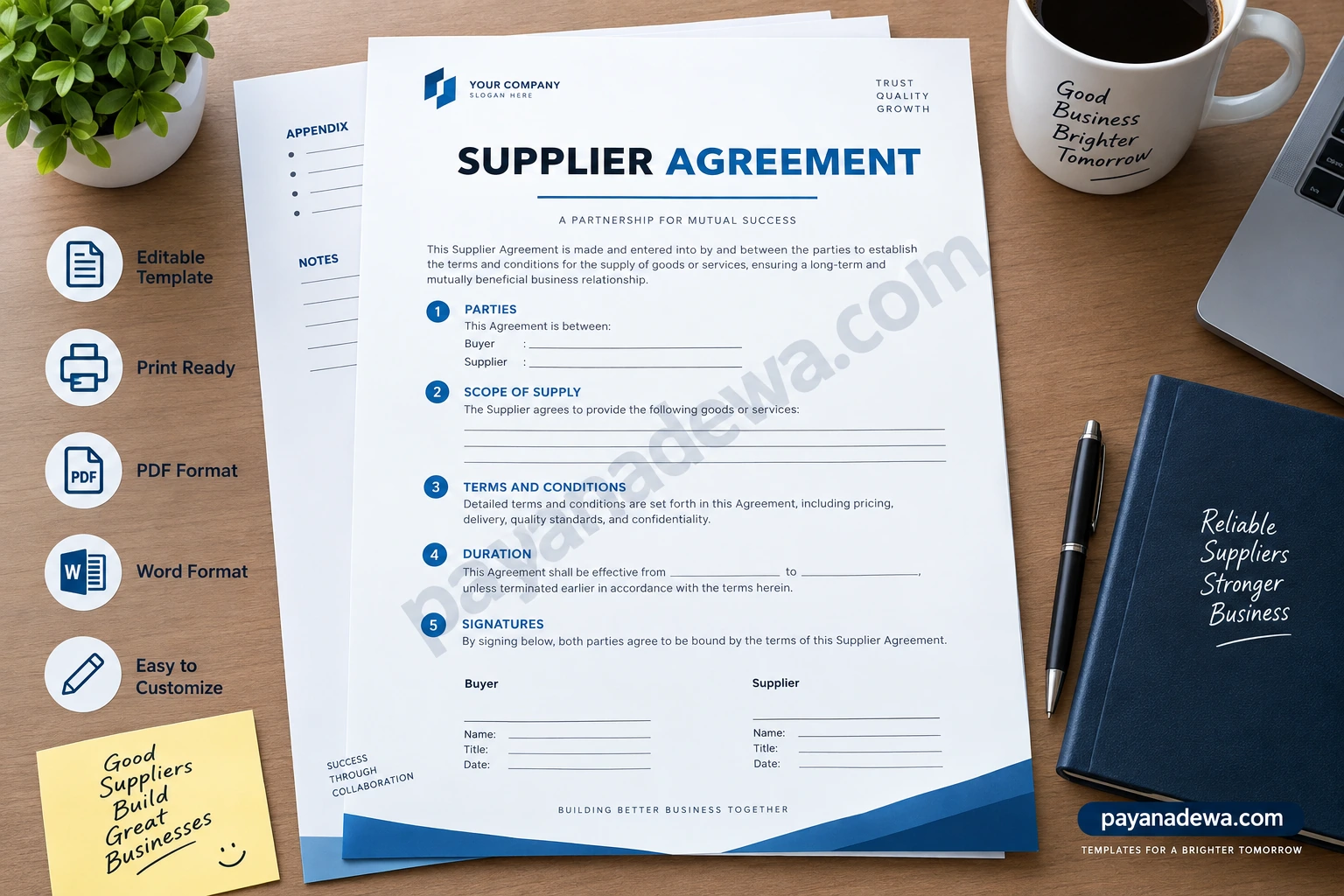
What Is a Supplier Agreement?
A supplier agreement is a written contract between a business and a supplier that defines how products or services will be provided. It establishes the commercial and operational expectations that apply to the relationship.
Purpose of a Supplier Agreement
The primary purpose of a supplier agreement is to create clarity. Instead of relying on informal conversations, emails, or individual purchase orders, both parties can refer to an agreed set of terms.
A supplier agreement may cover product specifications, pricing, payment terms, delivery requirements, quality standards, warranties, confidentiality, intellectual property, termination, and dispute resolution.
The agreement can be used for a single project or for an ongoing supplier relationship. Long-term arrangements often benefit from a master supplier agreement that establishes general terms while individual purchase orders define specific quantities and delivery requirements.
Why Is a Supplier Agreement Important?
Businesses depend on suppliers for everything from raw materials and inventory to equipment, software, logistics, and professional services. A supplier agreement helps establish predictable expectations for these relationships.
Reducing Business Misunderstandings
Clear written terms reduce uncertainty. Both parties can see what was agreed, including pricing, delivery dates, product requirements, and responsibilities.
For example, if a supplier is expected to deliver products within five business days, the agreement can clearly state that requirement. If payment is due within 30 days of receiving an invoice, that condition can also be documented.
Protecting Both Parties
A well-structured agreement does not only protect the buyer. It also gives the supplier clear information about its obligations and the customer’s responsibilities.
Documenting responsibilities can make it easier for both sides to resolve disagreements because the parties have a shared reference point for interpreting their relationship.
Key Elements of a Supplier Agreement
The exact structure of a supplier agreement depends on the nature of the transaction. However, most useful agreements contain several fundamental sections.
1. Identification of the Parties
The agreement should clearly identify the supplier and the purchasing business. Include the legal names, business addresses, and relevant contact information for both parties.
If a company operates through a specific legal entity, the agreement should identify the appropriate entity rather than relying only on a brand name.
2. Products or Services
The agreement should explain what the supplier is expected to provide. Product descriptions, specifications, service descriptions, quantities, quality requirements, and applicable standards can be included directly or incorporated by reference.
For complex products, supporting schedules or specifications may be attached to the agreement. This helps prevent ambiguity about what the supplier is required to deliver.
3. Pricing and Payment Terms
Pricing is one of the most important commercial terms. The agreement should explain the agreed prices, currency, taxes, invoicing requirements, payment deadlines, and any permitted price adjustments.
- Agreed product or service prices
- Payment due dates
- Accepted payment methods
- Applicable taxes and fees
- Invoice requirements
- Rules for price changes
- Late payment provisions
Clearly defining these details can help prevent disputes related to invoices and unexpected costs.
4. Delivery Requirements
The supplier agreement should explain when, where, and how products or services must be delivered. Delivery terms may include shipping responsibilities, delivery locations, lead times, packaging requirements, and procedures for handling delays.
For businesses that depend on inventory arriving on schedule, delivery requirements can be particularly important. The agreement may also establish procedures for notifying the buyer about expected delays.
5. Quality Standards
Quality requirements should be specific enough for both parties to understand what constitutes an acceptable product or service.
The agreement can identify inspection procedures, quality standards, defect handling, replacement requirements, returns, and corrective actions. Clear quality provisions are especially valuable when products are manufactured to specific specifications.
Additional Clauses to Consider
Beyond the basic commercial terms, businesses may need additional provisions depending on the nature and risk of the supplier relationship.
Confidentiality
A confidentiality clause can establish how sensitive business information must be handled. This may include pricing information, customer data, technical specifications, business strategies, product designs, and other confidential information.
Intellectual Property
If a supplier creates designs, software, documentation, branding materials, or other intellectual property, the agreement should clarify ownership and permitted use.
The appropriate arrangement depends on the nature of the work and applicable law. Businesses should make ownership provisions clear before work begins rather than attempting to resolve ownership questions afterward.
Warranties and Representations
A supplier agreement may include warranties relating to product quality, conformity with specifications, legal compliance, or performance requirements.
The scope of any warranty should be clearly defined, including its duration and the remedies available if the supplier fails to meet the applicable requirements.
Limitation of Liability
Some supplier contracts contain provisions that define the circumstances and extent to which one party may be liable for certain losses. These clauses can be legally significant and should be drafted according to the applicable law and circumstances of the transaction.
How to Create a Supplier Agreement
Creating an effective supplier agreement starts with understanding the actual business relationship rather than simply copying a generic contract.
Step 1: Define the Business Relationship
Begin by identifying what the supplier will provide and how the relationship will operate. Consider whether the arrangement is one-time, recurring, exclusive, or non-exclusive.
Step 2: Establish Commercial Terms
Document prices, payment schedules, minimum order quantities, delivery requirements, taxes, and other financial conditions. Make sure the commercial terms match the business deal that both parties have actually negotiated.
Step 3: Define Performance Expectations
Set measurable expectations where possible. Instead of using vague language such as “prompt delivery,” specify a reasonable delivery period or agreed performance standard.
Step 4: Address Potential Problems
Consider what should happen if products are defective, deliveries are late, prices change, orders are cancelled, or either party fails to meet its obligations.
Planning for potential problems before they occur can make the relationship easier to manage when unexpected situations arise.
Step 5: Review the Agreement
Both parties should carefully review the agreement before signing. For contracts involving significant financial commitments, regulated products, intellectual property, personal data, or substantial liability, obtaining appropriate professional legal advice can be valuable.
Supplier Agreement vs Purchase Order
A supplier agreement and a purchase order serve different purposes, although they can work together.
Supplier Agreement
A supplier agreement generally establishes the broader terms of the business relationship. It may remain effective for a defined period and apply to multiple transactions.
Purchase Order
A purchase order typically identifies a specific purchase, such as the products, quantities, prices, and requested delivery date for a particular transaction.
For recurring supplier relationships, a business may use a supplier agreement for the general terms and purchase orders for individual purchases.
Tips for Managing Supplier Agreements
Signing the agreement is only the beginning. Businesses should also establish a practical process for managing supplier contracts throughout their lifecycle.
Keep Agreements Organized
Store signed agreements in a secure location where authorized employees can easily access the current version. Keep track of amendments, schedules, renewals, and related documents.
Monitor Important Dates
Record contract start dates, expiration dates, renewal periods, notice deadlines, and other important dates. Missing a renewal or termination notice period can create unnecessary complications.
Review Supplier Performance
Businesses can periodically compare supplier performance against the agreed requirements. Useful metrics may include delivery reliability, product quality, response times, order accuracy, and issue resolution.
- Track delivery performance
- Monitor product quality
- Review invoice accuracy
- Document recurring problems
- Record corrective actions
- Review contract terms periodically
Common Mistakes to Avoid
Even a detailed supplier contract can create problems if important information is unclear or inconsistent.
Using Vague Terms
Avoid unnecessary ambiguity. Terms such as “reasonable,” “soon,” or “high quality” can mean different things to different people unless the agreement provides a measurable standard or context.
Ignoring Changes in the Business Relationship
Supplier relationships can evolve. Prices, product specifications, delivery locations, technology requirements, or business processes may change over time.
When important changes occur, make sure they are properly documented through an amendment, updated schedule, purchase order, or other appropriate contractual mechanism.
Failing to Define Termination
The agreement should explain when and how the relationship can end. Depending on the contract, this may include expiration, termination for breach, insolvency, convenience, or other specified circumstances.
Benefits of Using a Supplier Agreement Template
A supplier agreement template can provide a useful starting structure for businesses that frequently create supplier contracts.
Saving Time
A reusable template can reduce the time required to create a new agreement because common sections are already organized.
Improving Consistency
Using a standardized structure can help procurement and business teams consistently address important topics across multiple supplier relationships.
Easy Customization
A template should be treated as a starting point rather than a universal legal document. Businesses can customize the sections based on the supplier, products, services, industry, transaction value, and applicable requirements.
Final Thoughts on Supplier Agreements
A well-structured Supplier Agreement gives businesses and suppliers a clearer framework for working together. It can define products and services, prices, payment terms, delivery requirements, quality standards, confidentiality, warranties, responsibilities, and termination procedures.
The most useful agreement is one that reflects the actual relationship between the parties and uses clear, practical language. Businesses should avoid unnecessary complexity while making sure important commercial and operational risks are addressed.
A supplier agreement template can make the drafting process more efficient, but every agreement should be reviewed and customized before it is used. For significant or complex transactions, professional legal review may be appropriate.
By documenting expectations from the beginning and reviewing supplier relationships regularly, businesses can create a more organized procurement process and establish clearer working relationships with their suppliers.