Social media advertising gives businesses an effective way to reach potential customers, promote products, and build brand awareness. However, successful campaigns require more than engaging visuals and persuasive copy. Businesses must also follow advertising laws, platform policies, privacy requirements, and internal brand standards. A well-structured Social Media Compliance Advertising Policy helps organizations manage these responsibilities while creating consistent and trustworthy advertising campaigns.
Whether you manage a small online store, work in digital marketing, or oversee advertising for a growing company, a documented compliance policy can simplify campaign approvals and reduce avoidable risks. This guide explains what a social media advertising compliance policy should include, how to implement one, and how a practical template can help your team review content before publication.
What Is a Social Media Compliance Advertising Policy?
A Social Media Compliance Advertising Policy is a documented set of rules and procedures that explains how an organization creates, reviews, approves, publishes, and monitors advertisements on social media platforms. It establishes clear expectations for employees, marketing agencies, influencers, and other people involved in advertising activities.
The policy connects marketing objectives with legal obligations, platform advertising standards, data protection practices, and company guidelines. Instead of relying on individual judgment alone, teams can use a consistent process to identify potential issues before an advertisement goes live.
Why Is an Advertising Compliance Policy Important?
Without clear advertising guidelines, businesses may publish unsupported product claims, overlook sponsorship disclosures, use copyrighted materials without permission, or target audiences inappropriately. These mistakes can lead to rejected advertisements, account restrictions, customer complaints, legal exposure, and reputational damage.
A documented policy helps teams:
- Maintain consistent advertising standards across social media channels.
- Review claims, disclaimers, and promotional offers before publication.
- Clarify approval responsibilities and accountability.
- Protect customer information and respect privacy requirements.
- Identify potential advertising risks before campaigns launch.
- Keep records of reviews, approvals, and policy updates.
Key Elements of a Social Media Advertising Compliance Policy
An effective policy should be practical enough for daily use while covering the risks relevant to your business, industry, audience, and advertising channels. The following sections provide a useful starting point.
1. Advertising Standards and Platform Rules
Each social media platform maintains its own advertising requirements. Rules can differ for prohibited products, restricted services, targeting options, landing pages, creative formats, and account eligibility. A campaign that meets one platform’s requirements may not automatically qualify for publication on another.
Document the platforms your business uses and identify the official advertising policies that apply to each channel. Assign responsibility for checking policy changes, particularly before launching campaigns in regulated or restricted categories.
Include a checklist covering prohibited content, restricted products, landing-page accuracy, audience eligibility, and any required platform authorization.
2. Truthful Claims and Transparent Promotions
Advertisements should present products, services, prices, discounts, and expected results accurately. Avoid misleading statements, fabricated testimonials, exaggerated performance claims, or guarantees that your business cannot substantiate.
When making measurable claims, retain evidence that supports the wording. Promotional campaigns should also explain material conditions, including eligibility requirements, expiration dates, recurring charges, and significant limitations where applicable.
For example, an advertisement promoting a discount should direct customers to a page where the stated price and offer conditions are clearly explained. This consistency helps customers make informed decisions and reduces confusion.
3. Influencer and Sponsored Content Disclosures
Paid partnerships, gifted products, affiliate links, and other material relationships may require clear disclosures under applicable laws and platform rules. A disclosure should be easy for the intended audience to notice and understand.
Provide influencers, affiliates, and creators with written instructions explaining when disclosures are necessary, which approved wording to use, and how to position disclosures in captions, videos, livestreams, or other formats.
Do not assume that a platform’s branded-content label automatically satisfies every legal requirement. Review the rules that apply to the campaign’s audience and jurisdiction.
4. Privacy, Data Protection, and Audience Targeting
Advertising teams may use customer lists, website analytics, tracking technologies, lead forms, and audience segments to reach potential buyers. These activities must be evaluated against applicable privacy laws, consent requirements, platform terms, and company data-handling procedures.
Your policy should explain which data sources are approved, who can access campaign data, how consent is managed when required, and how long information may be retained. Avoid collecting unnecessary personal information or using sensitive data for targeting without an appropriate legal basis and authorization.
5. Copyright, Licensing, and Brand Assets
Images, videos, music, fonts, logos, and other creative assets must be used with the necessary rights and permissions. Content being publicly available online does not automatically make it free for commercial advertising.
Maintain a record of asset sources, license terms, creator permissions, usage restrictions, and expiration dates where relevant. Establish rules for approved brand logos, product images, trademarks, and third-party materials.
How to Create and Implement Your Policy
Creating a written policy is only the first step. Your organization also needs a repeatable process that employees and external partners can follow.
Step 1: Identify Your Advertising Risks
Review your products, services, target audiences, advertising channels, and operating locations. Identify requirements that may apply to your industry, such as financial services, healthcare, alcohol, children’s products, or other regulated categories.
Prioritize risks according to their potential impact and likelihood. Ask legal or compliance specialists to review areas that require specific expertise.
Step 2: Define Roles and Approval Responsibilities
Specify who creates advertising content, who checks factual claims, who reviews legal or regulatory issues, and who grants final approval. Small businesses may assign several responsibilities to one person, while larger organizations may require separate marketing, legal, privacy, and compliance reviews.
Set clear escalation procedures for uncertain claims, sensitive campaigns, complaints, and potentially restricted content. No employee should have to guess who can authorize a high-risk advertisement.
Step 3: Build a Pre-Publication Checklist
Use a standard checklist for every campaign. Depending on the advertisement, reviewers should verify the following items:
- The content follows the applicable platform advertising policies.
- Product descriptions and performance claims are accurate and supported.
- Prices, discounts, conditions, and disclosures are clear.
- Sponsored content and affiliate relationships are disclosed where required.
- Creative assets have the necessary commercial usage permissions.
- Targeting and data practices have received the required review.
- Landing pages match the advertisement and contain relevant information.
- Required approvals are documented before publication.
Step 4: Document Reviews and Approvals
Keep a record of the advertisement version reviewed, reviewer names or roles, approval dates, supporting evidence, and any changes requested. Version control is especially useful when several people work on the same campaign.
Store records in an approved location with appropriate access controls. Documentation makes it easier to investigate complaints, demonstrate internal accountability, and determine whether a published advertisement differs from its approved version.
Step 5: Monitor Campaigns and Update the Policy
Compliance does not end when an advertisement is published. Monitor live campaigns for policy changes, expired offers, inaccurate information, customer complaints, and unexpected delivery or targeting issues.
Review the policy on a defined schedule and whenever a significant change occurs, such as entering a new market, introducing a regulated product, adopting a new advertising platform, or receiving a relevant regulatory update.
Using a Social Media Compliance Advertising Policy Template
A ready-to-use template can help businesses organize advertising requirements without starting from a blank document. It also provides a common reference for marketers, designers, reviewers, and campaign managers.
A useful social media advertising policy template should include the following sections:
- Policy overview: Purpose, scope, covered platforms, and responsible teams.
- Platform compliance checklist: Relevant advertising restrictions and channel-specific requirements.
- Content review checklist: Claims, disclosures, copyright, targeting, and landing-page checks.
- Risk assessment: Potential risks, impact, mitigation measures, and responsible owners.
- Approval workflow: Content creation, compliance review, approval, publication, and monitoring.
- Review history: Version numbers, update dates, and documented changes.
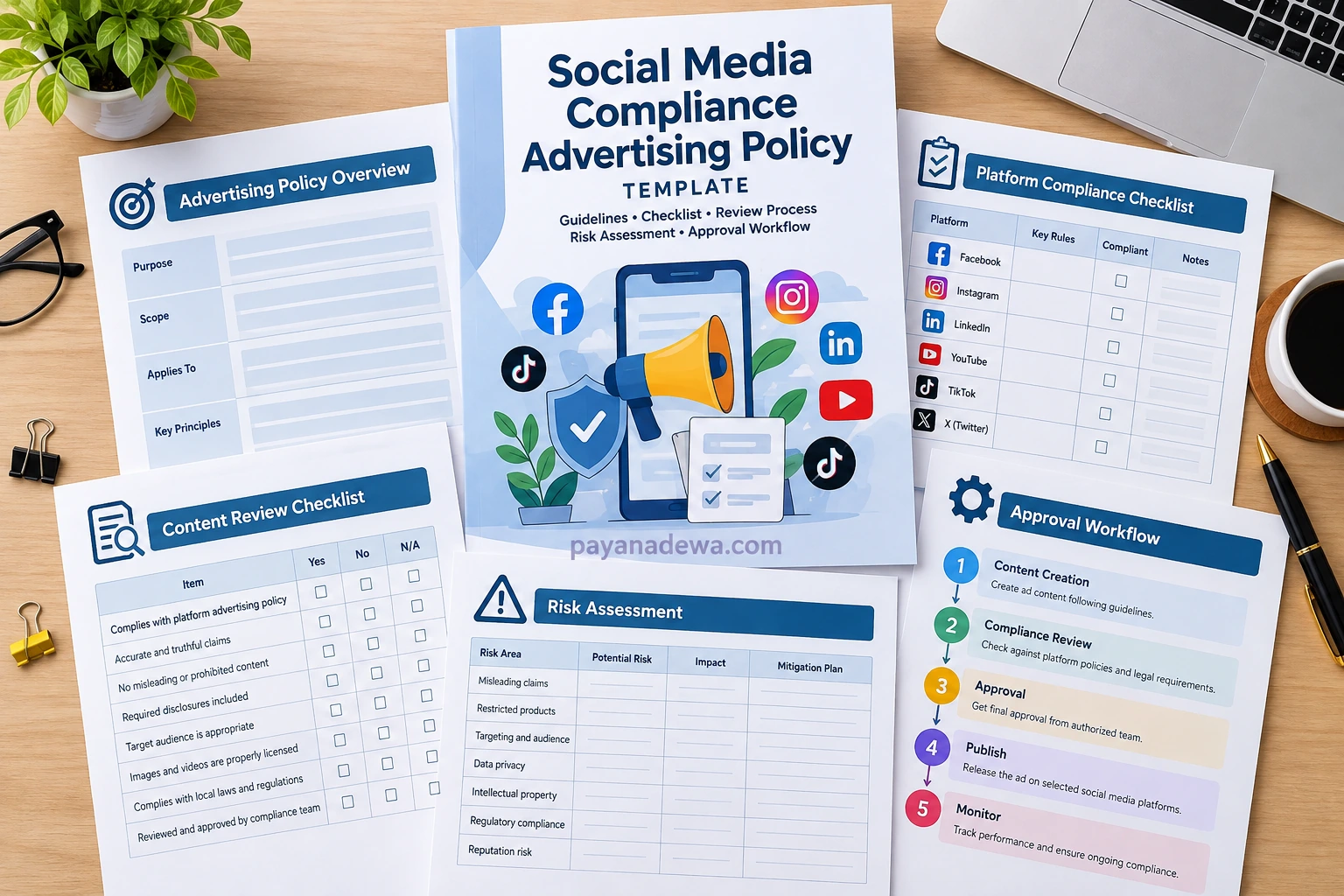
Customize the template to reflect your organization’s actual responsibilities and legal requirements. Remove irrelevant sections, add industry-specific checks, and assign an owner to each review task. A generic template is a starting point, not a substitute for professional legal advice or platform-specific verification.
Common Compliance Mistakes to Avoid
Even experienced marketing teams can overlook important details when working under tight deadlines. Avoid these common mistakes to make your compliance process more reliable.
- Assuming platform approval guarantees legal compliance: An advertisement accepted by a platform may still violate applicable laws or regulations.
- Using unsupported claims: Keep reliable evidence for statements about product performance, savings, health benefits, or business results.
- Hiding important disclosures: Place required disclosures where consumers can readily notice and understand them.
- Ignoring regional differences: Advertising rules may vary according to the audience’s location and the product being promoted.
- Failing to review creative changes: New captions, images, targeting settings, or landing pages may introduce additional risks.
- Leaving outdated content online: Review active campaigns when offers expire, rules change, or a compliance issue emerges.
Practical Tips for Maintaining Advertising Compliance
Build compliance into your everyday marketing workflow instead of treating it as a final administrative task. The following practices can make the process easier to maintain.
- Create a shared library of approved disclosures, brand assets, and claim substantiation documents.
- Use approval deadlines that allow sufficient time for high-risk campaign reviews.
- Train employees, agencies, and influencers on the requirements relevant to their responsibilities.
- Use automated alerts where appropriate to identify expiring offers, outdated content, or policy updates.
- Conduct periodic audits of active campaigns and retain records of corrective actions.
- Provide a clear process for reporting potential violations and escalating urgent concerns.
Choose tools and automation carefully. Technology can help organize approvals and flag potential issues, but human review remains important for interpreting context, evaluating claims, and addressing complex legal questions.
Frequently Asked Questions
What should a social media advertising compliance policy include?
It should cover platform rules, truthful advertising claims, disclosures, privacy and targeting practices, intellectual property, review responsibilities, approval procedures, recordkeeping, and ongoing monitoring.
Who is responsible for advertising compliance?
Responsibility is shared across the people involved in creating, reviewing, approving, and publishing advertisements. The organization should designate accountable owners and involve qualified legal or compliance professionals when necessary.
How often should the policy be reviewed?
Review it periodically according to your organization’s risk level and whenever relevant laws, platform policies, products, markets, or advertising practices change. High-risk campaigns may need more frequent checks.
Can a template guarantee that my advertisements are compliant?
No. A template supports consistency and documentation, but compliance depends on the facts of each campaign, the applicable rules, the target audience, and how the policy is implemented.
Conclusion
A well-designed Social Media Compliance Advertising Policy helps businesses create responsible advertising campaigns, clarify approval responsibilities, and manage legal, platform, privacy, and reputational risks. By combining clear guidelines with practical checklists, documented reviews, and ongoing monitoring, marketing teams can build a more consistent approach to advertising compliance.
Start with a policy template, tailor it to your business and advertising channels, and review it regularly. With clear ownership and a repeatable approval workflow, your team can make informed campaign decisions while maintaining transparency and protecting customer trust.