A reflective essay is more than a simple academic assignment. It is an opportunity to explore your experiences, understand your personal development, and explain how specific events have influenced your thoughts, decisions, and perspectives. Whether you are a high school student, college student, or professional, learning how to write a reflective essay can help you communicate your experiences with clarity and purpose.
However, writing about personal experiences is not always easy. You need to describe what happened, examine your feelings, identify important lessons, and connect those lessons to your future actions. A well-organized structure makes this process much easier.
In this guide, you will learn what a reflective essay is, how to structure it, how to develop meaningful ideas, and how to improve your writing. You will also find practical tips and a reflective essay template to help you get started.
What Is a Reflective Essay?
A reflective essay is a type of personal writing that examines an experience, event, situation, or lesson and explains what the writer learned from it. Unlike a traditional academic essay, which often focuses on external research and objective arguments, reflective writing emphasizes personal interpretation and critical thinking.
The main purpose is to connect an experience with its meaning. You should explain not only what happened but also why it mattered and how it changed your understanding.
Common subjects for reflective essays include:
- A memorable school or university experience.
- A challenging personal situation.
- A successful project or important achievement.
- A meaningful conversation or relationship.
- A volunteer activity or community project.
- A professional experience or workplace challenge.
- A mistake that taught you an important lesson.
For example, a student might write about giving their first presentation. Instead of simply describing the event, the essay could explore their nervousness, preparation process, mistakes, feedback, and growing confidence.
Understanding the Structure of a Reflective Essay
A strong reflective essay follows a clear structure. Organizing your ideas into sections helps readers understand your experience and follow your personal journey.
1. Introduction
The introduction presents the experience or subject you want to examine. It should capture the reader’s attention and provide enough background to understand the situation.
A good introduction typically includes:
- A brief introduction to the experience.
- Relevant background information.
- The reason the experience was meaningful.
- A central reflection or main point.
For instance, you could begin by explaining how your first group assignment challenged your communication skills and changed the way you approached teamwork.
2. Main Body: Description and Reflection
The body paragraphs explain what happened and explore your personal response. This section should balance storytelling with thoughtful analysis.
Consider addressing these questions:
- What happened during the experience?
- Who was involved?
- What challenges did you encounter?
- How did you feel at the time?
- What decisions did you make?
- What would you do differently today?
Avoid spending too much time describing events without explaining their significance. The strongest reflective essays focus on what the experience means rather than simply retelling a story.
3. Lessons Learned
This section explores the knowledge, skills, or personal insights you gained. Explain how the experience influenced your behavior, beliefs, or future decisions.
For example, a difficult group project might teach you the importance of listening, dividing responsibilities, and communicating expectations clearly.
Use specific examples to demonstrate your personal growth. This makes your reflection more convincing and meaningful.
4. Conclusion
The conclusion brings your reflection together. Summarize the most important lesson and explain how the experience may influence your future actions.
Do not introduce an entirely new topic in the final paragraph. Instead, leave readers with a clear understanding of why the experience mattered.
How to Write a Reflective Essay Step by Step
Writing a reflective essay becomes easier when you follow a practical process. Use these steps to develop your ideas and create a well-organized paper.
Step 1: Choose a Meaningful Experience
Select an experience that gave you something valuable to think about. It does not have to be dramatic or life-changing. Even a small event can provide meaningful insights.
Choose a topic that allows you to explain your emotions, decisions, challenges, and personal development.
Step 2: Brainstorm Your Thoughts
Before writing, spend a few minutes recording your memories and reactions. Think about what happened before, during, and after the experience.
You can organize your notes using these prompts:
- What did I expect to happen?
- What actually happened?
- What surprised or challenged me?
- How did I respond?
- What did I discover about myself?
Step 3: Create a Clear Outline
Arrange your ideas into an introduction, body paragraphs, and conclusion. Each paragraph should have a clear purpose.
An outline also helps prevent repetition. It allows you to identify missing details before you begin writing the full essay.
Step 4: Write in the First Person
Reflective writing commonly uses first-person pronouns such as I, me, and my. These expressions help communicate your personal perspective.
However, first-person writing should still sound thoughtful and professional. Avoid using informal expressions or repeating phrases such as “I think” in every paragraph.
Step 5: Analyze Your Experience
Go beyond describing events. Explain why things happened, how you interpreted them, and what you learned.
For stronger analysis, connect your personal experience with relevant concepts, theories, or knowledge when your assignment requires them.
Step 6: Revise and Proofread
After completing your first draft, review the entire essay. Check whether your ideas flow naturally and whether every paragraph contributes to your central reflection.
Pay attention to grammar, punctuation, sentence structure, and word choice. Remove unnecessary details and strengthen explanations that feel incomplete.
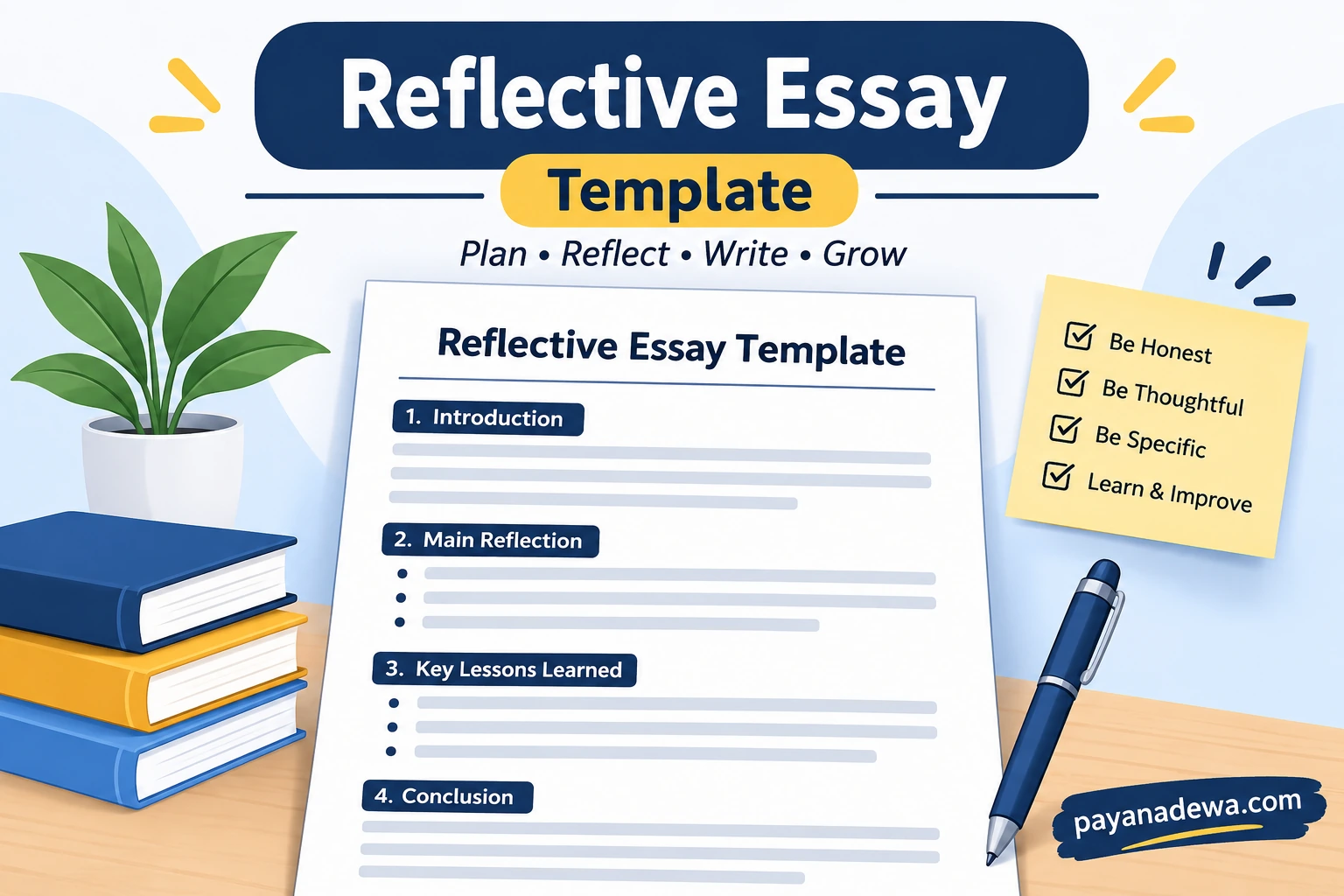
Reflective Essay Template You Can Follow
A reflective essay template provides a simple framework for organizing your thoughts. You can adapt the following structure to different academic assignments and personal experiences.
Title: Write a clear title that describes your experience or central reflection.
Introduction:
- Introduce the experience or situation.
- Explain the background.
- Identify why the experience was important.
- Present your main reflective idea.
Body Paragraph 1 – Description:
- Describe what happened.
- Explain the circumstances.
- Identify the people or factors involved.
Body Paragraph 2 – Personal Response:
- Describe your thoughts and feelings.
- Explain the challenges you faced.
- Discuss the decisions you made.
Body Paragraph 3 – Analysis and Lessons:
- Explain what you learned.
- Identify how your perspective changed.
- Connect the experience to your personal or academic development.
Conclusion:
- Summarize the most important insights.
- Explain the lasting impact of the experience.
- Describe how you will apply what you learned.
This framework is flexible. Adjust the number of paragraphs according to your assignment instructions and required word count.
Reflective Essay Example: Learning from a Group Project
Consider a university student who struggles during their first group assignment. At the beginning, the student expects everyone to contribute equally. However, poor communication and unclear responsibilities create confusion.
During the project, the student realizes that waiting for others to take action does not solve problems. They begin communicating more actively, suggesting deadlines, and helping teammates organize their tasks.
In the reflection, the student explains how frustration gradually becomes an opportunity to develop leadership and communication skills.
The most important lesson is that teamwork requires responsibility, patience, and clear expectations. The student also recognizes that future projects will benefit from discussing roles and deadlines at the beginning.
This example demonstrates an important principle: a reflective essay should connect an experience with personal understanding and future improvement.
Practical Tips for Writing a Better Reflective Essay
Even a simple essay can become more effective when you focus on clarity, honesty, and meaningful analysis.
Be Honest About Your Experience
Authenticity is essential. You do not need to present yourself as perfect. Discussing mistakes and difficulties can make your reflection more realistic and valuable.
Use Specific Details
Instead of writing that an experience was difficult, explain what made it challenging. Specific examples help readers understand your perspective.
Balance Description and Analysis
Do not turn your essay into a simple timeline of events. Describe important moments, then explain their significance and what they taught you.
Use Clear Transitions
Connect paragraphs with natural transition phrases such as “As a result,” “Looking back,” “This experience taught me,” and “In the future.”
Follow Your Assignment Guidelines
Check the required word count, formatting style, referencing rules, and assessment criteria. Some instructors may require a specific reflective framework or academic references.
Common Reflective Essay Mistakes to Avoid
Understanding common writing problems can help you produce a stronger final draft.
- Only describing events: Explain the meaning and lessons behind your experience.
- Being too general: Include specific examples to support your reflection.
- Ignoring personal development: Show how your thoughts, skills, or behavior changed.
- Repeating the same ideas: Give each paragraph a distinct purpose.
- Using an unclear structure: Organize your writing into logical sections.
- Forgetting to proofread: Review grammar, spelling, and readability before submitting.
Frequently Asked Questions About Reflective Essays
How long should a reflective essay be?
The length depends on your assignment requirements. Short reflective essays may contain 500 words, while university assignments can require 1,000 to 2,000 words or more. Always follow your instructor’s guidelines.
Can I use first-person pronouns in a reflective essay?
Yes. First-person pronouns are generally appropriate because reflective essays explore personal experiences and perspectives. Maintain an academic tone when required.
Does a reflective essay need references?
Not every reflective essay requires references. However, academic assignments may ask you to connect your experience with research, theories, or course materials. Follow the referencing instructions provided by your instructor.
What is the difference between a reflective essay and a personal essay?
A personal essay often shares an individual’s story, opinions, or experiences. A reflective essay goes further by analyzing those experiences and explaining the lessons or changes in perspective that resulted.
What makes a good reflective essay?
A good reflective essay combines a clear structure, honest personal insight, specific examples, thoughtful analysis, and meaningful conclusions. It should help readers understand both the experience and its impact on the writer.
Conclusion
Writing a reflective essay is an effective way to understand your experiences and recognize opportunities for personal growth. By describing meaningful events, analyzing your responses, and identifying important lessons, you can create an essay that is both engaging and insightful.
Start by choosing a meaningful experience, brainstorming your thoughts, and organizing your ideas with a clear outline. Then, use specific examples and honest analysis to explain how the experience influenced you.
Remember that the best reflective essays do more than describe the past. They demonstrate what you learned and how you plan to use that knowledge in the future. Use the reflective essay template in this guide as your starting point, and adapt it to your writing goals and assignment requirements.