A Simple Keyword Research Template helps you turn scattered keyword ideas into an organized SEO strategy. Instead of collecting hundreds of search terms and wondering what to do with them, a clear template gives every keyword a purpose. You can identify search demand, understand user intent, compare competition, group related topics, and decide which pages deserve your attention first.

Keyword research does not need to be complicated. Beginners often assume they need expensive software, advanced formulas, or thousands of keywords before they can start. In reality, a useful keyword system begins with a few important questions: What does your audience search for? Why are they searching for it? How relevant is the topic to your business? Can you create content that genuinely answers the search?
This guide explains how to build and use a simple keyword research framework, what information to include, how to prioritize opportunities, and how to turn keyword data into useful content. Whether you manage a blog, business website, online store, or client SEO campaign, the same basic structure can help you make better decisions.
What Is a Simple Keyword Research Template?
A Simple Keyword Research Template is an organized system for collecting, reviewing, and prioritizing search terms. It can be created in a spreadsheet, document, project management tool, or any workspace where you can keep keyword information in one place.

The main purpose is not simply to create a large list. A strong template helps you make decisions. Each keyword should eventually lead to an action, such as writing a new article, improving an existing page, creating a product category, building a landing page, or deciding that a topic is not worth pursuing.
A basic template can include information such as:
- The keyword or search phrase
- The broader topic or category
- Estimated search volume
- Competition or keyword difficulty
- Search intent
- Business relevance
- Current ranking position
- Target page or planned content
- Priority level
- Notes and observations

You do not need every possible metric. The best template is usually the one your team can consistently maintain. A complicated system with thirty unused columns is less valuable than a simple sheet that clearly tells you what to work on next.
Why a Keyword Research Template Matters for SEO
Without a structured process, keyword research often becomes a collection of disconnected ideas. Someone exports a list from an SEO tool, another person adds customer questions, and someone else creates content without checking whether the topic already exists. Over time, the keyword list grows, but the strategy becomes less clear.
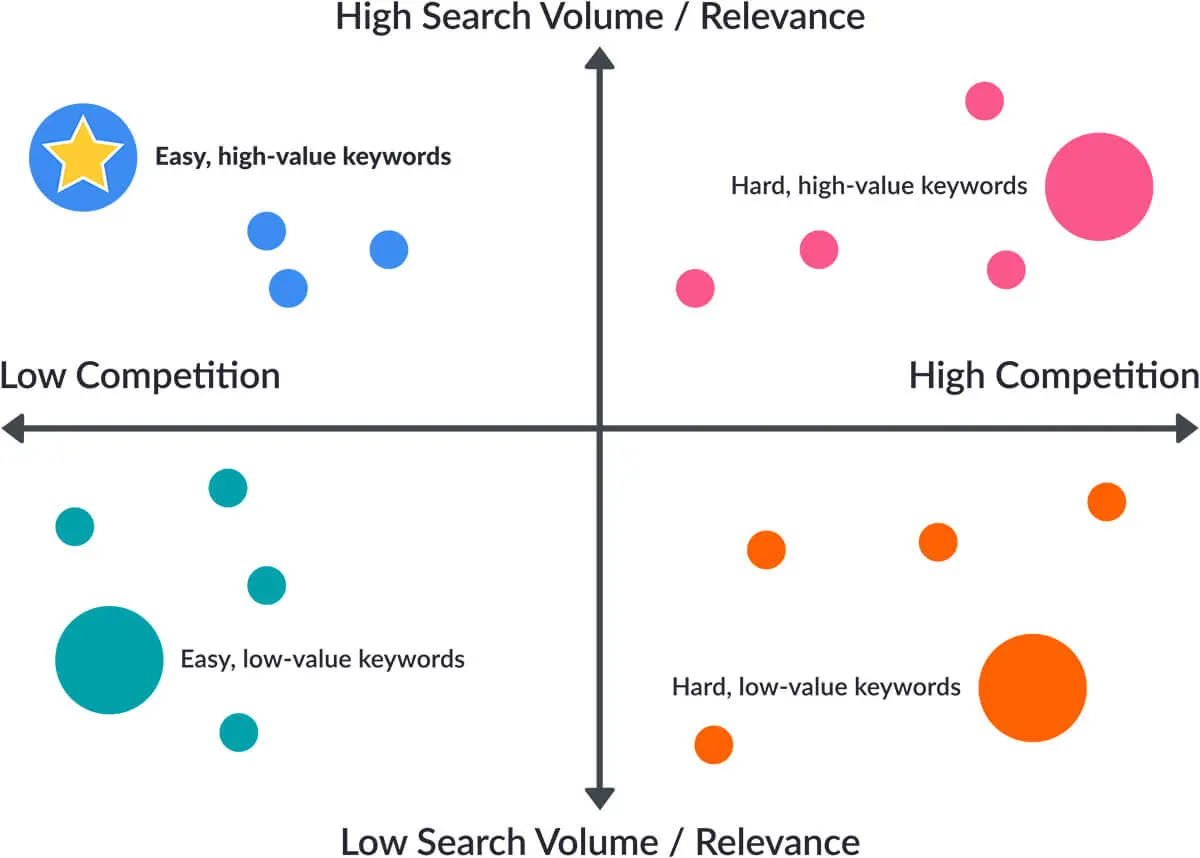
A template creates a central source of information. It allows you to compare opportunities rather than relying on guesswork. For example, a keyword with high search volume may look attractive, but it may also have intense competition and weak relevance to your business. A smaller long-tail keyword might have fewer searches but stronger purchase intent and a better chance of producing meaningful results.
A Simple Keyword Research Template can also help prevent duplicate content. When you assign keywords to specific pages, you can see when multiple articles are trying to rank for the same search intent. This makes it easier to combine overlapping content and create a clearer website structure.

The Essential Columns in Your Keyword Research Sheet
A practical Keyword Research Sheet should focus on information that helps you make decisions. Start with a simple structure and add more detail only when your SEO process requires it.
Keyword
This is the exact phrase you want to investigate. Keep the wording as close as possible to how people search. Avoid changing a keyword simply because a different version sounds more natural. Search behavior can reveal useful differences in wording and intent.
Topic or Category
Add a broader topic to every keyword. For example, a fitness website may categorize terms under strength training, nutrition, weight loss, recovery, and home workouts. This makes large lists easier to filter and helps reveal which topics deserve more content.
Search Volume
Search volume estimates how frequently a keyword is searched within a selected location and time period. It is useful for understanding demand, but it should not be treated as a promise of traffic. Search volume does not guarantee clicks, rankings, conversions, or revenue.
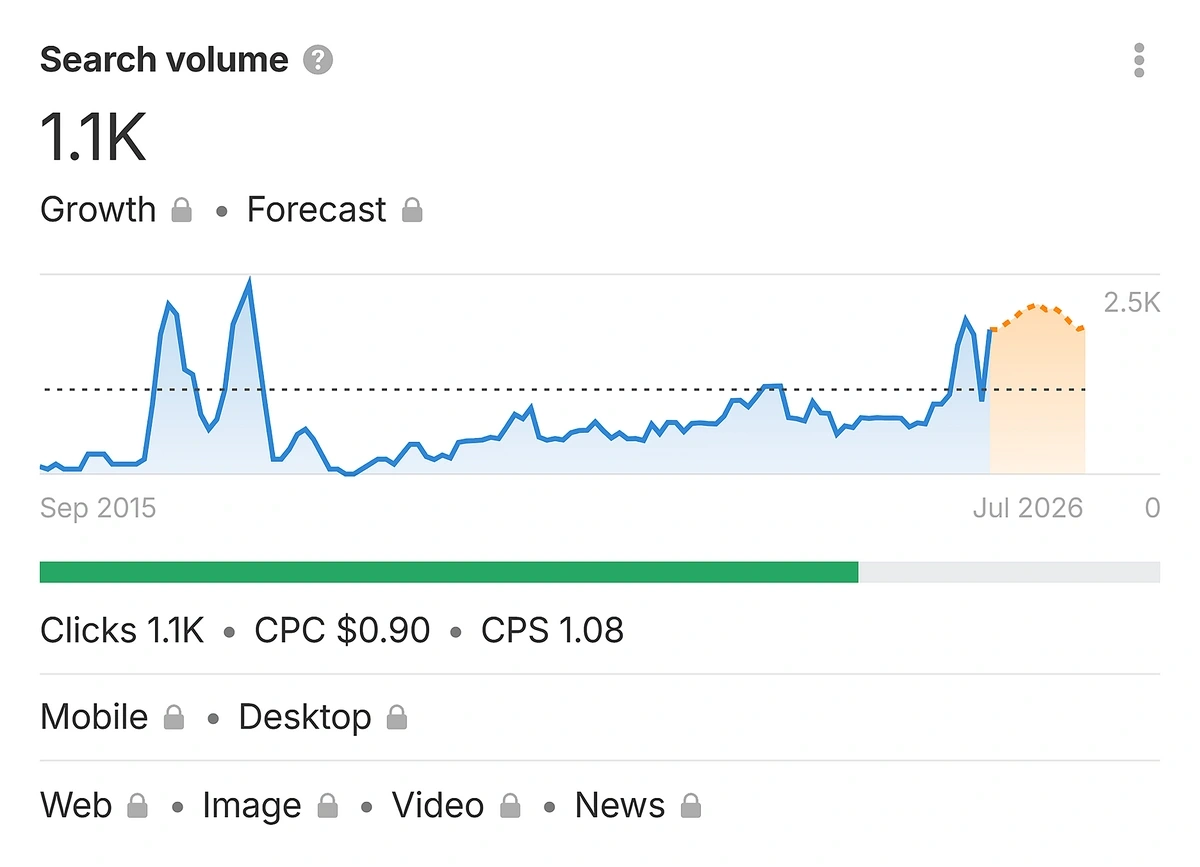
Use search volume as one part of the decision. A keyword with modest volume can still be highly valuable if it matches your audience and business goals.
Keyword Difficulty or Competition
Competition metrics estimate how difficult it may be to compete for a keyword. Different tools calculate difficulty differently, so avoid comparing scores from unrelated platforms as if they use identical formulas.
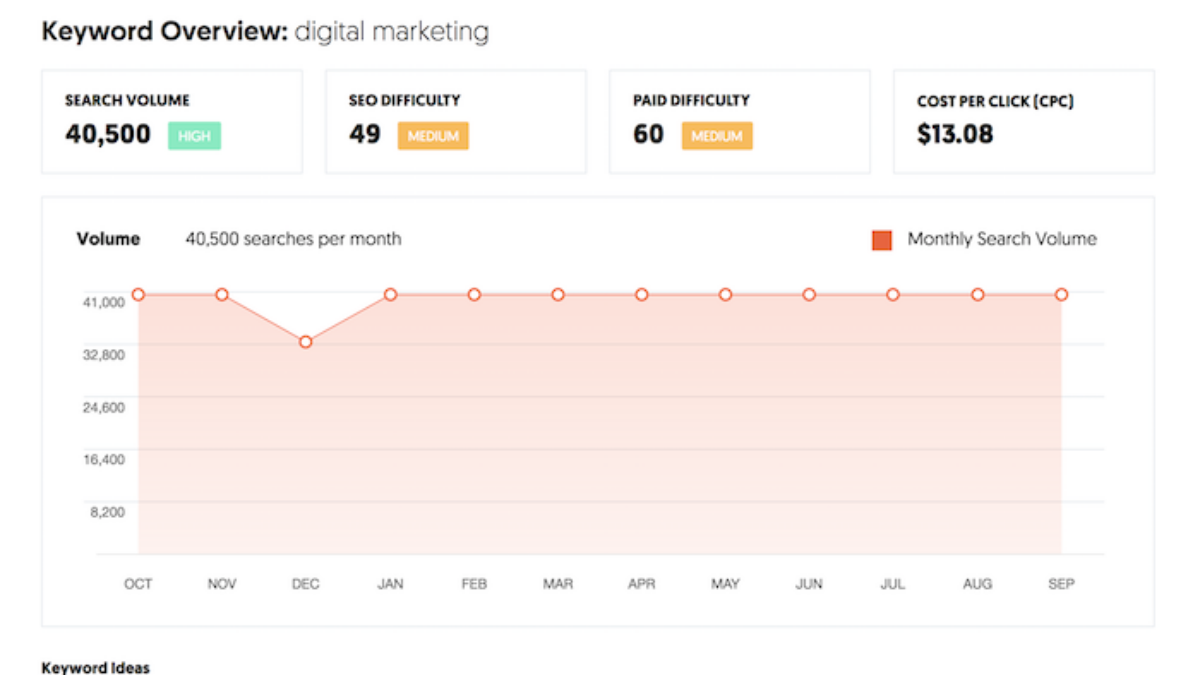
When competition data is unavailable, you can still manually review search results. Look at the types of pages ranking, how specific the content is, whether major brands dominate the results, and whether the search results contain pages that directly match the query.
Search Intent
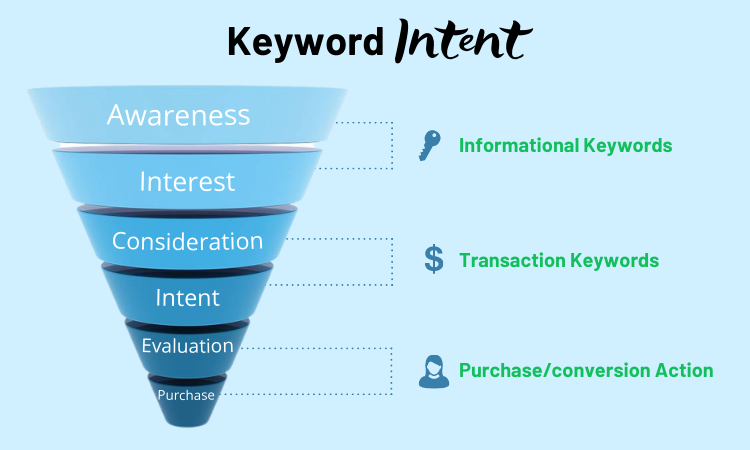
Search intent describes what the person wants to accomplish. Common categories include informational, navigational, commercial, and transactional intent.
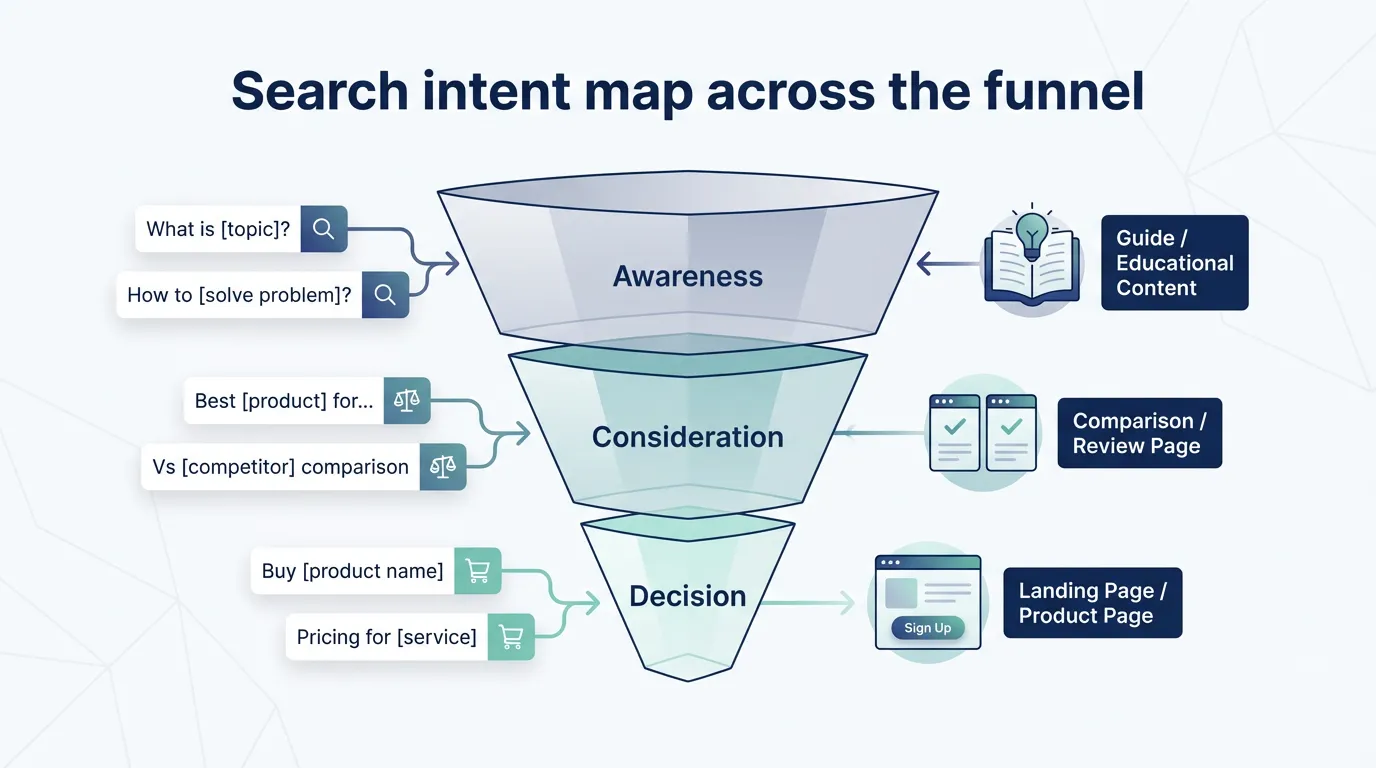
An informational search may lead to a guide or tutorial. A commercial search may require comparisons or reviews. A transactional search may be best served by a product or service page. Matching the content format to intent is often more important than simply repeating the keyword.
How to Build a Keyword Outline Template
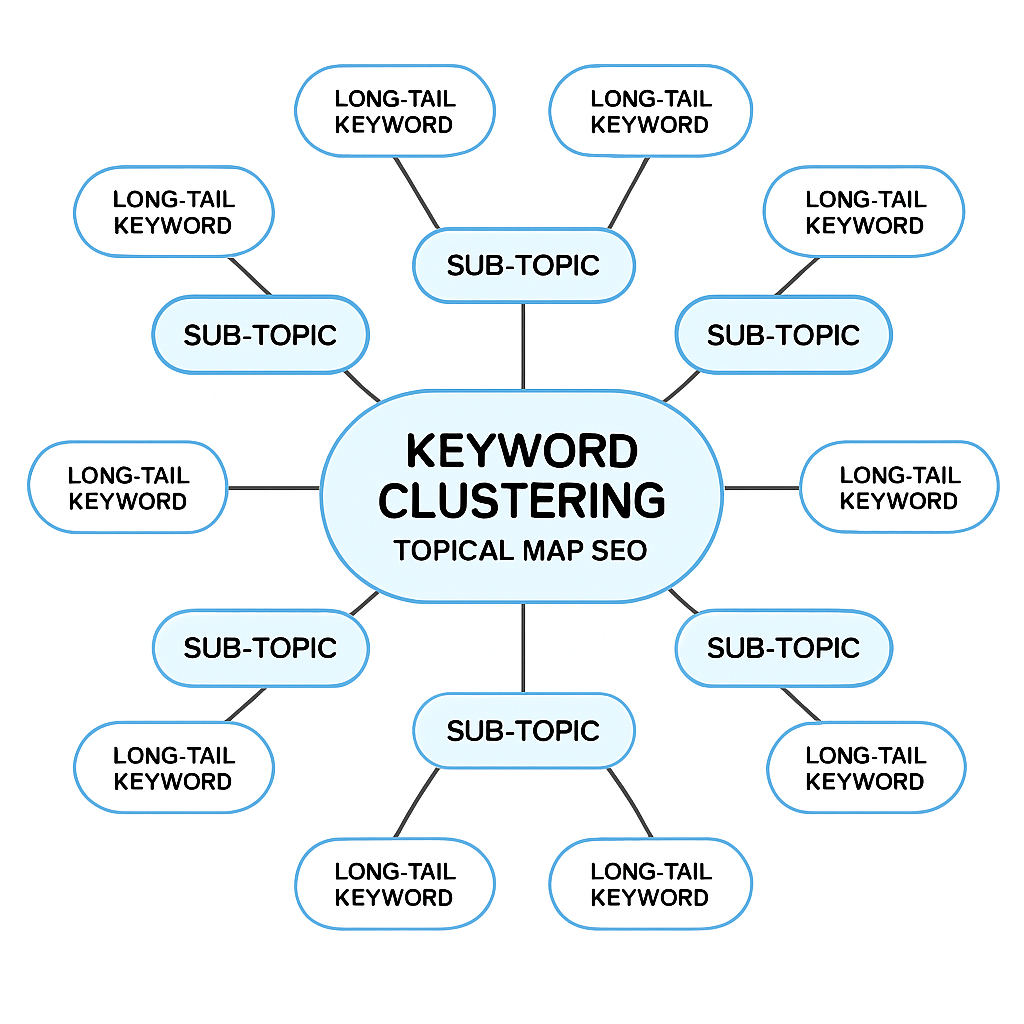
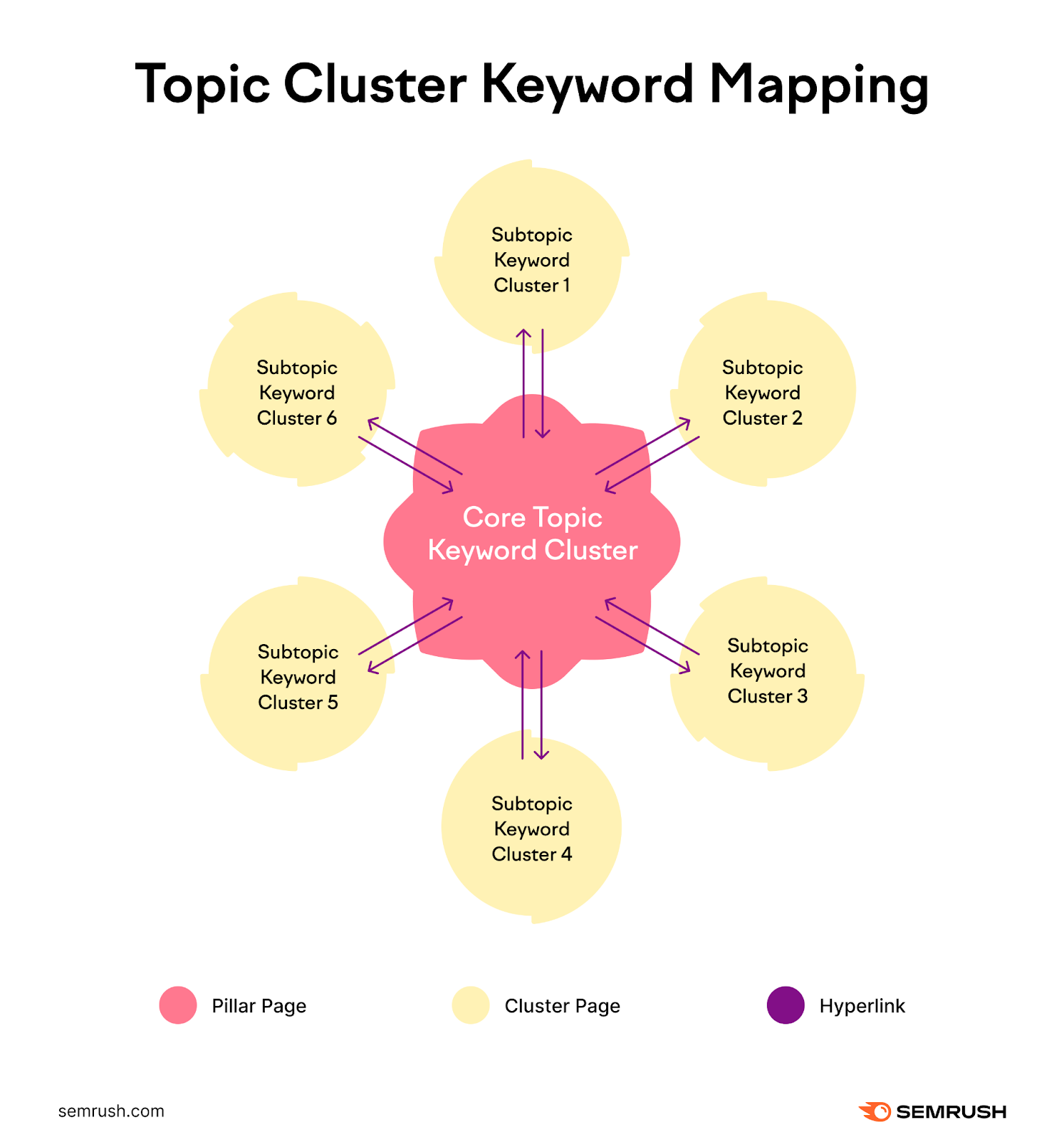
A Keyword Outline Template organizes your research before you begin collecting detailed metrics. Start by identifying the main subjects that matter to your audience. These are often called seed topics or parent topics.
Imagine you operate a website about home coffee brewing. Your broad topics might include espresso machines, coffee beans, grinders, brewing methods, milk frothing, and coffee recipes.

Under each broad topic, create related questions and long-tail variations. For espresso machines, you might collect phrases related to beginner machines, machine comparisons, cleaning, maintenance, and buying advice.
This outline prevents random keyword collection. Every new idea has a logical place, making it easier to identify gaps and clusters later.
Creating a Useful Keyword Chart
A Keyword Chart gives you a visual way to compare opportunities. You can organize keywords by volume, competition, relevance, and priority rather than viewing them as an unstructured list.
A simple approach is to classify each keyword into one of four groups:
- High relevance and realistic competition
- High relevance but difficult competition
- Low competition but limited business value
- Low relevance regardless of search volume
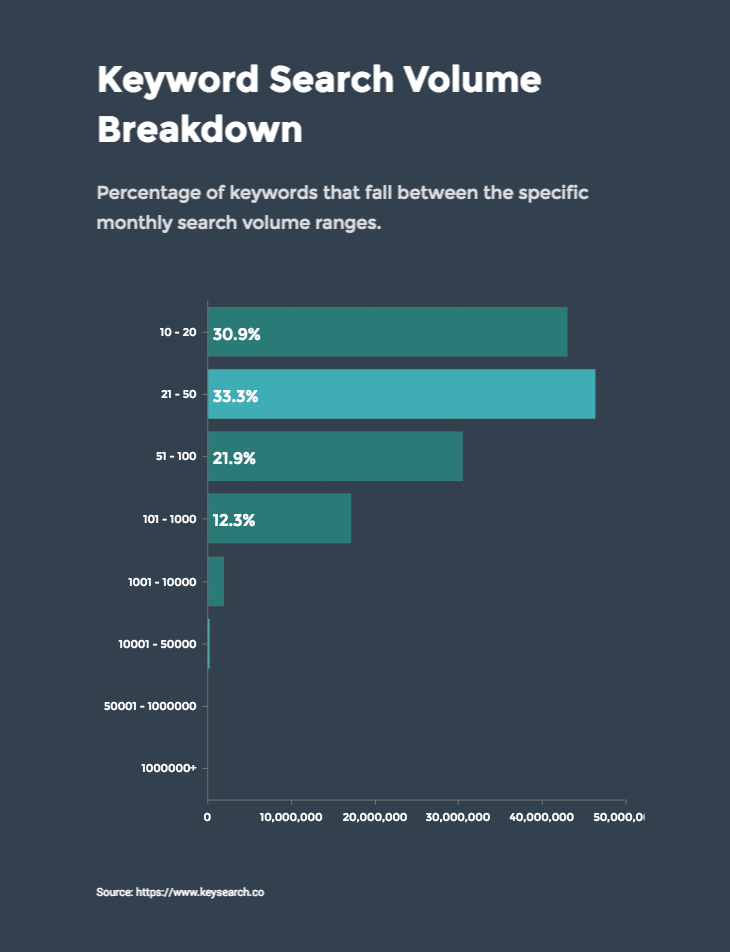
The goal is not to find only easy keywords. Instead, you want a balanced strategy. Some keywords can produce quick wins, while more competitive topics can become long-term content investments.

How to Find Keywords for Your Template
Keyword ideas can come from many places. SEO tools are useful, but they are not the only source. Some of the most relevant keywords come directly from customers and existing website data.
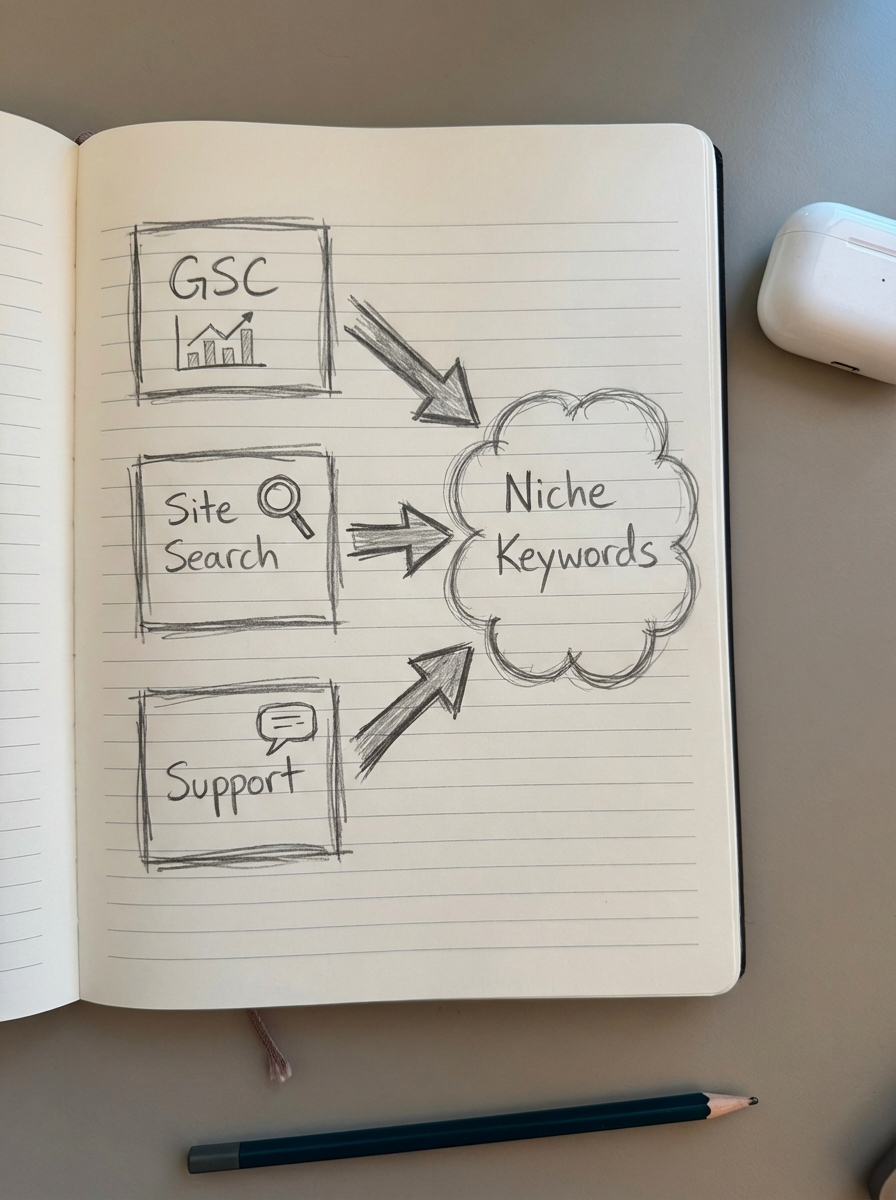
Start with the following sources:
- Customer questions and support conversations
- Search suggestions and autocomplete phrases
- Related searches and question-based queries
- Existing website search data
- Search performance reports
- Competitor content topics
- Product names and service descriptions
- Industry terminology and common problems

Collect ideas before judging them. During the discovery stage, quantity can be helpful. During the prioritization stage, relevance becomes more important.
Using an SEO Keyword Research Template to Prioritize Opportunities
An SEO Keyword Research Template becomes valuable when it helps you choose what to do next. Prioritization should consider more than search volume.
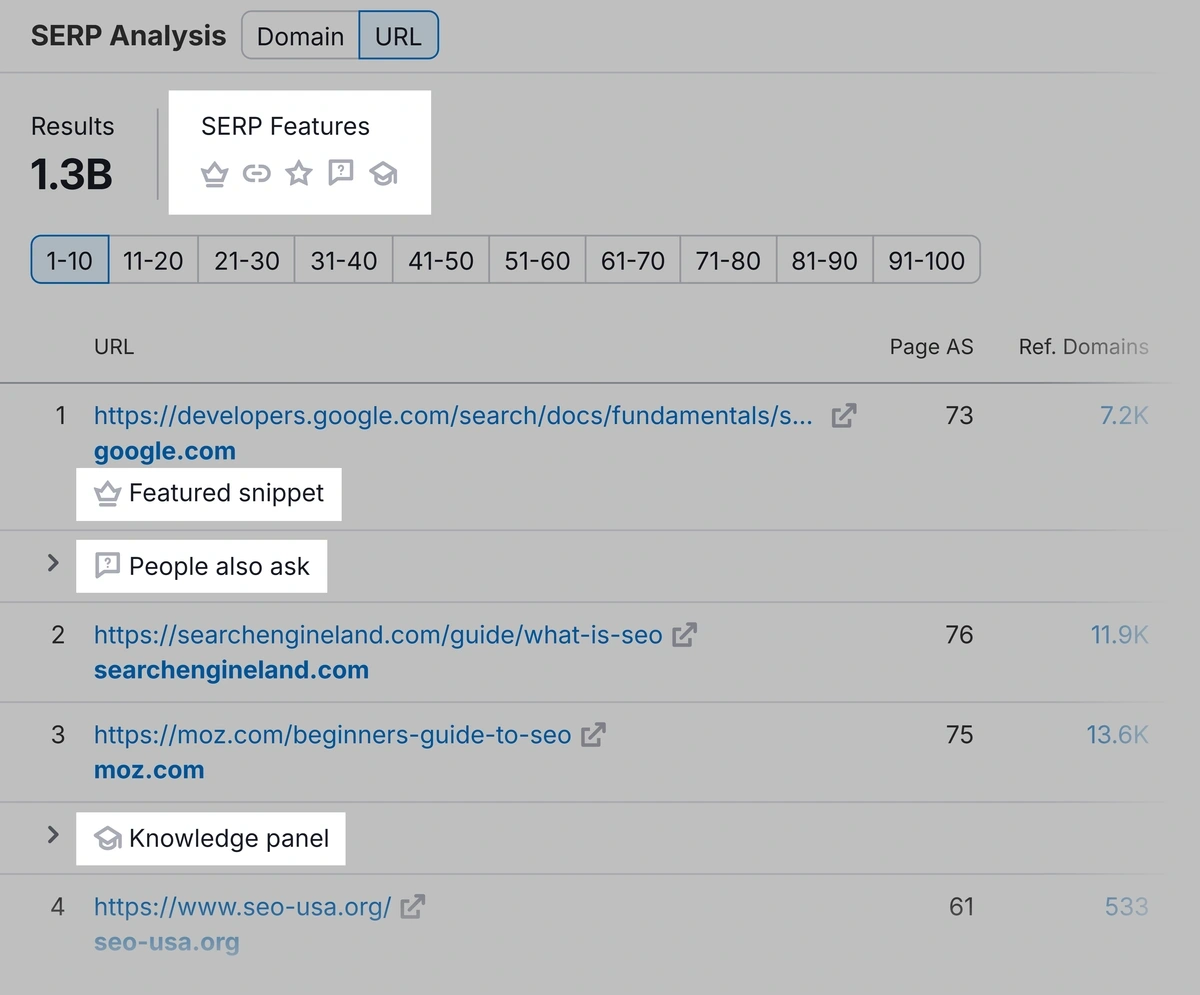
Ask four questions for each keyword:
- Is this search relevant to our audience?
- Can our website create a genuinely useful result for the searcher?
- Is the keyword realistic for our current website?
- Would success support a meaningful business or content goal?
You can assign a simple priority rating such as High, Medium, or Low. Another option is to score relevance, intent, difficulty, and opportunity using a basic scale. The exact formula matters less than applying the same reasoning consistently.

From Keyword Research to Keyword Mapping
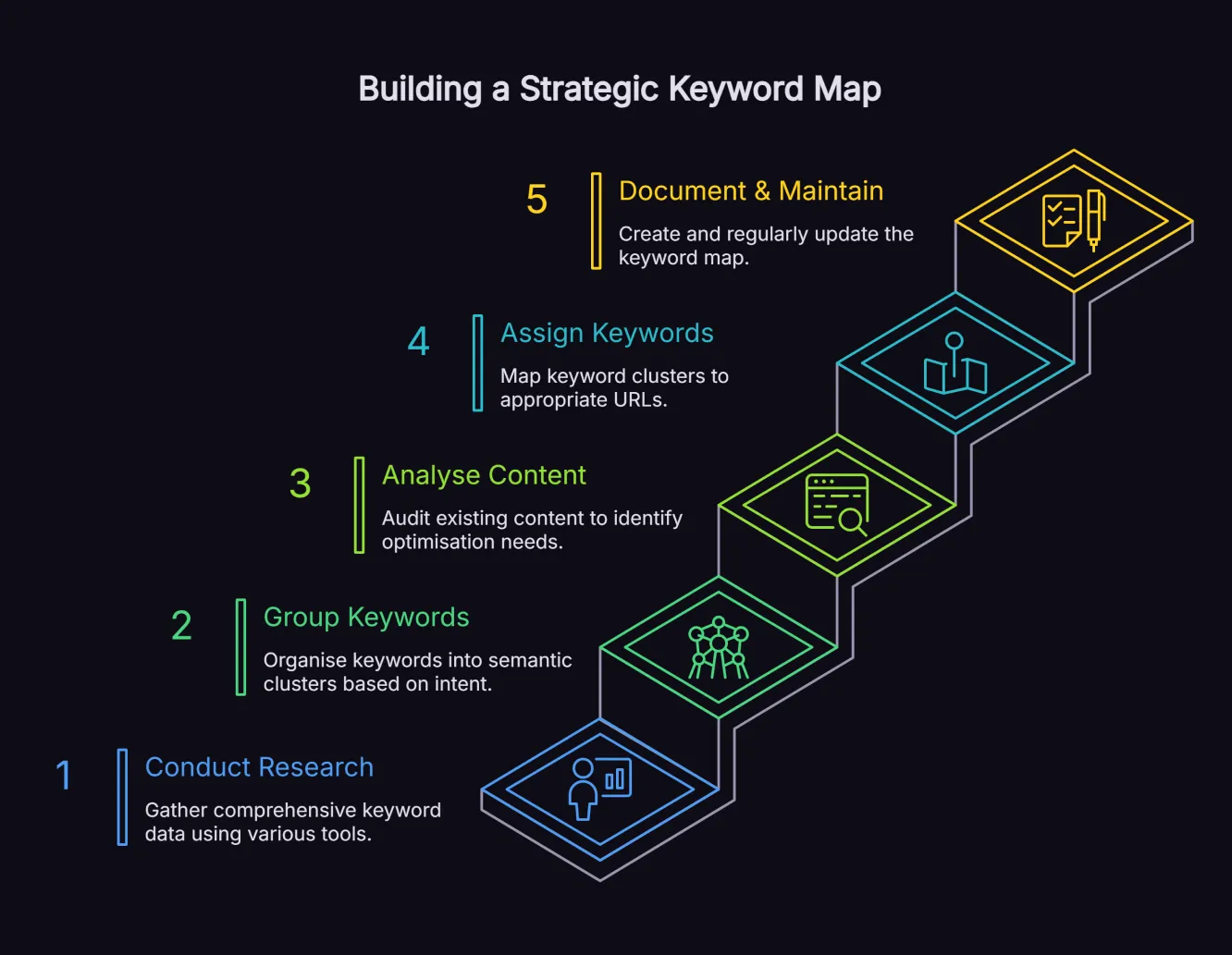
Research is only the beginning. Once you select keywords, assign them to existing or planned pages. This process is called keyword mapping.
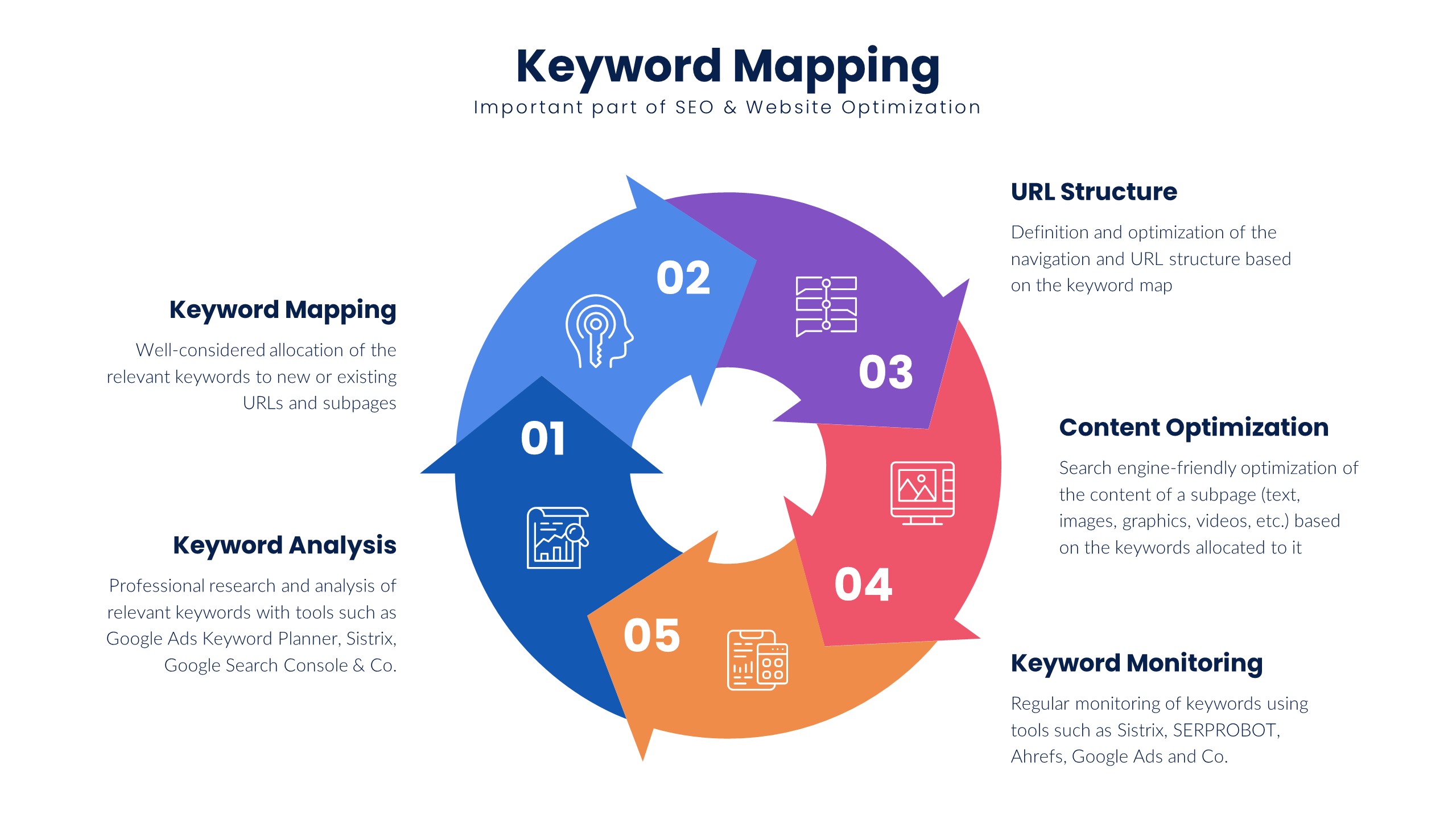
A page should usually have one primary search purpose. It can rank for multiple related phrases, but those phrases should generally share a similar intent. For example, “simple keyword research template” and “easy keyword research spreadsheet” may potentially fit one guide if the search results and user expectations are similar.
However, a broad informational query and a purchase-focused query may require separate pages. Mapping helps prevent keyword cannibalization, where several pages compete against one another.
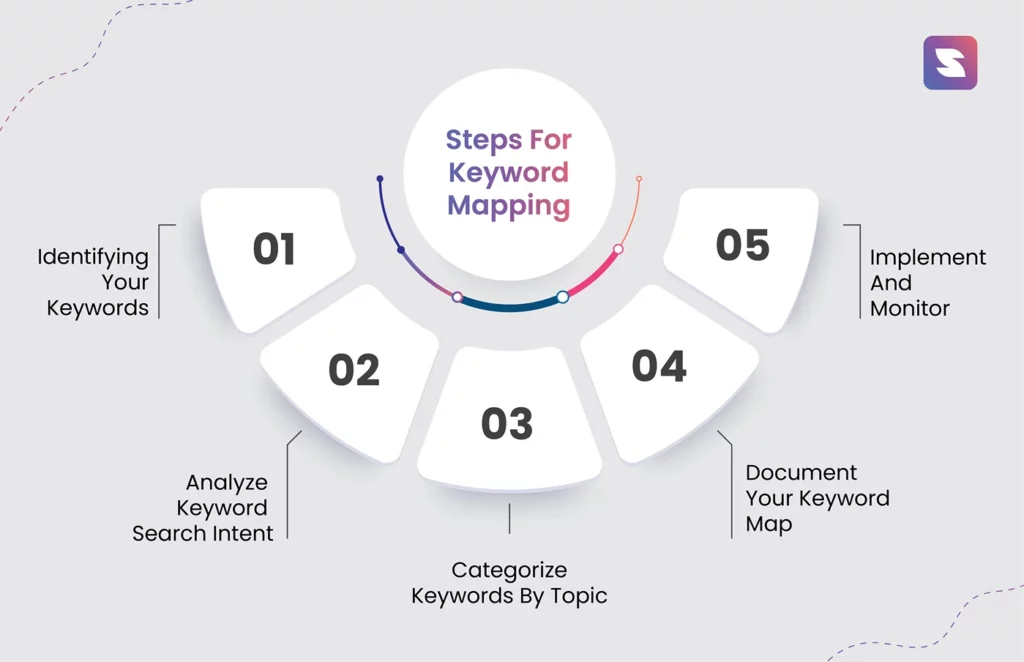
A Practical Example of a Simple Keyword Research Template
Suppose you run a website that teaches small businesses how to improve their online marketing. You might begin with the seed topic “keyword research.” Your list could include simple keyword research template, keyword research for beginners, how to find low competition keywords, keyword research spreadsheet, keyword clustering, and keyword mapping.
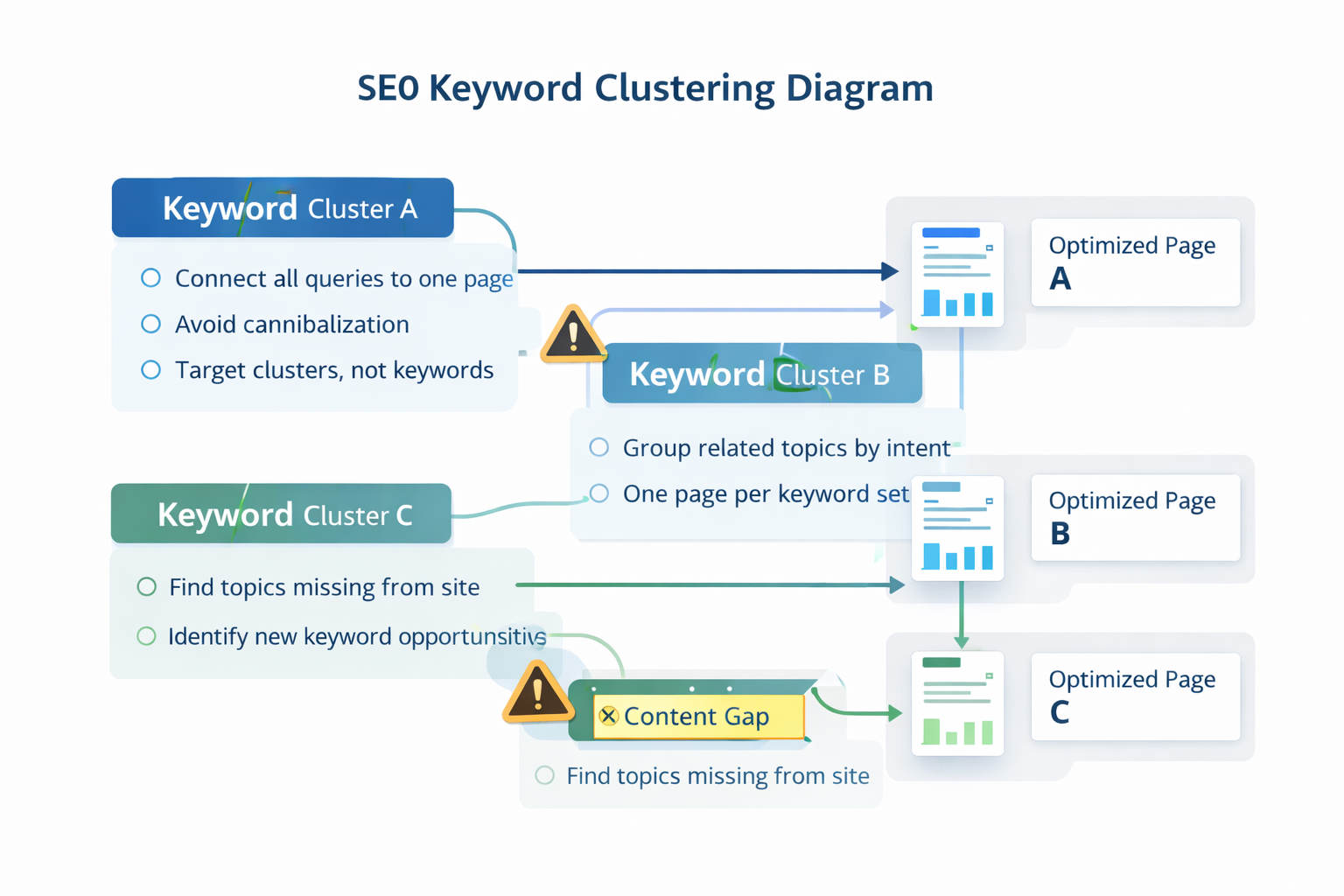
You would then review each phrase and record the available information. Informational searches could be assigned to guides. Commercial searches might be assigned to comparison pages. Keywords already generating impressions could become optimization opportunities.
This is also where a Key Work Template can support your workflow. The phrase can describe a simplified action plan connected to the keyword sheet. For each priority keyword, record the next piece of work: research the search results, update an existing article, write a new page, add internal links, or monitor performance.
Common Mistakes to Avoid
The most common keyword research mistake is chasing volume without considering relevance. A large keyword can attract visitors who have no interest in your products, services, or content.
Another mistake is relying entirely on tool metrics. Keyword difficulty and volume estimates are useful indicators, but the actual search results should also be reviewed. Search engines reveal what type of content users are currently finding useful.
Avoid creating separate pages for every minor keyword variation. Closely related phrases can often be addressed naturally within one comprehensive page. Creating dozens of nearly identical articles can make your site harder to navigate and can weaken your topical organization.
Finally, do not treat keyword research as a one-time project. Search behavior changes, new questions emerge, competitors publish new content, and your own website gains authority. Review your keyword data regularly.
Best Practices for Maintaining Your Template
Keep your system useful by reviewing it on a regular schedule. Monthly or quarterly reviews are often enough for many websites, although rapidly changing industries may need more frequent updates.
During each review, check whether your priority keywords have changed, whether existing pages are improving, and whether new search opportunities have appeared. Add notes explaining important decisions so you do not need to repeat the same analysis later.
It is also helpful to separate raw keyword collection from finalized decisions. Keep one area for unfiltered ideas and another for approved targets. This allows you to preserve potentially useful research without confusing unfinished ideas with your active SEO plan.
Conclusion: Keep Your Keyword Research Simple and Actionable
A Simple Keyword Research Template works best when it turns information into action. Start with relevant topics, collect real search ideas, record only the metrics that help you make decisions, identify search intent, group related phrases, and assign important keywords to the right pages. Whether you use a Keyword Outline Template, a Keyword Chart, a detailed Keyword Research Sheet, or a broader SEO Keyword Research Template, the principle remains the same: organize your research so every important keyword has a clear purpose. A simple, consistently maintained system can be far more valuable than an enormous spreadsheet full of keywords that never become useful content.