A salary certificate is an important employment document that confirms an employee’s job status and earnings. Banks, landlords, immigration offices, and other organizations often request this document when someone applies for a loan, rents a property, or verifies their financial circumstances. A properly prepared salary certificate helps establish credibility and makes the verification process easier.
Whether you are an employee requesting proof of income or an HR professional preparing an official salary certificate, understanding its purpose and required information can save time. This guide explains what a salary certificate is, what it should contain, how to request one, and how to prepare a professional salary certificate using a simple template.
What Is a Salary Certificate?
A salary certificate is an official document issued by an employer to confirm an employee’s employment details and salary information. It usually includes the employee’s name, job title, monthly earnings, employment date, and company information. An authorized representative, such as an HR manager or company director, typically signs the document.
Unlike an informal statement of income, a salary certificate provides written confirmation from the employer. Its contents can help another organization assess an employee’s financial position or verify their employment status.
Employers may issue a salary certificate for several purposes, including:
- Applying for a personal loan, mortgage, or other bank financing.
- Renting an apartment or residential property.
- Supporting a visa or immigration application when income verification is required.
- Completing financial or administrative requirements.
- Confirming employment and salary details for an authorized third party.
The exact format and information required depend on the requesting organization. Therefore, employees should confirm the recipient’s requirements before requesting the document.
What Information Should a Salary Certificate Include?
A professional salary certificate should present accurate information in a clear and organized format. Although employers may use different layouts, most certificates contain several essential sections.
1. Company Information
The document should begin with the employer’s official letterhead. Include the company name, address, contact details, and logo when available. This information helps the recipient identify the organization that issued the certificate.
2. Employee Details
The employee information section identifies the person whose income is being verified. Common details include:
- Full name as recorded in company employment records.
- Employee identification number, if applicable.
- Job title or current position.
- Department or business unit.
- Date of employment.
Only include personal information that is necessary for the certificate’s intended purpose. Avoid adding sensitive identification numbers unless the recipient specifically requires them and the employer can provide them securely.
3. Salary and Earnings Information
The salary section confirms the employee’s earnings. Depending on the purpose of the certificate, the employer may include basic salary, allowances, bonuses, and gross or net monthly income.
For example, a certificate may display the following salary components:
- Basic salary: The employee’s regular base compensation.
- Allowances: Additional payments, such as housing or transportation allowances.
- Bonus: Variable compensation, if applicable and relevant.
- Gross salary: Total earnings before applicable deductions.
- Net salary: The amount remaining after applicable deductions.
Employers should clearly identify whether the figures represent monthly or annual earnings. They should also distinguish gross salary from take-home pay to prevent misunderstandings.
4. Certification Statement and Authorization
A salary certificate should contain a short statement confirming that the information is accurate according to the employer’s records. The document usually ends with the issue date, the authorized signer’s name and position, and a signature or official company seal where applicable.
Free Salary Certificate Template
Use the following salary certificate template as a starting point. It is designed for employers who need a straightforward document confirming an employee’s monthly earnings. Replace the placeholders with verified information and adjust the salary components to suit the employee’s compensation structure.
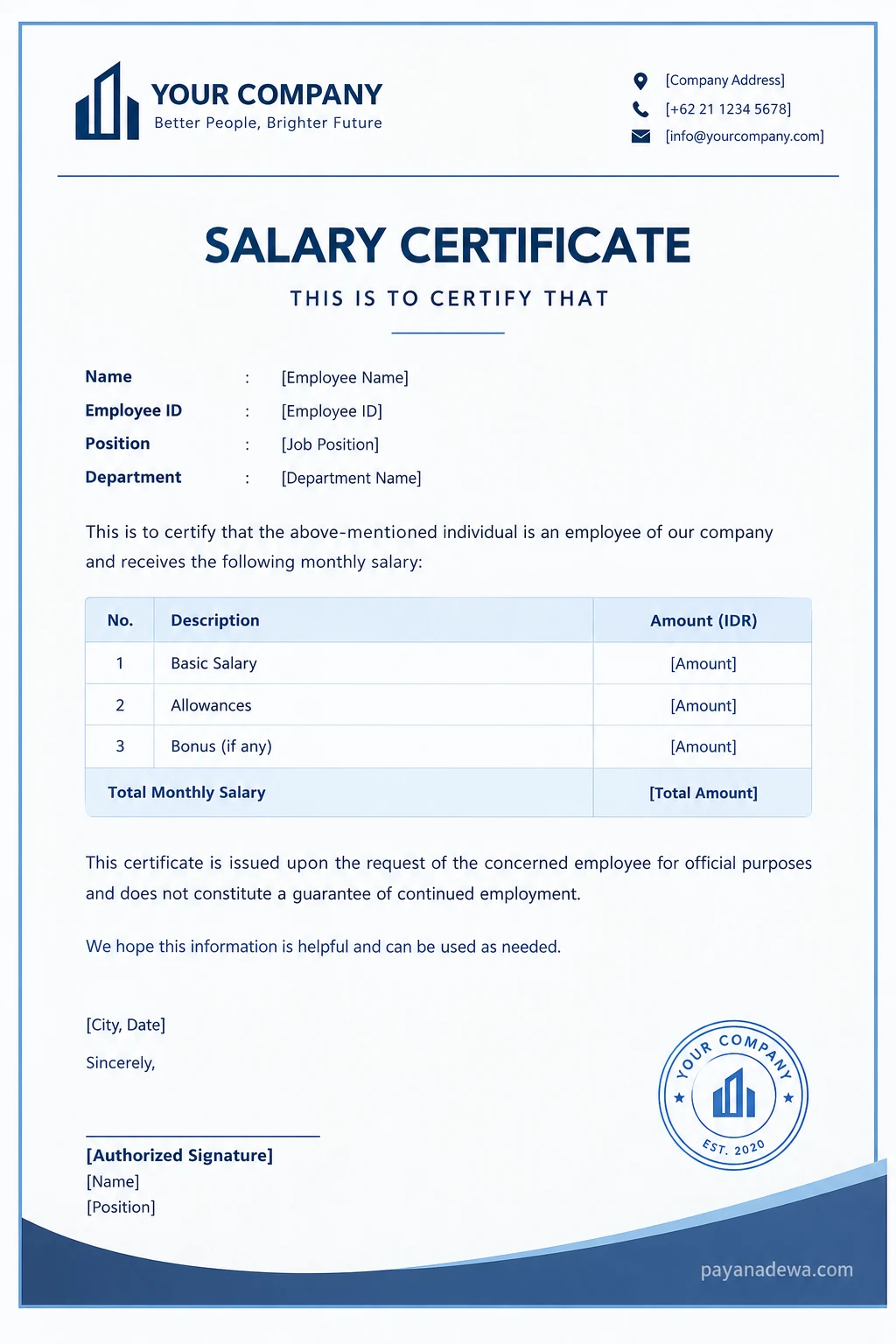
Before issuing the certificate, verify the employee’s details, salary figures, and recipient requirements. Print the document on company letterhead or save it as a PDF when the receiving organization accepts digital copies.
How to Create a Salary Certificate Step by Step
Preparing a salary certificate does not require complicated software. Employers can create one using a word processor or a document editor, provided the final document is accurate and professionally presented.
Step 1: Confirm the Employee’s Request
First, ask the employee why they need the certificate. A bank may require gross salary, net salary, and employment duration, while a landlord may only need confirmation of monthly income and current employment.
Confirm whether the recipient has a specific format, required wording, or a preferred issue date. This step helps prevent unnecessary revisions.
Step 2: Verify the Employment Information
Check the employee’s name, position, department, and employment date against official company records. Verify salary details using the appropriate payroll records or authorized HR information system.
Never estimate salary figures or copy outdated compensation details from an earlier certificate. If the employee recently received a salary adjustment, ensure that the certificate reflects the correct effective date and earnings period.
Step 3: Prepare the Document
Place the company information at the top, followed by a clear heading such as “Salary Certificate” or “Certificate of Employment and Salary.” Arrange employee details and salary information into separate sections.
Keep the layout simple. Use readable fonts, consistent spacing, and clearly labeled salary amounts. A table can make the earnings breakdown easier to understand.
Step 4: Review and Approve
Ask an authorized HR representative or company official to review the document. Check spelling, salary calculations, currency, and the employee’s details before approval.
The certificate should only be signed by someone authorized to confirm employment and compensation information. An official stamp may be included when company policy or the recipient requires it.
Step 5: Deliver the Certificate Securely
Provide the completed salary certificate to the employee or the authorized recipient according to company policy. If the document contains confidential financial information, use a secure delivery method rather than an unrestricted public link.
Keep a copy in the company’s employment records when appropriate. Follow applicable privacy rules and internal retention policies.
Salary Certificate vs Salary Slip: What Is the Difference?
A salary certificate and a salary slip both contain salary information, but they serve different purposes.
- Salary certificate: A formal employer-issued document that confirms employment and salary details, usually for a specific administrative or financial purpose.
- Salary slip: A periodic payroll statement that shows earnings, deductions, and the amount paid to an employee for a particular pay period.
A salary slip generally provides a detailed breakdown of one month’s payroll calculation. A salary certificate, on the other hand, summarizes relevant employment and income information in a format suitable for verification.
Some organizations accept recent salary slips instead of a salary certificate. Others require an employer-issued certificate, especially when they need confirmation that the employee is currently employed. Always check the recipient’s documentation requirements.
Tips for Making a Professional Salary Certificate
A well-prepared salary certificate should be easy to read, accurate, and appropriate for its intended use. Follow these practical recommendations:
- Use official letterhead: Include the employer’s verified company name and contact information.
- Keep salary figures consistent: Make sure the amounts match payroll records and specify the currency.
- State the salary period: Identify whether the earnings are monthly, annual, or based on another period.
- Avoid unnecessary details: Include only the employee information relevant to the request.
- Use a clear issue date: A recent date helps the recipient understand when the information was verified.
- Check the recipient’s requirements: Confirm whether a signature, company stamp, or particular wording is necessary.
- Protect confidential information: Share the certificate only with the employee or an authorized recipient.
Remember that a salary certificate confirms information recorded by the employer. It should not promise continued employment, guarantee future earnings, or include statements that the employer cannot verify.
Frequently Asked Questions About Salary Certificates
Can I request a salary certificate from my employer?
Yes. Employees can generally request a salary certificate from their HR department, payroll team, or authorized manager. Explain why you need it and provide the recipient’s requirements so the employer can prepare the appropriate document.
Is a salary certificate the same as proof of income?
A salary certificate is one form of proof of income. However, some organizations may also accept salary slips, bank statements, tax documents, or other evidence. The acceptable documents depend on the organization’s verification process.
Can I use a salary certificate for a bank loan?
Many banks request salary certificates to verify employment and earnings during a loan application. However, a salary certificate does not guarantee loan approval. The bank may also evaluate credit history, existing debts, bank statements, and other eligibility requirements.
Can a salary certificate be issued digitally?
Yes. Many employers provide salary certificates as PDF documents or digitally signed files. Whether a digital certificate is accepted depends on the recipient’s rules and the applicable electronic signature requirements.
How long is a salary certificate valid?
There is no universal validity period for every salary certificate. Some recipients accept documents issued within the last 30 or 90 days, while others specify a different timeframe. Ask the receiving organization how recent the certificate must be before requesting one.
Conclusion
A salary certificate is a useful employment document that confirms an employee’s position and earnings for financial, administrative, and personal purposes. A clear certificate should include verified company details, employee information, salary components, an issue date, and authorization from the employer.
Whether you are preparing a certificate for a bank, a rental application, or another official requirement, accuracy and clarity are essential. Use a professional salary certificate template, confirm the recipient’s requirements, and ensure that every salary figure matches the employer’s records. With the right information and a simple layout, you can prepare a reliable document that is easy to review and ready for its intended purpose.