You do not need an elaborate design to make an award feel special. Clear wording, a thoughtful message, and a polished layout can communicate genuine appreciation. This guide explains what a recognition certificate is, when to use one, what details to include, and how to create a professional certificate that is ready to print or share digitally.
What Is a Recognition Certificate?
A recognition certificate is a formal or informal document presented to acknowledge a person’s effort, behavior, service, progress, or achievement. It may be used in workplaces, schools, community groups, clubs, training programs, and special events.
Unlike a qualification certificate, which may confirm that someone completed a course or met a specific standard, a recognition certificate focuses on appreciation. It can celebrate measurable results, but it can also honor qualities such as teamwork, reliability, creativity, kindness, leadership, or dedication.
When Should You Give a Recognition Certificate?
Recognition is most effective when it is timely and specific. Give a certificate when you can explain what the recipient did and why that contribution matters. Here are several occasions when a certificate of recognition can be appropriate.
Employee and workplace appreciation
Managers can recognize employees for excellent service, consistent performance, collaboration, initiative, or completing an important project. A certificate can support an employee appreciation program and help make achievements visible across a team.
School and student achievements
Teachers and school administrators can use certificates to celebrate academic improvement, attendance, helpfulness, leadership, creativity, participation, or a positive attitude. Recognition does not have to be limited to the highest grades; progress and effort deserve attention too.
Volunteer and community service
Community organizations can thank volunteers for giving their time, supporting an event, helping neighbors, or contributing to a local initiative. Mentioning the specific service makes the recognition more personal and memorable.
Events, clubs, and training programs
Certificates are also useful at workshops, conferences, sports clubs, competitions, and team-building events. They can acknowledge participation, teamwork, problem-solving, or a noteworthy contribution during a shared activity.
What to Include in a Recognition Certificate
A professional certificate should be easy to understand at a glance. Include the details that explain who is being recognized, why the award is being given, and who is presenting it.
- Certificate title: Use a clear heading such as “Recognition Certificate” or “Certificate of Recognition.”
- Recipient’s name: Make the name prominent and check the spelling before printing.
- Reason for recognition: State the achievement, contribution, or behavior being celebrated.
- Presentation message: Add one or two sentences that express sincere appreciation.
- Date: Include the date the certificate is awarded or the event takes place.
- Presenter or organization: Add the company, school, group, or department name when relevant.
- Signature and title: Leave space for an authorized manager, teacher, organizer, or team leader to sign.
- Branding or emblem: A logo, seal, or small decorative motif can make the design feel official without overcrowding it.
Only include information that is relevant to the occasion. A certificate for a friendly classroom activity may need fewer formal details than one issued by a company or professional organization.
Recognition Certificate Template: A Simple Design Example
A printable recognition certificate template can save time while keeping the final result consistent and attractive. The navy-and-gold example below uses a clear title, an award emblem, a large recipient name, an appreciation message, and signature lines. You can replace the sample text with details that match your event.
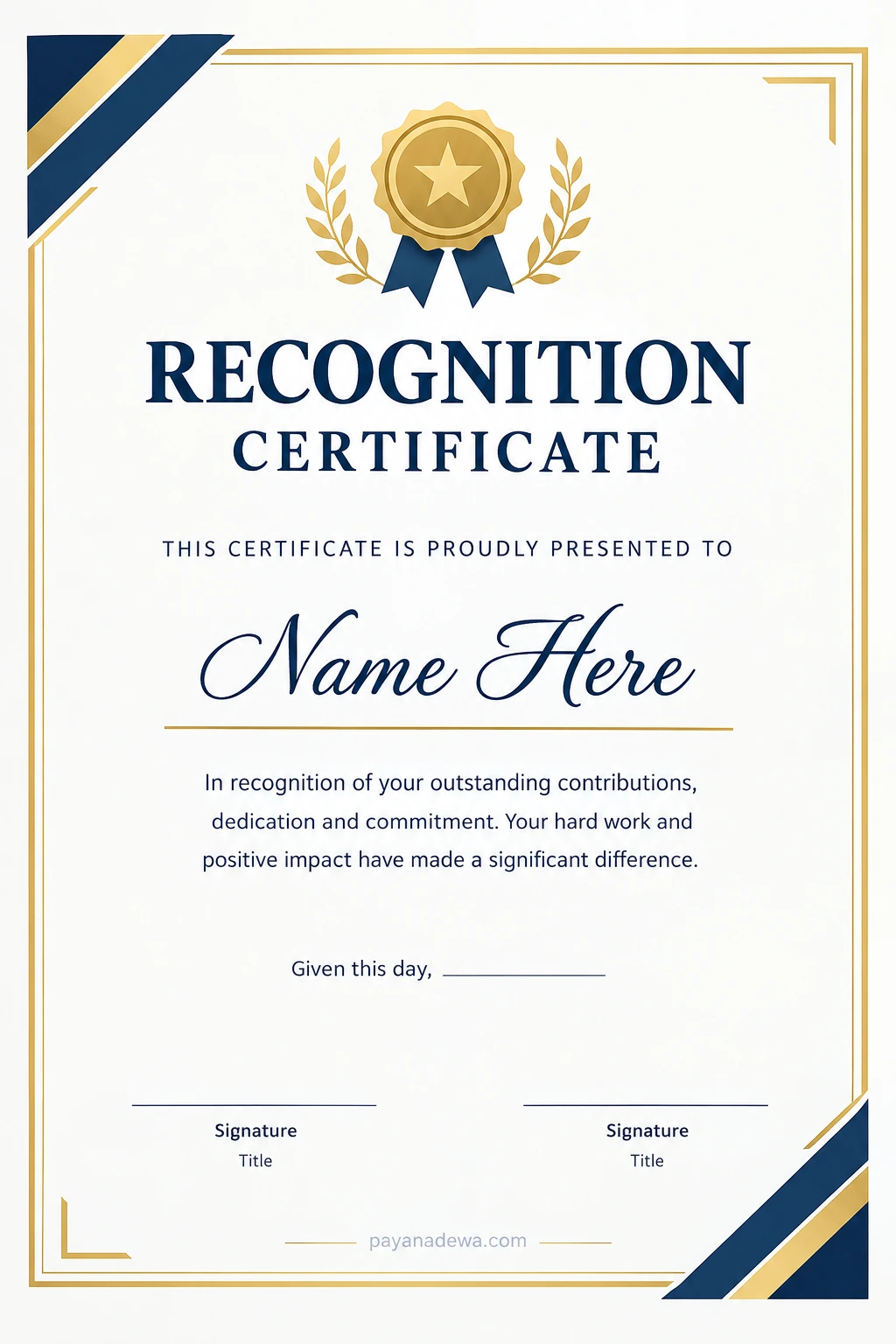
For the best result, choose a layout with enough white space for names and messages. Decorative borders and award symbols can add polish, but they should not compete with the recipient’s name or the reason for recognition.
How to Write a Meaningful Certificate Message
The wording is what turns a blank certificate into a meaningful award. Keep the message positive, specific, and easy to read. Instead of using broad praise alone, mention the action or quality you want to celebrate.
Use a clear, direct structure
A useful message can follow this pattern: recognize the recipient, name the contribution, and explain its value. For example: “Presented to [Recipient Name] in appreciation of outstanding teamwork and dependable support during [Project or Event]. Your commitment helped the team achieve its goals.”
Examples for different occasions
- Employee recognition: “In appreciation of your dedication, professionalism, and valuable contribution to our team.”
- Student recognition: “For demonstrating curiosity, perseverance, and a positive attitude toward learning.”
- Volunteer recognition: “In grateful recognition of your generous service and meaningful contribution to our community.”
- Team recognition: “For excellent collaboration, creative problem-solving, and a shared commitment to success.”
- Leadership recognition: “For leading by example, encouraging others, and making a positive difference.”
Personalize these examples with a real detail whenever possible. A short, accurate message is usually stronger than a long paragraph filled with general compliments.
How to Create and Print a Recognition Certificate
You can create a certificate with a word processor, a design application, or an editable certificate template. Follow these steps to make the process straightforward.
- 1. Choose the purpose. Decide what behavior, achievement, or contribution the certificate will recognize.
- 2. Select a suitable template. Pick a layout that matches the occasion, from formal and traditional to simple and modern.
- 3. Add the key details. Enter the recipient’s name, reason for recognition, date, organization, and presenter information.
- 4. Check the design. Use two or three complementary colors and readable fonts. Keep the most important text visually prominent.
- 5. Proofread carefully. Verify names, dates, titles, and the message before exporting or printing.
- 6. Export and print. Save a high-quality PDF for printing or use a suitable image format for digital sharing.
Printing tips for a polished result
Use a standard paper size that suits your region and printer, such as A4 or US Letter. Heavier paper or cardstock often feels more substantial than ordinary copy paper. Before printing a batch, print one test copy to check alignment, color, margins, and text size. Make sure the printer settings match the document size so that borders are not clipped.
Design Tips for a Professional Certificate
A strong certificate design balances style and readability. Keep these practical principles in mind when customizing your template.
- Make the recipient the focus. Use a larger font or a contrasting typeface for the person’s name.
- Keep typography simple. Pair a decorative heading font with a highly readable body font. Avoid using too many font styles.
- Use color with purpose. Navy and gold can feel formal, while softer colors may suit a classroom or community event.
- Leave breathing room. Adequate spacing helps the certificate feel organized and makes it easier to read.
- Check accessibility. Ensure strong contrast between text and background, and do not rely on color alone to communicate meaning.
- Keep branding restrained. A small logo or watermark can identify the source without distracting from the award.
Common Mistakes to Avoid
Even a good certificate template can look less professional if important details are overlooked. Avoid these common issues:
- Using a vague message that does not explain why the recipient is being recognized.
- Making the design so decorative that the name and award message become difficult to read.
- Leaving out the date or presenter details when they are important for the occasion.
- Printing without checking spelling, page size, margins, or alignment.
- Using the same generic message for every recipient when a personal detail would make the award more meaningful.
For formal or regulated settings, check your organization’s policies before presenting a certificate. A recognition award should not imply a license, qualification, or official status that the recipient has not earned.
Frequently Asked Questions
Is a recognition certificate the same as an award certificate?
The terms can overlap. An award certificate often marks a competition result or a specific achievement, while a recognition certificate may also acknowledge effort, service, improvement, or positive behavior. The best wording depends on the purpose of the presentation.
Can I use a recognition certificate for employees?
Yes. Employers commonly use employee recognition certificates to acknowledge teamwork, customer service, leadership, reliability, innovation, and project contributions. Pair the certificate with specific feedback so the recipient understands what made the contribution valuable.
Should a certificate be printed or sent digitally?
Both options work. A printed certificate can be displayed or presented at an event, while a digital PDF is convenient for remote teams and online programs. Choose the format that fits the recipient and occasion, and check that the final file is easy to read.
What paper is best for printing certificates?
Good-quality matte paper or light cardstock is a practical choice. Select paper that your printer supports, and test one copy before printing multiple certificates.
Conclusion
A recognition certificate is a practical way to show appreciation and make a meaningful contribution feel seen. The strongest certificates combine a clear design with accurate details and a message that explains why the recipient deserves recognition.
Start with a printable recognition certificate template, personalize the recipient’s name and achievement, and proofread the final version before sharing it. Whether you are celebrating an employee, student, volunteer, or team, a thoughtful certificate can turn a brief moment of appreciation into a lasting reminder of their positive impact.