A Professional HR Meeting is more than a scheduled conversation between human resources professionals and company leaders. It is an opportunity to review employee-related matters, discuss workplace priorities, solve organizational challenges, and create practical plans for improving the employee experience. When properly organized, an HR meeting can help teams make clearer decisions and keep people-related initiatives aligned with business goals.
Whether the meeting involves recruitment, employee engagement, performance management, training, workplace policies, or organizational development, preparation plays an important role. A structured approach helps participants understand why they are meeting, what needs to be discussed, and which actions should follow.
Professional HR meetings are also useful for improving communication between HR teams, managers, and employees. Instead of allowing important issues to remain unresolved, a focused meeting provides a dedicated space for discussion, clarification, and decision-making.
The most effective meetings combine clear objectives, relevant information, active participation, and documented follow-up. With the right meeting structure, HR professionals can reduce unnecessary discussion while giving important people-related issues the attention they deserve.
This guide explains how to prepare, organize, conduct, and follow up after a professional HR meeting. It also provides practical ideas that HR managers and business leaders can use to make their meetings more productive.
What Is a Professional HR Meeting?
A Professional HR Meeting is a structured discussion focused on human resources, employees, workplace practices, and organizational development. Depending on the purpose, participants may include HR managers, recruiters, department leaders, executives, team managers, or other relevant stakeholders.
Unlike an informal conversation, a professional HR meeting normally has a defined objective and agenda. The participants should understand what needs to be reviewed and what decisions or actions are expected from the meeting.
Common topics include employee performance, recruitment progress, workforce planning, training needs, employee relations, workplace culture, compensation discussions, HR policies, compliance requirements, and organizational changes.
Why HR Meetings Matter
HR meetings create a regular communication channel for people-related decisions. They can help organizations identify problems earlier, coordinate responsibilities, and ensure that HR initiatives support wider organizational objectives.
A well-managed meeting can also encourage collaboration. When participants have an opportunity to share information and perspectives, HR teams can better understand operational challenges and develop solutions that are practical for employees and managers.
How to Prepare for a Professional HR Meeting
Good preparation is one of the most important factors in creating a successful HR meeting. Participants should receive enough information before the meeting so they can review relevant materials and arrive ready to contribute.
Start by defining the main purpose of the meeting. Avoid creating an agenda that attempts to solve every HR issue at once. A focused agenda makes it easier to keep the discussion productive and ensures that important subjects receive sufficient attention.
Create a Clear Meeting Agenda
A professional HR meeting agenda can include the following elements:
- Meeting objective
- Date, time, and location
- List of participants
- Key discussion topics
- Relevant HR data or reports
- Questions requiring decisions
- Action items from previous meetings
- Expected outcomes
Sharing the agenda in advance allows participants to prepare questions, gather information, and identify issues that may require additional discussion. It also helps reduce time spent explaining basic information during the meeting.
Collect Relevant HR Information
Depending on the meeting topic, useful information may include recruitment numbers, employee turnover data, training participation, performance review progress, engagement feedback, attendance trends, workforce plans, or policy updates.
Information should be presented clearly and only when it supports the meeting objective. Too much unrelated data can make a meeting difficult to follow and may distract participants from the decisions that matter most.
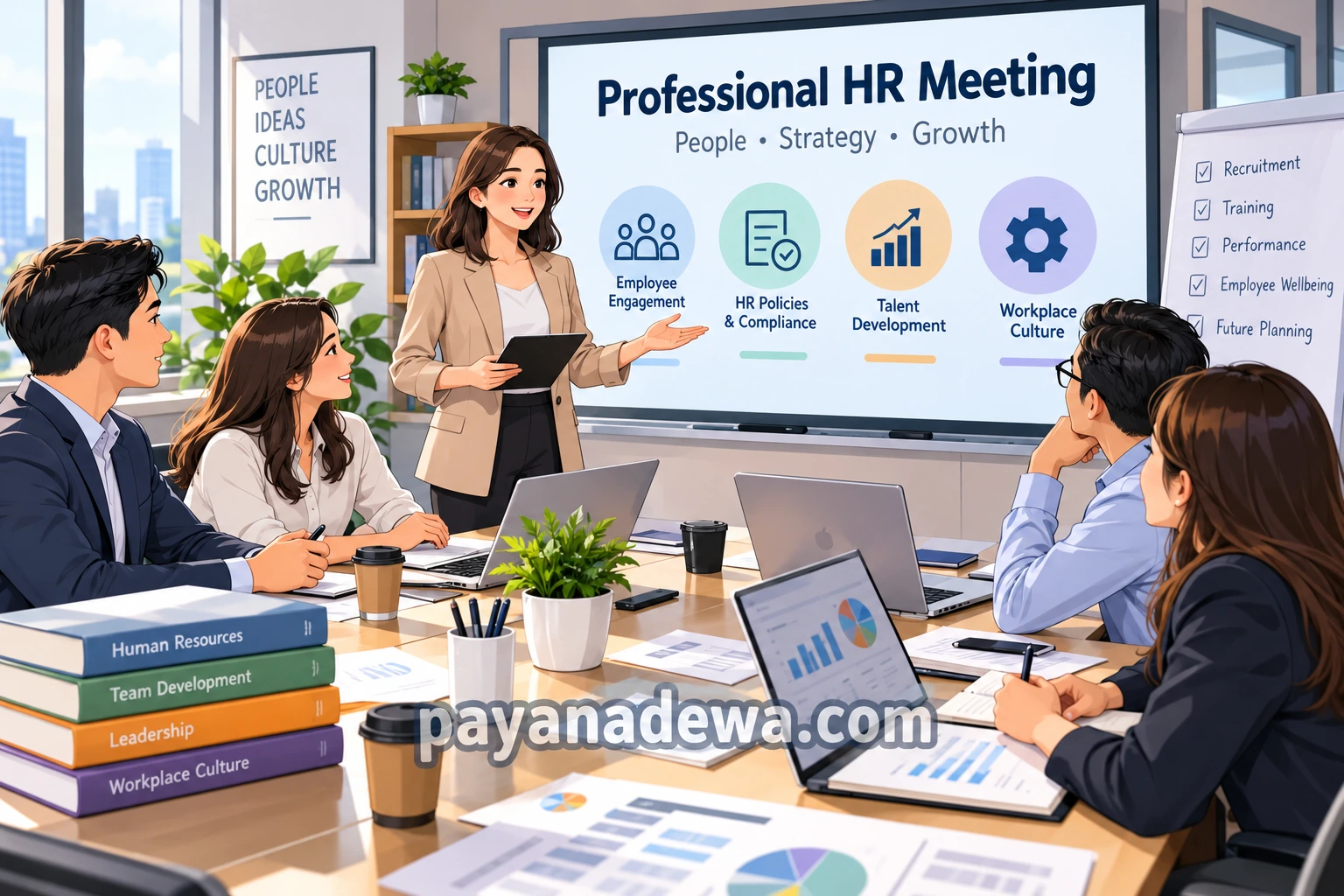
Key Topics to Discuss in an HR Meeting
The agenda for a Professional HR Meeting will vary according to the organization’s needs. However, several topics are frequently relevant to HR teams and business leaders.
Employee Performance
Performance management can be an important part of an HR discussion. Teams may review performance review cycles, development plans, recognition programs, or areas where employees need additional support.
The discussion should focus on facts, documented expectations, and practical next steps. Clear communication can help managers and HR professionals approach performance-related conversations consistently.
Recruitment and Workforce Planning
Recruitment discussions may cover open positions, hiring priorities, candidate pipelines, onboarding requirements, and workforce capacity. HR teams can use these discussions to coordinate hiring needs with department managers.
Workforce planning can also help organizations anticipate future talent requirements instead of responding only when vacancies appear. This can make recruitment processes more organized and easier to manage.
Employee Engagement and Workplace Culture
Employee engagement is another valuable subject for an HR meeting. Teams can discuss employee feedback, communication initiatives, recognition, collaboration, workplace experiences, and opportunities to strengthen organizational culture.
Rather than relying only on assumptions, HR professionals should consider available employee feedback and relevant organizational data. This creates a more informed foundation for deciding what actions may be useful.
How to Run a Professional HR Meeting
Once the meeting begins, the meeting leader should establish the purpose and expected outcome. A short opening can clarify the agenda and remind participants which topics require discussion or decisions.
Keeping the discussion structured does not mean preventing people from sharing ideas. Instead, the facilitator should make sure that comments remain relevant and that every important topic receives appropriate attention.
Encourage Constructive Participation
A productive HR meeting should allow participants to contribute their perspectives. HR issues can involve different experiences and priorities, so listening carefully is essential.
The facilitator can ask focused questions such as what has changed, what problem needs to be solved, what information is missing, and what action should happen next. These questions can move the conversation from general observations toward practical decisions.
Keep Discussions Focused
Long meetings can lose effectiveness when conversations repeatedly move away from the agenda. When an unrelated issue appears, the facilitator can record it as a separate follow-up item rather than allowing it to consume the entire meeting.
Time management is especially important when senior leaders or multiple departments are involved. A clear agenda and reasonable time allocation help participants stay focused on the most important issues.
Best Practices for Professional HR Meetings
Several simple practices can improve the quality of recurring HR meetings. The goal is not to make meetings complicated, but to create a consistent process that produces useful outcomes.
Use Consistent Meeting Templates
A professional HR meeting template can make recurring meetings easier to organize. A template may contain sections for objectives, discussion topics, employee-related metrics, decisions, responsibilities, deadlines, and follow-up notes.
Using the same structure also makes it easier to compare discussions over time. HR teams can quickly identify unfinished actions and determine whether previous decisions produced the intended results.
Assign Action Owners
Every important action item should have a responsible person or team. Instead of writing that “HR will follow up,” identify who will complete the task and when it should be completed.
- Action: Define the specific task.
- Owner: Identify the person responsible.
- Deadline: Set a realistic completion date.
- Status: Track whether the action is pending, active, or completed.
- Follow-up: Decide when progress will be reviewed.
Document Important Decisions
Meeting notes should capture significant decisions and commitments. Accurate documentation reduces confusion and gives participants a shared reference after the meeting ends.
Documentation is particularly useful when several departments are responsible for implementing an HR initiative. Everyone can refer to the same decisions, deadlines, and responsibilities.
Common Mistakes to Avoid in HR Meetings
Even well-intentioned HR meetings can become ineffective when they lack structure. Recognizing common problems can help meeting leaders improve future sessions.
Starting Without a Clear Objective
A meeting without a defined purpose can quickly become a collection of unrelated conversations. Before inviting participants, determine what the meeting should accomplish.
Inviting Too Many People
Every participant should have a meaningful reason to attend. Too many attendees can make discussion slower and make it harder for the group to reach decisions.
Ignoring Previous Action Items
Recurring HR meetings should not repeatedly discuss the same unresolved issues without tracking progress. Begin by reviewing important action items from the previous meeting and identifying what has been completed, delayed, or changed.
Ending Without Next Steps
A meeting should finish with a clear understanding of what happens next. Participants should know which actions were agreed upon, who owns them, and when progress will be reviewed.
Professional HR Meeting Checklist
Use this checklist before and after an HR meeting to create a consistent process:
- Define the meeting objective.
- Prepare and distribute the agenda.
- Invite only relevant participants.
- Collect supporting HR information.
- Review previous action items.
- Keep the discussion aligned with the agenda.
- Encourage constructive participation.
- Document important decisions.
- Assign owners to action items.
- Set deadlines for follow-up tasks.
- Share meeting notes when appropriate.
- Review progress during the next relevant meeting.
How Technology Can Improve HR Meetings
Digital tools can make HR meetings easier to organize, especially for distributed or hybrid teams. Online calendars, collaborative documents, HR information systems, video conferencing platforms, and project management tools can help participants prepare and follow up.
Technology should support the meeting rather than become the focus. The most useful tools are those that make information easier to access, decisions easier to document, and action items easier to track.
Using Data During HR Discussions
HR teams can use dashboards and reports to provide context for discussions. For example, recruitment data may show hiring progress, while engagement surveys can help identify areas that deserve further attention.
Data should be interpreted carefully and alongside relevant context. A single metric rarely explains an entire employee or organizational situation, so HR professionals should consider multiple sources of information before making decisions.
Creating a More Effective HR Meeting Culture
Effective meetings are part of a broader organizational communication culture. When employees and managers know that HR discussions are structured, respectful, and action-oriented, they may be more willing to participate openly.
HR leaders can strengthen this culture by modeling active listening, clear communication, confidentiality where appropriate, and respectful disagreement. These behaviors help create meetings where participants can raise concerns without turning every discussion into conflict.
Focus on People and Business Needs
The strongest HR meetings connect people priorities with organizational needs. Recruitment, development, engagement, workplace culture, and employee support should be considered alongside operational requirements and business objectives.
This balanced perspective helps HR teams move beyond administrative tasks and participate more effectively in organizational planning.
Conclusion
A Professional HR Meeting can become a valuable tool for improving communication, employee management, workforce planning, and organizational development. The key is to approach every meeting with a clear purpose, relevant information, focused discussion, and documented follow-up.
Using a consistent HR meeting agenda or professional meeting template can make preparation easier and help teams maintain accountability. When participants understand the objective and leave with clear responsibilities, meetings are more likely to produce meaningful results.
Whether the discussion involves recruitment, performance, employee engagement, workplace culture, training, or HR strategy, a professional and structured approach can help organizations turn conversations into practical action.