An Oregon Bill Of Sale is a useful written record for documenting the transfer of a vehicle, boat, trailer, or other property between a seller and buyer. It can provide important details about the transaction, including the parties involved, the item being sold, the sale price, and the date of transfer.
For vehicle transactions, an Oregon bill of sale can also serve as a release of interest document when it contains the information required by the Oregon Department of Motor Vehicles (DMV). However, it is important to understand that a bill of sale is not always a substitute for a vehicle title. Buyers and sellers may need additional documents to complete an ownership transfer.
Using a well-organized form can make a private-party transaction easier to document. The following guide explains what an Oregon Bill Of Sale should contain, when it may be needed, how it relates to Oregon DMV requirements, and practical steps for completing one correctly.
What Is an Oregon Bill Of Sale?
An Oregon Bill Of Sale is a written document that records the sale or transfer of an item from one person to another. It creates a clear record of the transaction and can help both parties keep track of important information after the sale.
A typical form identifies the seller and buyer, describes the property, records the purchase price, and includes signatures and the transaction date. Depending on the type of property, additional information may be appropriate.
Common Uses for an Oregon Bill Of Sale
A bill of sale may be used for several types of transactions, including:
- Private-party vehicle sales
- Boat or vessel transfers
- Trailer transactions
- Sales of personal property
- Other transactions where the parties want a written sales record
For motor vehicles, the Oregon DMV specifically allows a separate bill of sale to be used as a release of interest document when it contains the required information.
What Information Should an Oregon Bill Of Sale Include?
A good Oregon Bill Of Sale template should make the transaction details easy to understand. Complete information can also reduce confusion if either party needs to reference the transaction later.
Seller Information
Include the seller’s full printed name and relevant contact information. For a vehicle transaction, the seller’s identity should be consistent with the ownership documents whenever applicable.
Buyer Information
The buyer’s full name and contact information should also be recorded. Including the buyer’s address can be especially helpful when completing ownership and registration paperwork.
Property or Vehicle Details
The description should identify exactly what is being sold. For a vehicle, useful information includes the make, model, model year, VIN, license plate information, color, and odometer reading when applicable.
For other property, describe the item clearly enough that there is little uncertainty about what the transaction covers.
Sale Price and Payment Information
Record the agreed purchase price and, when useful, the payment method. The form can indicate whether payment was made by cash, check, bank transfer, or another method.
Signatures and Date
The seller should sign and date the document, and including a buyer signature can provide a stronger record that both parties acknowledged the transaction. Keep a completed copy for your records.
Oregon Vehicle Bill Of Sale Requirements
For Oregon vehicle transactions, the DMV states that a buyer may use the DMV’s Vehicle Bill of Sale or a separate document containing the same required information. The separate bill of sale must include at least the vehicle identification information, a statement releasing interest in the vehicle, the printed seller name, seller signature, and date of sale.
This distinction is important because a generic receipt may not contain enough information to function as an acceptable release of interest document for a vehicle transaction.
The Oregon DMV also explains that a bill of sale does not itself establish vehicle ownership. The buyer generally needs the appropriate title and other required documents to complete the title transfer.
Vehicle Title and Bill of Sale
When purchasing a vehicle from a private seller, the buyer should obtain the properly assigned title and make sure the information on the title matches the vehicle. A bill of sale should be treated as supporting documentation rather than automatically assuming that it replaces the title.
If the seller’s name is not on the title, Oregon DMV advises obtaining a bill of sale from that seller. The bill of sale must contain the information required for DMV processing.
Oregon DMV Steps After Selling a Vehicle
Completing an Oregon Bill Of Sale is only one part of the transaction. Both parties should understand their responsibilities after the sale.
Seller Responsibilities
When selling, donating, or gifting a vehicle, Oregon DMV instructs the seller to sign and date the back of the title or a bill of sale. If there is a lien, the lienholder must properly release its interest before the transaction can be completed.
The seller should also notify Oregon DMV of the sale. The DMV states that sellers should report the sale within 10 days. This can be done through DMV2U or by using the appropriate notice of sale process.
Buyer Responsibilities
The buyer should make sure the ownership documents are complete and submit the required title and registration paperwork. Oregon DMV states that buyers should apply for title within 30 days of the purchase.
Late title transfers can result in additional fees. Oregon DMV currently lists a $25 late title transfer fee for transactions occurring between 31 and 60 days after the sale and a $50 fee for transfers occurring after 60 days.
Odometer Disclosure in Oregon
Odometer information is an important part of many Oregon vehicle transactions. Oregon DMV requires an odometer disclosure for certain vehicles, including vehicles that are model year 2011 or newer and under 20 years old.
The buyer and seller may need to complete and sign the appropriate odometer disclosure. The odometer reading should be recorded accurately, and the parties should not guess or alter mileage information.
If the vehicle falls under an odometer disclosure requirement, check the current Oregon DMV instructions before completing the transaction because the applicable rules depend on the vehicle and transaction.
Oregon Bill Of Sale for Boats
An Oregon Bill Of Sale can also be relevant when transferring a boat or vessel. Oregon’s State Marine Board provides a vessel bill of sale that records information about the vessel, seller, buyer, ownership, and lienholder when applicable.
For a boat transaction, the documentation may include the vessel’s manufacturer, model, model year, hull identification number, Oregon registration information, seller details, buyer details, and signatures.
The Oregon State Marine Board also provides guidance for situations involving out-of-state boats, lost titles, and boats that have never previously been titled. Because vessel requirements can differ from vehicle requirements, buyers and sellers should verify the current Marine Board instructions for their particular transaction.
How to Complete an Oregon Bill Of Sale
Step 1: Identify Both Parties
Enter the seller’s and buyer’s legal names and contact information. Double-check spelling before signing.
Step 2: Describe the Property
Enter the vehicle VIN or other identifying information when applicable. For personal property, provide a detailed description that distinguishes the item from similar property.
Step 3: Record the Transaction
Enter the sale price, payment method, and date of sale. If there are specific terms agreed upon by both parties, document them clearly.
Step 4: Review the Information
Compare the information on the bill of sale with the title, registration, identification documents, or other relevant records. Correct mistakes before signing.
Step 5: Sign and Keep Copies
Both parties should retain a completed copy. Keeping the document with other transaction records can make it easier to resolve questions about the sale later.
Practical Tips for Using an Oregon Bill Of Sale
- Use accurate information: Verify names, addresses, VINs, serial numbers, and dates before signing.
- Do not rely on the bill of sale alone: Vehicle ownership transfers may require a properly assigned title and other documents.
- Keep copies: Both buyer and seller should retain a signed copy for their records.
- Document payment: Clearly record the purchase price and payment method.
- Check for liens: Make sure any security interest is properly addressed before completing the transaction.
- Report the vehicle sale: Sellers should follow Oregon DMV’s requirement to notify DMV within the applicable time period.
- Complete title transfer promptly: Buyers should submit title paperwork within the required 30-day period.
- Check current requirements: DMV and Marine Board requirements can change, so verify the latest instructions for the specific property involved.
Why Use a Printable Oregon Bill Of Sale Template?
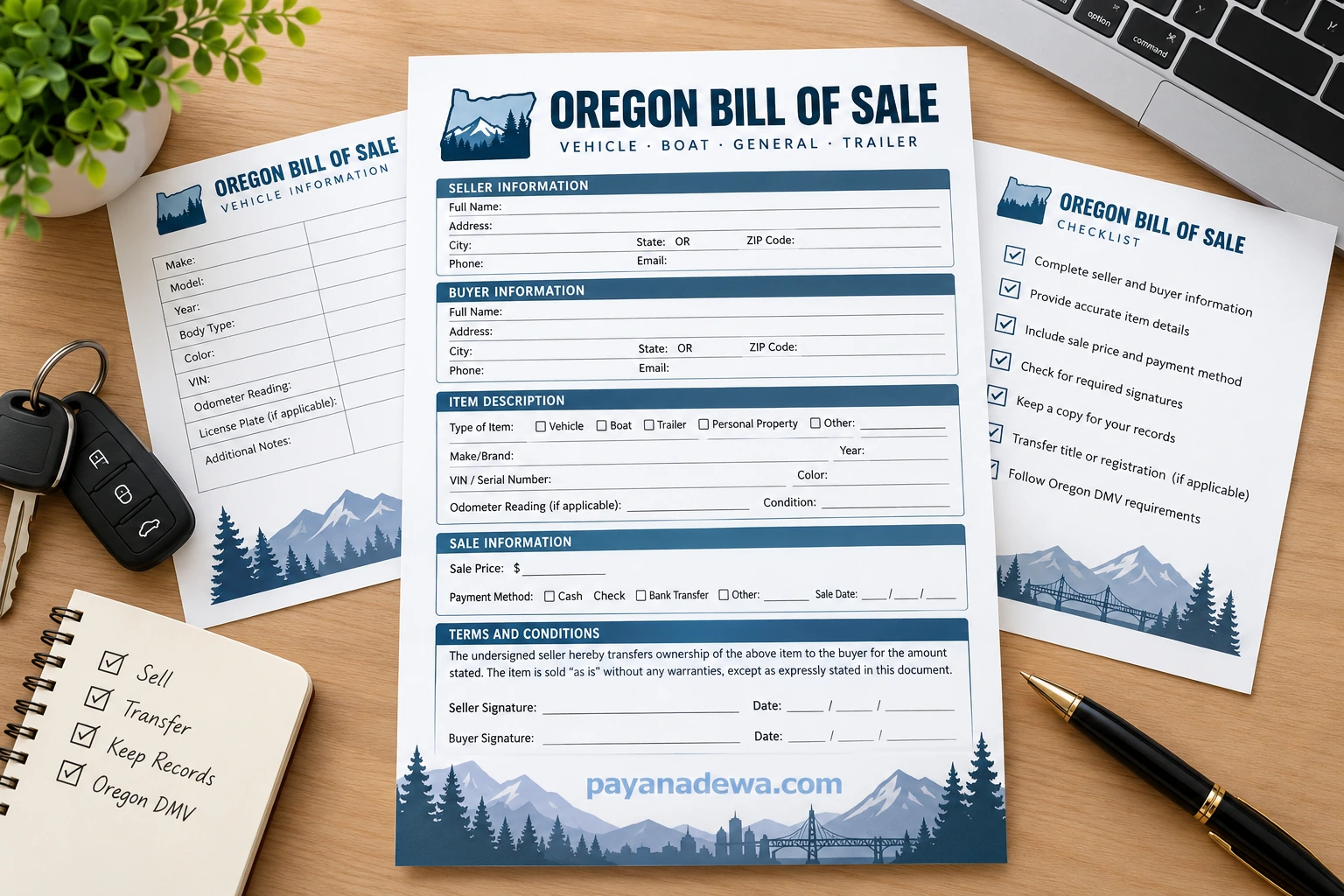
A printable template provides a structured way to organize the information needed for a private transaction. Instead of creating a document from scratch, buyers and sellers can work through clearly labeled sections and check that important details have been recorded.
A well-designed form can also help prevent common omissions. For example, a vehicle transaction may require identifying information such as the VIN, seller information, release language, signature, and sale date.
However, a template should always be reviewed against the current requirements of the appropriate Oregon agency. A form designed for a general property sale may not contain every field required for a vehicle or vessel transaction.
Common Mistakes to Avoid
Even a simple transaction can become complicated when documentation is incomplete. Avoid leaving important fields blank or using vague descriptions.
- Using an incomplete vehicle description
- Leaving the VIN or identifying number blank when required
- Forgetting the seller’s signature or sale date
- Assuming a bill of sale automatically replaces a title
- Failing to address an existing lien
- Waiting too long to report the sale or transfer the title
- Failing to keep a copy of the completed document
Frequently Asked Questions About Oregon Bill Of Sale Forms
Is a bill of sale required for every Oregon vehicle sale?
Not necessarily. Oregon DMV allows a bill of sale to function as a release of interest document when it contains the required information, but the exact documentation needed depends on the transaction. The properly assigned title and other required documents may still be necessary.
Can I create my own Oregon Bill Of Sale?
For vehicle transactions, Oregon DMV states that a separate document can be used instead of the DMV bill of sale form if it contains the required information. A carefully prepared template can therefore be useful, but it should match the requirements applicable to the transaction.
Does a bill of sale prove ownership?
A bill of sale documents the transaction, but it should not automatically be treated as the ownership document for an Oregon vehicle. The title transfer process remains important for establishing the buyer as the new titled owner.
How long does a buyer have to transfer an Oregon vehicle title?
Oregon DMV states that a buyer should apply for title within 30 days of purchasing an Oregon-titled vehicle. Late title transfers may result in additional fees.
How long does a seller have to report a vehicle sale?
Oregon DMV states that a seller should notify DMV within 10 days after selling a vehicle. Keeping a copy of the bill of sale and sale notification can provide useful records of the transaction.
Conclusion
An Oregon Bill Of Sale is a practical document for recording the details of a private sale or transfer. When used for a vehicle, it can serve as an important release of interest document when it contains the information required by Oregon DMV.
A complete form should clearly identify the parties, describe the property, document the sale price and date, and include the appropriate signatures. For vehicles and boats, additional title, registration, lien, and odometer requirements may apply.
Before completing any transaction, review the current Oregon DMV or Oregon State Marine Board requirements that apply to your specific situation. Using an organized Oregon Bill Of Sale Template can make the documentation process easier while helping both parties maintain a clear record of the transaction.