An Oklahoma Bill of Sale is an important document that records a transaction between a buyer and seller. It can provide written evidence of what was sold, the agreed purchase price, the parties involved, and the date of the transaction. For vehicle transactions, a properly completed bill of sale can also be useful when completing title and registration requirements in Oklahoma.
Whether you are buying or selling a car, truck, motorcycle, boat, or another valuable item, having accurate written documentation can make the transaction easier to understand later. A good bill of sale should clearly identify the property, buyer, seller, purchase price, and other important transaction details.
For Oklahoma vehicle transactions, it is important to understand that a bill of sale does not necessarily replace every title or registration document. Oklahoma’s current vehicle system includes both paper and electronic titles, and the required paperwork depends on the circumstances of the transaction. Service Oklahoma states that purchase price documentation may include a bill of sale, purchase contract, or other accepted documentation.
Below is a practical guide to what an Oklahoma Bill of Sale is, what information to include, how it can be used, and what buyers and sellers should consider before completing a transaction.
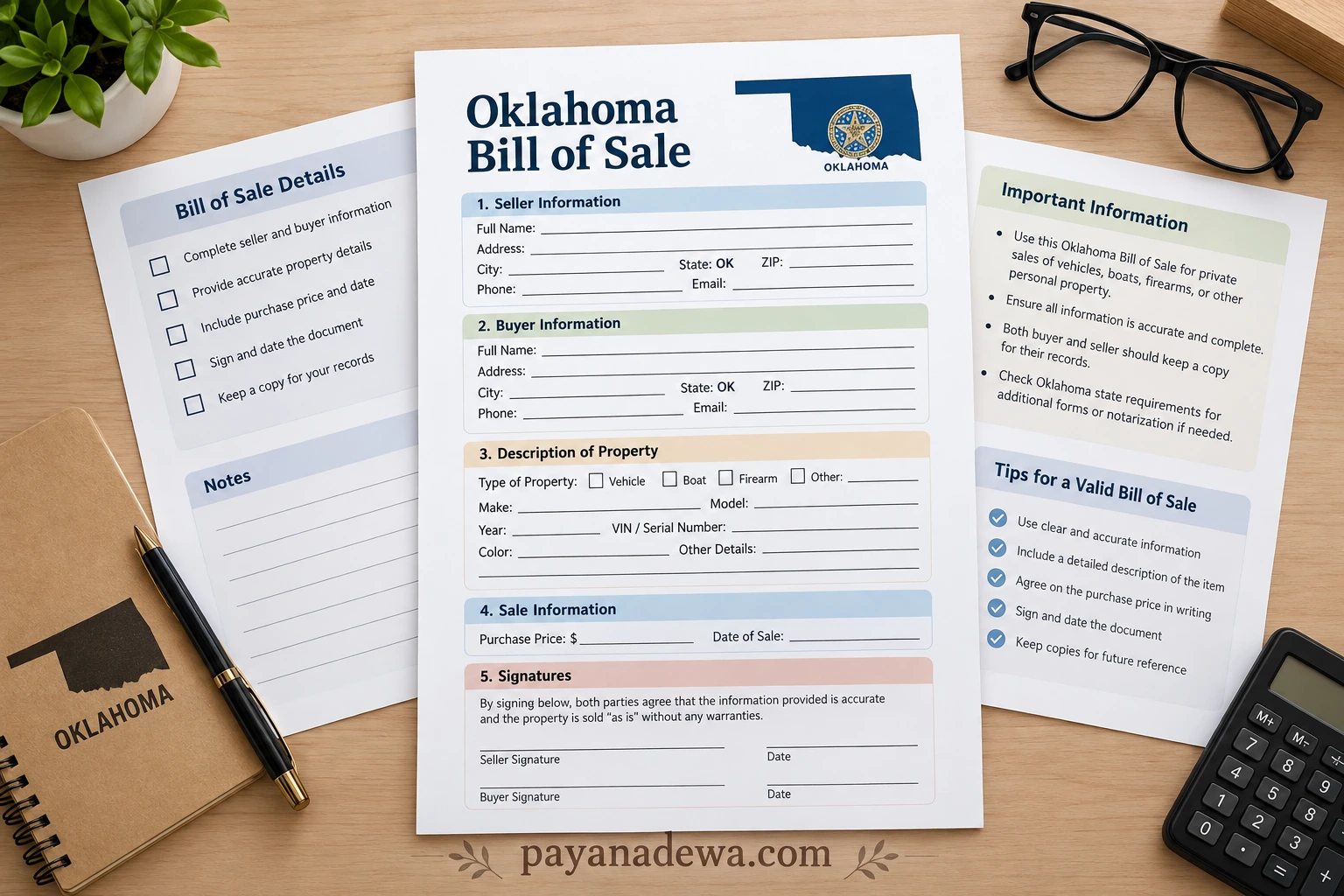
What Is an Oklahoma Bill of Sale?
An Oklahoma Bill of Sale is a written record between a buyer and seller showing that property has been sold. For motor vehicles, Service Oklahoma describes a bill of sale as a document between a buyer and seller stating that a vehicle is being sold. Its glossary indicates that vehicle bill of sale information includes the purchase price, VIN, buyer information, seller information, and notarization.
A bill of sale can be especially useful because it creates a written record of the transaction. Instead of relying only on verbal agreements, both parties can retain a copy showing the basic terms they agreed upon.
For a private-party transaction, the document should be completed carefully and consistently. Names, addresses, identification numbers, descriptions, dates, and prices should match the other transaction paperwork whenever applicable.
When Should You Use an Oklahoma Bill of Sale?
A bill of sale can be useful for many private transactions involving personal property. The specific documentation required depends on the type of property and the transaction.
Vehicle Sales
Vehicle transactions are one of the most important situations where an Oklahoma Bill of Sale may be used. Service Oklahoma lists a purchase contract, bill of sale, Form 722-1 Declaration of Vehicle Purchase Price, or sales agreement among documents that may provide purchase price documentation during a vehicle title transaction.
However, buyers should not assume that a generic bill of sale is the only document required. Vehicle title applications, ownership documents, insurance verification, odometer disclosures, and other paperwork may also apply depending on the transaction.
Boats and Other Property
Written sale documentation can also help document the transfer of other valuable property. Depending on the property type, separate Oklahoma forms or registration procedures may apply. Buyers and sellers should verify the requirements that apply specifically to the item being transferred.
What Information Should an Oklahoma Bill of Sale Include?
A well-prepared bill of sale should make the transaction easy to understand. The exact information can vary depending on the property, but a practical Oklahoma Bill of Sale commonly includes the following:
- Seller information: Full legal name, address, and appropriate contact information.
- Buyer information: Full legal name, address, and appropriate contact information.
- Property description: A detailed description of the item being sold.
- Vehicle identification: For a vehicle, include information such as year, make, model, VIN, and other identifying details.
- Purchase price: Clearly state the agreed amount paid for the property.
- Date of sale: Include the date on which the transaction takes place.
- Payment information: State whether the purchase was paid in full or whether another payment arrangement applies.
- Condition of property: Clearly document any agreed condition or relevant disclosures.
- Signatures: Provide appropriate signature spaces for the buyer and seller.
- Notarization: Include notarization when required for the particular document or transaction.
For vehicle transactions, accuracy is particularly important because the bill of sale may be reviewed alongside title and registration documentation.
Oklahoma Bill of Sale for a Vehicle
If you are selling a vehicle privately, the bill of sale should contain enough information to identify both the parties and the vehicle. A detailed description helps reduce confusion and creates a stronger record of what was actually sold.
Vehicle Information to Include
- Year
- Make
- Model
- Vehicle Identification Number (VIN)
- Color, when useful
- Odometer information when applicable
- Purchase price
- Date of purchase
Oklahoma also has specific odometer disclosure requirements. Service Oklahoma states that when ownership of a motor vehicle from 2011 or newer is transferred, a completed odometer disclosure statement is required; this may be incorporated into the title or completed on Form 729 when necessary.
Electronic Titles and the Oklahoma Bill of Sale
Oklahoma’s vehicle title system has changed significantly with the move to electronic titles. Service Oklahoma states that beginning July 1, 2025, Oklahoma titles are issued electronically by default, subject to limited exceptions. Existing paper titles remain valid until a subsequent title transaction.
For a vehicle with an electronic title, Oklahoma uses a specific document called Form 718 – Bill of Sale of an Electronic Title. Service Oklahoma explains that this form takes the place of the Oklahoma title during the transfer of a vehicle with an electronic title and must be printed, completed, and notarized.
This distinction is important. A generic Oklahoma Bill of Sale template may be useful as transaction documentation, but a vehicle with an electronic title may require the official Form 718 rather than a generic document for the ownership transfer itself.
How to Complete an Oklahoma Bill of Sale
Step 1: Identify the Buyer and Seller
Enter the complete legal names and addresses of both parties. Avoid nicknames or incomplete information when the document is being used for an official transaction.
Step 2: Describe the Property
Provide enough information to distinguish the property from similar items. For a vehicle, include the VIN along with the year, make, and model.
Step 3: Enter the Purchase Price
Write the agreed purchase price clearly. Avoid leaving the price blank or relying on a separate verbal agreement.
Step 4: Add the Sale Date
Clearly identify the date of the transaction. The date can become important when establishing the timing of ownership or other administrative requirements.
Step 5: Review the Terms
Both parties should carefully review the information before signing. Correct spelling mistakes, VIN errors, incorrect prices, or other discrepancies before completing the document.
Step 6: Sign and Notarize When Required
Signatures should be completed according to the requirements applicable to the transaction. For an Oklahoma electronic-title vehicle transfer using Form 718, notarization is required.
Is a Bill of Sale Enough to Transfer a Vehicle in Oklahoma?
A bill of sale should not automatically be treated as a substitute for every required ownership document. Oklahoma vehicle title transfers can involve multiple documents and requirements.
Service Oklahoma identifies the properly assigned Oklahoma title, purchase agreement or bill of sale, federal odometer disclosure statement when required, Oklahoma insurance verification, identification documentation, and other paperwork among title-transfer requirements.
If an assigned Oklahoma title has been lost, Oklahoma provides specific procedures for handling the situation. Service Oklahoma documentation states that a notarized bill of sale may be accepted as supporting documentation with Form 777 in certain circumstances involving a lost assigned title.
Therefore, buyers should check the exact title and registration requirements before assuming that a standalone bill of sale completes the entire transaction.
Tips for Creating a Reliable Oklahoma Bill of Sale
- Use accurate information. Double-check names, addresses, VINs, prices, and dates.
- Be specific. Describe the property clearly rather than using vague language.
- Keep copies. Both buyer and seller should retain a signed copy for their records.
- Match supporting documents. Make sure the bill of sale is consistent with the title, purchase agreement, and other transaction records.
- Do not alter official forms improperly. When Oklahoma provides a specific form for a transaction, use the current official version.
- Check notarization requirements. Some documents require notarization, while others may not.
- Complete the document before finalizing the transaction. Avoid leaving important fields blank.
Common Mistakes to Avoid
One common mistake is using a generic form when an official Oklahoma form is required. This is particularly relevant to electronic vehicle titles, where Service Oklahoma provides Form 718 specifically for transferring an electronic title.
Another mistake is entering an incorrect VIN. Because the VIN is a unique vehicle identifier, it should be carefully compared with the vehicle and the relevant title or ownership record.
Leaving out the purchase price or sale date can also make the document less useful. The parties should agree on the information before signing and retain copies of the completed paperwork.
Oklahoma Bill of Sale Checklist
Before completing your document, use this simple checklist:
- Buyer name and address are correct.
- Seller name and address are correct.
- Property description is complete.
- Vehicle VIN is accurate, if applicable.
- Purchase price is clearly stated.
- Date of sale is included.
- Relevant payment terms are documented.
- Required signatures are completed.
- Required notarization is completed.
- Buyer and seller each receive a copy.
- Additional Oklahoma title and registration requirements have been checked.
Frequently Asked Questions About Oklahoma Bill of Sale
Can I create my own Oklahoma Bill of Sale?
A written bill of sale can be created to document a private transaction, but vehicle transactions may require specific Oklahoma forms or additional documents. Always verify the requirements that apply to the particular transaction.
Does an Oklahoma Bill of Sale need to be notarized?
Notarization requirements depend on the document and transaction. For example, Oklahoma’s Form 718 Bill of Sale of an Electronic Title requires notarization.
What if I do not have a bill of sale?
Oklahoma provides other forms and procedures for certain situations. For example, Form 722-1 can be used to declare the purchase price when there was no contract or bill of sale and the buyer cannot obtain one from the seller. The form itself states that completing it does not convey ownership.
Can a bill of sale replace an Oklahoma vehicle title?
It depends on the title status and transaction. For vehicles with electronic titles, Oklahoma uses Form 718 as the ownership-transfer document in place of a physical title. Other situations can require a properly assigned title or additional documentation.
Conclusion
An Oklahoma Bill of Sale provides a useful written record of a transaction between a buyer and seller. A properly prepared document can identify the parties, describe the property, record the purchase price and sale date, and provide evidence of the agreed transaction.
For vehicle sales, however, a bill of sale should be considered part of the larger title and registration process rather than automatically being treated as the only required document. Oklahoma’s electronic title system also means that some vehicle transactions now use the official Form 718 Bill of Sale of an Electronic Title.
The safest approach is to provide complete and accurate information, keep copies of signed documents, and verify the current Oklahoma requirements that apply to your specific transaction before completing the sale.