A Notarized Bill Of Sale is a useful document for recording the transfer of ownership from a seller to a buyer. It provides written evidence of important transaction details, including the names of the parties, description of the item, purchase price, date of sale, and signatures. When the document is notarized, a notary public verifies the identity of the person signing and completes the required notarial acknowledgment or jurat.
Whether you are selling a vehicle, boat, valuable personal property, equipment, or another item, having a clear bill of sale can make the transaction easier to document. However, notarization requirements are not the same everywhere. Some jurisdictions require notarization for specific transactions, while others make it optional. Before using a notarized bill of sale, always check the rules that apply to your location and the type of property being transferred.
What Is a Notarized Bill Of Sale?
A notarized bill of sale is a written sales agreement that has been signed and notarized. The bill of sale records the basic terms of a transaction, while the notary process helps verify the identity of the signer and confirms that the signature was made according to the applicable notarial procedure.
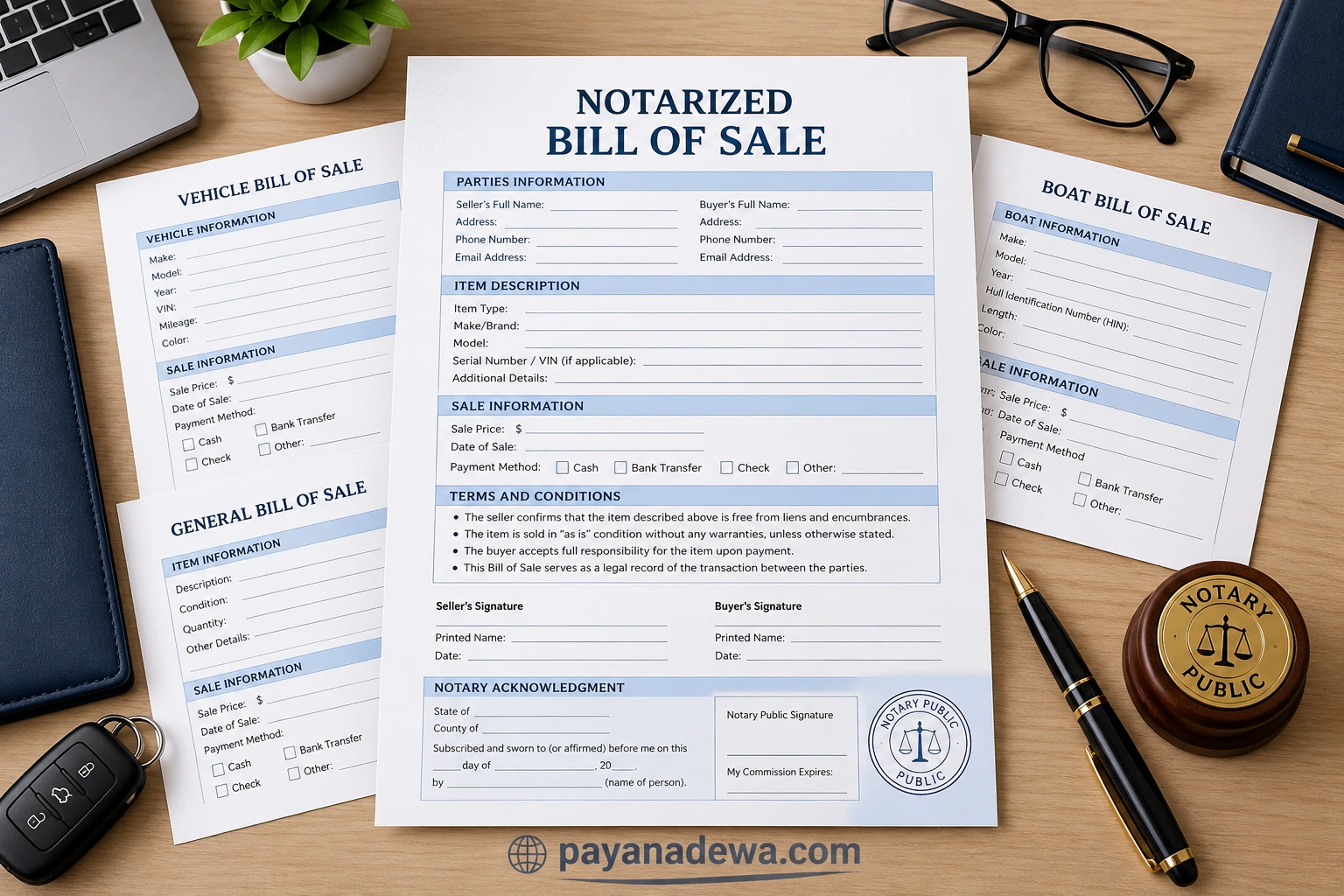
The document can be used for many types of transactions. A vehicle bill of sale may identify a car by its make, model, year, vehicle identification number, and mileage. A boat bill of sale may include the hull identification number and other identifying information. For general personal property, the description should be detailed enough to distinguish the item from similar property.
Notarization does not automatically make every statement in the document true or guarantee that a transaction is legally valid. Instead, the notary’s role is generally limited to performing the authorized notarial act. The exact duties and requirements depend on the jurisdiction.
When Should You Use a Notarized Bill Of Sale?
A notarized bill of sale can be helpful when the parties want additional formality or when notarization is required by a government agency, lender, title office, or other organization. It can also provide a convenient record for both sides of a transaction.
Common Situations
- Buying or selling a vehicle when local rules require or accept a notarized document.
- Transferring ownership of a boat or other registered property.
- Selling valuable equipment or business assets.
- Documenting a private sale between individuals.
- Creating a more formal record of an important transaction.
- Supporting an ownership transfer when additional documentation is requested.
Not every sale requires notarization. For example, a simple private sale of ordinary personal property may only need a signed receipt or bill of sale. The important question is whether the applicable law or receiving organization requires a notarized document.
What Information Should a Notarized Bill Of Sale Include?
A good bill of sale should clearly identify the people involved, the property being sold, and the financial terms of the transaction. Missing or unclear information can create confusion later, especially when the document is used to support an ownership transfer.
Buyer and Seller Information
Include the full legal names and contact information of both parties. Depending on the transaction and local requirements, the document may also need addresses or other identifying information.
Detailed Property Description
Describe the property accurately. Include identifying numbers whenever available. For a vehicle, this may include the make, model, year, color, mileage, and VIN. For equipment, include the manufacturer, model, serial number, and relevant specifications. A detailed description helps reduce uncertainty about what was actually sold.
Purchase Price and Payment Terms
Clearly state the agreed purchase price and, when appropriate, the payment method. If the buyer has already paid the full amount, the document can state that the purchase price has been received. If payment will occur in installments, the parties should use appropriate written terms that reflect the actual agreement.
Date of Sale
Include the date when the sale takes place or the date specified in the agreement. The date can be important when establishing when possession or ownership was transferred.
Signatures
The seller and buyer should sign the document as required. Some transactions may require additional signatures or witnesses. Do not assume that every jurisdiction follows the same signing procedure.
Notary Acknowledgment
If notarization is required or desired, the document should contain an appropriate notarial section. The notary public completes the applicable portion according to local law and procedure. The signer may need to provide acceptable identification and appear personally before the notary.
How to Complete a Notarized Bill Of Sale
Completing the document carefully can help prevent avoidable errors. The process is generally straightforward, but the exact procedure may vary by location and transaction type.
- Identify the parties. Enter the correct legal names and requested contact details for the buyer and seller.
- Describe the property. Add identifying information such as a VIN, serial number, model number, or other unique details.
- Enter the sale terms. State the purchase price, sale date, and agreed payment information.
- Review the document. Check names, numbers, dates, prices, and descriptions for accuracy.
- Follow the signing procedure. Do not sign in advance if the notary or applicable law requires the signer to sign in the notary’s presence.
- Complete the notarization. Present the required identification and follow the notary’s instructions.
- Keep copies. Both parties should retain a completed copy for their records.
Notarized Bill Of Sale for a Vehicle
Vehicle transactions are one of the most common situations in which people encounter bills of sale. A vehicle bill of sale can document the sale price, date, buyer, seller, and identifying information for the vehicle.
Depending on the jurisdiction, a bill of sale may be used alongside a title, registration application, tax documentation, or other ownership-transfer paperwork. A notarized bill of sale may be required in some circumstances, but it should not be assumed to replace a vehicle title or other mandatory government documents.
Vehicle Details to Consider
- Vehicle identification number (VIN)
- Make and model
- Model year
- Current mileage
- Color
- Purchase price
- Date of sale
- Buyer and seller information
- Signatures and applicable notarial information
Before completing a vehicle transaction, verify the requirements of the relevant motor vehicle authority. Requirements can differ significantly between jurisdictions.
Notarized Bill Of Sale for a Boat or Other Property
A notarized bill of sale can also be used for boats, trailers, machinery, electronics, tools, collectibles, and other valuable property. The key is to provide enough information to clearly identify the item and document the terms of the sale.
For a boat, useful details may include the manufacturer, model, year, hull identification number, length, and other identifying information. For equipment, serial numbers and model numbers can be particularly helpful.
When property is registered with a government agency, check whether that agency has a required form or specific language. A general bill of sale may not be sufficient for every official ownership-transfer process.
Benefits of Using a Notarized Bill Of Sale
A properly prepared bill of sale can provide several practical benefits. It creates a written record that both parties can review after the transaction and can help organize important information in one place.
- Clear transaction record: The document records what was sold and under what terms.
- Identity verification: Notarial procedures generally include verification of the signer’s identity.
- Better documentation: A completed document can support recordkeeping for both parties.
- Reduced misunderstandings: Written terms can make the agreement easier to understand.
- Useful supporting evidence: The document may be useful when another organization requests proof of a transaction, subject to applicable rules.
Common Mistakes to Avoid
Even a simple bill of sale can become problematic when important information is incomplete or inaccurate. Taking a few minutes to review the document before signing can prevent many common issues.
- Using incorrect legal names.
- Leaving the purchase price blank.
- Providing an incomplete property description.
- Entering an incorrect VIN or serial number.
- Using inconsistent dates.
- Signing before checking whether the notary must witness the signature.
- Assuming notarization replaces a required title or registration document.
- Failing to give both parties a completed copy.
Tips for Using a Notarized Bill Of Sale Template
A template can make the process faster because the main sections are already organized. However, a template should be treated as a starting point rather than a substitute for checking local requirements.
Customize the Template Carefully
Remove sections that do not apply and add information that is necessary for the transaction. Make sure the property description is specific enough for the parties and any relevant authority to identify the item.
Check Local Requirements
Before signing, confirm whether notarization is mandatory, optional, or handled differently in your jurisdiction. If the transaction involves a vehicle, boat, real estate-related interest, business asset, or regulated property, additional documents may be required.
Keep Supporting Records
Save the completed bill of sale along with payment records, title documents, receipts, inspection records, warranties, correspondence, and other relevant paperwork. Keeping a complete transaction file can make future recordkeeping much easier.
Frequently Asked Questions About Notarized Bill Of Sale
Does a bill of sale always need to be notarized?
No. Not every bill of sale requires notarization. The requirement depends on the jurisdiction, property type, transaction, and organization receiving the document.
Can I create my own notarized bill of sale?
In many situations, you can prepare a bill of sale using a suitable template and then complete the required signing and notarization process. However, the document should meet the requirements that apply to your particular transaction.
Does notarization prove that the seller owns the property?
Not necessarily. Notarization generally concerns the notarial act and the signer, rather than independently proving every factual statement contained in the document. Ownership should be verified through appropriate records and documents.
Should I sign the bill of sale before visiting a notary?
Do not assume that you should sign beforehand. Some notarial acts require the signer to sign or acknowledge the signature in the notary’s presence. Follow the instructions of the notary and the applicable law.
Conclusion
A Notarized Bill Of Sale provides a structured way to document an important sale and, when properly notarized, adds a formal notarial record to the transaction. A strong document should clearly identify the buyer and seller, describe the property, state the sale terms, include the required signatures, and contain the appropriate notary section when notarization applies.
Using a well-organized Notarized Bill Of Sale Template can simplify preparation, but it is important to verify local requirements before signing. For transactions involving vehicles, boats, valuable assets, or official ownership records, check the requirements of the relevant authority and consider professional legal advice when the transaction is complex.