A North Dakota Bill Of Sale is a useful written record of a transaction between a buyer and seller. For vehicle transactions, it can document important details such as the vehicle identification number, sale date, purchase price, vehicle condition, seller information, and buyer information. A properly completed bill of sale can help both parties maintain a clear record of what was agreed upon.
North Dakota provides an official Private Party Vehicle Bill of Sale, Form SFN 62502, through the North Dakota Department of Transportation (NDDOT). The form includes sections for vehicle information, sale details, vehicle condition, seller information, buyer information, and signatures.
Whether you are buying or selling a car, truck, motorcycle, trailer, or another titled vehicle, understanding how a North Dakota bill of sale works can make the transaction easier to document. It is also important to remember that a bill of sale does not replace the vehicle title or other documents required for transferring ownership.
What Is a North Dakota Bill Of Sale?
A North Dakota Bill Of Sale is a written document that records the sale or transfer of personal property. In a vehicle transaction, it provides a written record of the agreement between the seller and buyer.
The document can identify the parties, describe the vehicle, record the purchase price, and provide information about the condition of the vehicle. Having these details in writing can reduce misunderstandings after the transaction.
Why Use a Bill of Sale?
A bill of sale can be useful because it creates a dated record of the transaction. Depending on the type of sale, it may also help document information needed for tax, registration, title, or personal recordkeeping purposes.
For a private vehicle transaction, the NDDOT’s SFN 62502 form is specifically designed to record the sale. The form asks for the VIN, year, make, model, sale date, selling price, vehicle condition information, seller details, buyer details, and signatures.
Is a Bill of Sale Required in North Dakota?
The answer depends on the type of transaction. For vehicle purchases, the North Dakota Department of Transportation distinguishes between different types of transactions and documentation.
NDDOT’s current title and registration guidance states that a bill of sale is required for purchases from a dealership. For other transactions, the bill of sale may be included as supporting documentation, while the properly completed certificate of title remains an important part of transferring ownership.
For a private-party vehicle sale, using the official NDDOT bill of sale form can provide a clear record even when the transaction does not specifically require the document for title processing.
What Information Should a North Dakota Bill Of Sale Include?
A good bill of sale should contain enough information to clearly identify the transaction and the property being sold. For a vehicle sale, the official North Dakota form provides a useful structure.
Vehicle Information
- Vehicle Identification Number (VIN)
- Year
- Make
- Model
- Date of sale
- Selling price
The official SFN 62502 form also provides space for information about gifts, vehicle condition, whether the vehicle was drivable, towing or delivery, and trade-in details when applicable.
Seller and Buyer Information
The document should identify the people involved in the transaction accurately. The official North Dakota form includes the legal name, identification type, telephone number, mailing address, city, state, and ZIP code for the seller and buyer. It also provides space for a co-buyer when applicable.
Signatures and Dates
Both parties should review the completed information before signing. The North Dakota private-party vehicle bill of sale includes signature and date sections for the seller and buyer. The seller declares that the information provided is true and correct, while the buyer acknowledges the information provided.
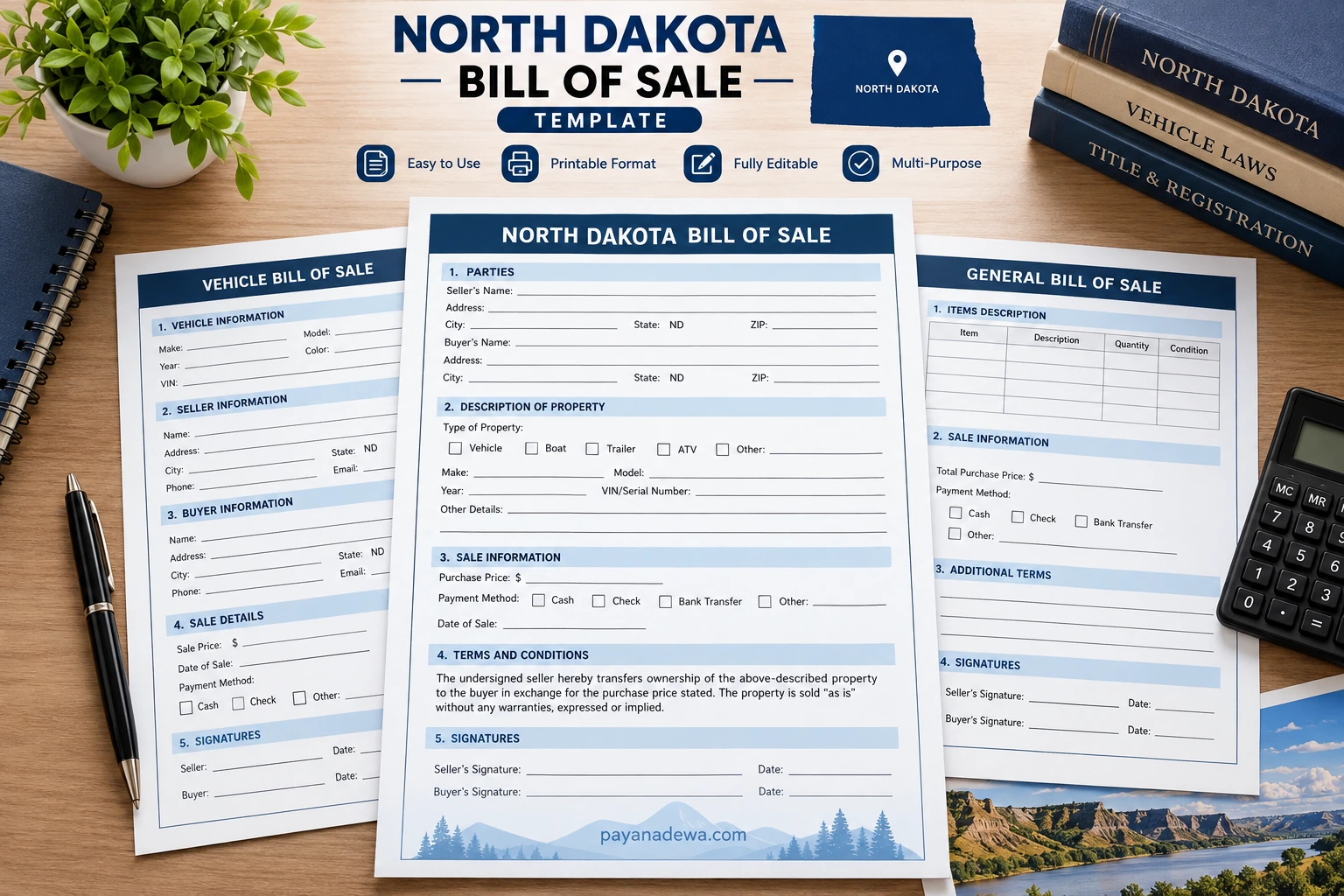
How to Complete a North Dakota Bill Of Sale
Completing a bill of sale carefully can help prevent errors and disagreements later. Before signing, both parties should compare the information on the document with the vehicle and the supporting ownership documents.
Step 1: Identify the Buyer and Seller
Enter the legal names and contact information of the buyer and seller. Make sure names are spelled correctly and consistently with the relevant identification and ownership documents.
Step 2: Record the Vehicle Details
Enter the VIN, year, make, and model. Double-check the VIN against the vehicle and title because a single incorrect character can create problems when documents are reviewed.
Step 3: Record the Sale Price and Date
Enter the agreed purchase price and date of sale. If the transaction involves a gift, trade, or another special circumstance, provide the applicable information requested by the form.
Step 4: Describe the Vehicle Condition
Be accurate when documenting the vehicle’s condition. The official North Dakota private-party form provides a section for condition notes and asks whether the vehicle was drivable at the time of sale.
Step 5: Review and Sign
Both parties should review every field before signing. Each person should keep a completed copy of the signed document for their records.
North Dakota Bill Of Sale and Vehicle Title Transfer
A bill of sale should not be treated as a replacement for a vehicle title. NDDOT’s title checklist states that the title or manufacturer’s certificate of origin must be properly completed to transfer ownership. The checklist also identifies secure odometer disclosure requirements for applicable vehicles and damage disclosure requirements for certain newer vehicles.
For a vehicle buyer, the paperwork required can therefore include more than a bill of sale. Depending on the transaction, the buyer may need the properly assigned title, applicable disclosure forms, identification, payment, and other supporting documents.
North Dakota Vehicle Excise Tax
Vehicle buyers should also understand that North Dakota uses a motor vehicle excise tax rather than treating the purchase in the same way as ordinary retail sales. The North Dakota Office of State Tax Commissioner states that the motor vehicle excise tax applies to the purchase or transfer of motor vehicles required to be registered for use on public roads, unless an exemption applies. The published guideline states a 5% excise tax based on the vehicle’s taxable purchase price.
The official private-party bill of sale also notes that vehicles are subject to excise tax based on fair market value according to established standards and guides. If the selling price is below fair market value, the form asks for detailed information about the vehicle condition or other circumstances affecting the price.
Tips for Buyers and Sellers
- Check the VIN carefully. Compare the VIN on the vehicle with the title and bill of sale.
- Use accurate legal names. Avoid nicknames or incomplete names when completing official documents.
- Record the actual transaction details. Do not intentionally enter an inaccurate purchase price or description.
- Describe important condition issues. Written notes can help create a clearer record of what was known at the time of sale.
- Keep copies. Both buyer and seller should retain a signed copy of the completed bill of sale.
- Check title requirements. A bill of sale does not eliminate title-transfer requirements.
- Check current NDDOT instructions. Requirements can vary depending on the vehicle and transaction.
Common Mistakes to Avoid
Small documentation mistakes can make a vehicle transaction more complicated. One common mistake is entering an incorrect VIN. Another is failing to record the agreed purchase price or sale date accurately.
It is also important not to assume that a generic bill of sale automatically satisfies every North Dakota vehicle requirement. NDDOT provides specific forms for different motor vehicle transactions, including the private-party vehicle bill of sale, title application, assignment documents, lien releases, and other forms.
Buyers should also avoid relying exclusively on the bill of sale when completing a title transfer. NDDOT’s current guidance emphasizes properly completed ownership documents and identifies additional documentation that may be required depending on the transaction.
North Dakota Bill Of Sale Template Checklist
Before completing your document, use this simple checklist:
- Buyer legal name and contact information
- Seller legal name and contact information
- Vehicle VIN
- Vehicle year, make, and model
- Date of sale
- Purchase price
- Vehicle condition information
- Trade-in information, if applicable
- Seller signature and date
- Buyer signature and date
- Copies retained by both parties
- Properly completed vehicle title and other required documents
Where to Find the Official North Dakota Bill of Sale Form
The North Dakota Department of Transportation lists SFN 62502, Private Party Vehicle Bill of Sale, among its current Motor Vehicle forms. The form is specifically designed for private-party vehicle transactions.
For the most current requirements, buyers and sellers should review the NDDOT Motor Vehicle Division instructions applicable to their specific transaction. This is particularly important when dealing with vehicles that have liens, unusual ownership circumstances, title problems, trade-ins, or other special conditions.
Frequently Asked Questions
Can I use a North Dakota Bill Of Sale for a private vehicle sale?
Yes. North Dakota provides an official Private Party Vehicle Bill of Sale, SFN 62502, for documenting private-party vehicle transactions.
Does a bill of sale replace a vehicle title in North Dakota?
No. A bill of sale is not a substitute for the properly completed title or other ownership documents required for a vehicle title transfer. NDDOT’s current checklist specifically identifies the properly completed title or manufacturer’s certificate of origin as part of the title process.
What should I do after buying a vehicle?
Review the title and other transaction documents, make sure the ownership information has been completed correctly, and follow NDDOT’s current title and registration instructions. Additional documentation may be required depending on the transaction.
Is the North Dakota bill of sale useful even when it is not specifically required?
A written bill of sale can provide both parties with a clear record of the transaction, including the vehicle description, price, date, condition information, and signatures. The official NDDOT private-party form is structured specifically for this purpose.
Conclusion
A North Dakota Bill Of Sale can be an important record when buying or selling a vehicle. The official NDDOT SFN 62502 form provides dedicated fields for vehicle information, transaction details, condition notes, buyer and seller information, and signatures.
For a smooth transaction, complete the document accurately, verify the VIN and ownership information, keep copies of signed paperwork, and follow the current NDDOT requirements for title and registration. Remember that the bill of sale is part of the transaction record and does not replace the title or other documents that may be required to legally transfer ownership.
Important: This article is provided for general informational purposes and is not legal advice. North Dakota vehicle requirements can vary according to the circumstances of a transaction. Check the current NDDOT instructions and applicable official forms before completing an ownership transfer.