Starting a limited liability company is an important step for business owners who want a formal structure for managing their company. However, forming an LLC is only part of the process. Members also need clear rules for ownership, management, financial responsibilities, and decision-making. An LLC Operating Agreement provides a written framework that can help establish those rules and reduce uncertainty among members.
An operating agreement explains how an LLC will operate and how important business decisions will be handled. It can be especially useful when an LLC has multiple members because it gives everyone a shared understanding of their rights, responsibilities, and financial interests. Even when an LLC has only one owner, an agreement can help document how the business is structured and managed.
Because LLC requirements can vary by state, business owners should review applicable state laws and consider professional legal or tax advice when necessary. A well-organized agreement can serve as an important reference as the company grows, adds members, changes ownership, or faces unexpected business situations.
What Is an LLC Operating Agreement?
An LLC Operating Agreement is a legal document that describes the internal rules and operating procedures of a limited liability company. It typically identifies the LLC’s members, ownership interests, management structure, financial arrangements, and procedures for making important decisions.
The document essentially creates a written understanding between the owners. Instead of relying entirely on informal conversations, members can refer to the agreement when questions arise about company operations.
Why an Operating Agreement Matters
An operating agreement can help provide clarity in several areas of an LLC. Depending on the business and applicable state law, it may address:
- Member names and ownership percentages
- Initial capital contributions
- Profit and loss allocations
- Management responsibilities
- Voting and decision-making procedures
- Distribution of company profits
- Rules for admitting new members
- Procedures for transferring ownership
- Buyout and withdrawal provisions
- Business dissolution procedures
- Methods for amending the agreement
Having these provisions documented can make the company’s internal structure easier to understand and manage.
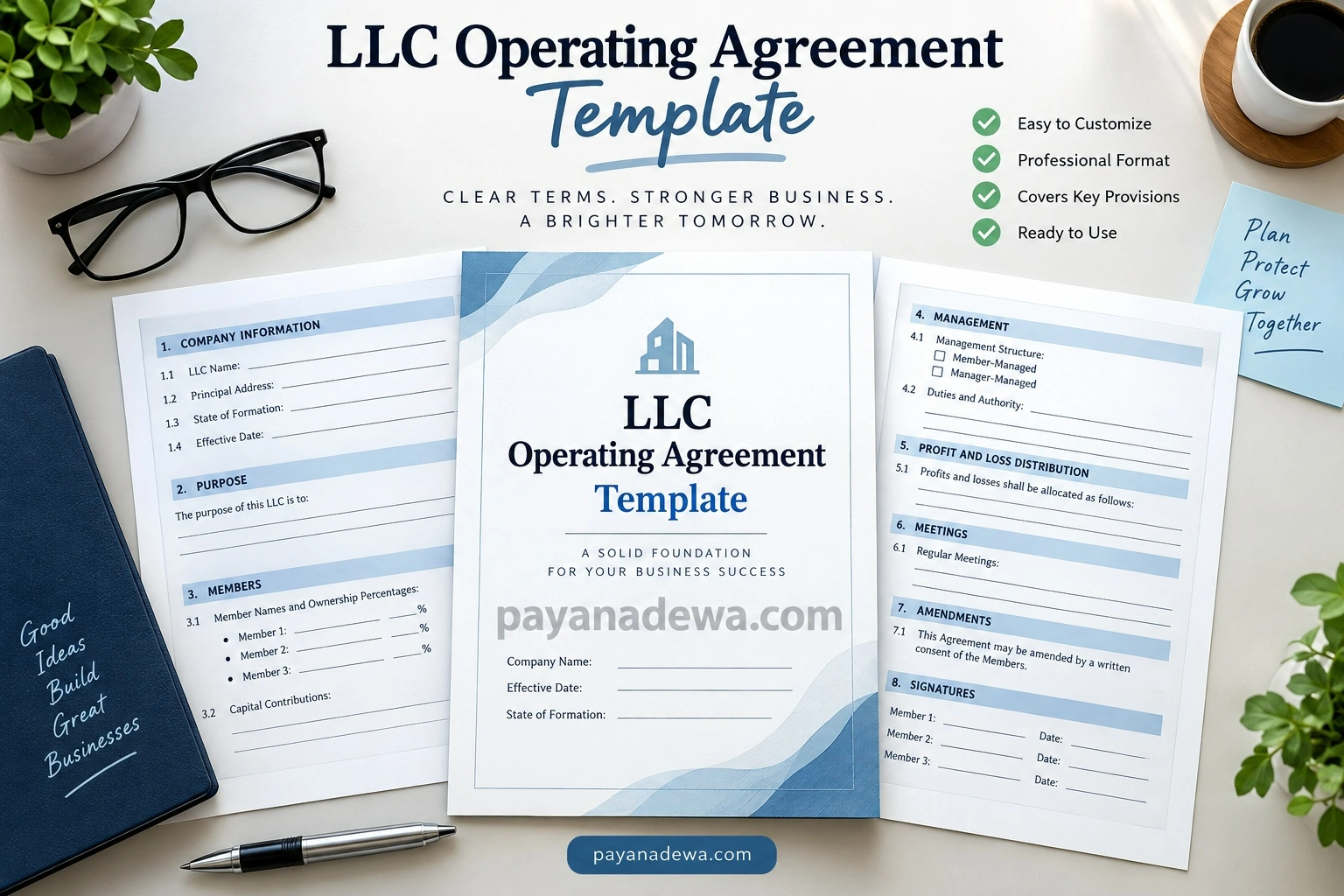
What Should an LLC Operating Agreement Include?
The contents of an operating agreement depend on the LLC’s structure, state requirements, and the members’ preferences. A comprehensive agreement usually covers several core areas.
Company Information
The agreement should identify the LLC and provide basic information about the business. This may include the legal company name, principal business address, state of formation, and effective date of the agreement.
Accurate company information is important because it establishes which business entity the document governs. Owners should make sure these details match the LLC’s official formation records.
Members and Ownership Interests
For a multi-member LLC, the operating agreement should clearly identify each member and explain their ownership interest. Ownership percentages can affect voting rights, profit distributions, and other financial matters.
The agreement can also document each member’s initial contribution to the business. Contributions may include cash, property, equipment, intellectual property, or other agreed-upon assets.
Management Structure
An LLC generally needs rules explaining who has authority to manage the business. An agreement can specify whether the company is member-managed or manager-managed.
It can also define individual responsibilities, authority limits, voting requirements, and procedures for approving major transactions. Clear management provisions can reduce confusion about who is authorized to make decisions on behalf of the company.
Profits, Losses, and Distributions
Financial provisions are another important part of an LLC operating agreement. The document can explain how profits and losses are allocated among members and how distributions will be handled.
These provisions should be written carefully because ownership percentages, tax arrangements, and distribution rules can interact in complex ways. Business owners may want professional tax or legal advice before finalizing these sections.
Single-Member vs. Multi-Member LLC Operating Agreements
The appropriate operating agreement can differ depending on the number of owners. A single-member LLC has one owner, while a multi-member LLC has two or more members. Both structures can benefit from documenting their internal business rules.
Single-Member LLC
A single-member operating agreement can establish the owner’s authority over the company and document the separation between the individual and the business. It can also provide a written record of how the LLC is intended to operate.
Although a single owner may not need to negotiate terms with other members, documenting the company’s structure can still be useful for maintaining organized business records.
Multi-Member LLC
A multi-member LLC typically requires more detailed provisions because multiple owners may have different contributions, responsibilities, and expectations. The agreement can establish voting procedures, ownership interests, distributions, dispute procedures, and rules for changes in membership.
Discussing these provisions before problems occur can help members understand how significant business decisions will be handled.
How to Create an LLC Operating Agreement
Creating an operating agreement is easier when the members address the company’s fundamental structure first. The following process can help organize the document.
1. Identify the LLC and Its Members
Begin with the company’s legal name, formation state, business address, effective date, and member information. Verify every detail against the LLC’s official records.
2. Define Ownership and Contributions
Record each member’s ownership percentage and agreed contribution. If members contribute different amounts or types of assets, explain the arrangement clearly.
3. Establish Management Rules
Determine who will manage the LLC and which decisions require member approval. Consider separating ordinary business decisions from major decisions such as selling significant assets, taking on substantial debt, or admitting a new member.
4. Explain Financial Procedures
Document how profits, losses, and distributions will be handled. The agreement should be consistent with the company’s intended tax and financial structure.
5. Add Ownership Transfer Rules
Consider what happens if a member wants to sell or transfer an ownership interest. The agreement may establish procedures for member approval, buyouts, valuation, or transfers following certain events.
6. Establish Amendment and Dissolution Procedures
A business can change over time. Include a process for modifying the agreement and explain how the LLC can be dissolved if the members decide to end the business.
Common Mistakes to Avoid
A poorly prepared operating agreement can create confusion instead of preventing it. Business owners should review the document carefully and avoid vague provisions.
- Leaving ownership percentages unclear: Every member’s interest should be documented accurately.
- Ignoring decision-making rules: Explain how important decisions are approved.
- Using inconsistent information: Company names and other key details should match official records.
- Forgetting ownership changes: Include procedures for transfers, withdrawals, and new members.
- Using one generic agreement without customization: A template should be adapted to the LLC’s actual circumstances.
- Failing to review the agreement: Update the document when significant changes occur.
Tips for Using an LLC Operating Agreement Template
An LLC Operating Agreement Template can provide a useful starting structure. Templates can help business owners organize important topics without starting with a blank document.
However, a template should not automatically be treated as a complete legal document for every situation. Business owners should customize the provisions according to their company structure, ownership arrangements, and applicable state requirements.
Keep the Agreement Organized
Use clear headings and logical sections so members can quickly find information. Important subjects such as ownership, management, distributions, voting, amendments, and dissolution should be easy to locate.
Review It When the Business Changes
An operating agreement should reflect the current structure of the LLC. Review it when the company adds a member, changes ownership percentages, modifies management responsibilities, or enters into a significant new arrangement.
Keep Signed Copies
Once the members have approved the agreement, maintain properly signed copies with the company’s important records. Members should know where the current version is stored and avoid relying on outdated drafts.
LLC Operating Agreement and State Requirements
LLC laws and filing requirements can differ between jurisdictions. An operating agreement may also interact with default rules that apply when an LLC does not establish its own internal provisions.
For that reason, business owners should check the requirements applicable to the state where the LLC is formed. If the company has multiple members, significant assets, complex ownership arrangements, or unusual management provisions, consulting a qualified attorney can help identify issues that a general template may not address.
Frequently Asked Questions About LLC Operating Agreements
Does every LLC need an operating agreement?
The answer depends on the applicable state law and the LLC’s circumstances. Some jurisdictions may not require an operating agreement to be filed with the state, while having one can still provide useful documentation of the company’s internal rules.
Can I create an LLC Operating Agreement myself?
Business owners can use a template or create their own document, but the appropriate approach depends on the complexity of the LLC. Professional legal advice may be worthwhile when the business has multiple members, complicated ownership arrangements, significant assets, or specialized requirements.
Can an operating agreement be changed?
Generally, an operating agreement can include procedures for making amendments. The agreement should specify how changes are proposed, approved, documented, and adopted.
Should a single-member LLC have an operating agreement?
A single-member LLC may benefit from having a written operating agreement because it documents the company’s intended structure and operating rules. Applicable state requirements should still be reviewed.
Conclusion
An LLC Operating Agreement provides a practical framework for documenting how an LLC is owned, managed, and operated. It can address important subjects such as member responsibilities, ownership interests, voting procedures, financial distributions, ownership transfers, amendments, and dissolution.
Using an LLC Operating Agreement Template can make the drafting process more organized, but the document should be customized to match the company’s actual structure and applicable legal requirements. Taking time to clarify these issues early can give members a clearer reference for managing the business as it develops.
Before signing a final agreement, review the document carefully and consider professional legal or tax guidance when the LLC’s circumstances are complex. A clear and current agreement can become an important part of maintaining organized business records and establishing consistent operating procedures.