An Agreement Letter is a practical document used to record the understanding between two or more parties. It can outline responsibilities, expectations, payment terms, deadlines, services, confidentiality requirements, and other conditions that everyone agrees to follow. Whether you are managing a business relationship, hiring a freelancer, working with a supplier, or confirming a personal arrangement, a well-written agreement letter can help prevent misunderstandings.
Unlike a casual message or verbal promise, an agreement letter provides a written record of what the parties discussed and accepted. The document should be clear, specific, and easy to understand. It should also identify the people or organizations involved and explain the terms that apply to the arrangement.
A useful agreement does not need complicated language. In many situations, straightforward wording is more effective because each party can easily understand what is expected. The following guide explains what an agreement letter is, what to include, how to structure one, and how to create a professional template that can be adapted to different situations.
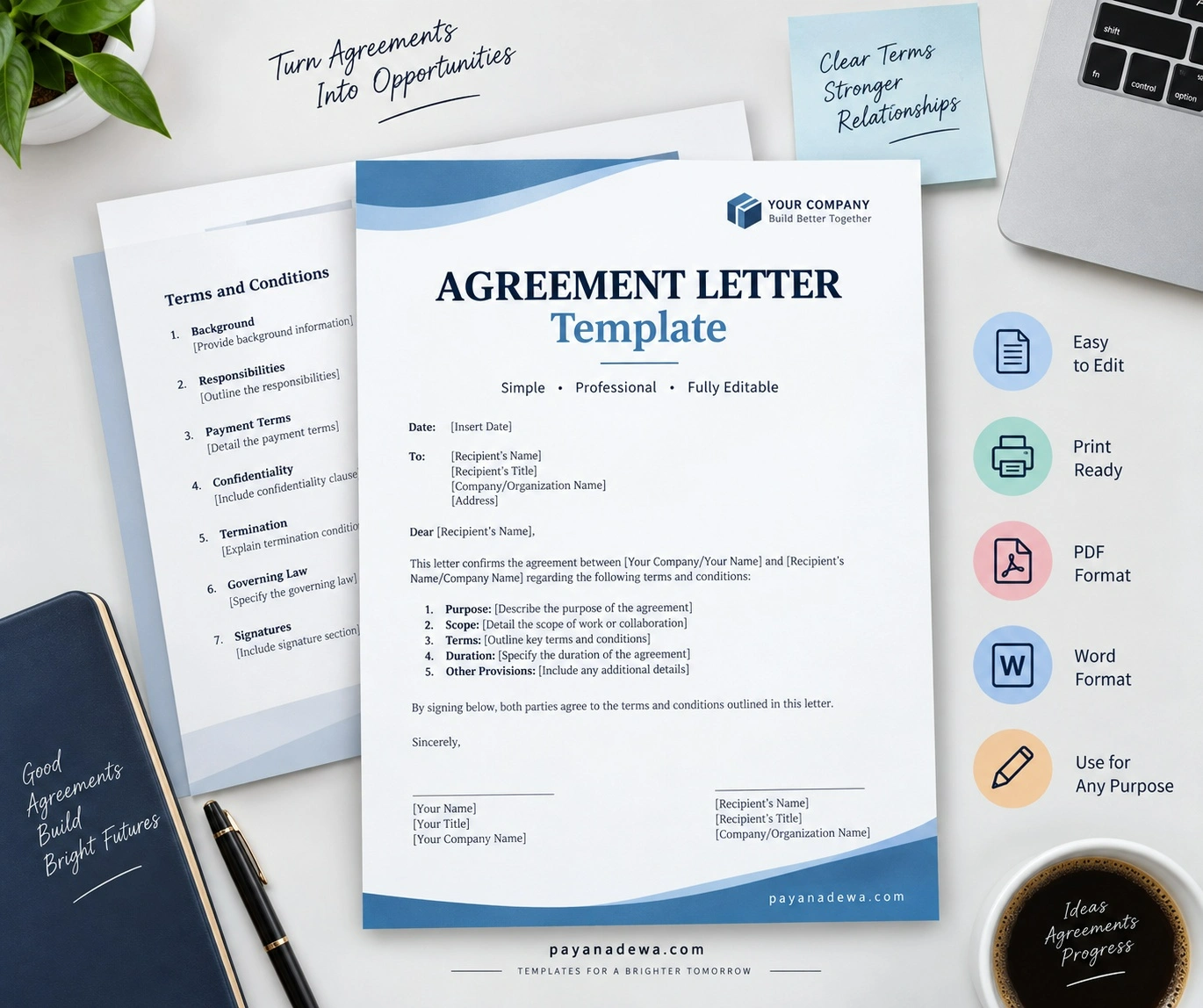
What Is an Agreement Letter?
An agreement letter is a written document that describes the terms accepted by the parties involved in an arrangement. It can be used for business, employment, freelance work, partnerships, services, loans, projects, or other situations where documenting an understanding is useful.
The exact content depends on the purpose of the agreement. A simple letter may contain only a few essential terms, while a more detailed document may include several sections covering payment, confidentiality, intellectual property, termination, dispute resolution, and other requirements.
Why Use an Agreement Letter?
The main purpose is to create clarity. When important details are written down, each party has a reference that can be reviewed later. This can reduce confusion about deadlines, responsibilities, payments, deliverables, and other expectations.
- Clarifies responsibilities: Each party can see what they are expected to do.
- Documents important terms: Key conditions are recorded in writing.
- Reduces misunderstandings: Clear wording can prevent disagreements caused by vague expectations.
- Creates a reference: The document can be reviewed throughout the relationship or project.
- Supports professional communication: A structured agreement demonstrates that important details have been considered.
What Should an Agreement Letter Include?
A strong agreement letter should contain enough information for the reader to understand who is involved, what has been agreed upon, and what happens next. The exact structure may vary, but several elements are commonly useful.
1. Date and Contact Information
Begin with the date of the agreement and identify the parties involved. Include names, company names when applicable, job titles, addresses, or other identifying information that helps distinguish the parties clearly.
2. Purpose of the Agreement
Explain why the agreement is being created. A short statement describing the purpose gives the reader immediate context. For example, the agreement might confirm a consulting service, freelance project, supplier relationship, or business collaboration.
3. Scope and Responsibilities
Describe what each party will provide or perform. Avoid vague statements when specific information is available. If the agreement concerns a project, consider listing deliverables, milestones, responsibilities, and deadlines.
4. Payment Terms
If money is involved, clearly state the agreed amount, payment schedule, payment method, due dates, deposits, fees, or other relevant financial conditions. Clear payment information can help both parties understand their financial obligations.
5. Duration and Termination
State when the agreement begins and, when appropriate, when it ends. If either party can terminate the arrangement, explain the applicable notice period and any conditions that may apply.
6. Signatures
Provide an appropriate signature section for the parties. Include printed names, titles, and dates where relevant. Depending on the circumstances and applicable requirements, additional formalities may be necessary.
How to Write an Agreement Letter Step by Step
Writing an agreement letter becomes easier when the information is organized logically. Start by identifying the purpose and then build the document around the terms that matter most.
Step 1: Identify the Parties
Write the complete names of the individuals or organizations entering the agreement. If a business is involved, include its legal or commonly used business name and the representative’s position when appropriate.
Step 2: Define the Purpose
Use a concise opening paragraph to explain the reason for the agreement. The reader should understand the general arrangement without having to search through the document.
Step 3: List the Main Terms
Break important information into clearly labeled sections. Depending on the agreement, these may include services, deliverables, responsibilities, payment, confidentiality, ownership, deadlines, and termination.
Step 4: Remove Ambiguous Language
Review phrases that could have multiple interpretations. Instead of saying a task will be completed “soon,” specify an actual date or measurable deadline when possible. Specific language makes the document easier for everyone to follow.
Step 5: Review Before Signing
Each party should carefully review the agreement before accepting it. Check names, dates, amounts, responsibilities, deadlines, and other important details. For agreements involving significant legal or financial consequences, professional legal advice may be appropriate.
Common Types of Agreement Letters
An agreement letter can be adapted to many different situations. The structure remains similar, but the specific terms change according to the purpose.
- Business Agreement Letter: Documents arrangements between businesses or business partners.
- Service Agreement Letter: Defines services, deliverables, fees, and responsibilities.
- Freelance Agreement Letter: Establishes project scope, payment, deadlines, revisions, and ownership terms.
- Employment Agreement Letter: May outline employment conditions, compensation, duties, and other applicable terms.
- Payment Agreement Letter: Records payment arrangements, schedules, or repayment conditions.
- Partnership Agreement Letter: Describes responsibilities and expectations between business partners.
- Confidentiality Agreement Letter: Establishes expectations concerning confidential information.
Tips for Creating a Professional Agreement Letter
A professional agreement should be easy to scan and understand. Good formatting is particularly important when the document contains several conditions.
Keep the Language Clear
Use direct sentences and familiar terms whenever possible. Complex wording does not automatically make an agreement more professional. Clarity should remain the priority.
Use Logical Headings
Organize the document with headings such as Purpose, Responsibilities, Payment Terms, Duration, Confidentiality, and Signatures. This allows readers to quickly locate important information.
Be Specific About Important Details
Include exact dates, amounts, deliverables, and responsibilities whenever possible. Specific information reduces the possibility of different interpretations later.
Leave Room for Customization
An editable agreement letter template can save time by providing a professional starting point. Replace placeholder information with the correct names, dates, terms, and conditions before the document is finalized.
Agreement Letter Template Checklist
Before sending or signing an agreement, use a simple checklist to verify that the essential information is present.
- Parties are correctly identified
- Date of the agreement is included
- Purpose is clearly explained
- Responsibilities are defined
- Services or deliverables are specified
- Payment terms are documented when applicable
- Important deadlines are included
- Confidentiality or ownership terms are addressed when relevant
- Termination conditions are explained when necessary
- Signature fields are included
- All parties have reviewed the final version
Agreement Letter vs. Contract
The terms “agreement” and “contract” are sometimes used interchangeably, but their legal meaning can depend on the jurisdiction and circumstances. An agreement letter can serve as written evidence of an understanding, while a contract may contain more comprehensive provisions and specific legal requirements.
Whether a particular agreement letter is legally binding depends on factors such as applicable law, the wording of the document, the parties’ intentions, consideration where required, signatures, and other circumstances. Therefore, an agreement letter should not automatically be assumed to have the same legal effect as a formal contract.
When Should You Use an Agreement Letter?
An agreement letter can be useful whenever important expectations need to be documented. It is particularly valuable when multiple people are involved or when the arrangement includes deadlines, payments, services, confidential information, or specific responsibilities.
For simple arrangements, a concise document may be sufficient. For complex transactions, high-value projects, employment matters, real estate transactions, or situations involving substantial legal obligations, a formal contract and professional legal review may be more appropriate.
Final Thoughts on Agreement Letter Templates
A well-prepared Agreement Letter provides a practical way to document expectations and create clarity between parties. By identifying everyone involved, explaining the purpose, defining responsibilities, documenting important financial terms, and providing appropriate signature sections, you can create a document that is easier to understand and use.
An editable Agreement Letter Template can also make the process more efficient because you can begin with an organized structure rather than creating every section from scratch. Always customize the template carefully and review the final document before it is accepted or signed.
For agreements with significant legal consequences, consider obtaining advice from a qualified professional who understands the laws applicable to your situation. A clear template can organize information effectively, but the specific legal requirements of an agreement depend on its purpose, jurisdiction, and circumstances.