For software developers, building applications and writing code may be the easy part of running a business. Managing billing, tracking project work, and getting paid on time can be a different challenge. A professional invoice helps turn completed development work into a clear payment request while also keeping financial records organized.
Fortunately, there are several Invoice Template Options For Software Developers. The source material highlights three main approaches: Microsoft Excel templates, online invoicing software, and customized templates. Each option offers different levels of flexibility, automation, design, and cost, so the best choice depends on how you work and how much invoicing support you need.
Why Software Developers Need a Professional Invoice Template
Whether you work as a freelancer, independent contractor, consultant, or part of a development business, an invoice should make your billing information easy for a client to understand. Instead of creating every invoice from scratch, a reusable template can save time and provide a consistent format.
A software developer may bill clients by the hour, by project, or through recurring arrangements. The source specifically identifies hourly-rate, project-based, and subscription-based invoice formats as useful options for developers.
A well-structured developer invoice can also make it easier to communicate what was completed, what the client owes, and which payment terms apply. Keeping invoices consistent is especially helpful when handling multiple clients or projects at the same time.
1. Microsoft Excel Invoice Templates
Microsoft Excel is one of the most flexible choices for creating a developer invoice. The source notes that Excel provides a wide range of invoice templates that can be adapted to software development work, including hourly, project-based, and subscription billing.
Advantages of Excel Invoice Templates
- Familiar interface: Developers who already use Excel can begin with little additional learning.
- High customization: Fields, layouts, descriptions, and calculations can be adjusted to match individual requirements.
- Automatic calculations: Excel can calculate totals, taxes, and discounts.
- Flexible file formats: Completed invoices can be saved in formats such as Excel and PDF.
These advantages make Excel particularly attractive for freelancers who want control over their invoice layout without immediately paying for dedicated invoicing software.

Potential Limitations of Excel
Excel templates are not perfect for every developer. The source points out that users may need basic Excel knowledge to take full advantage of the templates. Excel may also provide fewer design choices than dedicated invoicing platforms and may lack advanced features such as automatic reminders and recurring invoices.
If you only create a handful of invoices each month, those limitations may not matter. However, developers with recurring clients or a growing customer base may eventually benefit from more automation.
2. Online Invoicing Software
Online invoicing software provides another practical option for software developers who want more than a basic document template. The source identifies FreshBooks, QuickBooks, and Zoho Invoice as examples of platforms offering dedicated invoicing functionality for developers.
Instead of treating an invoice as a standalone spreadsheet, online invoicing tools can make it part of a broader billing workflow. This can be useful when you need to create invoices regularly, follow up on unpaid balances, or accept online payments.
Benefits of Online Invoicing Software
- User-friendly workflow: Invoices can be created quickly through a dedicated interface.
- Professional templates: Templates can often be customized to present a consistent business image.
- Automated reminders: Automatic notifications can reduce manual payment follow-ups.
- Recurring invoices: Useful for maintenance contracts, subscriptions, and ongoing development services.
- Payment integration: Some platforms connect invoices with payment gateways for easier online payment.
The source highlights these features as key advantages of online invoicing software, while also noting that subscription costs, customization limitations, and a learning curve can be disadvantages.

3. Customized Invoice Templates
Some software developers want an invoice that looks completely different from a standard spreadsheet or software-generated document. In that situation, a customized invoice template can be created specifically around the business’s visual identity and workflow.
The source describes professional design as an option for developers with specific branding requirements or those who want a unique invoice. A custom design can include particular sections or features that are important to the business while creating a distinctive professional appearance.
Advantages of a Custom Developer Invoice
- Brand consistency: The invoice can match your business identity.
- Flexible structure: You can request sections that suit your development services.
- Distinctive presentation: A unique design can help your business appear polished and established.
- Flexible sharing: The finished design can be prepared in convenient file formats.
What Are the Drawbacks?
The main disadvantage is cost. A professionally designed invoice can cost more than using a ready-made template. The design process may also take additional time, and future changes can require further collaboration with the designer.
What Should a Software Developer Invoice Include?
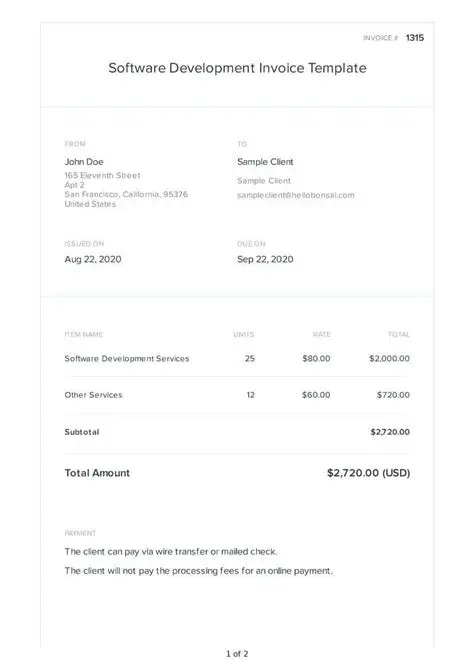
Regardless of which template you choose, your invoice should communicate the billing information clearly. A useful developer invoice can include details such as:
- Developer or business name
- Client name and contact information
- Invoice number and issue date
- Project or service description
- Hours, quantities, or milestones
- Hourly rate or project price
- Taxes or applicable discounts
- Total amount due
- Payment terms and due date
- Payment instructions
For software development projects, descriptive billing can be particularly useful. Instead of simply writing “Development Services,” consider identifying the project, milestone, feature, maintenance period, or other work covered by the charge.
How to Choose Between Different Invoice Template Options
The right choice depends less on which option looks best and more on how you actually bill clients.
Choose Excel If You Want Maximum Control
Excel is a strong choice if you want a low-cost and highly customizable solution. It is particularly suitable for developers who are comfortable working with spreadsheets and do not need extensive automation.
Choose Online Software If You Need Automation
An online invoicing platform makes more sense when you regularly send invoices, manage recurring billing, track payments, or want automated reminders. The additional features can reduce repetitive administrative work.
Choose a Custom Template If Branding Is a Priority
A custom invoice is appropriate when your visual identity is important and you need a design that cannot easily be achieved with a standard template. Keep in mind that this approach generally requires more time and expense.
Practical Tips for Better Developer Invoices
Once you select one of the available Invoice Template Options For Software Developers, a few simple practices can make your billing process easier.
- Use a unique invoice number for every transaction.
- Keep project descriptions specific and easy for clients to understand.
- Separate development work into clear services, milestones, or billable hours.
- State payment terms prominently.
- Review calculations before sending an invoice.
- Save copies of completed invoices for your records.
- Use the same core format across recurring client projects.
- Consider automated reminders if late payments become difficult to manage.
Using different templates for different clients or projects is also possible. The source notes that multiple templates can be useful when specific clients or projects have different requirements.

Can Developer Invoice Templates Be Customized?
Yes. Most invoice templates can be adapted with your business name, logo, branding, contact details, and project-specific information. The source specifically notes that adding branding can create a more professional image and reinforce brand identity.
You can also adapt a template for different types of software work. For example, a freelance developer may use an hourly billing layout, while an agency may prefer project milestones. A developer offering ongoing maintenance could use a recurring invoice format.
Free vs Paid Invoice Template Options
Free invoice templates are available online and can be a useful starting point for independent developers. However, the source notes that free options may have fewer features and customization capabilities than paid templates or dedicated invoicing software.
For a developer with a small number of clients, a free Excel template may be all that is needed. As billing volume increases, paying for automation, payment tracking, recurring invoices, or accounting integration may become more worthwhile.
Frequently Asked Questions About Developer Invoice Templates
Can I use multiple invoice templates for different projects?
Yes. Using different templates for different clients or projects can help you accommodate specific requirements and billing structures.
Can I add my company logo to an invoice?
Yes. The source states that most invoice templates allow you to add a company logo, branding, and contact information.
Can invoice templates track overdue payments?
This depends on the template or software. Online invoicing platforms can provide payment tracking and overdue invoice management features.
Can invoices be saved as PDF or Excel files?
Yes. The source notes that invoice templates can generally be saved in formats such as PDF, Excel, or Word, making them convenient to share or print.
Can invoice software integrate with accounting software?
According to the source, many online invoicing platforms can integrate with accounting software such as QuickBooks or Xero, helping simplify financial management.
Final Thoughts
Choosing among the available Invoice Template Options For Software Developers does not have to be complicated. Excel offers flexibility and customization, online invoicing software provides automation and payment-focused features, while custom templates offer greater control over branding and presentation.
The best option is the one that fits your current workload, billing model, budget, and client expectations. Start with a straightforward template if your invoicing needs are simple, then consider more advanced tools as your development business grows. With a consistent and professional invoice process, you can spend less time managing paperwork and more time focusing on the software projects that drive your business forward.