A Facility Agreement explains the terms for using or providing a facility. It identifies the parties, describes the facility, and defines important responsibilities.
A clear agreement can prevent misunderstandings. It gives everyone a written record of the agreed terms. It can also make facility management easier.
This guide explains how a Facility Agreement works. It also covers the main sections, practical tips, and common terms to include.
What Is a Facility Agreement?
A Facility Agreement is a written contract between two or more parties. It sets the terms for providing, accessing, or using a facility.
The facility may be an office, building, room, workspace, venue, or equipment area. The agreement should describe the facility in enough detail to avoid confusion.
The terms can vary from one situation to another. Therefore, each agreement should match the actual arrangement.
Why Use a Facility Agreement?
A written agreement creates clear expectations. Each party can see what they need to do.
It can also reduce uncertainty. If a question arises, the parties can review the written terms.
A Facility Agreement can cover several important areas. These areas include access, fees, maintenance, safety, and termination.
Clear Responsibilities
The agreement can assign duties to each party. This makes it easier to understand who handles specific tasks.
Better Communication
Clear terms can improve communication. Everyone can refer to the same document when discussing the facility.
Organized Records
A signed agreement creates a useful business record. It can also help with future reviews and updates.
What Should a Facility Agreement Include?
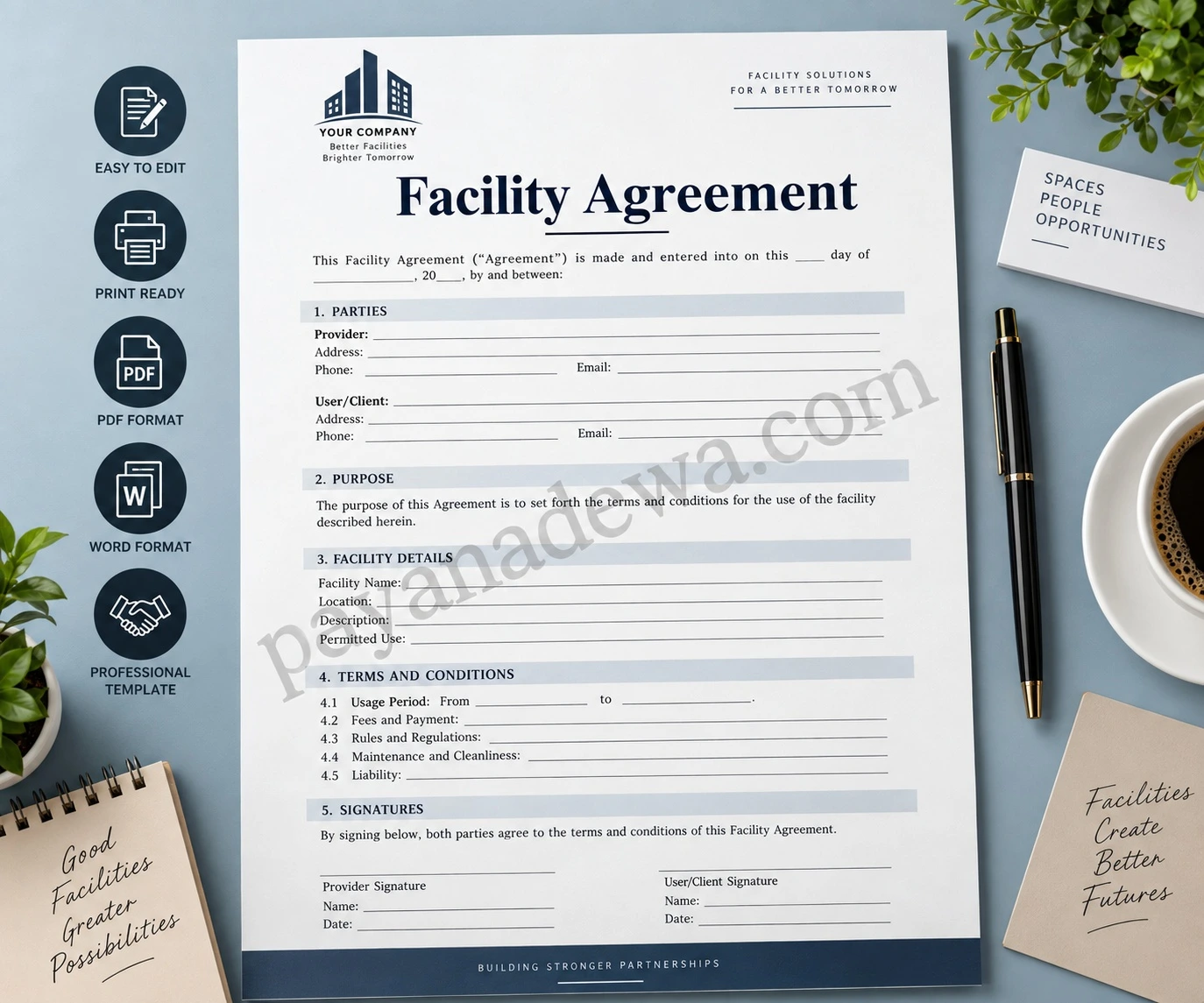
A complete Facility Agreement should contain the main details of the arrangement. The following sections provide a useful structure.
1. Parties and Contact Details
Start by identifying the parties. Use accurate names and contact information.
- Party name
- Business name
- Address
- Phone number
- Email address
- Authorized representative
Accurate details can help prevent mistakes. They also make communication easier.
2. Facility Description
Next, describe the facility. Include enough information to identify it clearly.
You can include the facility name and address. You can also add a room number, unit number, or equipment number.
If the agreement covers several areas, list them separately. This approach can make the scope easier to understand.
3. Purpose of the Agreement
Explain why the facility is being provided. Then describe the permitted use.
For example, the facility may support office work, meetings, training, events, or storage.
If some activities are restricted, list them clearly. Specific rules are easier to follow.
4. Agreement Period
State the start date and end date. If the agreement has no fixed end date, explain the notice requirements.
Access hours can also be included. For example, access may be limited to normal business hours.
5. Fees and Payment
If the facility requires payment, explain the financial terms. Include the amount, due date, and payment schedule.
- Facility fee
- Payment frequency
- Payment due date
- Security deposit
- Additional charges
- Late payment terms
- Payment method
Check every amount before the agreement is signed. Also check every payment date.
Facility Access Terms
Many facilities have access requirements. These requirements should appear in the agreement when they apply.
Access may require a key, card, identification, or security code. The agreement can explain who receives access.
It can also explain when access is allowed. This may include normal hours, weekends, or after-hours access.
Visitor rules can also be included. Clear access terms can improve security and organization.
Facility Use Rules
Facility use rules help protect the property and its users. They also explain what activities are permitted.
Common rules may cover cleanliness, noise, security, equipment, visitors, and restricted areas.
For example, users may need to keep shared spaces clean. They may also need to report damage quickly.
Keep these rules simple. Clear wording can make them easier to understand.
Maintenance Responsibilities
Maintenance is an important part of a Facility Agreement. The document should explain who handles each task.
Provider Duties
The provider may handle major repairs and essential systems. The provider may also maintain shared facilities.
List these duties in clear terms. This can reduce uncertainty.
User Duties
The user may need to keep the facility clean. The user may also need to use equipment correctly.
The user should report problems when required. The agreement can also explain responsibility for damage.
Safety Requirements
Safety rules can vary by facility. Therefore, include requirements that apply to the specific location.
The agreement may cover emergency procedures, security rules, restricted areas, and equipment use.
Applicable laws and regulations should also be considered. Add relevant policies when necessary.
Liability and Insurance
A Facility Agreement may include liability terms. These terms explain how certain risks are handled.
The agreement may address property damage, personal injury, equipment loss, or third-party claims.
Insurance requirements may also apply. The correct requirements depend on the arrangement.
For complex agreements, professional legal advice can be useful. This is especially important when significant financial or legal risks are involved.
Termination Terms
A good agreement should explain how the arrangement can end. Clear terms can help both parties plan ahead.
End of the Agreement
The agreement may end when the stated period expires. It may also end after a breach or missed payment.
Other termination conditions can be added when they apply.
Notice Period
If notice is required, state the notice period. Also explain how the notice must be delivered.
Written notice is common in many agreements. However, the required process depends on the specific arrangement.
Renewal Terms
If renewal is available, explain the renewal process. State whether renewal requires written approval.
Also include any renewal deadline. This can help prevent missed dates.
How to Create a Facility Agreement
Start with a structured template. Then add the details for your specific facility.
First, enter the names and contact details of the parties. Next, describe the facility and its permitted use.
After that, add the agreement period and payment terms. Then review the access and maintenance sections.
Next, add safety, liability, and insurance terms when needed. Finally, review the termination and renewal provisions.
Remove sections that do not apply. Add special conditions when necessary.
Tips for a Clear Facility Agreement
A good agreement should be clear and easy to review. Short sentences can make important terms easier to understand.
- Use simple language. Avoid unnecessary jargon.
- Use clear dates. State start dates and end dates.
- Define responsibilities. Explain who handles each task.
- List fees. Include amounts and payment dates.
- Explain access. State who can enter the facility.
- Describe restrictions. List important limits on facility use.
- Review the document. Check all details before signing.
- Keep attachments. Store related schedules and policies with the agreement.
Facility Agreement Checklist
Before signing, review every section. The following checklist can help.
- Are all parties correctly identified?
- Is the facility clearly described?
- Is the permitted use clear?
- Are the start and end dates correct?
- Are access rules included?
- Are fees and payment dates clear?
- Are maintenance duties assigned?
- Are safety requirements included?
- Are liability terms appropriate?
- Are insurance requirements clear?
- Are termination terms included?
- Are renewal terms included?
- Are required attachments included?
- Have all parties signed the document?
Common Uses for a Facility Agreement
A Facility Agreement can support many types of arrangements. Businesses can use one for offices and commercial facilities.
Organizations can also use one for meeting spaces and training facilities. Other examples include event venues, shared workspaces, and equipment areas.
The document is useful whenever parties need clear terms for facility access or use.
Facility Agreement vs. Other Contracts
A Facility Agreement can resemble other business contracts. However, the purpose may be different.
A lease usually focuses on the right to occupy property. A service agreement usually focuses on services.
A Facility Agreement can focus on facility access and use. It can also cover fees, maintenance, safety, and operating rules.
Choose the document type that matches the actual transaction. For complex situations, consider professional advice.
Final Review Before Signing
Read the entire Facility Agreement before signing. Do not focus only on the payment section.
First, check the names and addresses. Next, check the facility description and permitted use.
Then review the fees, dates, and access rules. After that, review maintenance and safety requirements.
Finally, check termination terms and signatures. Make sure the final document reflects the actual agreement.
Conclusion
A Facility Agreement creates a clear written record for facility use. It can cover access, fees, maintenance, safety, responsibilities, liability, and termination.
A Facility Agreement template can make the drafting process easier. It provides a useful structure for organizing important information.
However, every agreement should match the actual arrangement. Review each section carefully before signing.
With clear terms and defined responsibilities, a Facility Agreement can support better communication. It can also make facility management more organized.