Whether you are a professional DJ, a mobile DJ, or an event organizer, having a clear DJ contract is essential for every booking. A written agreement protects both the DJ and the client. It also helps prevent misunderstandings about payment, performance schedules, equipment, cancellations, and other important details.
Without a proper agreement, even a simple booking can turn into a complicated situation. For example, a client might expect additional performance hours without extra payment. Similarly, a DJ might arrive at a venue without knowing the equipment requirements. A well-written DJ service agreement helps avoid these problems before they happen.
In this guide, you will learn what a DJ contract should include, how to write one, and how to use a DJ contract template for weddings, private parties, corporate events, and other entertainment bookings.
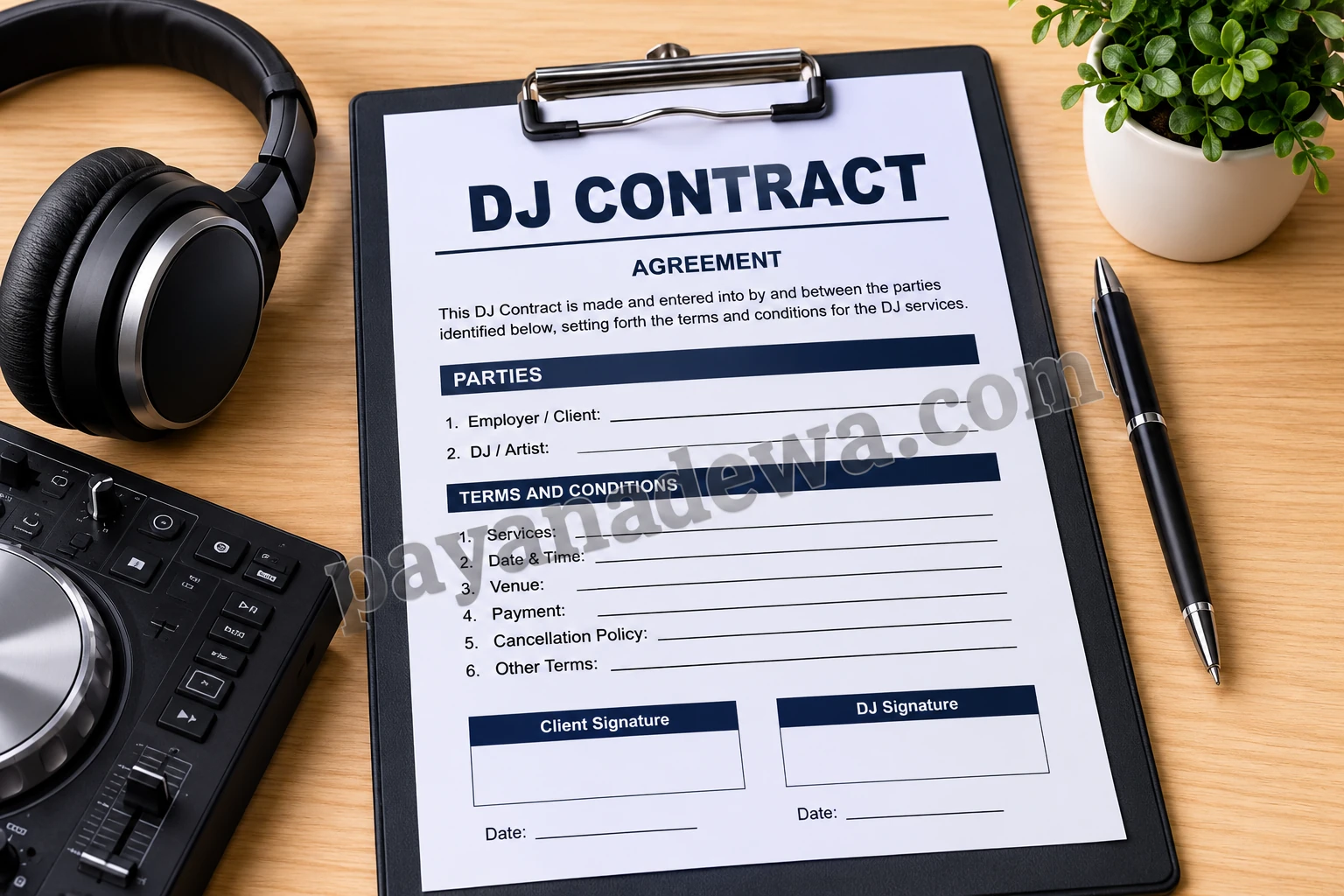
What Is a DJ Contract?
A DJ contract is a written legal agreement between a DJ and a client who hires them to provide music and entertainment services. It outlines the responsibilities, expectations, and conditions agreed upon by both parties.
The document serves as a reference throughout the booking process. It explains what services the DJ will provide, when and where the performance will take place, and how much the client must pay.
A professional DJ agreement typically includes:
- DJ and client contact information.
- Event date, time, and venue location.
- Performance duration and scheduled breaks.
- DJ services and entertainment requirements.
- Total booking fee and payment schedule.
- Deposit and cancellation policies.
- Sound equipment and technical requirements.
- Overtime charges and additional services.
- Liability and unexpected circumstances.
- Signatures from both parties.
Although verbal agreements may seem convenient, written contracts provide clearer evidence of the agreed terms. Therefore, DJs should use a signed agreement for every confirmed booking.
Why Is a DJ Contract Important?
A DJ contract is more than a booking confirmation. It is a practical tool that helps manage professional relationships and protect everyone’s interests.
1. Protects Both Parties
A written agreement explains the responsibilities of the DJ and the client. If a disagreement occurs, both parties can refer to the original terms instead of relying on different memories of a conversation.
2. Prevents Payment Disputes
Payment terms should always be clear before an event. The contract can specify the booking deposit, remaining balance, accepted payment methods, and deadlines.
As a result, the DJ knows when payment is expected, while the client understands the total financial commitment.
3. Clarifies Performance Expectations
Every event has different entertainment requirements. A wedding DJ may need to coordinate special announcements, while a corporate DJ may need to follow a specific music schedule.
The agreement should describe the expected services, music preferences, performance hours, and any special requests.
4. Establishes Professional Credibility
Using a professional DJ service contract shows clients that you take your business seriously. It also creates a consistent booking process, which can improve customer confidence and strengthen your reputation.
Essential Elements of a Professional DJ Contract
Before creating your agreement, make sure it includes the following important sections.
1. Contact Information of Both Parties
Start by identifying everyone involved in the agreement. Include the DJ’s business name, legal name, phone number, email address, and business address when appropriate.
Also include the client’s full name and contact information. For business events, identify the company and the authorized representative.
2. Event Details and Performance Schedule
Clearly describe the event so there is no confusion about the booking.
- Event name or type.
- Event date.
- Venue name and complete address.
- DJ arrival and setup time.
- Performance start and end times.
- Scheduled breaks, if applicable.
It is also helpful to include the venue contact person’s information. This makes communication easier on the event day.
3. DJ Services and Responsibilities
Describe exactly what the DJ will provide. This may include music playback, mixing, announcements, sound equipment, lighting, and coordination with event organizers.
For example, a wedding DJ package may include ceremony music, cocktail hour entertainment, dinner music, and reception DJ services.
Be specific about what is included in the package. If additional services are available at an extra cost, explain those charges separately.
4. Payment Terms and Booking Deposit
One of the most important parts of a DJ booking contract is the payment section.
Include the following information:
- Total service fee.
- Required booking deposit.
- Remaining balance and due date.
- Accepted payment methods.
- Additional travel or equipment charges.
- Overtime rates.
For example, a DJ might require a 30% deposit to reserve the event date, with the remaining balance due seven days before the performance.
However, the exact payment arrangement should be agreed upon by both parties and clearly documented.
5. Cancellation and Rescheduling Policy
Unexpected situations can affect event schedules. Therefore, every DJ agreement should explain what happens when a client cancels or changes the booking.
Consider including:
- How much notice is required for cancellation.
- Whether the deposit is refundable.
- Any cancellation fees.
- Rules for changing the event date.
- Procedures for postponements.
- How refunds are handled, when applicable.
Make sure these conditions are reasonable, clearly written, and consistent with applicable consumer protection laws.
6. Equipment and Technical Requirements
Explain which equipment the DJ will provide and what the venue must supply.
Common requirements include a suitable performance area, electrical outlets, safe cable routing, adequate lighting, and access for loading and unloading equipment.
If the client requests additional speakers, microphones, lighting systems, or special production equipment, identify the associated costs in advance.
7. Overtime and Additional Services
Events do not always finish on schedule. Your contract should explain how additional performance time will be handled.
Specify the hourly overtime rate and whether the DJ must approve any extension before continuing. You should also explain how additional services will be quoted and authorized.
8. Liability and Unexpected Circumstances
Consider including provisions covering equipment damage, venue restrictions, power failures, severe weather, and other circumstances beyond the parties’ reasonable control.
The agreement should also explain each party’s responsibilities if an unexpected situation affects the performance.
Because liability provisions can have legal consequences, consider having a qualified attorney review this section before using the contract commercially.
How to Create a DJ Contract Step by Step
Creating a professional DJ agreement does not have to be complicated. Follow these practical steps to prepare a document that is easy to understand and complete.
Step 1: Choose a Suitable Contract Template
Start with a printable DJ contract template or create your own document. Choose a clean layout with enough space for booking information, payment details, terms, and signatures.
Step 2: Add Your Business Information
Include your DJ business name, contact details, and relevant booking information. Adding your logo can also make the document look more professional.
Step 3: Enter the Event Information
Fill in the event date, venue, performance schedule, and requested services. Double-check these details with the client before preparing the final agreement.
Step 4: Explain All Fees and Conditions
Write down the agreed price, deposit, payment deadlines, cancellation rules, and overtime charges. Avoid vague statements that could create confusion later.
Step 5: Review and Sign the Agreement
Give both parties enough time to read the document. Make any necessary changes before signing. Each party should receive a complete copy of the final agreement.
Different Types of DJ Contracts
Not every event requires exactly the same agreement. You can adapt your DJ contract to match the type of entertainment service you provide.
Wedding DJ Contract
A wedding DJ agreement should include ceremony music, reception entertainment, special song requests, announcements, and coordination with the wedding planner.
Private Party DJ Contract
For birthdays, anniversaries, and private celebrations, include the event schedule, music preferences, venue access, equipment requirements, and payment conditions.
Corporate DJ Contract
Corporate events often have stricter schedules and professional presentation requirements. Include company details, event objectives, dress code, announcements, and any restrictions on music or entertainment.
Club and Nightclub DJ Contract
Club DJ agreements may require additional details about set duration, performance fees, promotional responsibilities, exclusivity, and equipment provided by the venue.
Common DJ Contract Mistakes to Avoid
Even experienced DJs can overlook important details when preparing a booking agreement. Avoid these common mistakes:
- Using vague payment terms: Always state the exact fee, deposit, and payment deadlines.
- Ignoring overtime: Specify additional performance charges before the event.
- Leaving out cancellation rules: Explain the process for cancellations and rescheduling.
- Not confirming equipment: Identify who supplies sound systems, microphones, and lighting.
- Accepting verbal changes only: Document important changes in writing.
- Skipping signatures: Make sure both parties sign the final agreement.
- Using the same terms for every event: Adjust the agreement to match each booking.
Taking a few extra minutes to review the document can prevent unnecessary problems later.
Tips for Making Your DJ Contract More Professional
A well-organized contract makes your business easier to manage. Use these tips to improve your document and booking process.
- Use simple, professional language that clients can understand.
- Keep headings and sections clearly organized.
- Use consistent fonts and formatting.
- Include your business branding where appropriate.
- Provide digital signing options when legally accepted.
- Keep copies of signed agreements and payment records.
- Review your contract regularly as your services change.
- Ask a qualified legal professional to review important contract terms.
Additionally, consider creating separate versions for weddings, private parties, and corporate events. This approach makes it easier to provide clients with an agreement that matches their booking requirements.
Frequently Asked Questions About DJ Contracts
Do DJs need a contract for every event?
Yes. A written agreement is recommended for every booking, regardless of the event size. It helps establish clear expectations and provides a record of the agreed terms.
Can I use a free DJ contract template?
Yes. A free DJ contract template can be a useful starting point. However, you should customize it to match your services, payment arrangements, and local legal requirements.
Should a DJ contract include a deposit?
It is common for DJs to request a deposit to reserve an event date. The amount, payment deadline, and refund conditions should be clearly stated in the agreement.
Can a DJ contract be signed electronically?
In many jurisdictions, electronic signatures can be legally valid. However, the applicable requirements vary by location. Check the relevant laws before relying on electronic signatures.
What happens if a client cancels a DJ booking?
The outcome depends on the cancellation terms agreed upon by both parties and applicable laws. A clear contract should explain notice periods, deposit treatment, cancellation fees, and possible rescheduling arrangements.
Can I modify a DJ contract after it has been signed?
Yes, changes may be possible if both parties agree. Document the amendments in writing and obtain the necessary approvals or signatures.
Conclusion
A professional DJ contract is an essential document for anyone offering DJ entertainment services. It protects both the DJ and the client by clearly explaining performance expectations, payment arrangements, equipment requirements, cancellation policies, and other important conditions.
Whether you perform at weddings, private parties, corporate functions, or nightclubs, a written agreement can make your booking process more organized and professional.
Start with a suitable DJ contract template, customize the terms for each event, and make sure both parties understand the agreement before signing. With the right preparation, you can spend less time worrying about booking problems and more time focusing on delivering an excellent entertainment experience.
Disclaimer: This article provides general educational information and is not legal advice. Contract requirements vary by jurisdiction. Consult a qualified legal professional to ensure your agreement meets applicable laws.