However, creating a contract agreement can feel complicated if you do not understand its basic requirements. You need to identify the parties, explain their responsibilities, establish payment terms, and define what happens if someone fails to meet their obligations.
This guide explains everything you need to know about contract agreements. You will learn their meaning, essential elements, common types, and practical steps for creating a professional agreement. Additionally, you will discover how to use a contract agreement template to save time and organize important details.
What Is a Contract Agreement?
A contract agreement is a written or legally recognized arrangement between two or more parties that establishes their rights, duties, and obligations. It explains what each party promises to do and the conditions they must follow.
For example, a business may sign a contract agreement with a marketing agency. The document can describe the services, project deadlines, payment schedule, and responsibilities of both parties.
Depending on the applicable law, an agreement may become legally binding when it meets certain legal requirements. These requirements can include an offer, acceptance, consideration, mutual consent, and the legal capacity of the parties.
Therefore, a well-prepared contract should clearly explain the arrangement and reduce the possibility of misunderstandings.
Why Is a Contract Agreement Important?
A contract agreement provides a reliable reference for everyone involved in a business or personal transaction. Instead of depending on verbal promises, the parties can review a written document whenever questions arise.
Here are several important benefits of using a contract agreement:
- Clear expectations: Each party understands what they must deliver and when they must complete their responsibilities.
- Legal protection: A properly prepared agreement can help protect the parties when a dispute occurs.
- Payment security: Written payment terms explain the agreed amount, due dates, and accepted payment methods.
- Professional relationships: A formal document demonstrates commitment and creates a more organized working relationship.
- Dispute prevention: Clear conditions can reduce confusion about deadlines, services, and responsibilities.
- Written evidence: The signed document can provide useful evidence of the agreed terms.
In addition, a written agreement encourages both parties to discuss important details before starting their cooperation. This simple step can prevent expensive problems later.
Essential Elements of a Contract Agreement
Every contract agreement should contain information that explains the arrangement. Although requirements vary depending on the jurisdiction and type of contract, several elements are commonly important.
1. Names and Information of the Parties
Start by identifying everyone involved in the agreement. Include their full legal names, business names when applicable, addresses, and relevant contact information.
Accurate identification helps prevent confusion about who has legal responsibilities under the contract.
2. Purpose of the Agreement
Explain why the parties are entering into the agreement. Describe the transaction, project, service, or business relationship in clear language.
For example, a service agreement should explain exactly what services the provider will perform. Avoid descriptions that are too general or open to different interpretations.
3. Rights and Responsibilities
Clearly describe what each party must do. Include important tasks, delivery requirements, performance standards, and responsibilities.
Whenever possible, use specific and measurable terms. This makes it easier for everyone to understand whether the obligations have been fulfilled.
4. Payment Terms and Conditions
If the agreement involves payment, explain the financial arrangement in detail. Include:
- Total contract value or agreed service fees.
- Payment methods and accepted currencies.
- Deposit requirements, if applicable.
- Payment deadlines and installment schedules.
- Late payment procedures and applicable charges.
Clear financial terms help prevent disagreements and make financial planning easier for both parties.
5. Contract Duration and Termination
State when the agreement begins and how long it remains effective. If the contract has an expiration date, include it clearly.
You should also explain how either party can terminate the agreement. Include notice requirements, acceptable reasons for termination, and any outstanding obligations that must be completed.
6. Confidentiality and Data Protection
Some business relationships involve confidential information, customer records, financial details, or proprietary materials.
When necessary, include confidentiality provisions that explain what information must remain private, how it can be used, and when disclosure is permitted.
7. Dispute Resolution
Disagreements can happen even when both parties act professionally. Therefore, include a procedure for handling disputes.
Depending on the agreement and applicable law, this may involve negotiation, mediation, arbitration, or court proceedings. Also, identify the governing law and appropriate jurisdiction when relevant.
8. Signatures and Dates
Finally, provide signature spaces for all parties. Include printed names, positions when applicable, and signing dates.
Signatures demonstrate that the parties have accepted the agreement. However, signing alone does not automatically make every provision enforceable. The agreement must also satisfy applicable legal requirements.
Common Types of Contract Agreements
Contract agreements are used in many industries and situations. Choosing the right type depends on the purpose of the relationship and the obligations involved.
Employment Agreement
An employment agreement establishes the relationship between an employer and an employee. It commonly covers job responsibilities, salary, working hours, benefits, leave policies, and termination conditions.
Service Agreement
A service agreement describes the services provided by an individual or business. It is commonly used by consultants, freelancers, marketing agencies, maintenance companies, and other service providers.
Business Partnership Agreement
This agreement defines the relationship between business partners. It can explain ownership percentages, financial contributions, profit distribution, management responsibilities, and procedures for leaving the partnership.
Sales Agreement
A sales agreement establishes the terms of a transaction involving goods or products. It typically identifies the products, purchase price, delivery arrangements, payment conditions, and ownership transfer requirements.
Non-Disclosure Agreement (NDA)
An NDA protects confidential information shared between parties. Businesses often use it before discussing new products, partnerships, investments, or sensitive commercial information.
Independent Contractor Agreement
This document establishes the relationship between a business and an independent contractor. It explains project requirements, compensation, deadlines, ownership of work, and the independent nature of the working arrangement.
How to Create a Professional Contract Agreement
Creating a professional contract does not have to be difficult. By following a structured process, you can prepare a document that clearly communicates the arrangement.
Step 1: Identify the Purpose
First, determine why the agreement is necessary. Identify the transaction, project, or relationship you want to establish. This will help you choose the correct contract structure.
Step 2: Collect Important Information
Gather the legal names, addresses, contact details, financial information, and other relevant details of every party.
Next, confirm that the information is accurate before including it in the document.
Step 3: Write Clear Terms
Describe each responsibility using simple and specific language. Avoid unnecessary legal jargon because complicated wording can create confusion.
Also, make sure that the payment conditions, deadlines, deliverables, and termination procedures are consistent throughout the document.
Step 4: Review the Agreement
Carefully review every section before signing. Check names, dates, amounts, obligations, and references to additional documents.
If the contract involves significant financial or legal risks, consider asking a qualified legal professional to review it.
Step 5: Sign and Keep Copies
Once all parties approve the terms, arrange for the agreement to be signed. Depending on applicable laws, electronic signatures may also be accepted.
Finally, distribute a complete copy to each party and store the signed document securely for future reference.
Free Contract Agreement Template: What Should It Include?
A contract agreement template provides a convenient starting point when preparing a new document. Instead of creating the entire structure from scratch, you can use an existing format and customize it to match your needs.
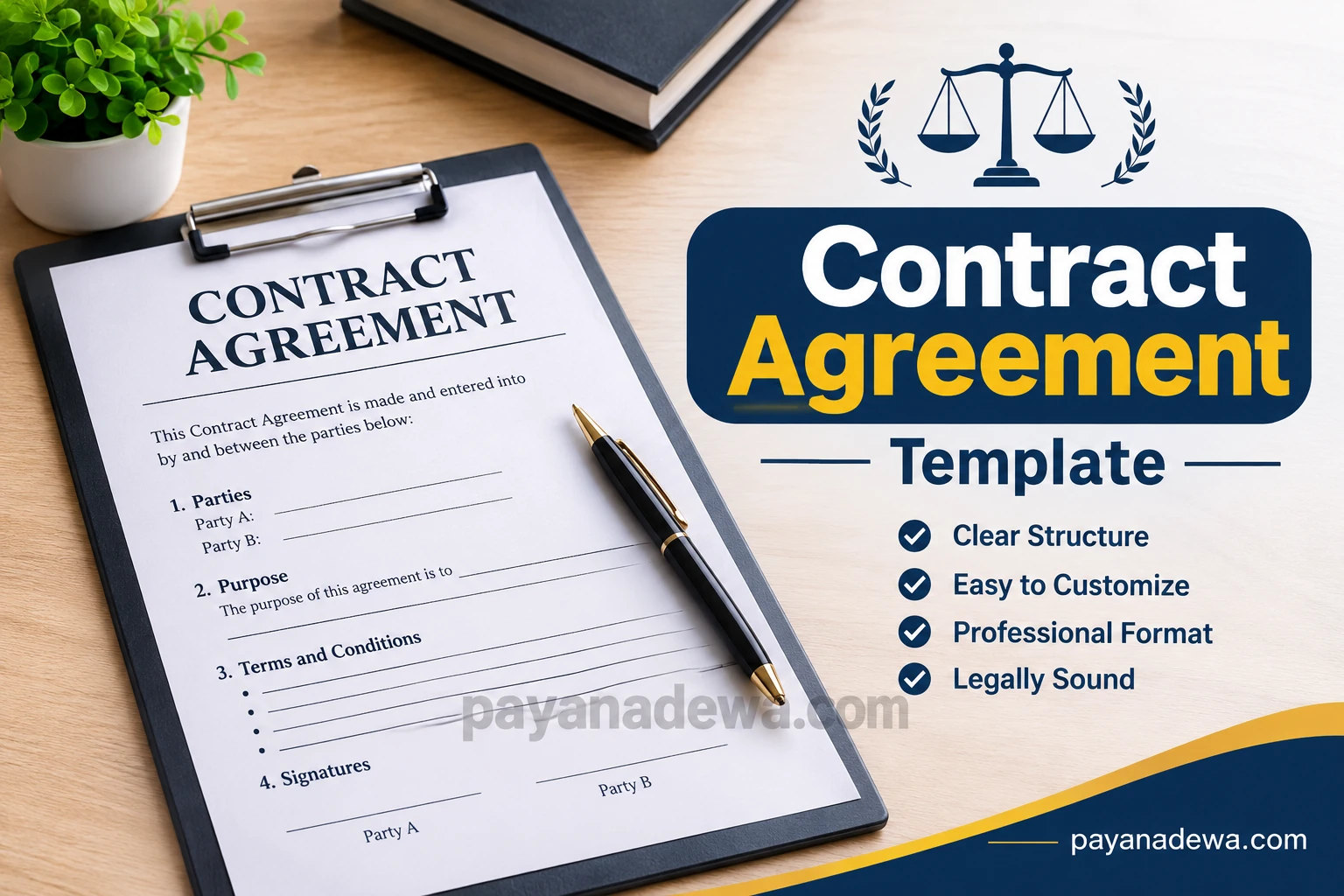
A useful template should include the following sections:
- Document title: Identifies the type of agreement.
- Effective date: States when the agreement becomes effective.
- Party information: Provides identification details for everyone involved.
- Agreement purpose: Explains the reason for the arrangement.
- Terms and conditions: Describes the rights and responsibilities of each party.
- Payment information: Explains fees, due dates, and payment procedures.
- Termination provisions: Establishes how the agreement can end.
- Signatures: Provides spaces for authorized parties to sign and date the document.
A template can save time and improve consistency. However, it should never be treated as a universal legal solution. Always customize the wording, check local legal requirements, and obtain professional advice when necessary.
For a visual reference, use the Contract Agreement Template illustration below to understand how a professional agreement document can be organized.
Common Mistakes to Avoid When Writing a Contract
Even a well-designed document can cause problems if important details are missing. Before finalizing your agreement, watch out for these common mistakes:
- Using vague language: Unclear terms can create different interpretations. Use precise descriptions instead.
- Leaving important sections blank: Missing information can create uncertainty about the parties’ obligations.
- Ignoring payment details: Always specify amounts, deadlines, and payment conditions.
- Copying an unsuitable template: A contract designed for another transaction may not protect your interests.
- Forgetting termination conditions: Explain how the parties can end the relationship.
- Skipping legal review: Complex agreements may require professional advice before signing.
Taking additional time to review the document can help you avoid unnecessary disputes and misunderstandings.
Practical Tips for Managing Contract Agreements
Writing a contract is only the first step. Proper management is equally important, especially when you handle multiple business relationships.
- Use consistent document names and file formats.
- Store signed agreements in a secure location.
- Keep digital and physical copies when appropriate.
- Track expiration dates and important deadlines.
- Record amendments and obtain the required approvals.
- Limit access to confidential contract information.
- Review agreements regularly when business conditions change.
Additionally, consider using document management software if your organization handles many contracts. This can make searching, tracking, and updating agreements more efficient.
Frequently Asked Questions About Contract Agreements
Is a contract agreement legally binding?
A contract agreement can be legally binding when it meets the applicable legal requirements. These requirements vary depending on the jurisdiction, transaction, and type of agreement.
Can I create my own contract agreement?
Yes. You can prepare your own agreement using a suitable template. However, make sure the document contains clear terms and complies with relevant laws. Professional legal review is recommended for complex or high-value arrangements.
Is a written contract better than a verbal agreement?
A written contract is generally easier to review and use as evidence of agreed terms. Although some verbal agreements may be legally enforceable, certain transactions require written documentation under applicable law.
Can I use a free contract agreement template?
Yes. A free template can provide a useful structure for preparing an agreement. Nevertheless, customize it to reflect your specific transaction and legal requirements before signing.
Does every contract need a lawyer?
Not every simple agreement requires a lawyer. However, professional legal advice is valuable when a contract involves substantial money, complex obligations, intellectual property, employment matters, or significant legal risks.
Conclusion
A contract agreement is an important tool for establishing clear expectations and protecting the interests of everyone involved in a transaction. It explains the parties’ responsibilities, payment conditions, deadlines, and other essential terms.
Whether you need an employment agreement, service contract, sales agreement, or business partnership document, a well-organized structure makes the process easier.
Start with a suitable contract agreement template, customize every relevant section, and review the terms carefully before signing. Most importantly, make sure your document follows the laws that apply to your situation.
With proper preparation and clear communication, a professional contract agreement can help build stronger business relationships and reduce the risk of future disputes.