Consultant Agreement Templates provide a clear structure for documenting a professional relationship between a consultant and a client. They help both parties record the services, deliverables, fees, deadlines, responsibilities, confidentiality duties, intellectual property rights, and termination terms. A well-prepared agreement can make project management easier because important expectations appear in one place.
The right contract should match the actual consulting engagement. A short advisory project may need only a clear scope, payment terms, confidentiality provisions, ownership terms, and signatures. In contrast, a long-term consulting relationship may need milestones, statements of work, expense rules, change procedures, insurance, liability terms, and detailed handover requirements.

What Is a Consultant Agreement?
A consultant agreement is a written contract between a consultant and a client. It sets out the terms for professional services. The consultant may provide strategy, research, marketing advice, technical expertise, financial analysis, design, training, operations support, or another specialized service.
The contract gives both parties a shared reference point. Instead of relying on conversations, each party can check the agreed scope, price, schedule, and responsibilities. As a result, the project can be easier to manage from the beginning.
Consulting agreement templates can also help organize the drafting process. However, a template is only a starting point. Each clause should be reviewed before signing. The final document should reflect the actual project, the parties, and the law that applies to the relationship.

Why a Written Consulting Contract Matters
Consulting projects often begin with a simple conversation. The client explains a problem, and the consultant proposes a solution. However, a verbal understanding may leave important details unclear.
For example, the client may expect three reports while the consultant expects one final report. The client may also expect unlimited revisions. Meanwhile, the consultant may have priced the project around two revision rounds.
A written agreement helps resolve these assumptions before they become disputes. It can define the work, price, deadlines, deliverables, review process, and responsibilities of each party.
The contract can also explain what happens when the project changes. If the client requests additional work, a clear change process can determine whether the request falls within the existing scope or requires a revised fee.

Essential Sections of a Consultant Agreement
Identify the Contracting Parties
Begin by identifying the consultant and client correctly. Use the legal name of each contracting party. If the client is a company, identify the entity that is actually entering the agreement.
The contract should also state the effective date. This date may be the signing date or another agreed commencement date. If work begins before signing, the parties should address that situation clearly.
Define the Scope of Services
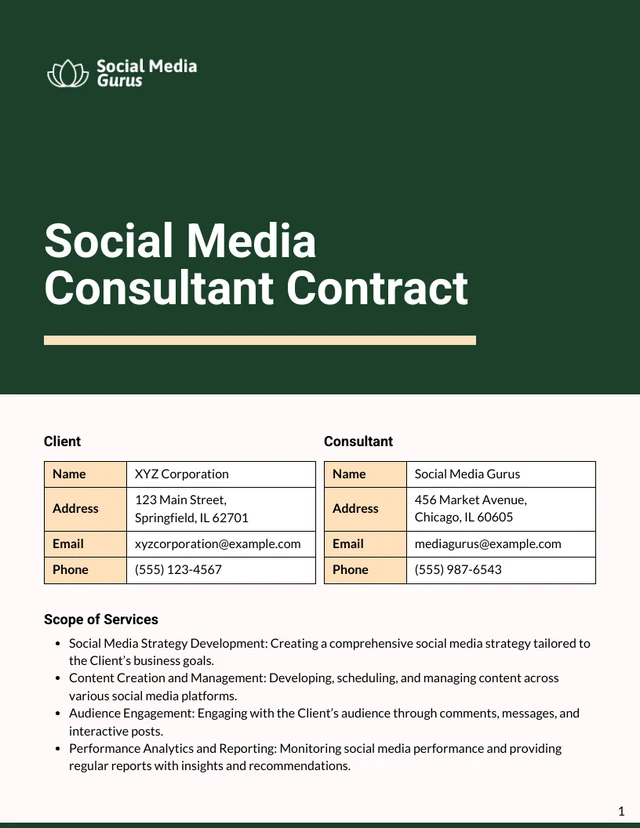
The scope explains what the consultant will do. It should be specific enough for both parties to understand the expected work.
- Describe the main consulting services.
- Identify important exclusions.
- List expected deliverables.
- State project assumptions.
- Identify information required from the client.
- Explain how major changes will be handled.
Clear scope language also makes later discussions easier. When a new request appears, the parties can compare it with the original scope.

Describe Deliverables
Deliverables should be easy to identify. They may include reports, presentations, research findings, designs, technical specifications, financial models, training materials, or other defined outputs.
If the client must approve a deliverable, the agreement can explain the review process. It may state how long the client has to review the work and how revisions are requested.
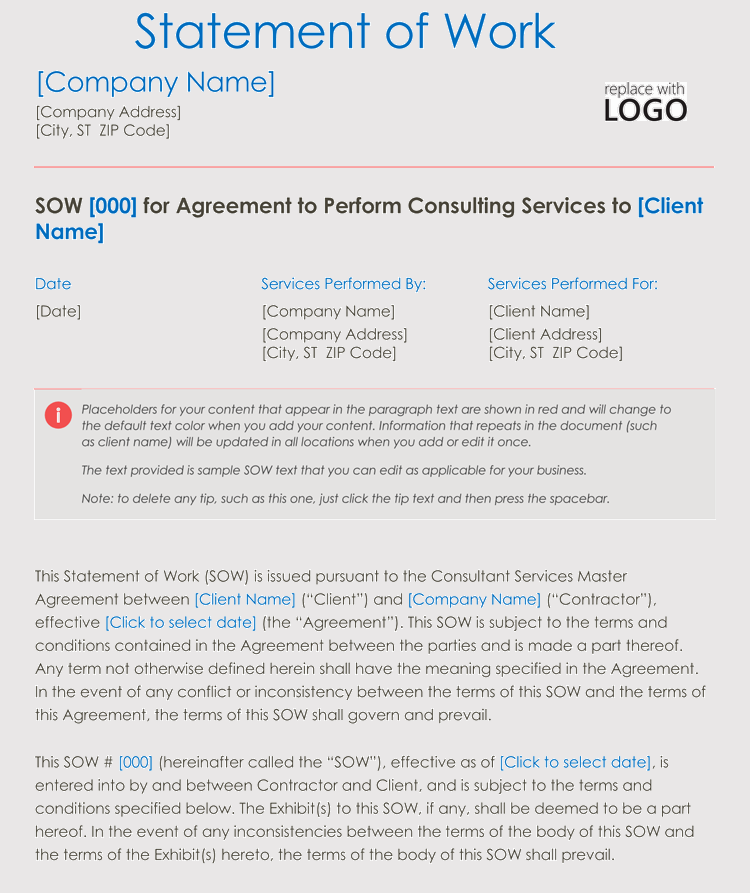
A Statement of Work can provide more detail when the same consulting relationship includes several projects. In that structure, the main agreement establishes general terms. Each statement then describes a specific assignment.
Fees and Payment Terms
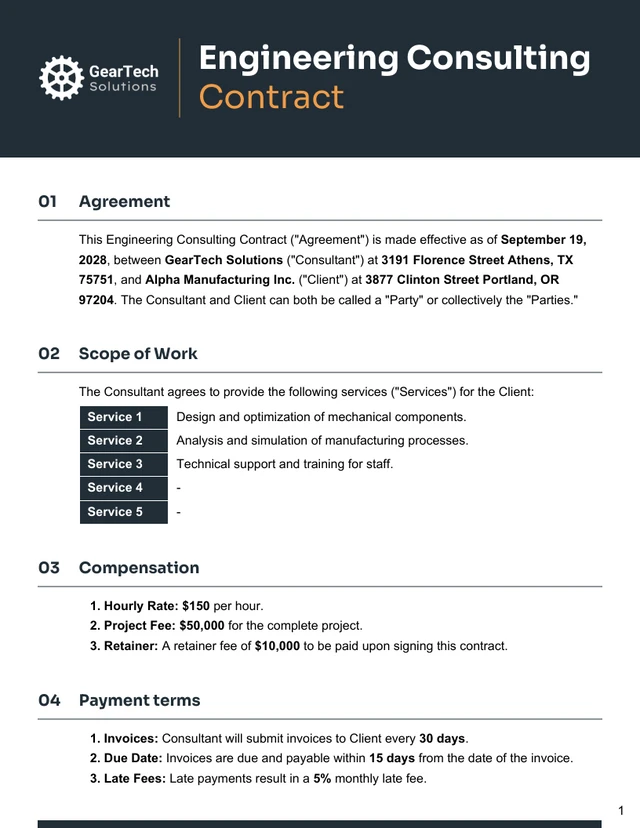
Payment terms should be simple and precise. State the fee structure, billing method, invoice timing, payment deadline, currency, and treatment of applicable taxes.
Consultants can use hourly rates, daily rates, fixed project fees, milestone payments, recurring retainers, or another agreed method. The contract should connect the pricing model to the services.
For hourly work, explain how time is recorded. If additional hours need approval, state who provides that approval. For fixed-fee work, connect installments to specific milestones whenever practical.

Expense terms should also be clear. Travel, lodging, specialist services, research materials, and other costs can create disagreements if the contract does not explain who pays them.

Term and Renewal
The term states when the consulting relationship begins and ends. A project may have a fixed end date. Alternatively, it may end when the agreed deliverables are completed.
Ongoing consulting relationships can use a continuing term. In that case, the contract should explain how either party can end the relationship.
Renewal terms should also be clear. If rates, services, personnel, or project scope may change during renewal, those changes should be documented.

Confidentiality and Information Protection
Consultants often receive sensitive business information. This information may include financial records, customer information, technical material, product plans, research, strategy documents, or internal procedures.
A confidentiality clause should explain what information is protected. It should also explain how the consultant may use that information and who may receive it.

The UK government’s knowledge-asset guidance discusses several useful subjects for confidentiality arrangements. These include the definition of confidential information, permitted recipients, permitted uses, duration, and treatment after the relationship ends. The exact wording should still be adapted to the specific contract.

The agreement can also identify common exceptions. For example, information may already be known to the receiving party or may become public without a contractual breach. Legal disclosure requirements may also need separate treatment.
Intellectual Property and Work Product
Intellectual property terms explain what happens to materials created during the engagement. These materials may include reports, designs, software, research, presentations, models, processes, or other work products.
A useful distinction is between background materials and new deliverables. A consultant may bring existing methods, tools, templates, libraries, or know-how into the project. The contract should explain what happens to those materials.

The parties may use an assignment structure or a licensing structure. The choice depends on the engagement and the law that governs the contract.
A consultant agreement template work for hire may appear suitable when a client expects ownership of commissioned work. However, work-for-hire concepts can have specific legal meanings. Therefore, the parties should not assume that the same wording produces the same result in every jurisdiction.
Independent Contractor Relationship
Many consulting contracts describe the consultant as an independent contractor. This language can record the parties’ intended relationship.
However, the contract label does not always determine legal classification. Actual working conditions may also matter. Factors such as control, independence, economic circumstances, and applicable law can affect classification.

The contract can explain responsibility for taxes, insurance, equipment, business expenses, personnel, and work methods. These provisions help clarify practical responsibilities during the engagement.
Client Responsibilities
Consultants often depend on information and decisions from the client. The agreement should identify important client responsibilities.
Depending on the project, the client may need to provide records, system access, specifications, approvals, interviews, facilities, data, or personnel.

For example, a financial consultant may need accounting records. A technology consultant may need system documentation. A marketing consultant may need brand materials and timely approvals.
If these inputs affect project deadlines, the contract can explain how delays are handled. This approach makes the project timeline more realistic.
Managing Scope Changes
Scope changes are common in consulting. A client may request additional research, another report, more meetings, extra revisions, or implementation support.
A change-control process helps the parties decide what happens next. If the request falls outside the original scope, the parties can agree on the additional work before it begins.
The change record can identify the new task, revised fee, updated deadline, and additional deliverable. This method is especially useful for fixed-fee projects.
Professional Standards and Quality
The agreement can describe the professional standard expected from the consultant. The wording should match the nature of the services.
Specialized or regulated consulting may require additional provisions. The parties should verify any relevant professional rules, licenses, certifications, or statutory obligations before including them as contractual requirements.
The agreement should also distinguish professional services from business results. A consultant may provide analysis and recommendations, while the client makes the final business decision. Clear wording prevents unrealistic expectations.
Insurance, Liability, and Indemnity
Some consulting projects involve risks that make insurance provisions useful. The contract can identify required coverage and responsibility for maintaining that coverage.

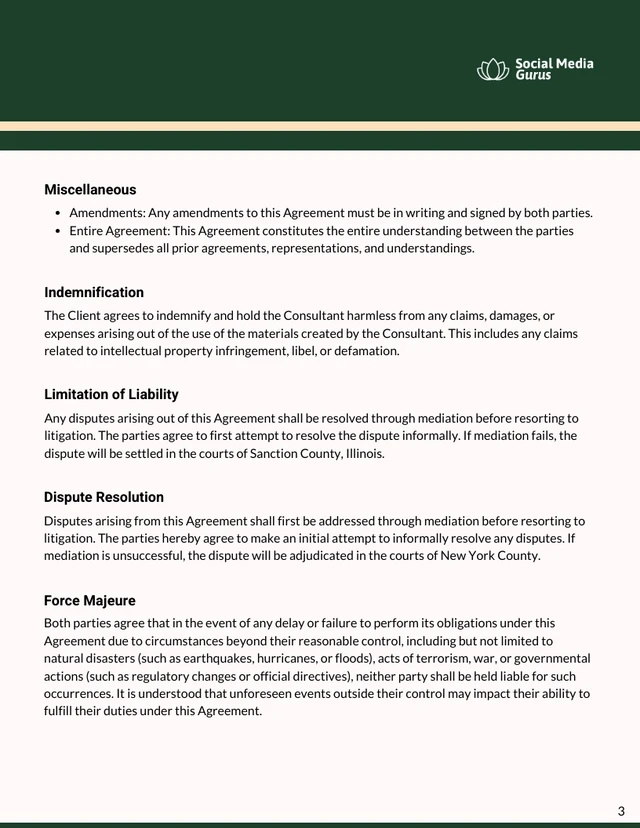
Liability provisions can address limits, excluded losses, confidentiality breaches, intellectual property claims, negligence, misconduct, and other risks.
Indemnity provisions can define which events trigger an indemnity and which losses are covered. They may also explain how claims are handled.
Because these provisions can have significant legal effects, complex or high-value consulting engagements may benefit from professional legal review.
Termination and Handover
Termination provisions explain how the consulting relationship can end. A contract may end when the project is complete. It may also allow either party to terminate after giving notice.

The contract should explain what happens after termination. Important subjects include payment for completed work, work in progress, return of information, system access, confidentiality, intellectual property, and outstanding expenses.
For ongoing consulting, a reasonable notice period can make handover easier. The agreement can also state which documents, records, or reports must be transferred.
Dispute Resolution and Governing Law
The contract should identify the governing law when appropriate. It should also explain how disputes will be handled.
Possible procedures include negotiation, mediation, arbitration, or court proceedings. The appropriate structure depends on the parties, location, project, and governing legal framework.
Cross-border consulting deserves additional care. Laws can differ between countries and regions. Issues involving intellectual property, taxes, privacy, worker classification, and enforcement may require local advice.
Amendments and Formal Notices
A consulting agreement should explain how amendments are made. Written amendments help create a reliable record when the parties change the original terms.
Notice provisions can identify the addresses or communication methods used for formal notices. The contract can also explain when a notice is considered received.
Signatures and Contract Records
The signature section should identify each signer. When an organization is involved, the signer should have appropriate authority.
After signing, preserve the executed agreement with relevant statements of work and amendments. Keeping these records together makes it easier to identify the controlling version later.

Choosing Word or PDF Formats
Readers searching for consultant agreement templates pdf often want a fixed document for review, printing, signing, or recordkeeping. PDF can be useful after the wording has been finalized because the layout remains consistent.
During drafting, an editable Word document can be more convenient. A consultant agreement template word document allows the parties to adjust the scope, schedules, clauses, and project details.
The phrase consultant agreement template word is commonly associated with editable contract drafting. A consulting agreement template word can also help during the revision stage.
A consultant agreement template word uk should not automatically be treated as suitable for every UK engagement. Likewise, a consultant agreement template word australia should be reviewed for the circumstances and legal framework that apply to the Australian engagement.
Common Consulting Engagement Types
Consulting agreements can support many professional services. A marketing consultant may need provisions for campaign materials, approvals, analytics, and brand assets.
A technology consultant may need terms for source code, credentials, security, testing, third-party components, and system access.

A financial consultant may need provisions for records, forecasts, assumptions, reporting, and approvals. An operations consultant may need detailed milestones and process documentation.
A sample consultancy agreement can help readers understand the overall structure of a consulting contract. However, the example should be adapted to the actual engagement.
Remote consulting may also require additional terms. A consultant agreement template work from home can address remote access, confidentiality, equipment, information security, communication, and working arrangements.

Subcontracting should also be addressed when relevant. The agreement can state whether the consultant may delegate work and whether client approval is required.

Review Checklist Before Signing
A careful review can identify missing details before the consulting work begins. Review each section instead of assuming that a standard template fits automatically.
- Confirm the legal names of both parties.
- Check the effective date and contract term.
- Read the scope and exclusions carefully.
- Confirm that deliverables are specific.
- Check fees and invoice deadlines.
- Review expense provisions.
- Confirm client responsibilities.
- Check the scope-change procedure.
- Review confidentiality obligations.
- Confirm intellectual property ownership.
- Separate background materials from new work.
- Review termination rights.
- Read liability and indemnity provisions.
- Confirm governing law.
- Check dispute procedures.
- Review notice requirements.
- Confirm signature authority.

Practical Solution
The most practical way to use Consultant Agreement Templates is to begin with the real business arrangement. Before editing a template, write down the purpose of the engagement, services, deliverables, schedule, fees, client responsibilities, information involved, ownership expectations, and termination requirements.
Next, choose a structure that matches the project. A short assignment may need a concise contract. A recurring relationship may work better with a master agreement and separate statements of work. A complex project may need detailed schedules for deliverables, pricing, security, or intellectual property.
Then customize the scope. Describe the work in practical language. Identify exclusions. Connect deliverables to dates or milestones. If the client’s cooperation is essential, list the information and approvals that must be supplied.

After the scope is complete, review the commercial terms. Confirm the fee, billing method, payment deadline, approved expenses, taxes, and treatment of additional work.
Next, resolve intellectual property and confidentiality issues. Separate background materials from new work product. State whether ownership transfers or whether the client receives defined usage rights.
Finally, review termination, liability, insurance, dispute resolution, governing law, notices, and signatures. For cross-border, regulated, high-value, or intellectual-property-heavy engagements, professional legal review can help identify issues that a general template cannot resolve.
Maintaining a Reusable Contract Library
Organizations that work with consultants regularly can maintain a controlled master agreement. Optional clauses can be separated from standard provisions. Project-specific details can remain in statements of work.
Version control is also important. Keep a record of the signed agreement, amendments, statements of work, and formal changes. Negotiation drafts should remain separate from the executed version.
A consistent review process can improve contract administration. Finance can review commercial terms. Project owners can review scope and deliverables. Security teams can review information-handling requirements when appropriate. Legal professionals can review higher-risk provisions.
Reference Examples
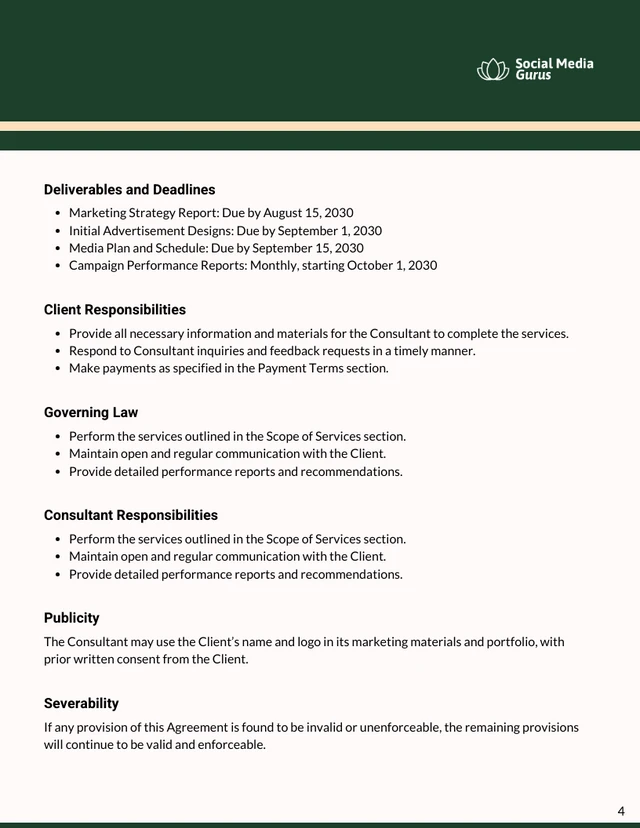
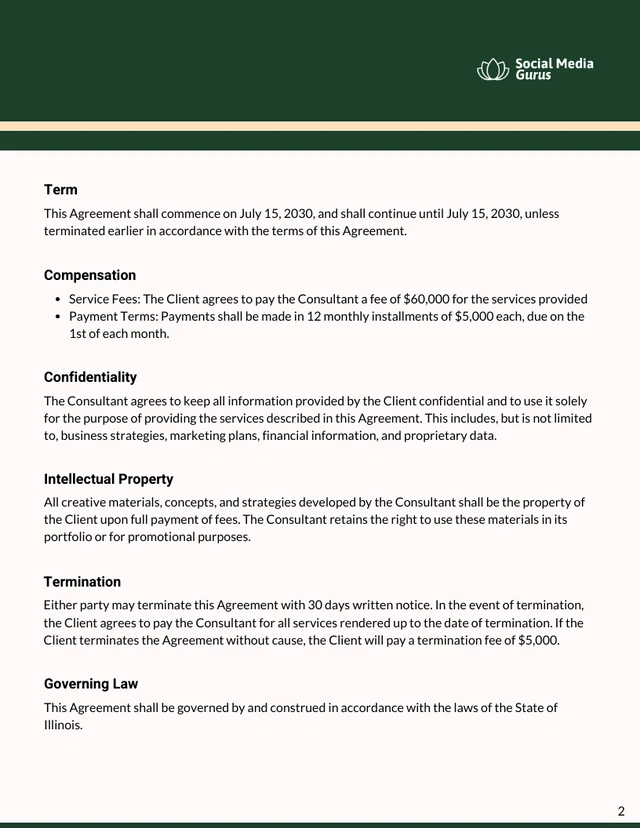
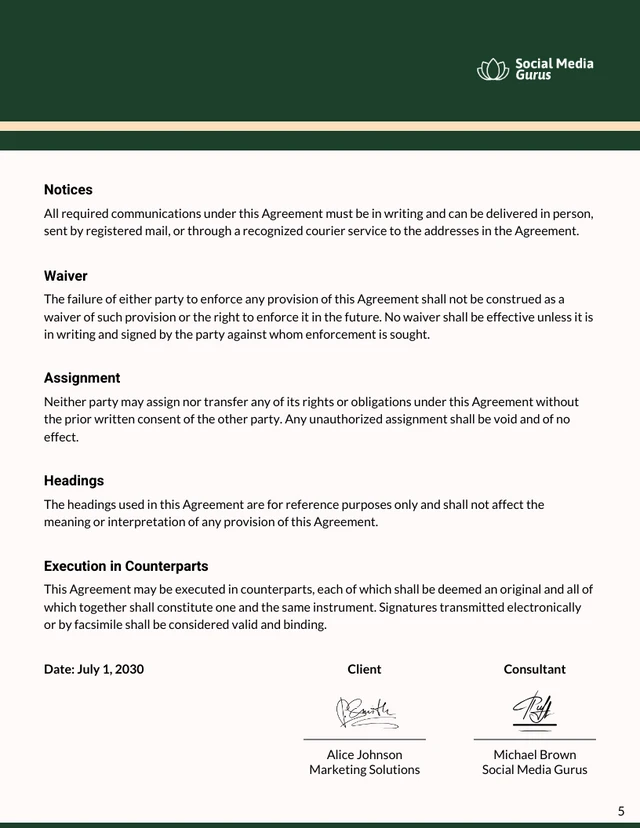
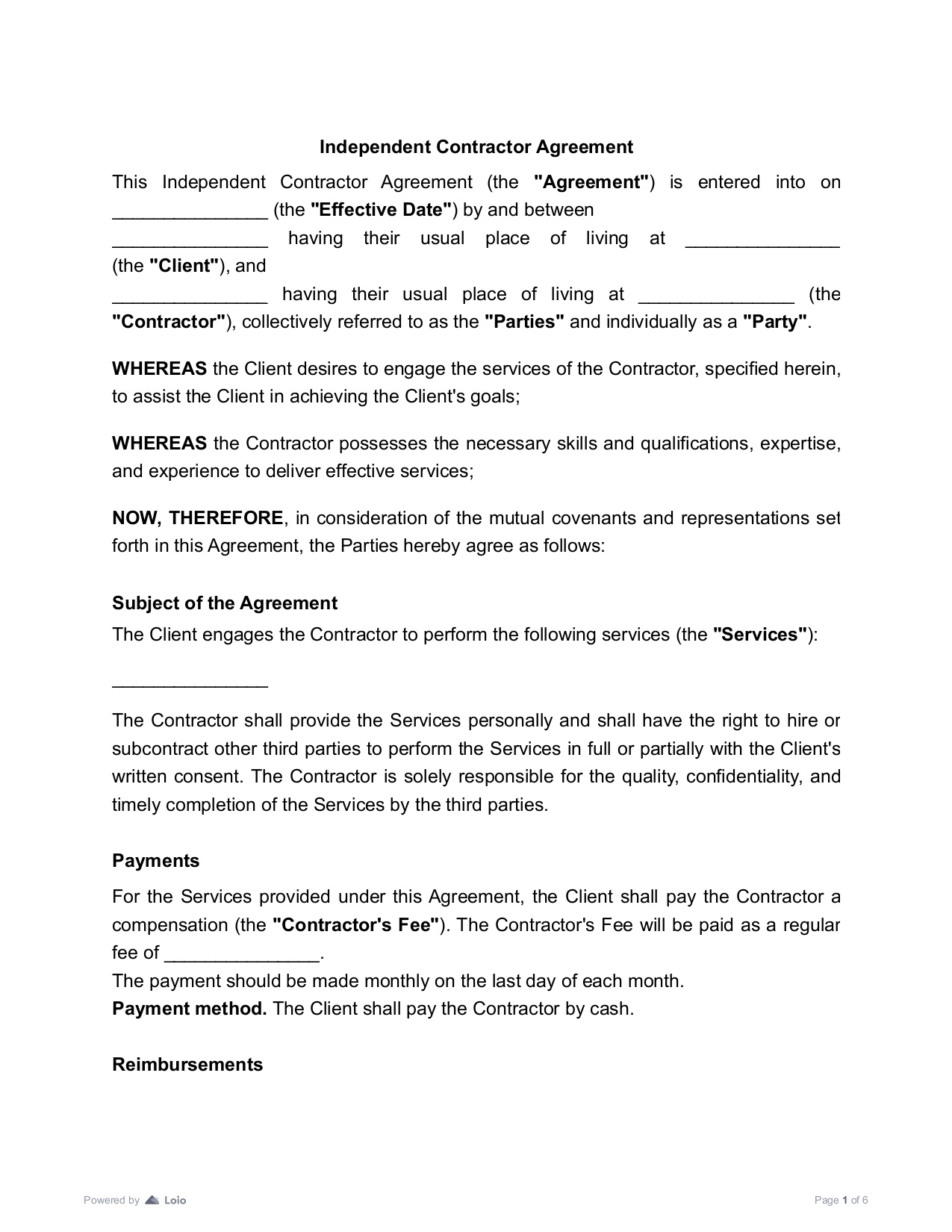
Consultant Agreement Templates become easier to evaluate when readers can see how contract information is organized visually. The examples below show different ways of presenting party details, services, payment terms, confidentiality provisions, ownership arrangements, termination language, and signatures. These layouts can help readers recognize the relationship between the main agreement and supporting project details.
These visual references should be treated as examples of document structure rather than universal legal forms. The appropriate wording depends on the consulting service, business relationship, governing jurisdiction, intellectual property arrangement, confidentiality requirements, and commercial terms. Comparing several examples can help readers identify useful sections and prepare a clearer working draft.
Public Relations Consulting Agreement Template

Source: Scribd