Canada Day is a special occasion that brings Canadians together to celebrate their country’s history, culture, and identity. Every year on July 1, communities across Canada mark the anniversary of Confederation with fireworks, parades, concerts, family gatherings, and outdoor activities. It is a day filled with national pride, friendly celebrations, and opportunities to reflect on what makes Canada unique.
Whether you are planning a Canada Day party, visiting a local festival, or learning about Canadian traditions, understanding the meaning behind this national holiday can make the experience more memorable. This guide explores the history of Canada Day, popular celebrations, traditional activities, and practical ways to enjoy the holiday with family and friends.
What Is Canada Day?
Canada Day is Canada’s national holiday, celebrated annually on July 1. It commemorates the creation of the Dominion of Canada in 1867, when the British North America Act brought together the provinces of Ontario, Quebec, New Brunswick, and Nova Scotia under a federal government.
Today, Canada Day is a public holiday across the country. Many government offices, banks, and businesses close or operate with reduced hours. However, public celebrations, community festivals, and outdoor events often make the day lively and exciting.
For many Canadians, July 1 is a chance to celebrate their communities, enjoy the summer weather, and spend time with loved ones. The holiday also encourages people to learn about Canada’s diverse cultures, languages, and history.
The History of Canada Day
From Confederation to a National Celebration
Canada Day began with an important political milestone. On July 1, 1867, the British North America Act came into effect. This event united three British colonies into four provinces within a new federation called the Dominion of Canada.
The anniversary was originally known as Dominion Day. Early celebrations included public ceremonies, speeches, military displays, and community gatherings. Over time, the holiday became an opportunity for Canadians to express their connection to the country.
Why Is It Called Canada Day?
In 1982, the holiday’s official name changed from Dominion Day to Canada Day. The change followed the patriation of the Canadian Constitution and the introduction of the Constitution Act, 1982.
The new name reflected Canada’s evolving national identity. It also made the holiday easier to recognize as a celebration of Canada itself, rather than a reference to its earlier constitutional relationship with Britain.
Recognizing Indigenous Peoples and Canada’s Diverse History
Canada’s history extends far beyond Confederation. Indigenous peoples have lived on these lands for thousands of years, with distinct cultures, languages, governments, and traditions. Their histories and contributions are an essential part of understanding Canada today.
For some people, Canada Day is also a time to reflect on the impacts of colonization, residential schools, and historical injustices. Celebrating the country can include learning about these experiences, listening to Indigenous voices, and supporting meaningful reconciliation efforts.
When Is Canada Day Celebrated?
Canada Day takes place every year on July 1. The date marks the anniversary of Confederation in 1867.
When July 1 falls on a Sunday, the following Monday is generally observed as the statutory holiday for federal employees and many workplaces. Provincial and territorial holiday rules can vary, so it is helpful to check local guidance when planning travel, shopping, or events.
In 2027, Canada Day will fall on Thursday, July 1. The holiday offers a summer opportunity to attend local celebrations, explore Canadian destinations, or organize a gathering with friends and family.
Popular Canada Day Traditions
Canada Day celebrations vary from one community to another. Some cities organize large public festivals, while smaller towns host neighborhood events and family-friendly activities. Here are some of the most popular traditions.
Fireworks and Evening Displays
Fireworks are among the most recognizable Canada Day traditions. Many communities organize displays after sunset, often near waterfronts, parks, or public squares.
To enjoy fireworks comfortably, arrive early and check the event schedule. Bring a blanket or folding chairs if permitted. Families with young children may prefer a viewing location away from loud speakers and crowded areas.
Parades and Community Festivals
Canada Day parades often feature marching bands, local organizations, colorful floats, performers, and Canadian flags. These events create a welcoming atmosphere and give residents a chance to celebrate together.
Community festivals may also include food stalls, live music, craft markets, and cultural performances. Check local event listings before leaving home, since schedules and road closures can change from year to year.
Wearing Red and White
Red and white are the national colors of Canada, and many people wear them on July 1. Canadian flags, maple leaf shirts, hats, and face paint are popular choices.
You do not need special clothing to participate. A red shirt, white outfit, or small maple leaf accessory can be a simple way to join the festive atmosphere.
Outdoor Activities and Picnics
Canada Day takes place during the summer, making outdoor activities a natural part of the celebration. Families and friends often gather for picnics, barbecues, sports, and visits to parks or beaches.
Popular activities include:
- Hosting a backyard barbecue with Canadian-inspired food.
- Organizing a picnic at a local park.
- Playing outdoor games such as soccer, badminton, or frisbee.
- Exploring hiking trails or waterfront paths.
- Attending free concerts and cultural performances.
How to Celebrate Canada Day With Family and Friends
You can celebrate Canada Day in many ways, regardless of your budget or location. A little planning helps create an enjoyable day for everyone.
Plan a Canada Day Party
A Canada Day party can be simple and affordable. Invite friends or family, decorate your space with red and white accents, and prepare a few activities for guests.
Consider including these party essentials:
- Decorations: Canadian flags, maple leaf banners, and red-and-white table settings.
- Food: Burgers, grilled vegetables, fresh fruit, or Canadian favorites such as butter tarts and Nanaimo bars.
- Activities: Trivia games, outdoor sports, music, and a photo corner.
- Planning: A simple schedule for meals, games, and any evening event.
Keep the gathering flexible. Guests may have different interests, so offering a mix of food, activities, and quiet spaces can make the celebration more comfortable.
Make a Canada Day Printable Checklist
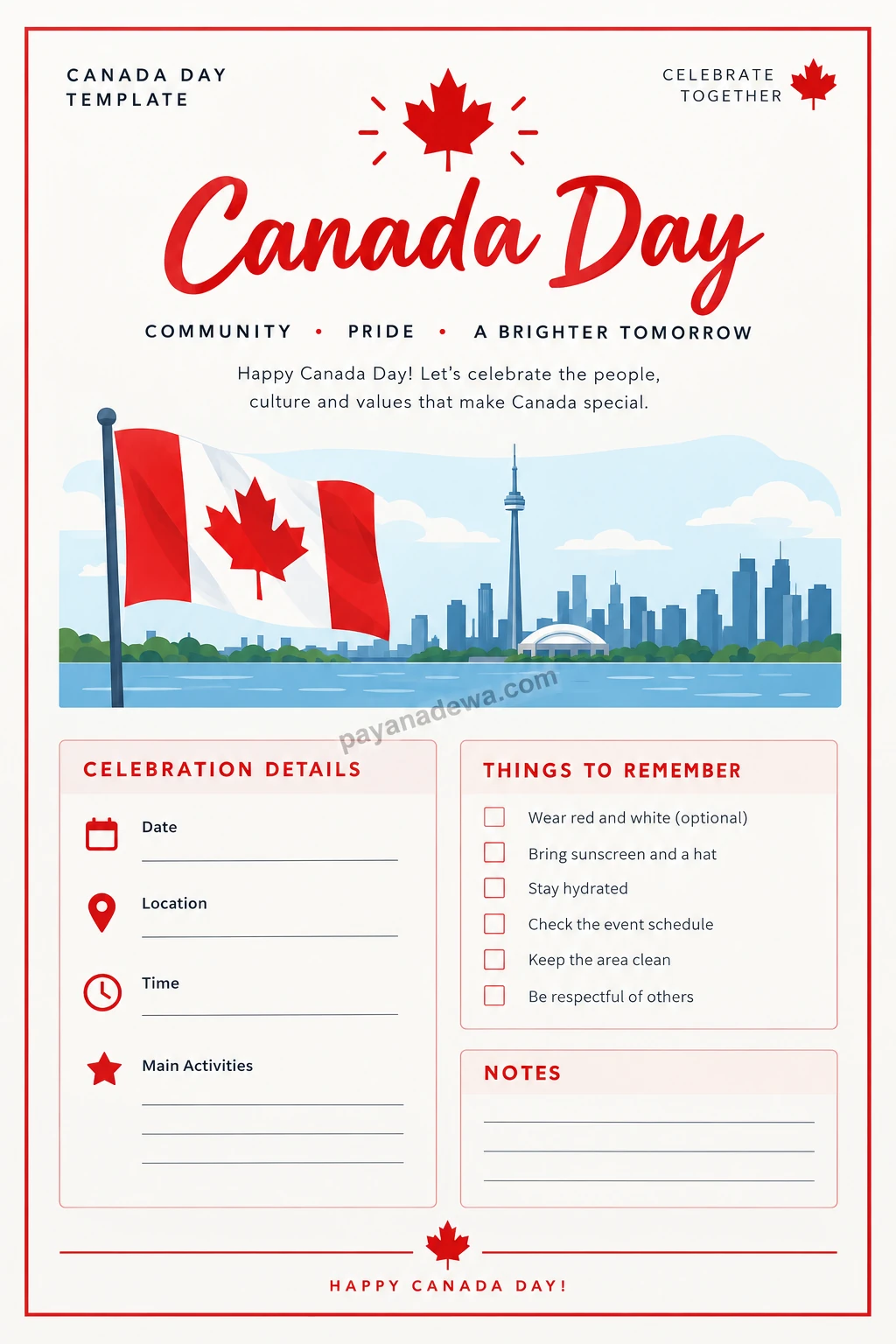
A printable Canada Day template can help organize a celebration. Use it to record the event date, location, time, and planned activities. You can also add a checklist for supplies, food, and tasks that need to be completed before guests arrive.
For a family celebration, a printable planner can include:
- Party details and guest information.
- A shopping list for food and decorations.
- Outdoor activity ideas.
- Reminders for sunscreen, water, and weather preparation.
- A notes section for special plans or important details.
This approach keeps the planning process simple and helps everyone participate. It is especially useful for school activities, community events, and family gatherings.
Canada Day Activities for Children
Canada Day is an excellent opportunity for children to learn about Canadian history and traditions through creative activities. Hands-on projects make the holiday more engaging and help children understand the meaning of national symbols.
Creative Maple Leaf Crafts
Provide paper, crayons, markers, and safe craft supplies so children can make maple leaf decorations. They can also create Canadian flags, greeting cards, or small posters featuring their favorite things about Canada.
Canada Day Scavenger Hunt
Organize a simple scavenger hunt using Canadian symbols and summer items. Children can search for a maple leaf, a red object, a Canadian flag, or something that represents their community.
For younger children, use picture clues. Older children can solve short riddles or answer simple questions about Canadian geography and history.
Canadian Trivia Games
Prepare age-appropriate questions about Canada’s provinces, territories, wildlife, landmarks, and national symbols. Keep the game friendly and offer small prizes such as stickers or homemade certificates.
Canada Day Safety and Planning Tips
Large celebrations can become crowded, and July weather can be warm. A few practical precautions can help everyone enjoy the holiday.
- Check event information: Confirm the location, schedule, parking arrangements, and any restrictions before leaving.
- Prepare for the weather: Bring sunscreen, hats, drinking water, and rain protection when needed.
- Stay aware of crowds: Choose a meeting point in case family members become separated.
- Follow fireworks rules: Attend official displays where possible and follow local regulations for private fireworks.
- Keep public spaces clean: Bring reusable containers when practical and dispose of waste responsibly.
- Be considerate: Respect neighbors, local communities, and people who may prefer quieter celebrations.
If you are attending a major event, consider using public transportation or walking when convenient. Roads near popular celebration areas may close, and parking can be limited.
What Makes Canada Day Meaningful?
Canada Day is more than a holiday filled with fireworks and summer activities. It is an opportunity to appreciate the people, cultures, and communities that shape the country.
For some Canadians, the day is a celebration of national identity and shared experiences. For others, it is a moment to consider the country’s history, recognize ongoing challenges, and think about how communities can become more inclusive.
A meaningful celebration can include attending a cultural event, learning about Indigenous history, supporting local businesses, volunteering, or spending time with neighbors. These activities help connect national celebrations with everyday community life.
Conclusion: Celebrate Canada Day With Pride and Purpose
Canada Day, celebrated on July 1, marks a major milestone in Canada’s history and offers people across the country a chance to come together. From fireworks and parades to backyard parties and family crafts, there are many ways to enjoy the national holiday.
Whether you are planning a large community event or a quiet gathering at home, thoughtful preparation can make the day more enjoyable. Use a Canada Day printable template to organize your plans, explore local celebrations, and include activities that bring people together.
Most importantly, take time to appreciate Canada’s diverse communities, reflect on its history, and consider how you can contribute to a welcoming future. Happy Canada Day!