A well-designed camping flyer can turn a simple outdoor gathering into an exciting adventure that people want to join. Whether you are organizing a family camping weekend, a school camping trip, a youth camp, or a community outdoor event, the right flyer helps you share important details and attract more participants.
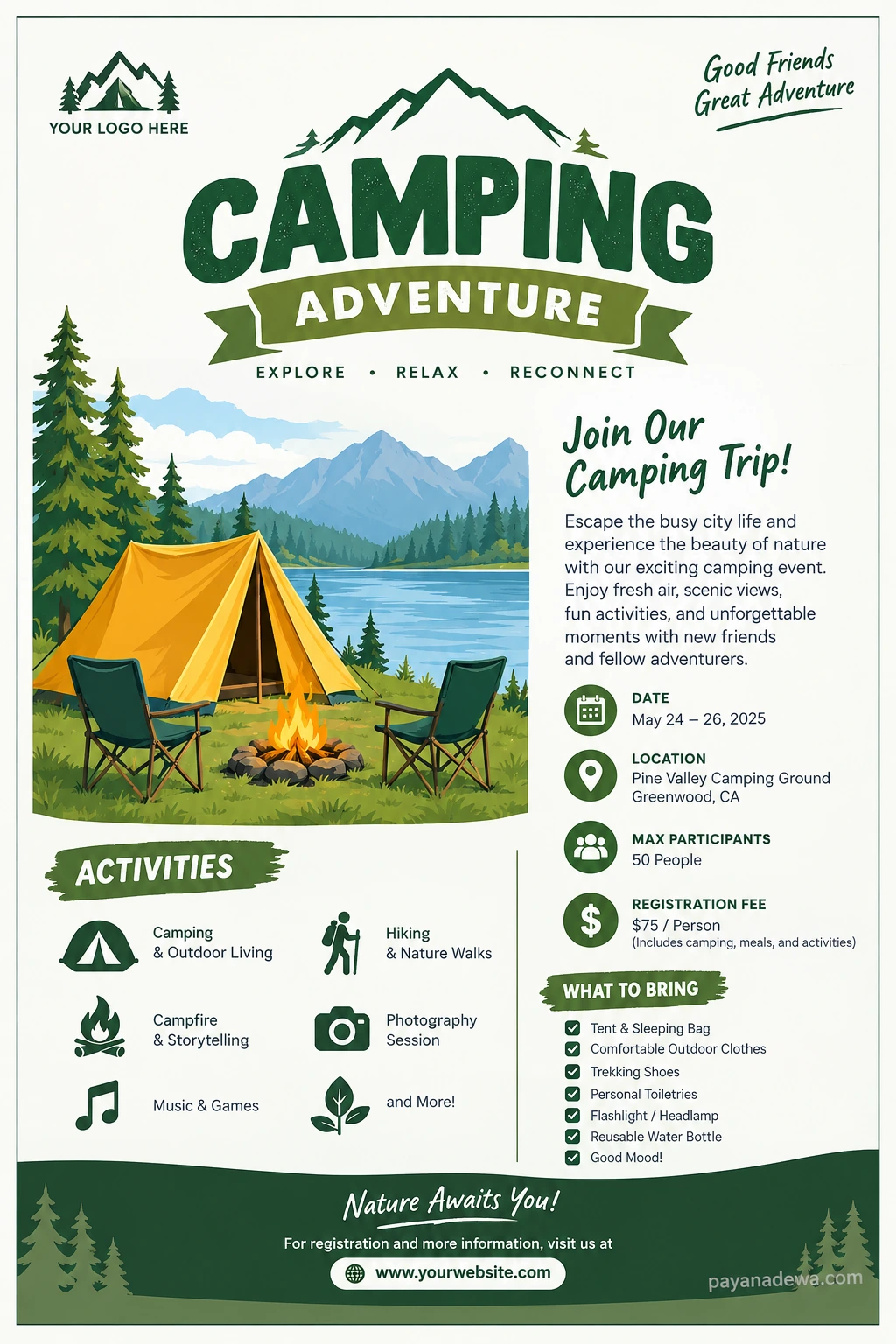
A camping flyer combines eye-catching visuals with clear event information. Images of mountains, tents, campfires, forests, and starry skies create an adventurous atmosphere. Meanwhile, readable text helps potential attendees understand the schedule, location, registration process, and items they need to bring.
In this guide, you will learn how to create an effective camping flyer, choose the right design, organize event details, and use printable templates to save time. You will also discover practical ideas for promoting your next outdoor adventure online and offline.
What Is a Camping Flyer?
A camping flyer is a promotional document designed to advertise a camping trip or outdoor activity. It can be printed and distributed in schools, community centers, parks, and local businesses. You can also share a digital version through social media, email, and messaging apps.
The main purpose is to communicate essential information while building excitement. A good flyer tells readers what the event offers, who can attend, when it takes place, and how to register.
Camping flyers are useful for many occasions, including:
- Family camping trips: Invite relatives and friends to spend quality time outdoors.
- School camping programs: Share information about educational trips and student activities.
- Youth camps: Promote outdoor learning, teamwork, and nature exploration.
- Community camping events: Encourage local residents to connect through outdoor recreation.
- Adventure camping tours: Advertise guided hikes, overnight stays, and wilderness experiences.
- Camping club gatherings: Keep members informed about upcoming trips and group activities.
Why Use a Camping Flyer Template?
Designing a promotional flyer from scratch can take time. A camping flyer template provides a ready-made layout that you can customize with your own information, colors, images, and branding.
Templates are especially helpful when you need to promote an event quickly. They provide a visual structure, so you can focus on the details that matter most to your audience.
Save Time on Design
A template gives you a starting point for your design. Instead of arranging every element yourself, you can update the headline, event date, location, registration fee, and contact information.
This approach works well for organizers who have limited design experience. It also helps teams create consistent promotional materials for recurring events.
Create a Professional Appearance
A balanced layout makes your flyer easier to read. Clear headings, consistent colors, and suitable illustrations help the design look organized and professional.
Choose a template with enough white space to separate sections. Avoid placing too many images or decorative elements around the main message. A clean design helps readers find important information quickly.
Customize It for Different Audiences
Not every camping event has the same audience. A family camping flyer may feature friendly illustrations and simple activity lists. A hiking and camping event may benefit from mountain scenery, trail information, and a more adventurous style.
You can also adjust the design for children, students, outdoor clubs, or professional camping organizers. The key is to match the visual style to the event and its participants.
Essential Elements of an Effective Camping Flyer
Before choosing a camping flyer design, identify the information your audience needs. Organizing these details first will make the final layout clearer and more useful.
1. An Attention-Grabbing Headline
Your headline should communicate the event’s purpose immediately. Use a short, memorable phrase that creates excitement without confusing the reader.
Examples include:
- Camping Adventure Weekend
- Explore Nature, Make Memories
- Family Camping Under the Stars
- Discover the Great Outdoors
- Join Our Summer Camping Trip
Make the headline one of the most prominent elements on the page. A bold font and strong contrast can help it stand out.
2. Date, Time, and Location
Display the event date and location where readers can find them easily. Include the starting time, expected return time, campsite name, and meeting point when applicable.
If the campsite is difficult to find, provide a map link or clear directions. For overnight trips, explain the check-in and departure arrangements.
3. Activities and Highlights
Give readers a reason to participate. List the activities that make your camping event special, such as hiking, campfire storytelling, stargazing, nature photography, fishing, outdoor cooking, or group games.
Choose activities that accurately reflect the planned program. If an activity requires special equipment or additional payment, explain that detail before registration.
4. Registration and Pricing
Tell readers how to reserve a place. Include a registration link, contact email, phone number, or QR code when available.
If the event has a fee, state the price and explain what it covers. For example, the fee might include campsite access, meals, equipment rental, or guided activities. Mention additional costs so participants can plan their budgets.
5. A Packing Checklist
A short packing checklist makes your camping flyer more practical. It also helps participants prepare for different weather conditions and outdoor activities.
Depending on the event, the checklist may include:
- Tent and sleeping bag
- Comfortable outdoor clothing
- Weather-appropriate jacket
- Hiking shoes or sturdy boots
- Reusable water bottle
- Flashlight or headlamp
- Personal toiletries and essential medication
- Insect repellent and sun protection
- Personal snacks and other requested supplies
Adjust the list to match the campsite, season, available facilities, and planned activities. Tell participants which shared supplies the organizers will provide.
Camping Flyer Design Ideas
The best camping flyer design supports the event’s atmosphere while keeping the information readable. You do not need complicated graphics to create an attractive result. A few well-chosen visual elements can make a strong impression.
Nature-Inspired Green Design
Green is a natural choice for outdoor promotions because it evokes forests, plants, and environmental exploration. Combine forest green with cream, white, or muted brown for a clean and balanced appearance.
Add illustrations of pine trees, mountain peaks, tents, and campfires. This style works well for family camping trips, community events, and printable outdoor activity flyers.
Adventure and Mountain Theme
Use mountain landscapes, winding trails, and dramatic outdoor photography to create a sense of discovery. Earthy colors and bold typography can make the flyer feel adventurous without overwhelming the event details.
This approach suits hiking weekends, wilderness excursions, and outdoor adventure clubs.
Family-Friendly Camping Design
For family events, choose cheerful colors, friendly illustrations, and simple language. Include activities that appeal to different age groups, such as nature walks, outdoor games, storytelling, and beginner-friendly camping lessons.
If children will attend, clearly communicate age requirements, supervision arrangements, safety guidelines, and any equipment parents must provide.
Minimalist Printable Layout
A minimalist camping flyer uses a limited color palette, clean typography, and carefully spaced sections. It is a practical option for printing because the layout remains easy to read at different sizes.
Keep decorative backgrounds light when possible. This can reduce ink usage and improve readability on ordinary home or office printers.
Free Camping Flyer Template: How to Customize It
A printable camping flyer template can simplify the design process while giving you room to add your own creative touches. Start with a layout that matches your event, then replace the sample information with accurate details.
Use the following steps to prepare your flyer for publication.
Step 1: Choose a Suitable Layout
Select a template with enough space for the headline, event information, activities, and registration details. A portrait layout is often suitable for printed flyers, while a landscape or square version may work better for certain digital platforms.
Step 2: Add Your Event Information
Replace sample dates, locations, prices, and contact details. Double-check every entry before sharing the flyer. Incorrect information can create confusion and discourage potential participants.
Step 3: Personalize the Visual Style
Add your organization logo, choose appropriate colors, and select images that match the event. Use high-quality visuals that you own or have permission to use.
Keep the most important information prominent. Avoid using too many fonts or competing colors, as these can make the flyer harder to scan.
Step 4: Review the Design
Check spelling, dates, contact details, and registration instructions. Preview the flyer on a phone and, if you plan to print it, test a physical copy to check the text size and image quality.
Step 5: Export and Share
Export a print-ready PDF when possible. For digital distribution, use a high-quality image format that works well on websites and social media.
Share the finished camping flyer through relevant community groups, school newsletters, email lists, local noticeboards, and your website. Choose channels that reach people who are likely to attend.
Tips for Making Your Camping Flyer More Effective
A beautiful flyer is only useful when people understand the message and know what to do next. Use these practical tips to improve its effectiveness.
Make the Main Message Easy to Scan
Most readers look at a flyer briefly before deciding whether to read more. Put the event name, date, location, and registration details in visible positions.
Use short paragraphs, descriptive headings, and bullet points. These elements make the information easier to understand, especially on mobile screens.
Use Clear Calls to Action
Tell readers exactly what to do next. Phrases such as “Register Today,” “Reserve Your Spot,” and “Contact Us for Details” can guide them toward the next step.
If registration is limited, mention the actual participant limit or deadline. Avoid creating artificial urgency when no genuine limit exists.
Consider Accessibility and Readability
Choose readable font sizes and strong text contrast. Do not rely on color alone to communicate important information. Keep text away from busy photographs and decorative backgrounds.
For digital flyers, add meaningful alternative text to the image. If essential information appears only inside the image, repeat it in the accompanying webpage or social media description.
Include Practical Safety Information
Camping involves outdoor conditions that may change quickly. Depending on the event, provide guidance about weather, terrain, water access, emergency contacts, and campsite rules.
Tell attendees whether the campsite has drinking water, toilets, cooking facilities, or mobile coverage. Clear expectations help everyone prepare responsibly.
Where to Use a Camping Flyer
A camping flyer can support both online and offline promotion. The best distribution method depends on your audience, location, and registration process.
- Schools and universities: Promote student camping trips, outdoor clubs, and educational excursions.
- Community centers: Reach families and residents interested in local recreation.
- Social media: Share a digital flyer with event dates and a registration link.
- Websites and blogs: Publish event details and provide a downloadable flyer.
- Outdoor recreation stores: Ask permission to display printed flyers where relevant audiences shop.
- Email newsletters: Send event information directly to subscribers and club members.
For better results, tailor the message to each channel. A printed flyer may need complete event details, while a social media post can use a shorter introduction and direct readers to a registration page.
Common Camping Flyer Mistakes to Avoid
Even a well-intentioned design can lose its impact when important information is missing or difficult to read. Avoid these common mistakes:
- Too much text: Focus on essential information and move lengthy rules to a separate webpage.
- Low-quality images: Use clear graphics that remain sharp when printed.
- Unclear pricing: Explain what the registration fee includes and disclose additional costs.
- Missing contact information: Give readers a reliable way to ask questions.
- Inconsistent branding: Use a coordinated color palette and a small number of fonts.
- Unverified details: Confirm the date, venue, schedule, and registration link before publishing.
- Ignoring mobile users: Make sure digital versions remain legible on smaller screens.
A final review can prevent many of these problems. Ask someone unfamiliar with the event to read the flyer and identify any details that are confusing or missing.
Conclusion
A camping flyer is a practical way to promote outdoor adventures and help participants prepare for a memorable experience. With an engaging headline, clear event details, appealing nature-inspired visuals, and a useful packing checklist, you can create a design that informs readers and encourages registrations.
Start with a printable camping flyer template, customize it for your audience, and check every detail before publishing. Then share it through relevant online and offline channels to reach potential participants.
Whether you are organizing a family getaway, a school trip, or a community camping weekend, a thoughtfully designed flyer can make your event easier to understand and more inviting. Keep the layout simple, the information accurate, and the call to action clear. Your next outdoor adventure will be easier to promote with the right camping flyer.