Remembering birthdays can be surprisingly difficult when your calendar is filled with work, family commitments, appointments, and everyday responsibilities. A Birthday Calendar offers a simple and practical solution. Instead of relying entirely on memory, you can keep important birthdays organized in one convenient place and check them throughout the year.
A well-designed birthday calendar can be used at home, in the office, at school, or even as part of a family organization system. You can record the birthdays of relatives, friends, coworkers, clients, classmates, and other important people. With everyone’s special dates arranged by month, it becomes much easier to prepare thoughtful messages, cards, gifts, or celebrations.
Using a printable birthday calendar also makes planning more enjoyable. You can write names directly onto the template, add notes, highlight important dates, and personalize each month according to your needs. A simple visual reminder can make a meaningful difference when you want to stay connected with the people around you.
Whether you need a family birthday calendar, a classroom birthday chart, or a personal birthday tracker, the basic idea remains the same: collect important dates and make them easy to see. This article explains how to use a birthday calendar effectively and how to turn it into a useful organization tool.
If you often realize that someone’s birthday has already passed, creating a dedicated birthday list may be exactly what you need. Once the dates are recorded, you can review the calendar regularly and prepare ahead of time instead of rushing at the last minute.
What Is a Birthday Calendar?
A birthday calendar is a planning tool designed specifically for recording birthdays throughout the year. Unlike a standard monthly calendar that focuses on appointments and events, a birthday calendar is centered on recurring annual dates.
How a Birthday Calendar Works
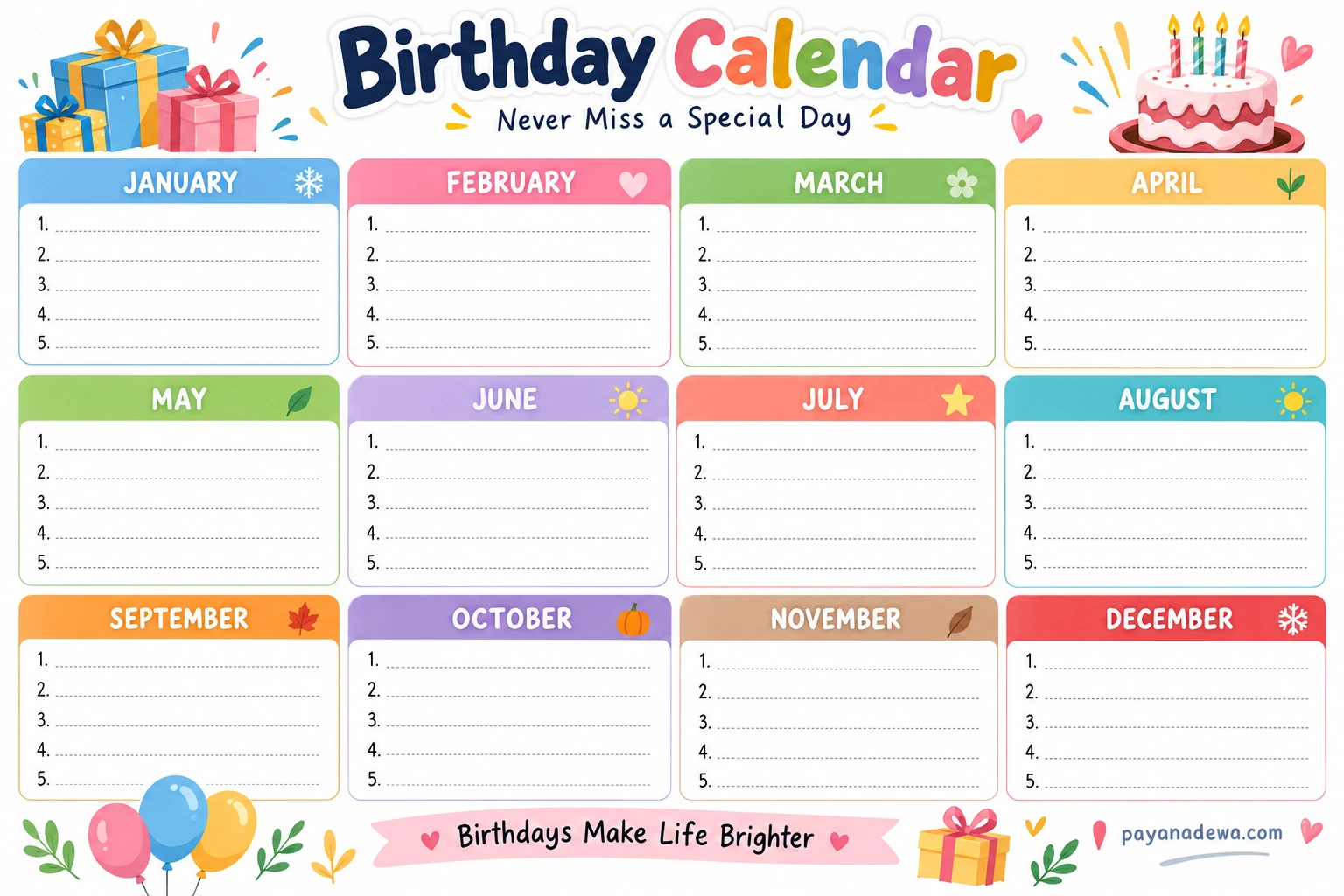
Most birthday calendars organize the year into twelve sections, with one section for each month. You can add a person’s name, birthday date, and optional information such as their age, relationship, gift ideas, or preferred way to celebrate.
The advantage of this format is that birthdays remain visible without requiring you to enter the same information every year. Once the birthday dates are recorded, the calendar can continue to serve as a yearly reference.
A printable birthday calendar can be especially useful because it allows you to keep the information somewhere visible. You might place it near your desk, refrigerator, family command center, or another location where you naturally look during the week.
Digital versions can also be useful for people who prefer smartphones and computers. However, a physical template can provide a quick visual overview that is easy to scan without opening an application.
For families, a shared birthday calendar can also help distribute responsibilities. Everyone can see upcoming birthdays and decide who will purchase a gift, prepare a card, make a phone call, or organize a celebration.
Why Use a Birthday Calendar?
Birthdays are easy to overlook when important dates are scattered across different messages, notebooks, social media profiles, and digital calendars. A centralized birthday tracker gives you one reliable place to check.
Keep Important Dates Organized
The first benefit is organization. Instead of searching through old conversations or trying to remember dates from memory, you can simply check the appropriate month.
This approach is particularly helpful when you know many people with birthdays throughout the year. A birthday calendar turns a collection of individual dates into an easy-to-understand yearly overview.
It can also reduce the chance of forgetting birthdays because the information stays visible. A quick monthly review can remind you which celebrations are approaching.
Prepare Celebrations in Advance
Knowing about an upcoming birthday early gives you more time to prepare. You can purchase a gift, order flowers, create a birthday card, plan a dinner, or arrange a small gathering without unnecessary last-minute stress.
For major milestones, advance planning becomes even more valuable. A significant birthday may require travel arrangements, venue reservations, invitations, or personalized gifts. A birthday planner provides an early reminder so these tasks can be handled gradually.
Strengthen Personal Connections
Remembering someone’s birthday is a small gesture, but it can communicate genuine thoughtfulness. A simple birthday message or phone call can help maintain friendships and family relationships.
A birthday calendar is therefore more than an organizational document. It can become a practical reminder to make time for the people who matter to you.
How to Create Your Own Birthday Calendar
Creating a birthday calendar does not have to be complicated. You can start with a printable birthday template and customize it with the information that matters most to you.
Collect Birthday Information
Begin by making a list of the people whose birthdays you want to remember. This could include immediate family members, extended relatives, close friends, coworkers, clients, neighbors, or members of a community group.
Check existing address books, contact lists, messages, social profiles, and previous calendars if necessary. If you are unsure about a date, ask the person directly rather than guessing.
Record each person’s name and birthday month and date. You may also want to add optional information such as their relationship to you, favorite interests, gift preferences, or celebration ideas.
Organize the Dates by Month
After collecting the information, place each birthday into the correct month. Keeping birthdays grouped by month makes the calendar easier to use and prevents important dates from becoming buried in a long list.
For example, January birthdays can be recorded together, followed by February, March, and the remaining months. If several people share the same birthday, list them together so you can prepare for everyone at once.
Add Useful Notes
A good birthday tracker can contain more than names and dates. Consider adding a small notes area for gift ideas, preferred restaurants, favorite colors, hobbies, or previous gifts.
These details can help you avoid buying the same type of present repeatedly. They can also make future celebrations more personal because you have useful information available when you need it.
Creative Ways to Use a Birthday Calendar
A birthday calendar can be adapted to many situations. You do not have to use it only for personal birthdays. With a few adjustments, the same concept can support families, classrooms, workplaces, and community organizations.
Family Birthday Calendar
A family birthday calendar can include relatives across several generations. Parents can use it to remember children’s birthdays, grandparents’ birthdays, anniversaries, and other recurring family occasions.
For a busy household, placing the calendar in a shared location can make it easier for everyone to stay aware of upcoming celebrations.
Classroom Birthday Calendar
Teachers can use a birthday chart to record students’ birthdays. A classroom birthday calendar can create opportunities for simple celebrations and help students learn about dates and months.
Teachers should consider school policies and privacy expectations when displaying students’ personal information. A simple first-name format may be appropriate depending on the classroom environment.
Office Birthday Calendar
Workplaces can also use birthday calendars to help teams remember colleagues’ special days. A shared calendar can support small gestures such as birthday cards, team messages, or optional celebrations.
Keeping the system simple is important. The purpose should be to make birthdays easier to remember rather than create another complicated administrative task.
Tips for Maintaining Your Birthday Calendar
Creating the calendar is only the first step. Keeping it accurate and easy to use will make it much more valuable over time.
Review It at the Beginning of Each Month
Set aside a few minutes at the beginning of every month to check upcoming birthdays. Look at the names, dates, and any notes you have recorded.
This small habit can give you enough time to decide how you want to celebrate each person. For example, you can purchase gifts earlier, write cards, or schedule a reminder for an important phone call.
Use a Consistent Format
Choose one format for recording names and dates. Consistency makes the calendar easier to scan and reduces confusion when several birthdays appear close together.
You can also use symbols or simple categories to distinguish family members, friends, coworkers, or other groups. Keep the system intuitive so you can understand it quickly.
Update the Calendar Regularly
People’s information can change, and you may meet new friends or colleagues whose birthdays you want to remember. Update the calendar whenever you receive new information.
If you use a printable template, keep a pen nearby so adding a new birthday takes only a few seconds. For digital calendars, update the information immediately when possible.
- Check birthdays at the beginning of every month.
- Add new birthdays as soon as you learn them.
- Keep important gift and celebration notes nearby.
- Review the entire calendar at least once a year.
- Remove outdated information when it is no longer useful.
Printable Birthday Calendar vs. Digital Calendar
Both printable and digital birthday calendars can be effective. The best choice depends on how you naturally organize information.
Advantages of a Printable Calendar
A printable birthday calendar is visible, simple, and easy to personalize. You can write notes by hand, decorate the page, highlight important birthdays, and keep the finished calendar somewhere convenient.
Printable templates are also useful for households that want a shared reference point. Everyone can look at the same page without needing access to a particular account or application.
Advantages of a Digital Calendar
A digital birthday calendar can provide automated reminders. You can receive notifications days or weeks before a birthday, which is useful when you have a large number of dates to manage.
Digital calendars can also be synchronized across devices. This makes them convenient for people who frequently use smartphones, tablets, or computers.
There is no requirement to choose only one approach. Some people use a printable birthday chart for visual organization and a digital reminder system for notifications.
Make Your Birthday Calendar More Personal
A birthday calendar does not have to look like a basic administrative document. Personal touches can make it more enjoyable to use throughout the year.
Add Colors and Simple Symbols
Different colors can make months easier to identify at a glance. You can also use simple symbols for gifts, parties, phone calls, or other reminders.
Keep the design readable, however. Too many colors or decorative elements can make important information harder to find.
Include Gift Planning Notes
If you frequently struggle to find suitable gifts, use the calendar as a lightweight gift planner. When someone mentions something they like during the year, record the idea in your notes.
When their birthday approaches, you already have several ideas to consider. This can make gift shopping more thoughtful and less stressful.
Conclusion
A Birthday Calendar is a simple but useful tool for keeping important birthdays organized throughout the year. Whether you choose a printable birthday template, a digital birthday tracker, or a combination of both, having a dedicated system can make it easier to remember the people who matter.
The key is to keep the calendar practical. Record birthdays accurately, review upcoming dates regularly, and add useful notes when needed. With a few minutes of organization each month, you can replace last-minute birthday reminders with a more thoughtful and reliable routine.
A well-organized birthday calendar can also become a small part of a larger planning system for family life, friendships, school, or work. Start with the birthdays you already know, add new dates as you discover them, and customize the template to match the way you prefer to organize your life.