Advisory Templates can turn a loosely organized message, meeting, recommendation, or stakeholder update into a clear and professional document. Whether you are preparing an advisory board meeting, communicating an operational change, briefing the media, or coordinating a specialized advisory group, a well-structured template provides a dependable starting point. It reduces formatting decisions and gives readers a familiar structure for finding important information quickly.

The value of an advisory document is not simply its appearance. The strongest templates help people understand what is happening, why it matters, what action is expected, and who is responsible. This guide explains how to select, design, customize, and maintain advisory documents while covering common formats such as an advisory board agenda template, media communication, organizational notices, and planning materials.
What Is an Advisory Template?
What is an advisory template? It is a reusable document framework designed to communicate guidance, recommendations, meeting information, warnings, operational updates, or strategic questions in a consistent format. Instead of starting with a blank page every time, the writer works from predefined sections and replaces placeholder information with details relevant to the current situation.

A useful template normally establishes the document hierarchy before the content is written. It can identify the title, date, audience, purpose, key information, recommended action, contact details, and follow-up requirements. This structure is particularly helpful when multiple people contribute to documents or when an organization needs a consistent communication standard.

The term can cover many formats. A board agenda is designed around discussion and decisions, while a media advisory focuses on event information for journalists. A holiday notice may communicate operational changes, whereas a quality-focused advisory document can outline governance responsibilities. The format should therefore follow the purpose rather than forcing every communication into the same layout.
Why Advisory Templates Matter
Consistency is one of the biggest advantages of structured advisory documents. When readers regularly receive communications using predictable headings and information order, they can scan them more efficiently. The organization also appears more prepared because essential details are less likely to be forgotten.

- Faster preparation: recurring documents begin with an established framework.
- Better clarity: readers can quickly locate dates, responsibilities, decisions, and recommendations.
- Improved consistency: different contributors can follow the same document standards.
- Reduced omissions: predefined fields remind writers to include important information.
- Easier review: managers and stakeholders can assess documents using a familiar structure.
- Stronger brand presentation: typography, spacing, terminology, and visual hierarchy remain consistent.
The most effective approach is not to make every document identical. Instead, establish a flexible design system that can accommodate different advisory purposes. This distinction becomes important when an organization manages several audiences, such as executives, employees, community representatives, regulators, customers, and journalists.

Choosing the Right Advisory Format
Before selecting a layout, identify the document’s primary objective. Ask whether the reader needs to attend something, make a decision, understand a risk, respond to a change, provide feedback, or simply stay informed. This question determines the most appropriate structure.

Advisory Board Materials
An advisory board document should emphasize preparation, strategic discussion, recommendations, and follow-up. An advisory board agenda template commonly includes meeting details, participants, objectives, previous action items, strategic discussion topics, reports, decisions or recommendations, and next steps.
Keep strategic topics prominent. Routine updates should not consume the space needed for meaningful discussion. A practical agenda can identify the desired outcome for each major item, such as “review,” “discuss,” “recommend,” or “decide.” This helps advisors understand what contribution is expected from them.

Public and Media Communications
Media advisory templates are structured differently because journalists often need event details quickly. A strong media-oriented advisory usually emphasizes the event title, date, time, location, participants, purpose, opportunities for coverage, and contact information. The writing should be concise and factual rather than promotional.
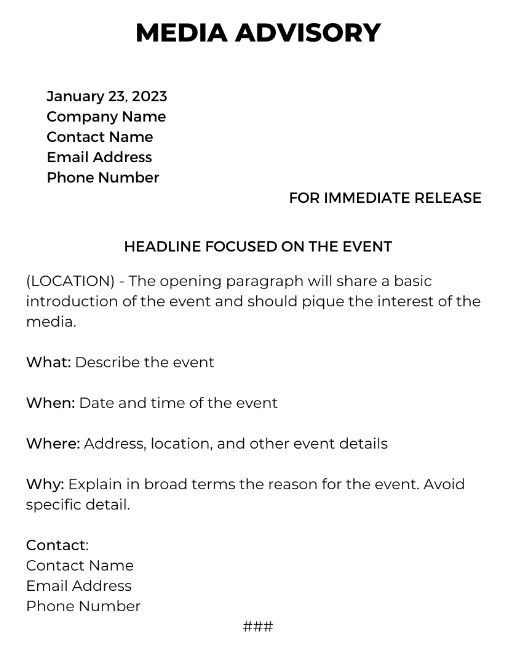
The same principle applies to an internal advisory. Employees may need to know what changed, when the change takes effect, who is affected, and where questions should be directed. Separating essential information from background explanation makes the document easier to act on.
Advisory Template Design Principles
Advisory template design should prioritize hierarchy, readability, and purpose. A visually attractive document can still fail if the reader cannot identify the main message within a few seconds. Start with a clear title, followed by concise contextual information and logically grouped sections.

Build a Clear Information Hierarchy
Use headings to separate ideas and keep each section focused. Important dates and actions should be visually prominent without relying on excessive decoration. A consistent type scale, sufficient white space, and short paragraphs generally produce a more professional result than crowded pages.

Design for Different Readers
A senior executive may scan for recommendations and decisions, while an employee may look first for an effective date and required action. A journalist may want event logistics. Design should therefore make the most important information obvious to the primary audience.

Using an Advisor Template Effectively
An advisor template should support professional judgment rather than replace it. Templates are useful for organizing information, but the writer remains responsible for checking facts, context, audience, and timing. A rigid document can become counterproductive when contributors fill every section simply because the field exists.

For recurring advisory work, create a master version with carefully chosen placeholders. Keep instructions separate from the visible final document where possible. For example, an internal instruction might remind authors to confirm the meeting location, while the final advisory simply presents the verified location.
A good template should also identify optional sections. Not every meeting needs a guest presentation, and not every advisory needs a detailed background section. Optional fields help preserve flexibility without encouraging unnecessary content.
Creating an Advisory in Word
For teams that prefer Microsoft Word, an advisory template word workflow can be practical because Word supports headings, reusable styles, tables when appropriate, headers, footers, and document properties. The key is to create styles rather than manually formatting every heading and paragraph.
How Do I Create an Advisory?
How do I create an advisory? Begin by defining the audience and purpose. Then gather the facts the reader needs before deciding on the visual format. A reliable process is to draft the content first, organize it into sections, apply the template’s styles, review the message, and conduct a final accuracy check.
- Define the audience.
- State the purpose in one clear sentence.
- Gather dates, names, locations, responsibilities, and supporting facts.
- Choose sections that match the communication objective.
- Write the most important information first.
- Apply consistent headings and typography.
- Review accuracy, tone, accessibility, and required action.
- Obtain the appropriate approval before distribution.
Holiday and Operational Advisory Documents
A holiday advisory template is useful when an organization needs to communicate changes caused by public holidays, seasonal schedules, maintenance periods, or temporary closures. The document should identify the affected dates, operating changes, deadlines, contact arrangements, and any action recipients must take.

Clarity matters especially when several groups are affected differently. Customers might see altered service hours, while employees may have separate staffing instructions. Suppliers could have delivery changes. Instead of putting every audience into one confusing paragraph, use concise audience-specific sections.
Specialized Advisory Templates for Quality and Planning
Some searches focus on specialized governance or service environments. Quality care advisory body templates, for example, may need sections for membership, responsibilities, consultation, quality priorities, feedback, reporting, and review. In this setting, clarity around accountability is more important than decorative design.
Planning-focused searches can also produce highly specific terminology such as planning advisory service bng templates. When a template serves a specialized field, preserve the terminology that practitioners already understand, but explain uncommon abbreviations and responsibilities clearly for external stakeholders.
Specialized templates should also include a review mechanism. Policies, responsibilities, regulations, and operational procedures can change. Assign an owner to verify the template periodically so outdated language does not continue circulating simply because the document remains visually polished.
Common Sections to Include
Although every advisory serves a different purpose, several components appear repeatedly because they answer the questions readers naturally ask.
- Title: identifies the subject immediately.
- Date: establishes when the communication was issued.
- Audience: clarifies who should pay attention.
- Purpose: explains why the advisory exists.
- Key details: provides the facts required for understanding.
- Required action: tells recipients what they should do.
- Contact: identifies the appropriate person or department.
- Follow-up: explains the next review, meeting, deadline, or communication.
For a meeting document, add objectives, agenda items, presenters, timing, previous actions, and expected outcomes. For a public notice, emphasize timing, affected groups, operational details, and contact information. For a strategic advisory, make the decision context and specific questions for advisors especially clear.
How to Improve an Advisory Template Over Time
A template should evolve through actual use. After several meetings or communications, review which sections consistently cause confusion, which fields are rarely used, and which information recipients repeatedly request. These observations can guide improvements to the next version.

Track recurring issues such as unclear ownership, excessive background information, missing deadlines, inconsistent terminology, or overloaded agendas. A small structural change can often improve the usefulness of an advisory more than a major visual redesign.
Accessibility should also be part of the review. Use readable text, meaningful headings, adequate contrast, descriptive link text when links are permitted, and logical reading order. Documents should remain understandable when printed or viewed on different screen sizes.

Common Mistakes to Avoid
The first mistake is treating a template as a substitute for thinking. A polished layout cannot compensate for an unclear purpose. The second is including too many sections. More fields do not automatically create better communication.

- Using a generic structure for a specialized audience.
- Hiding the main action inside a long paragraph.
- Leaving outdated names, dates, or instructions in recurring documents.
- Creating overly dense agendas with unrealistic timing.
- Using decorative formatting that competes with the message.
- Failing to identify ownership for follow-up tasks.
- Sending an advisory without confirming its factual accuracy.
Another frequent problem is confusing information with action. An advisory may explain an issue perfectly but leave recipients unsure what happens next. Every operational document should make the expected response easy to identify.
Practical Checklist Before Finalizing
Before an advisory is issued, perform a short quality review. Confirm that the title matches the actual subject and that the date is correct. Check every name, role, location, time, deadline, and contact method. Then read the document from the perspective of someone who has no background knowledge.
Ask whether the reader can answer five questions immediately: What is this about? Why does it matter? Who is affected? What should happen next? Who can answer questions? If any answer requires searching through several paragraphs, revise the structure.
For recurring documents, record the template version and assign an owner. This simple practice prevents teams from using several slightly different versions of the same document. It also makes future revisions easier because there is a clear source version to update.
Frequently Asked Questions About Advisory Templates
What should an advisory template contain?
It should contain the information required by its purpose and audience. Common elements include a title, date, purpose, key details, responsibilities, required actions, contact information, and follow-up instructions. Meeting formats may also include objectives, agenda items, presenters, timing, and expected outcomes.
When should I use an advisory board agenda template?
Use an advisory board agenda template when advisors need a structured view of meeting objectives, strategic topics, reports, questions, and next steps. The best agenda gives discussion items enough time while keeping routine updates concise.
Can an advisory template be used for several departments?
Yes. A core template can establish consistent branding and structure while optional sections allow departments to adapt the document. Governance, communications, human resources, operations, and community teams may each need different content blocks.
What makes media advisory templates different?
Media-oriented documents prioritize event logistics and timely facts. They should make the event, date, time, location, participants, purpose, and media contact easy to locate. Concise writing is usually more effective than lengthy background material.
Should advisory templates be reviewed regularly?
Yes. Review recurring templates whenever responsibilities, policies, contact information, processes, or organizational structures change. A periodic review also helps remove sections that no longer serve a practical purpose.
Final Recommendations for Better Advisory Documents
The best Advisory Templates are purposeful, adaptable, and easy to scan. Start with the audience, define the communication objective, select only the sections that support that objective, and establish a consistent visual hierarchy. Whether you need an advisor template for strategic discussions, an advisory board agenda template for recurring meetings, a holiday advisory template for operational changes, or media advisory templates for event communication, the same principle applies: structure should make useful information easier to understand and act upon.
Use templates as living systems rather than static forms. Review them after real-world use, improve unclear sections, maintain accurate information, and keep specialized versions aligned with the needs of their audiences. With thoughtful advisory template design, a simple document framework can become a dependable communication tool that improves preparation, accountability, collaboration, and decision support.