A great advertisement bio helps people understand who you are, what you offer, and why they should choose your business. Whether you promote a small business, personal brand, online shop, or professional service, a clear bio can turn casual visitors into potential customers.
However, writing a promotional bio is not always easy. You need to communicate your value quickly while keeping your message natural, memorable, and relevant. Fortunately, a simple structure can make the process much easier.
In this guide, you will learn how to create an effective advertisement bio, explore practical examples, and discover how an Advertisement Bio Template can help you organize your message. You will also find actionable tips for improving your brand communication across websites, social media profiles, and advertising campaigns.
What Is an Advertisement Bio?
An advertisement bio is a short promotional description that introduces a person, business, product, or service to a target audience. It highlights important information and encourages readers to take a specific action.
Unlike a traditional biography, which often focuses on personal history, an advertising bio emphasizes value. It tells potential customers what makes your offer useful and how they can learn more.
You can use an advertisement bio in several places, including:
- Instagram, Facebook, and TikTok business profiles.
- Online shop descriptions and marketplace storefronts.
- Business websites and landing pages.
- Digital advertising campaigns and promotional materials.
- Professional portfolios and personal branding pages.
The ideal length depends on the platform. A social media bio may need only a few concise lines. Meanwhile, a website introduction can include more details about your experience, services, and unique selling points.
Why an Effective Advertisement Bio Matters
Your bio often creates the first impression of your brand. Therefore, it should communicate your message clearly and give readers a reason to keep exploring.
Build Brand Awareness
A consistent bio helps people recognize your business. When your name, message, and tone remain consistent across platforms, customers can connect your content with your brand more easily.
Explain Your Value
Customers want to know how your product or service can help them. A strong advertisement bio answers this question without unnecessary details. For example, an online clothing store can emphasize everyday styles, comfortable materials, and convenient ordering.
Encourage Customer Action
A clear call to action tells readers what to do next. You might invite them to browse your collection, request a quotation, visit your website, or send a direct message.
Although a compelling bio can support marketing efforts, it does not guarantee sales. Product quality, pricing, customer service, and the overall shopping experience also influence purchasing decisions.
Essential Elements of a Successful Advertisement Bio
Before writing your bio, identify the information your audience needs most. A practical structure makes your message easier to understand and remember.
1. Brand Name or Identity
Start by introducing your business, professional identity, or personal brand. Use a recognizable name so visitors can quickly understand who is speaking.
2. A Clear Value Proposition
Explain what you offer and who benefits from it. Instead of using broad claims, focus on specific features, services, or customer needs.
3. Your Unique Selling Point
Highlight a genuine reason customers might choose your business. This could include personalized service, original designs, convenient ordering, or a specialized product range.
4. Relevant Keywords
Include natural phrases related to your business and products. These terms help visitors understand your offer and may improve discoverability where platforms use profile text as a relevance signal.
5. A Strong Call to Action
Finish with a simple instruction. For example, invite readers to explore your products, visit your website, or contact your team for more information.
How to Write an Advertisement Bio Step by Step
Writing an effective bio becomes easier when you follow a repeatable process. Use these steps to create a message that fits your business goals and audience.
Step 1: Identify Your Target Audience
First, determine who you want to reach. Consider their needs, interests, preferences, and common problems. A bio for a beauty brand, for instance, will differ from one written for a financial consultant.
When you understand your audience, you can choose language that feels relevant and approachable.
Step 2: Define Your Main Message
Next, write one sentence that explains what you offer and why it matters. Keep the sentence specific enough to distinguish your business from similar alternatives.
For example, a handmade gift shop might use the message, “Thoughtful handmade gifts for birthdays, celebrations, and everyday surprises.”
Step 3: Highlight Your Benefits
Choose two or three benefits that matter most to potential customers. Focus on meaningful details rather than listing every product feature.
For example, a local bakery could mention freshly prepared treats, custom cake designs, and convenient preorders. Only include benefits that accurately describe the business.
Step 4: Add a Call to Action
Give readers a clear next step. Suitable calls to action include:
- Explore our latest collection.
- Shop your favorite designs today.
- Message us for product details.
- Visit our website to learn more.
- Request a personalized quotation.
Choose one main action whenever possible. This keeps your message focused and reduces confusion.
Step 5: Edit and Test Your Bio
Finally, remove unnecessary words and check the character limit of your chosen platform. Read the bio aloud to identify awkward phrases. Then, ask someone unfamiliar with your business whether the message is easy to understand.
You can also test different versions over time. Compare meaningful outcomes, such as profile visits, website clicks, inquiries, and qualified leads, rather than judging the bio by wording alone.
Advertisement Bio Examples for Different Businesses
Examples can help you understand how to apply the same structure to different industries. Adapt the following ideas to your brand and replace general claims with accurate details.
Online Shop Advertisement Bio
“Discover everyday essentials and stylish finds for your lifestyle. Browse our collection, explore new arrivals, and find products that suit your needs. Visit our shop to get started.”
This example introduces the offer, communicates its general value, and provides a clear next step.
Beauty Business Advertisement Bio
“Your destination for beauty essentials and everyday self-care. Explore our curated selection and find products that fit your routine. Message us for product information and assistance.”
This version emphasizes the customer experience without making unsupported claims about product results.
Freelancer Advertisement Bio
“Helping businesses communicate their ideas through engaging content and thoughtful design. Explore my portfolio to see previous projects, or get in touch to discuss your next creative project.”
This bio identifies a professional service, explains its purpose, and invites prospective clients to continue the conversation.
Food Business Advertisement Bio
“Made for delicious moments, from everyday snacks to special celebrations. Explore our menu, discover available options, and contact us to ask about orders and availability.”
For the best results, personalize each example with your business name, service area, signature products, or other relevant details.
How to Use an Advertisement Bio Template
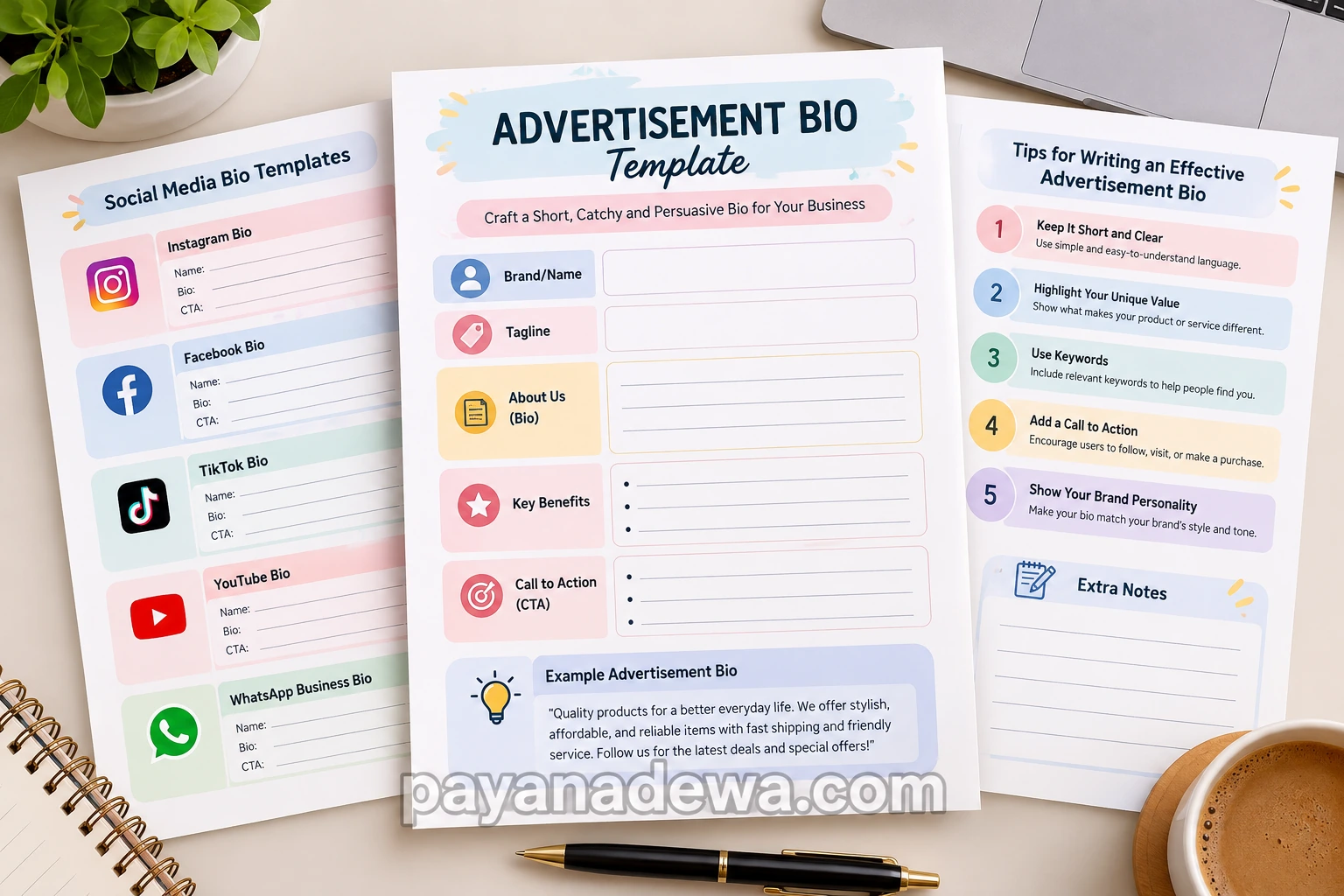
An Advertisement Bio Template gives you a structured place to plan and refine your promotional message. It is especially useful when you manage multiple platforms or regularly update your marketing content.
Start by filling in the main sections:
- Brand name: Identify the business or personal brand.
- Tagline: Summarize the central brand message.
- About or bio: Describe the offer and its intended audience.
- Key benefits: Highlight relevant features or customer advantages.
- Call to action: Direct readers toward the next step.
- Extra notes: Record platform limits, keywords, and alternative versions.
Complete the template before publishing your bio. This approach makes it easier to compare wording, maintain consistent branding, and reuse approved messaging across different channels.
You can also create separate versions for Instagram, Facebook, TikTok, your website, and online marketplaces. Each version should respect the platform’s character limits and audience expectations while preserving your main brand message.
Common Advertisement Bio Mistakes to Avoid
Even a well-designed bio can lose effectiveness when the message is unclear. Watch out for these common mistakes.
- Being too vague: Explain what your business actually offers instead of relying on generic phrases.
- Adding too much information: Focus on the details readers need first.
- Using too many keywords: Write naturally instead of repeating the same search phrase.
- Making unsupported promises: Ensure every claim reflects your actual products or services.
- Forgetting the call to action: Tell visitors how they can learn more or contact you.
- Ignoring platform requirements: Check character limits, formatting options, and relevant advertising rules.
Additionally, review your bio whenever your products, audience, business goals, or contact information change. Regular updates help keep your promotional message accurate and relevant.
Tips for Improving Advertisement Bio SEO
Search optimization can help make your business information clearer and more relevant. However, no single bio can guarantee higher rankings or increased traffic.
Use these practical techniques to strengthen your content:
- Include your primary keyword naturally when it fits the topic.
- Use specific business terms that describe your products or services.
- Keep your brand name and business information consistent.
- Link to a relevant landing page when the platform supports it.
- Write original descriptions instead of copying competitors.
- Review engagement data and update your message when needed.
For website content, place the main topic in a clear heading and write a useful meta description. For social profiles, prioritize clarity, audience relevance, and a direct path to your products or services.
Conclusion
An effective advertisement bio introduces your brand, communicates your value, and guides potential customers toward a useful next step. By understanding your audience, highlighting genuine benefits, and using a clear call to action, you can create promotional content that feels professional and approachable.
An Advertisement Bio Template makes this process easier by organizing your brand name, tagline, key benefits, and promotional message in one place. Use the template to draft your bio, refine the wording, and adapt the final version to each platform.
Start with a simple message, keep it authentic, and review its performance over time. With thoughtful improvements, your advertisement bio can become a useful part of a consistent and effective marketing strategy.