A sample advertising quotation helps an agency, freelancer, or marketing team explain campaign costs before work begins. It gives clients a clear view of the services included, the price of each item, and the terms that apply. When the details are easy to understand, both sides can make decisions with greater confidence.
Advertising projects can include social media promotions, search ads, banner placements, video production, email campaigns, and creative services. Each activity may have a different fee or billing method. A well-organized quotation brings these details together in one document, making it easier to compare options and agree on the project scope.
Use the guidance below to prepare an advertising price quotation that looks professional, reduces confusion, and supports a smooth client approval process. You can adapt the example to a small business campaign, a one-time promotion, or a larger digital marketing plan.
What Is an Advertising Quotation?
An advertising quotation is a written estimate that outlines the expected cost of specific advertising services. It is usually prepared after a client shares their goals, target audience, preferred channels, timeline, and budget. The quotation records the proposed work and the price offered for that work.
Unlike a general price list, a quotation is tailored to a particular client or campaign. It can specify deliverables, campaign duration, management fees, production costs, taxes, and payment terms. It may also state how long the quoted prices remain valid.
A quotation is not always the final contract. Depending on the arrangement and local rules, the parties may need a separate agreement to define responsibilities, approvals, ownership, cancellation, and other legal terms. Keep the quotation consistent with any contract or proposal used for the same project.
What to Include in a Sample Advertising Quotation
A useful advertising quotation should answer the client’s main questions quickly: who is providing the service, what will be delivered, how much will it cost, and what happens next? Use clear headings and simple tables so readers can scan the document without searching for key details.
1. Business and Client Information
Start with the names and contact details of both parties. Include the agency or freelancer’s business name, address, email, and phone number. Add the client’s company name, main contact, and billing details when available.
Also include a quotation number, issue date, and expiry date. A unique reference number makes it easier to find the document later, especially when a client receives several estimates for different campaigns.
2. Campaign Objectives and Scope
Briefly describe the campaign goal and the services being proposed. For example, the objective may be to increase brand awareness, generate qualified leads, promote a product launch, or encourage online sales. Explain the intended audience and channels when those details are known.
List each deliverable in practical terms. Instead of writing “social media marketing,” specify the number of posts, creative assets, platforms, reporting periods, or management tasks included. Clear scope helps both sides understand what the quoted fee covers.
3. Itemized Advertising Costs
Show the cost of each service separately. An itemized breakdown makes the quotation easier to review and helps the client adjust the campaign if the total exceeds the available budget.
- Media spend: The amount paid to advertising platforms or publishers.
- Campaign management: Planning, setup, monitoring, and optimization fees.
- Creative production: Design, copywriting, photography, or video production.
- Additional services: Landing page work, tracking setup, translation, or extra reporting.
- Taxes and other charges: Any applicable tax or clearly disclosed fee.
Separate media spend from service fees whenever possible. This distinction helps clients see which money goes to the advertising platform and which amount pays for professional work. State whether platform costs are estimates or fixed amounts.
4. Timeline, Payment Terms, and Validity
Provide the expected start date, campaign duration, and important milestones. Mention any client materials or approvals needed before work can begin. If the schedule depends on receiving assets or feedback, say so in plain language.
Payment terms should be specific. State the deposit, payment milestones, due dates, accepted payment methods, and any late-payment terms that apply. Include the quotation’s validity period, since supplier rates and advertising costs may change over time.
5. Approval and Contact Details
Finish with the name and contact information of the person who prepared the quotation. Include a clear approval area for the client, such as a signature line, printed name, date, or written acceptance method. Tell the client how to ask questions or request a revised estimate.
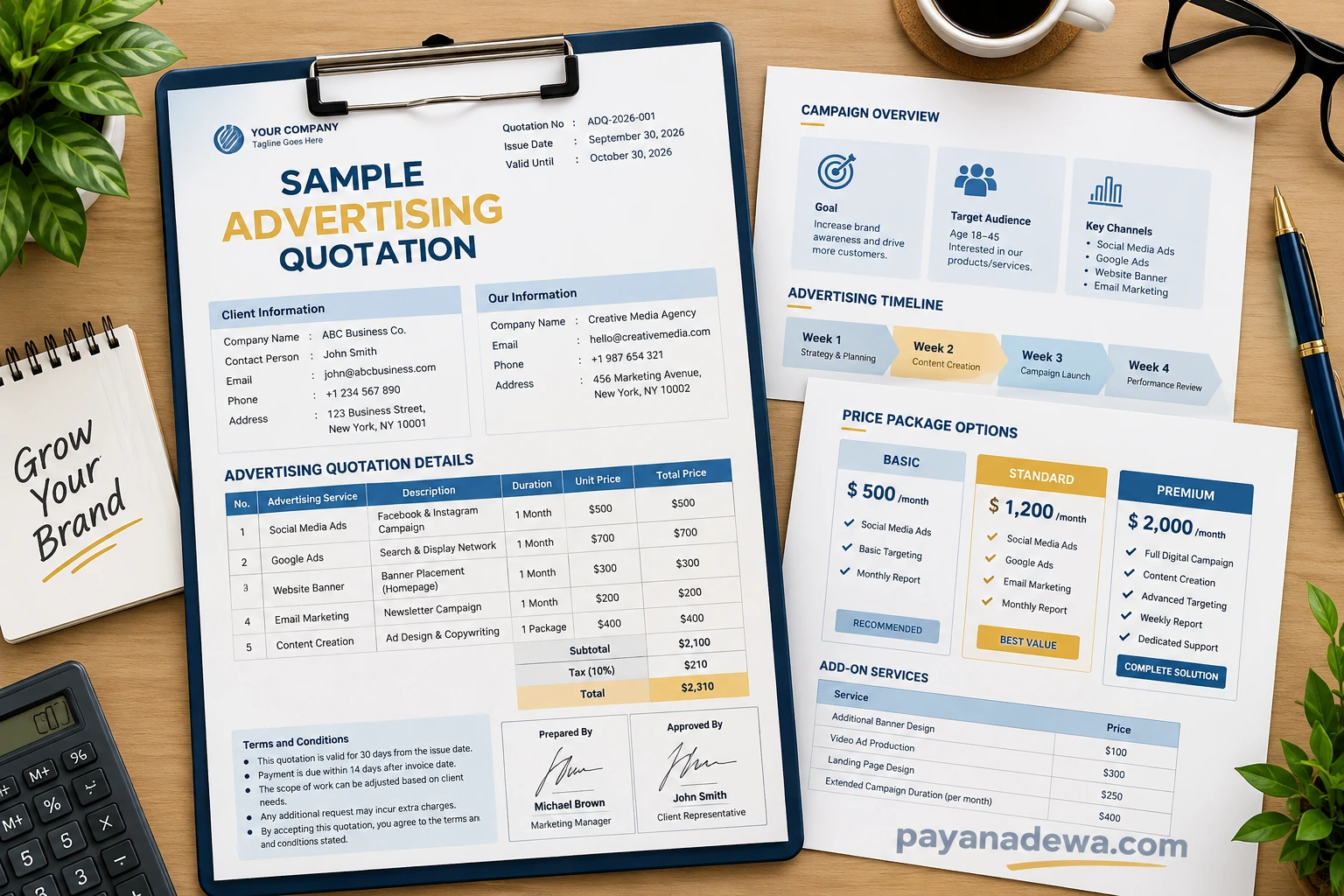
Sample Advertising Quotation: Example Cost Breakdown
The following example shows how a small digital advertising campaign might be presented. These figures are illustrative only. Actual prices vary by location, campaign complexity, audience, platform, production requirements, and provider experience.
- Social media campaign management: $500 for one month
- Search advertising setup and management: $700 for one month
- Website banner placement: $300 for one month
- Email campaign preparation: $200 for one campaign
- Creative content production: $400 for one package
- Subtotal: $2,100
- Illustrative tax at 10%: $210
- Total estimate: $2,310
Make sure the calculation is accurate and that each line describes its billing unit. A fee charged per month should not be confused with a one-time production cost. If the advertising budget is paid directly to a platform, show it separately and explain whether it is included in the total.
How to Customize the Quotation for Different Campaigns
Social Media Advertising
For social media campaigns, identify the platforms and explain whether the fee includes creative design, copywriting, audience targeting, campaign monitoring, and performance reporting. Specify the number of ad variations or creative revisions included. Keep the platform budget separate from the management fee.
Search Engine Advertising
For search ads, describe setup, keyword research, conversion tracking, campaign optimization, and reporting. Explain whether landing page design or analytics configuration is included. Avoid promising a specific number of clicks, leads, or sales unless the estimate is clearly presented as a forecast with stated assumptions.
Print, Outdoor, and Media Placement
For print advertisements, billboards, radio, or other offline media, list the publication or placement, ad size or duration, production requirements, booking period, and any placement fees. If the final cost depends on a publisher’s availability or rate card, mark it as subject to confirmation.
Tips for Creating a Clear and Trustworthy Quote
- Use plain language. Explain specialist terms so clients can understand the offer without marketing expertise.
- Define deliverables. Specify quantities, formats, channels, deadlines, and revision limits.
- Show assumptions. Identify estimated media costs, client-supplied assets, and any dependencies.
- Check every calculation. Confirm line totals, discounts, taxes, and the final amount before sending.
- Keep the design consistent. Use readable fonts, clear headings, adequate spacing, and restrained brand colors.
- Avoid vague promises. Describe the work and reporting process rather than guaranteeing outcomes outside your control.
- Make next steps obvious. Tell the client how to approve the quote and when the team can begin.
Before sending the document, review it from the client’s point of view. Can they understand what they will receive? Are optional services clearly separated? Is the total easy to find? Can they see when payment is due and how long the quotation remains valid? If any answer is unclear, revise the document.
Common Mistakes to Avoid
One common mistake is providing only a single total without explaining what it covers. That can lead to disagreement about deliverables or additional fees. Another is forgetting to state whether taxes, media spend, revisions, or third-party costs are included.
Do not use an expired price without checking it first. Advertising platform rates, vendor fees, and campaign requirements can change. Avoid copying a quotation from another project without updating the scope, dates, client details, and calculations. Finally, do not bury important exclusions in small print. State them clearly near the relevant service or in a separate terms section.
Frequently Asked Questions
Is an advertising quotation the same as an invoice?
No. A quotation estimates the price and scope before the client commits to the work. An invoice requests payment for an amount due under the agreed arrangement. Some projects use both documents at different stages.
Should media spend be included in the quotation?
It can be included, but show it as a separate line from agency or freelancer fees. This makes the total more transparent and helps the client understand how the campaign budget will be used.
How long should an advertising quotation remain valid?
The validity period depends on the project and how quickly costs may change. Many providers choose a defined period, such as 14 or 30 days, and state the exact expiry date. Confirm supplier and media rates before extending an expired quotation.
Can I use one quotation template for every client?
Yes, a reusable template saves time, but customize the campaign objectives, deliverables, rates, dates, assumptions, and terms for every client. A template should support accurate communication, not replace project-specific planning.
Conclusion
A well-prepared sample advertising quotation makes campaign pricing easier to understand and gives clients a clear basis for approval. Include business details, objectives, itemized services, timeline, payment terms, exclusions, and an approval method. Separate media spend from professional fees, check the arithmetic, and explain assumptions before the client accepts the offer.
With a consistent quotation template, you can prepare estimates faster while keeping each proposal relevant to the client’s needs. Adapt the example to your services, use realistic prices, and make every commitment clear. The result is a professional document that supports better communication from the first discussion through campaign delivery.