Advertising projects often involve valuable information that businesses cannot afford to share publicly. From creative campaign concepts and marketing strategies to customer data and advertising budgets, confidential details play an important role in successful collaborations. An Advertising Non-Disclosure Agreement helps establish clear expectations about how this information should be protected when working with agencies, freelancers, influencers, and business partners.
Whether you run a marketing agency, manage a growing brand, or hire independent advertising professionals, a written confidentiality agreement can help reduce misunderstandings and protect sensitive business information. This guide explains what an advertising NDA is, what it should include, and how to customize a template for your next marketing project.
What Is an Advertising Non-Disclosure Agreement?
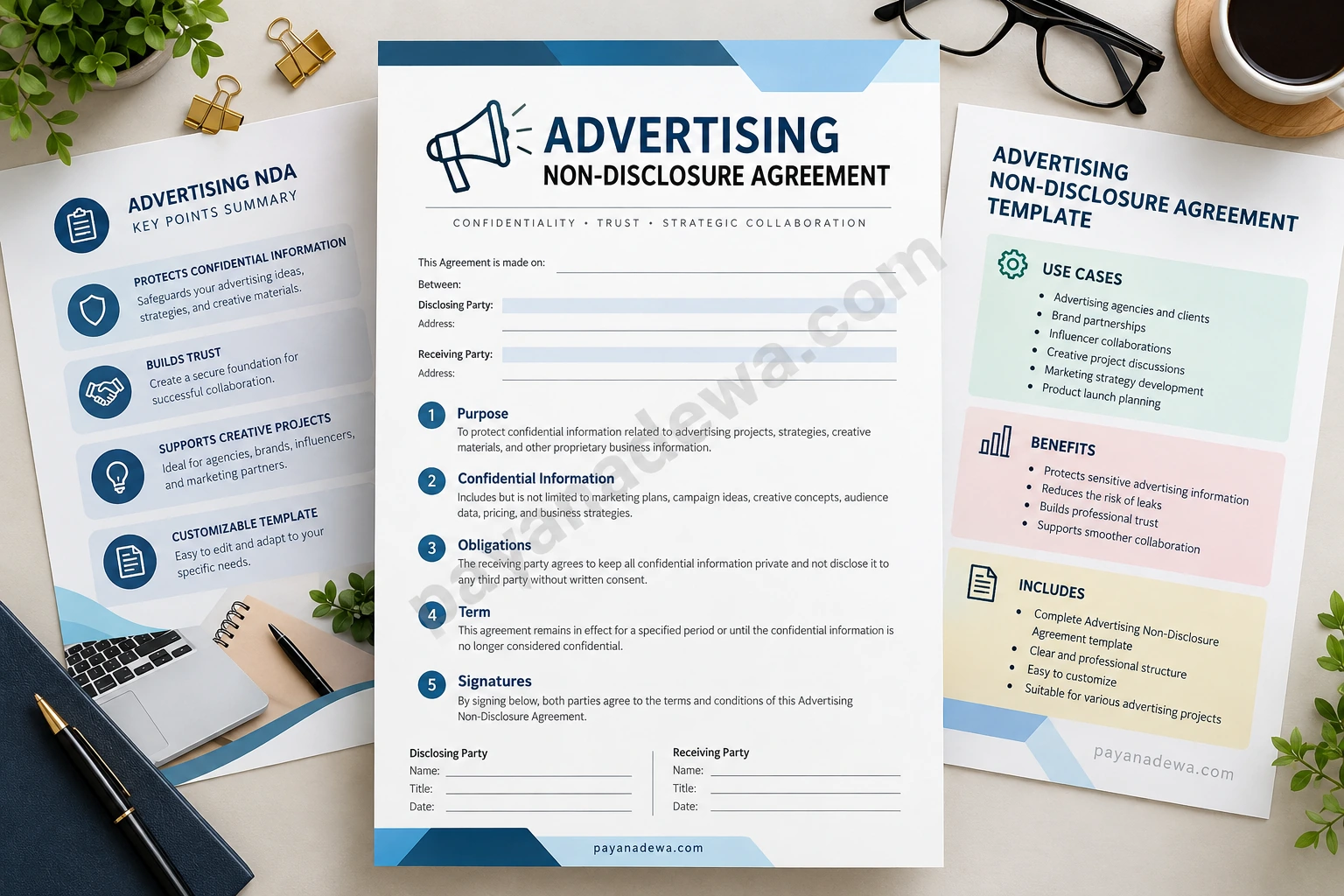
An Advertising Non-Disclosure Agreement is a written confidentiality contract between parties involved in an advertising or marketing project. It identifies the information that must remain confidential and establishes rules for using, storing, and sharing that information.
Businesses commonly use this agreement before revealing campaign concepts, product launch plans, audience research, pricing strategies, or other commercially sensitive details. Depending on the arrangement, the agreement may protect one party’s information or require both parties to maintain confidentiality.
Although an NDA can provide contractual protection, its effectiveness depends on the wording, applicable law, and circumstances. A clear agreement should explain what qualifies as confidential information rather than attempting to restrict every possible communication.
Who Can Use an Advertising NDA?
This type of agreement can support several professional relationships, including:
- Advertising agencies: Protect client campaign strategies, creative concepts, and unpublished promotional materials.
- Freelancers: Establish confidentiality expectations when providing copywriting, graphic design, media buying, or marketing consulting services.
- Influencers and creators: Protect unreleased sponsorship campaigns, product announcements, and collaboration details.
- Businesses and brands: Safeguard product launch information, advertising budgets, and competitive marketing plans.
- Marketing consultants: Maintain confidentiality when reviewing analytics, customer research, and business strategies.
Before sharing sensitive information, both parties should understand their responsibilities and confirm that the proposed agreement fits the project.
Why Is an Advertising Non-Disclosure Agreement Important?
Advertising campaigns frequently depend on originality, timing, and access to valuable business information. An unauthorized disclosure could expose a campaign before launch, reveal a competitor-sensitive strategy, or damage a client’s commercial relationships.
An advertising confidentiality agreement helps establish boundaries before collaboration begins. It can also make professional expectations easier to understand because both parties agree on permitted uses, disclosure restrictions, and the duration of confidentiality obligations.
Key Benefits of Using an Advertising NDA
- Protect creative ideas: Set rules for handling campaign concepts, advertising copy, design drafts, and creative presentations.
- Safeguard business strategies: Help protect confidential media plans, advertising budgets, targeting methods, and launch schedules.
- Support client trust: Demonstrate that confidential project information will be handled according to agreed terms.
- Clarify responsibilities: Explain who may access protected information and under what conditions.
- Reduce misunderstandings: Establish written expectations before sensitive discussions or project handovers.
An NDA does not automatically prevent every leak or guarantee a successful legal claim. Instead, it creates agreed contractual obligations that may help a business respond to unauthorized use or disclosure.
What Should an Advertising Non-Disclosure Agreement Include?
A useful advertising NDA should be specific enough to protect legitimate business interests while remaining practical for the people signing it. The following provisions are important starting points.
1. Names and Details of the Parties
Identify every party entering the agreement, including the correct legal business name, business address, and relevant representative. If a marketing agency signs on behalf of a company, confirm that the representative has authority to sign.
2. Definition of Confidential Information
Explain which information the agreement covers. Depending on the project, confidential information may include:
- Unpublished advertising concepts and campaign proposals.
- Marketing research, customer insights, and audience segmentation.
- Media buying plans, advertising costs, and campaign performance data.
- Product launch schedules and unreleased promotional materials.
- Client lists, commercial terms, and nonpublic business strategies.
- Creative assets, drafts, and project documents shared privately.
Consider how the agreement will handle information disclosed in meetings, presentations, messages, or digital files. It should also identify appropriate exceptions, such as information already lawfully public or independently developed without using protected material.
3. Purpose and Permitted Use
State why the information is being shared. For example, an advertising agency may receive confidential product details solely to prepare a campaign proposal. The receiving party should not use that information for unrelated projects or unauthorized commercial purposes.
4. Confidentiality Obligations
Describe how each party must protect confidential information. Common requirements include restricting access to authorized personnel, using reasonable security measures, and avoiding unauthorized copying, publication, or distribution.
If employees, subcontractors, or professional advisers need access, explain when disclosure is permitted and what confidentiality safeguards must apply. Include legally required disclosures and protected reporting activities where applicable.
5. Agreement Duration and Termination
Specify when the agreement begins and how long the confidentiality obligations continue. The appropriate period depends on the information, the project, and applicable law. Some commercial information may require protection beyond the working relationship, while other information may lose its confidential character over time.
6. Return or Deletion of Information
Explain what happens to confidential documents when a project ends or a party requests their return. The provision may cover physical documents, downloaded files, drafts, and stored copies. Include reasonable exceptions for legally required retention and routine backup systems where appropriate.
7. Governing Law and Signatures
Identify the governing law and, where appropriate, the agreed dispute resolution process. Provide signature fields for authorized representatives, along with their names, positions, and signing dates. Cross-border advertising projects may require additional consideration of jurisdiction and enforceability.
How to Use an Advertising NDA Template
A ready-made advertising NDA template can save time when preparing a confidentiality agreement for a new project. However, a template should serve as a starting point rather than a substitute for reviewing the actual business arrangement.
- Identify the project: Describe the advertising campaign, services, or collaboration that requires confidentiality.
- Select the agreement type: Use a one-way NDA when only one party discloses confidential information, or consider a mutual NDA when both parties share it.
- Customize the information covered: List the relevant categories of confidential material and define the permitted purpose clearly.
- Set practical safeguards: Determine who needs access, how information will be shared, and what security measures are appropriate.
- Review the duration: Choose a reasonable confidentiality period based on the project and applicable requirements.
- Check legal provisions: Review exceptions, disclosure obligations, governing law, and remedies with a qualified legal professional when needed.
- Obtain signatures before disclosure: Complete the agreement before sharing sensitive campaign details, unless an appropriate arrangement is already in place.
Keep a signed copy in your project records. You should also ensure that everyone handling confidential materials understands the agreed procedures.
Common Mistakes to Avoid When Drafting an Advertising NDA
Even a professionally formatted confidentiality agreement can cause problems if important details are missing. Watch out for these common mistakes:
- Using vague definitions: Describe the protected information clearly enough for both parties to understand its scope.
- Ignoring mutual obligations: Consider whether both parties will disclose sensitive information during the collaboration.
- Setting unrealistic restrictions: Make sure the terms reflect legitimate confidentiality needs rather than imposing unnecessarily broad restrictions.
- Overlooking permitted disclosures: Account for authorized advisers, legal requirements, and applicable protected reporting rights.
- Forgetting digital information: Address access controls, file sharing, storage, and deletion procedures where relevant.
- Relying on a generic template without review: Adapt the agreement to the transaction, industry, and relevant jurisdiction.
Confidentiality agreements must not be treated as a way to conceal unlawful conduct or prevent disclosures protected by law. Businesses should review any applicable legal restrictions before using an NDA.
Advertising NDA Template: Practical Checklist
Before signing or sharing the agreement, use this checklist to review the main requirements:
- All parties are correctly identified.
- The advertising project and permitted purpose are clearly stated.
- Confidential information is defined appropriately.
- Permitted disclosures and relevant exceptions are included.
- Security, access, and handling responsibilities are understandable.
- The confidentiality period is specified.
- Return or deletion requirements are addressed.
- Governing law and dispute provisions are reviewed.
- Authorized representatives have signed and dated the document.
Completing this review can help identify gaps before the agreement is used. For projects involving trade secrets, valuable intellectual property, sensitive personal data, or international parties, seek advice from a qualified legal professional.
Conclusion: Protect Your Advertising Projects With a Clear NDA
An Advertising Non-Disclosure Agreement provides a structured way to establish confidentiality expectations between businesses, agencies, freelancers, influencers, and other marketing partners. By defining protected information, permitted uses, confidentiality responsibilities, and agreement duration, both parties can approach their collaboration with a clearer understanding of their obligations.
Use an advertising NDA template to organize the essential provisions, then customize it to reflect the actual project. Review the wording carefully, address applicable legal requirements, and obtain signatures before sharing sensitive information. With a practical and appropriately drafted agreement, your team can manage confidential advertising materials more responsibly while building a foundation for professional collaboration.
Legal disclaimer: This article provides general educational information and is not legal advice. Laws and enforceability vary by jurisdiction. Have a qualified legal professional review your agreement before relying on it.
Reference: For additional background, see the UK Intellectual Property Office guidance on non-disclosure agreements and the World Intellectual Property Organization’s guide to trade secret management.