An Ohio Bill Of Sale is a useful written record of a transaction between a buyer and seller. It can document what was sold, who purchased it, who sold it, the agreed price, the date of the transaction, and other important details. While a bill of sale does not always replace a certificate of title or another legally required ownership document, keeping a detailed record can make a private transaction easier to document and understand.
In Ohio, the documents needed can depend on what is being sold. Motor vehicles, watercraft, trailers, and personal property can have different ownership and documentation requirements. For example, the Ohio Bureau of Motor Vehicles explains that a bill of sale may be accepted as evidence of ownership in certain titling situations, while Ohio law generally requires a certificate of title for a motor vehicle transfer.
This guide explains what to include in an Ohio Bill Of Sale, when you may need one, how to complete it correctly, and how to keep useful records after a private sale.
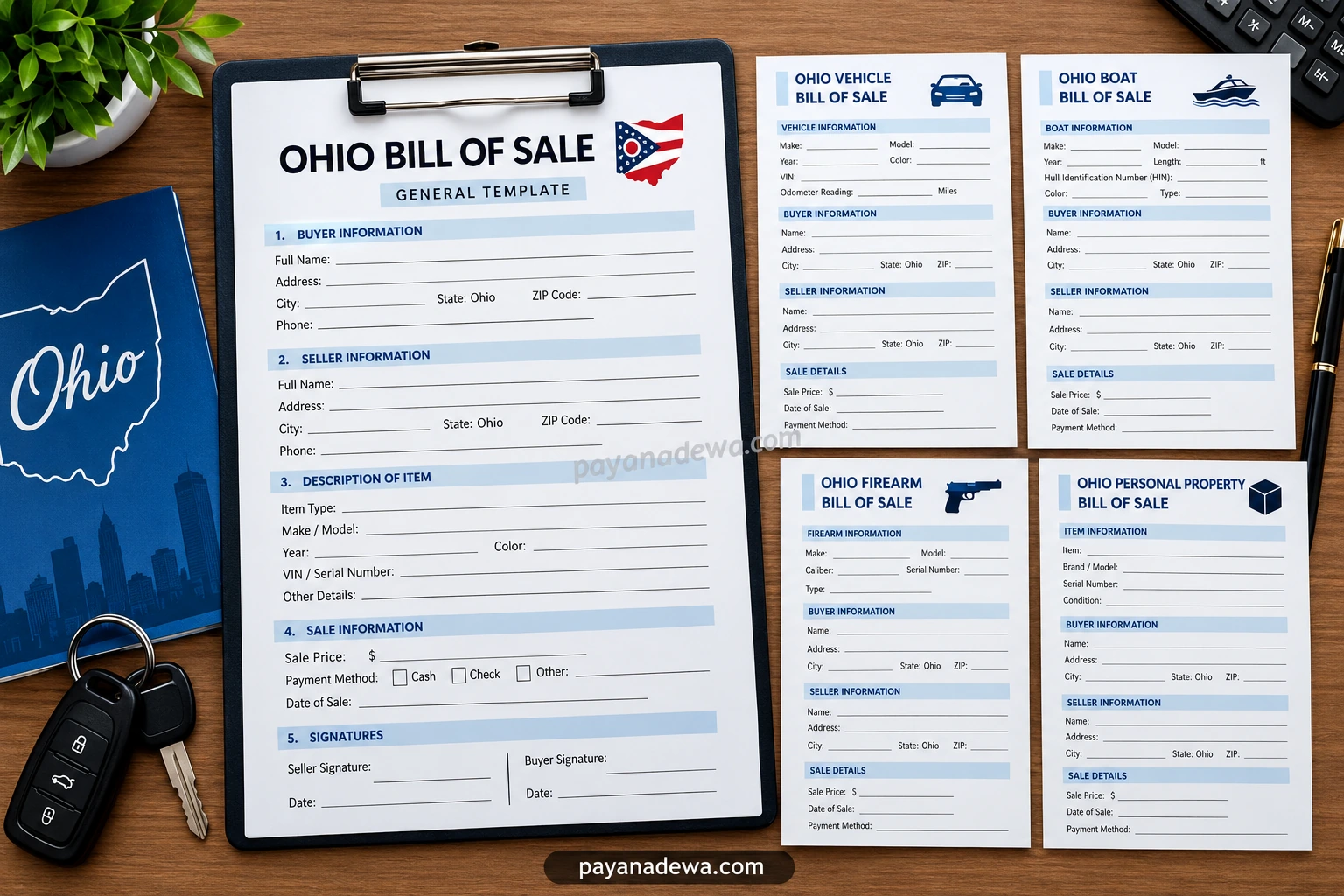
What Is an Ohio Bill Of Sale?
An Ohio Bill Of Sale is a written document that records the details of a sale or transfer between two parties. It can be used for many types of transactions, including private sales of vehicles, boats, equipment, furniture, electronics, and other personal property.
A well-prepared document gives both parties a record of the transaction. It can also help reduce confusion about the item’s description, purchase price, payment method, condition, and date of sale.
However, buyers and sellers should understand an important distinction: a bill of sale is not automatically a substitute for a title when Ohio law requires a title. For motor vehicles, Ohio law generally requires the seller to deliver the certificate of title with the necessary assignment to the buyer.
When Should You Use an Ohio Bill Of Sale?
A bill of sale can be especially useful when completing a private transaction where both parties want a clear written record. Even when another ownership document is required, keeping a separate bill of sale can provide additional transaction details.
Common situations include:
- Private vehicle sales
- Boat and watercraft transactions
- Trailer sales
- Sales of motorcycles and recreational equipment
- Sales of furniture, electronics, tools, and appliances
- Sales of business or household equipment
- Other transfers of personal property
For certain Ohio transactions, the bill of sale can also be relevant when establishing proof of ownership. The Ohio BMV lists a bill of sale from a retail business or individual among possible evidence of ownership for certain vehicle titling situations.
What Information Should an Ohio Bill Of Sale Include?
A good Ohio Bill Of Sale should provide enough information for someone reviewing the document later to understand exactly what was sold and under what terms. The more specific the description, the easier it is to connect the document to the actual transaction.
Buyer and Seller Information
Start by identifying both parties. Include their full legal names and current contact information. Depending on the transaction, addresses and other identifying details may also be useful.
- Seller’s full name
- Buyer’s full name
- Address for each party
- Phone or email information, when appropriate
Description of the Property
Describe the item being sold as specifically as possible. For a vehicle, useful information can include the make, model, year, VIN, color, and odometer reading. For other property, include identifying information such as a model number, serial number, dimensions, or distinctive features.
Sale Price and Payment Details
Clearly state the agreed purchase price. If the buyer pays by cash, check, electronic transfer, or another method, recording the payment method can create a more complete transaction record.
If the parties agree to installments or another payment arrangement, the document should clearly explain the payment terms rather than simply stating the total price.
Date of Sale
Include the date when the transaction takes place. The date helps establish when possession and the agreed transaction occurred.
Condition of the Property
For used property, consider documenting its condition at the time of sale. The parties can describe known defects, damage, included accessories, or other relevant information.
Do not use generic language when a more specific description is available. For example, listing known scratches, missing components, or mechanical issues can create a clearer record than simply writing “used condition.”
Signatures
The buyer and seller should sign and date the document. Each party should receive a copy for their records.
Ohio Bill Of Sale for Vehicles
Vehicle transactions require particular attention because Ohio’s title laws apply to motor vehicles. The Ohio BMV states that Ohio vehicle titles are issued by county Clerk of Courts title offices rather than directly by the BMV. For titling, acceptable proof of ownership can include an assigned title and, in certain circumstances, a bill of sale or other evidence.
For a private vehicle sale, a bill of sale can be useful as supporting documentation, but buyers should not assume that it replaces the vehicle title. Ohio law generally requires the transfer of the certificate of title when a motor vehicle is sold or otherwise transferred.
Vehicle Information to Record
- Year
- Make
- Model
- Vehicle Identification Number (VIN)
- Color
- Odometer reading
- Sale price
- Date of sale
- Buyer and seller information
- Signatures
Ohio law also contains specific requirements concerning title transfers and odometer information. Therefore, buyers and sellers should complete the official title documents and other required paperwork in addition to retaining a bill of sale.
Ohio Bill Of Sale for Boats and Watercraft
Watercraft transactions have their own Ohio documentation rules. Ohio Revised Code Section 1548.03 generally requires a certificate of title for the sale or transfer of a titled watercraft or outboard motor. The law also provides a specific exception allowing a purchaser in a casual sale to possess and operate a watercraft for up to 60 days with a notarized bill of sale while obtaining the required title.
For a boat bill of sale, useful information includes the boat’s make, model, year, hull identification number, length, color, purchase price, buyer information, seller information, date of sale, and signatures.
How to Complete an Ohio Bill Of Sale
Step 1: Identify Both Parties
Enter the buyer’s and seller’s complete information. Review the spelling of names and addresses before signing.
Step 2: Describe the Property
Write a detailed description of the item. Include identification numbers whenever available. For vehicles and watercraft, carefully verify the VIN or hull identification number against the applicable ownership document.
Step 3: Enter the Purchase Price
Write the exact agreed sale price. Avoid leaving the price field blank after the parties have agreed to the transaction.
Step 4: Record the Sale Date
Enter the actual transaction date and make sure both parties understand when the sale is considered completed.
Step 5: Document Important Conditions
If the item has known defects, included accessories, warranties, or special terms, record them clearly. Both parties should review these terms before signing.
Step 6: Sign and Exchange Copies
Both parties should review the completed document, sign it, and retain a copy. If a transaction requires notarization or another official document, follow the applicable Ohio requirements rather than relying solely on a general bill of sale.
Tips for Using an Ohio Bill Of Sale
- Be specific: Identify the property using as many relevant details as practical.
- Check identification numbers: Compare VINs, serial numbers, or other identifiers with the original documents.
- Record the exact price: Make sure the written amount matches the agreed transaction price.
- Keep copies: Buyer and seller should retain their own copies.
- Do not replace required title documents: A bill of sale may supplement ownership paperwork but may not replace a required Ohio certificate of title.
- Verify special requirements: Vehicles, watercraft, trailers, and other titled property can have different documentation rules.
- Use clear language: Avoid vague descriptions that could make the item difficult to identify later.
Is an Ohio Bill Of Sale Required to Sell a Vehicle?
The answer depends on the type of transaction and the documentation involved. Ohio law generally requires a certificate of title for a motor vehicle transfer, while the Ohio BMV recognizes a bill of sale as one possible form of ownership evidence in certain titling situations.
Ohio law also distinguishes casual vehicle sales from dealer transactions. For example, the statutory written-agreement requirement for retail and wholesale motor vehicle sales specifically excludes casual sales.
Because requirements can vary according to the transaction, buyers and sellers should check with the appropriate Ohio county Clerk of Courts title office when completing a vehicle title transfer.
Why Keep a Copy of the Bill of Sale?
A completed bill of sale provides a convenient record of the transaction. It can help both parties remember the terms that were agreed upon and can provide supporting documentation if questions arise later.
For the seller, the document can help establish what was sold, to whom, when, and for how much. For the buyer, it provides a record of the purchase and the property’s description.
Keep the document together with related records such as the title, receipts, payment confirmation, inspection records, maintenance records, or other transaction paperwork when appropriate.
Ohio Bill Of Sale Template: What to Look For
A printable Ohio Bill Of Sale Template should be simple enough to complete without confusion while providing enough space for important transaction information. A useful template should normally include sections for the buyer, seller, property description, sale price, payment information, date, signatures, and additional terms.
For vehicles, a dedicated vehicle bill of sale can provide fields for the VIN, year, make, model, color, and odometer reading. For boats, a watercraft-specific format can include the hull identification number and other relevant information.
A template should be treated as a record-keeping tool rather than a replacement for official Ohio title forms or other documents required by law.
Frequently Asked Questions About Ohio Bill Of Sale
Can I use a generic bill of sale in Ohio?
A generic bill of sale can be useful for documenting a transaction, provided it contains relevant information. However, some transactions have additional legal or administrative requirements, so a generic form should not be assumed to replace official Ohio documents.
Does an Ohio Bill Of Sale transfer vehicle ownership by itself?
Not generally. Ohio’s motor vehicle title law requires the appropriate certificate of title and assignment process for most vehicle transfers. A bill of sale can provide supporting evidence of the transaction, but it should not be treated as a substitute for required title documentation.
Should both parties keep a copy?
Yes. Keeping a signed copy gives both the buyer and seller a record of the transaction and its terms.
Does a boat bill of sale need notarization?
Ohio law provides a specific rule for casual watercraft sales: a purchaser may possess and operate the watercraft for up to 60 days without the certificate of title when the purchaser has a notarized bill of sale.
Conclusion
An Ohio Bill Of Sale is a practical way to document the details of a private transaction. A complete form should identify the buyer and seller, describe the property, record the purchase price and sale date, document relevant conditions, and include signatures.
For titled property such as motor vehicles and watercraft, remember that a bill of sale may work alongside official ownership documents rather than replacing them. Ohio’s requirements vary depending on the type of property and transaction, so reviewing the applicable BMV and Ohio Revised Code requirements is an important final step.
By using a clear Ohio Bill Of Sale Template and carefully recording the transaction, both parties can maintain a more organized and useful record of the sale.