A Scooter Bill Of Sale is an essential document when buying or selling a scooter. It records important transaction details, identifies both parties, and provides written evidence of the sale. Whether you are selling a used motor scooter or purchasing an electric scooter, having a properly completed bill of sale can help prevent future disagreements.
Private scooter transactions often involve significant financial decisions. However, buyers and sellers sometimes overlook the importance of written documentation. A simple purchase agreement can help establish the agreed price, payment method, scooter condition, and transaction date.
Fortunately, creating a scooter sales document does not need to be complicated. This guide explains what information to include, how to complete the form, and which mistakes to avoid. You will also learn how to use a printable Scooter Bill Of Sale Template to document your transaction efficiently.
What Is a Scooter Bill Of Sale?
A Scooter Bill Of Sale is a written document that records the transfer of a scooter from a seller to a buyer. It typically includes the personal information of both parties, vehicle identification details, purchase price, and signatures.
The document serves as evidence of the transaction. Additionally, it helps clarify the responsibilities of the buyer and seller. Depending on local regulations, a bill of sale may also support vehicle registration or ownership transfer procedures.
Why Is a Scooter Bill Of Sale Important?
Creating a written sales agreement offers several practical advantages. First, it establishes a clear record of the transaction. Second, it documents the agreed purchase price and payment arrangements. Finally, it helps both parties understand the conditions of the sale.
A properly completed document can provide the following benefits:
- Records the identities of the buyer and seller.
- Identifies the scooter involved in the transaction.
- Documents the agreed purchase price.
- Records the date and method of payment.
- Clarifies the scooter’s condition and sale terms.
- Provides supporting documentation for future reference.
However, a bill of sale does not automatically replace a vehicle title, registration certificate, or other documents required by local authorities. Always verify the applicable ownership transfer requirements before completing the transaction.
Printable Scooter Bill Of Sale Template
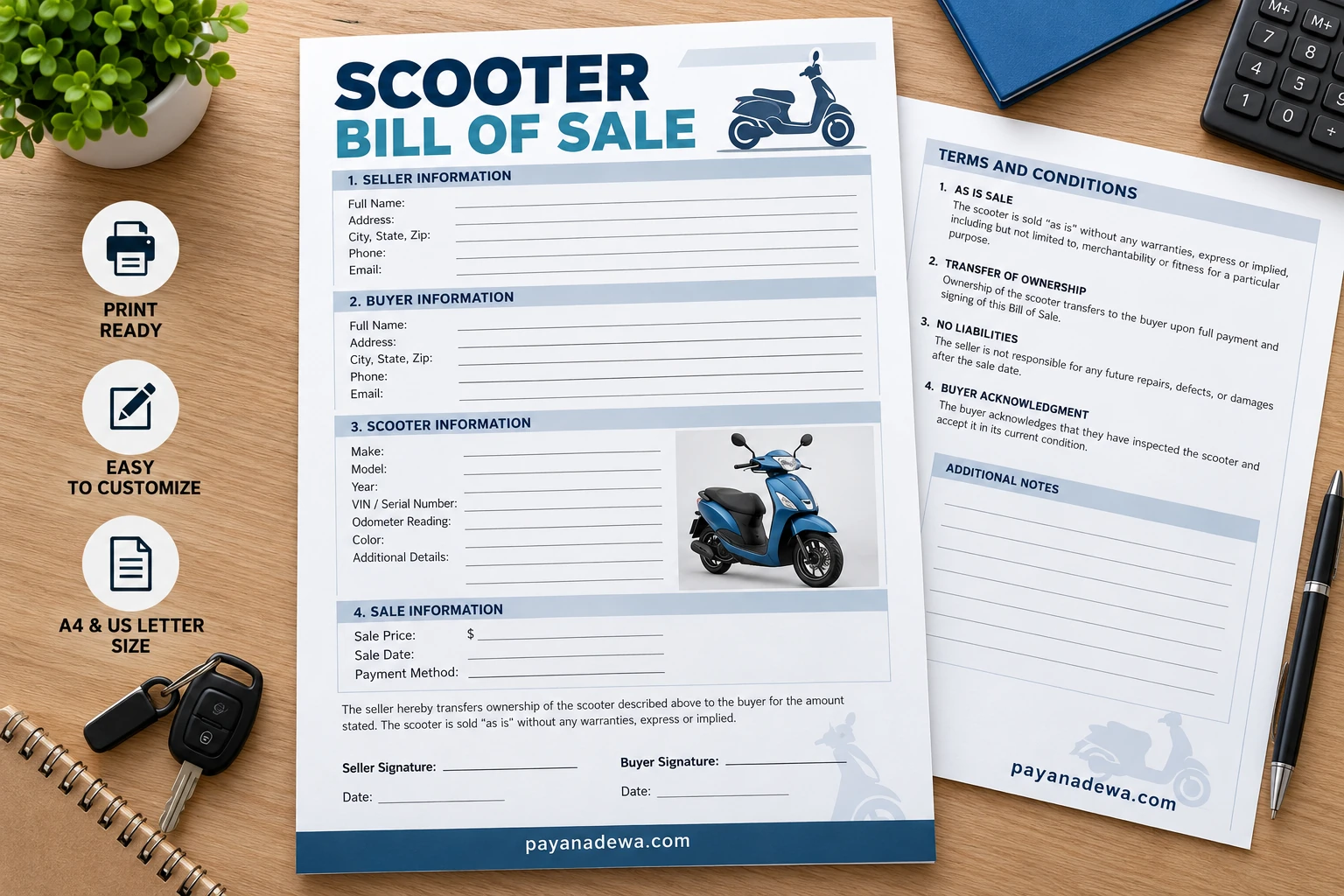
Using a printable Scooter Bill Of Sale Template makes documenting a private sale easier. Instead of creating an agreement from scratch, buyers and sellers can complete a structured form containing the essential transaction details.
A practical template should provide sufficient space for identifying the scooter, recording payment information, describing additional conditions, and collecting signatures. Both parties should review the completed form before signing it.
Information Included in the Template
A well-organized scooter sales form usually contains several important sections. Each section serves a specific purpose and helps create a complete transaction record.
- Seller information, including full name and contact details.
- Buyer information, including full name and address.
- Scooter identification, including manufacturer, model, and year.
- Vehicle identification number or serial number, when applicable.
- Purchase price and payment information.
- Sale date and additional transaction conditions.
- Buyer and seller signatures.
Depending on the transaction, additional information may be necessary. For example, a registered motor scooter may require an odometer disclosure or specific ownership documentation under applicable law.
How to Complete a Scooter Bill Of Sale
Completing a scooter purchase agreement requires accurate information and careful attention to detail. Follow these steps to create a clear and reliable transaction record.
Step 1: Enter the Seller’s Information
Begin by recording the seller’s full legal name, address, and contact information. Make sure these details match the seller’s identification and relevant ownership documents.
If multiple individuals legally own the scooter, determine whether additional signatures are necessary. This precaution can help prevent complications during the ownership transfer process.
Step 2: Record the Buyer’s Details
Next, enter the buyer’s full legal name, address, and contact information. Accurate buyer information is particularly important when the scooter requires registration or an official ownership transfer.
Both parties should carefully review this section before proceeding. Even minor spelling mistakes can create unnecessary administrative difficulties.
Step 3: Describe the Scooter
The scooter description is one of the most important parts of the document. It identifies the specific vehicle involved in the transaction and helps distinguish it from similar models.
Include the following information whenever applicable:
- Scooter manufacturer or brand.
- Model name and manufacturing year.
- Vehicle identification number or serial number.
- Color and distinguishing features.
- Odometer reading, if available.
- Registration or license plate details, where appropriate.
- Included accessories and additional equipment.
Check the identification number directly on the scooter and compare it with the available ownership documents. If the information does not match, resolve the discrepancy before completing the purchase.
Step 4: Specify the Purchase Price
Clearly state the agreed purchase price and currency. If the buyer has already paid a deposit, record that amount and explain how the remaining balance will be paid.
Also, identify the payment method. Common options include cash, bank transfer, or another mutually accepted arrangement.
For additional protection, both parties can retain separate payment receipts. A bill of sale should accurately distinguish between an agreed purchase price and payment that has actually been received.
Step 5: Include the Sale Date and Conditions
Record the date of the transaction and describe any additional agreements. These may include delivery arrangements, included accessories, payment deadlines, or the scooter’s disclosed mechanical condition.
If the scooter is being sold as-is, include appropriate language explaining the intended condition of sale. However, an as-is statement does not necessarily eliminate statutory consumer protections, disclosure obligations, or liability for misrepresentation.
Step 6: Sign and Keep Copies
Finally, both parties should carefully review the completed document before signing. Check the scooter description, transaction amount, payment status, and additional conditions.
After signing, provide a complete copy to each party. Digital copies can also be useful, provided they are stored securely and comply with applicable documentation requirements.
Important Legal Considerations
Although a Scooter Bill Of Sale is useful for documenting a transaction, legal requirements vary depending on location and scooter classification. A motor scooter, electric scooter, and mobility scooter may be subject to different rules.
Therefore, buyers and sellers should verify the requirements that apply to their particular transaction.
Ownership and Registration Requirements
Some jurisdictions require registered scooters to have an official vehicle title or registration certificate. In these locations, signing a bill of sale alone may not complete the legal ownership transfer.
Before purchasing a scooter, confirm that the seller has the authority to sell it. Check available ownership documents and investigate any outstanding liens when relevant.
Notarization and Witness Requirements
Some transactions may require notarization, witness signatures, or additional official forms. These requirements depend on the applicable jurisdiction and vehicle category.
Contact the appropriate vehicle registration authority to confirm whether additional documentation is necessary. Completing these checks before payment can help avoid delays.
Common Mistakes to Avoid When Selling a Scooter
Even a simple private scooter transaction can become complicated when important details are missing. Fortunately, several common problems are easy to prevent.
- Incomplete identification: Include the correct serial number or vehicle identification number whenever applicable.
- Incorrect buyer information: Verify the buyer’s legal name and contact details.
- Unclear payment arrangements: Document the purchase price, payment method, and outstanding balance.
- Missing condition disclosures: Record known defects and any agreed repairs or included accessories.
- Unsigned documents: Make sure the required parties sign the completed agreement.
- Missing ownership paperwork: Confirm which additional documents are necessary for a valid transfer.
Taking a few minutes to verify these details can make the transaction more transparent. Furthermore, retaining complete documentation can help resolve questions that arise after the sale.
Tips for a Safe Scooter Transaction
A properly prepared bill of sale is only one part of a successful transaction. Buyers and sellers should also take practical precautions before exchanging money and transferring possession.
Inspect the Scooter Before Buying
Buyers should inspect the scooter’s general condition, identification information, and available maintenance records. When appropriate, arrange an independent mechanical inspection.
For electric scooters, examine the battery, charging equipment, brakes, tires, and electrical components. For motor scooters, check the engine, transmission, brakes, and other relevant mechanical systems.
Document any known problems before signing the purchase agreement. This helps establish clear expectations about the scooter’s condition.
Choose a Secure Payment Method
Use a payment method that both parties understand and accept. Avoid releasing the scooter or ownership documents until the agreed payment arrangements have been satisfied.
When using electronic payments, verify that the funds have actually arrived. A screenshot or payment notification alone may not establish that the transaction is complete.
Organize the Ownership Transfer
Before completing the sale, determine which documents must be exchanged. Depending on local requirements, these may include the vehicle title, registration certificate, inspection records, or other official forms.
Also, establish when the buyer will take possession and who is responsible for completing any required registration procedures.
Frequently Asked Questions About Scooter Bills of Sale
Can I Write My Own Scooter Bill Of Sale?
Yes. You can prepare your own scooter sales document, provided it contains the necessary transaction information and satisfies applicable legal requirements. A printable template can simplify the process and reduce the likelihood of missing important details.
Is a Bill of Sale Required for Every Scooter?
Not necessarily. Requirements depend on your location and the type of scooter being sold. Some motor scooters require specific ownership documentation, while certain smaller electric scooters may be subject to different regulations.
Does a Bill of Sale Prove Ownership?
A bill of sale provides evidence of a transaction. However, it does not necessarily establish legal ownership by itself. Registered vehicles may require an official title transfer or additional administrative procedures.
Can I Use a Scooter Bill Of Sale for an Electric Scooter?
Yes. A bill of sale can document the private sale of an electric scooter. Include the manufacturer, model, serial number, purchase price, and relevant transaction conditions. Check whether additional requirements apply to your particular scooter.
Should Both Parties Keep a Copy?
Yes. Both the buyer and seller should retain a complete copy of the signed agreement. Keeping payment receipts and relevant ownership documents together can provide a more comprehensive transaction record.
Conclusion
A Scooter Bill Of Sale provides a straightforward way to document a private scooter transaction. By recording the buyer’s information, seller’s details, scooter identification, purchase price, and agreed conditions, both parties can maintain a clear written record.
Using a printable template makes the process more convenient. Nevertheless, accurate information and compliance with applicable ownership transfer requirements remain essential.
Before finalizing your transaction, inspect the scooter, verify the ownership documents, confirm the payment arrangements, and carefully review the completed agreement. These practical steps can help create a smoother and more transparent buying or selling experience.