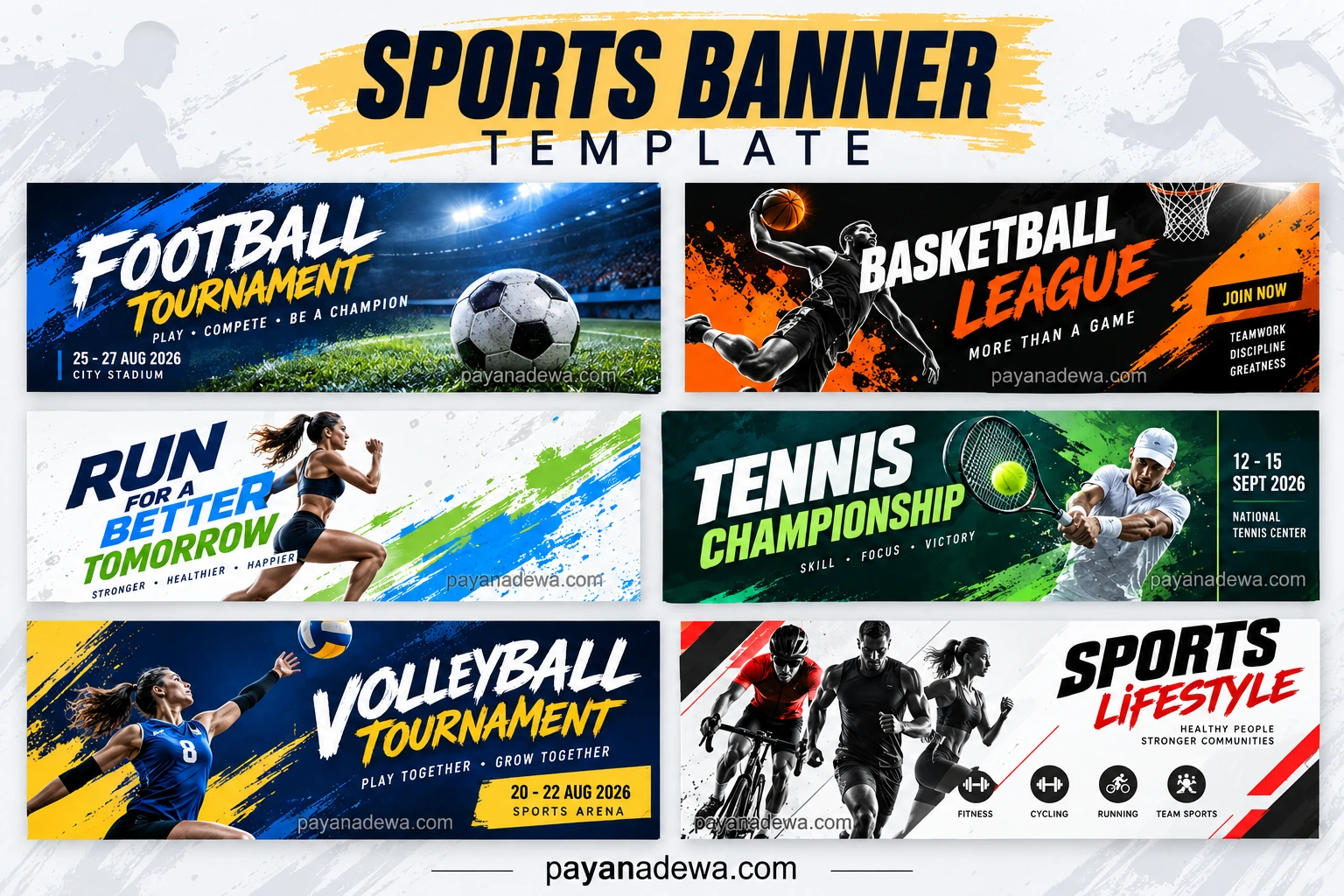
A well-designed Sports Banner can instantly capture attention, communicate important information, and create excitement around a game, tournament, fitness campaign, or sporting event. Whether you are promoting a football competition, basketball league, running event, tennis championship, volleyball tournament, or community sports program, the right banner can make your message easier to notice and remember.
A professional sports banner does more than display a team name or event date. It combines strong typography, energetic imagery, clear information, and an engaging visual hierarchy. With a practical Sports Banner Template, you can create attractive promotional graphics without starting every design from scratch.
Templates are especially useful for sports clubs, coaches, schools, event organizers, marketers, gyms, community groups, and businesses that regularly need promotional graphics. A reusable design can save time while keeping your branding consistent across social media, websites, printed materials, and event signage.
Below, you will discover practical ideas for creating effective sports banners, choosing layouts, organizing information, and making your design more professional.
What Is a Sports Banner?
A sports banner is a visual promotional design created to communicate information about a sporting activity, organization, team, event, or campaign. It can be used both digitally and in print. Common formats include website banners, social media graphics, event posters, stadium signage, team announcements, promotional advertisements, and tournament displays.
The main purpose is to communicate a message quickly. A viewer should understand the subject of the banner within a few seconds. This means the event name, team name, competition title, or promotional message should be easy to identify.
Common Uses for Sports Banners
- Promoting sports tournaments and competitions
- Advertising local games and community events
- Introducing sports teams and players
- Promoting fitness classes and training programs
- Announcing registration or ticket information
- Creating social media promotional content
- Decorating sports venues and event spaces
- Supporting sponsorship and advertising campaigns
Why Use a Sports Banner Template?
Creating a sports graphic from a blank canvas can take considerable time. You need to choose dimensions, fonts, colors, photographs, icons, text placement, and visual effects before the design starts to feel complete. A Sports Banner Template provides a structured starting point.
Templates can also help maintain visual consistency. For example, a football club may use the same typography, colors, logo position, and graphic style for match announcements, tournament promotions, and social media posts.
Save Time During Repeated Promotions
Sports organizations often promote multiple events throughout a season. Instead of creating every banner from scratch, you can duplicate a template and replace the event information. This approach makes the design process faster and more efficient.
Maintain Consistent Branding
Consistency is important when building recognition. A reusable banner design allows you to keep your logo, brand colors, typography, and overall visual style consistent across different campaigns.
Essential Elements of an Effective Sports Banner
A strong sports banner should combine visual impact with clear communication. Attractive graphics are useful, but they should never make important information difficult to read.
1. Strong Headline
The headline should immediately communicate what the banner is about. Examples include “Football Championship,” “Basketball League,” “City Marathon,” or “Summer Volleyball Tournament.” Use a large and readable font so the main message remains visible even when the banner is viewed quickly.
2. Relevant Sports Imagery
Use images that match the activity being promoted. A football event can feature a ball, stadium, player silhouette, or football field. A running campaign may benefit from dynamic runner imagery, while a tennis tournament can use rackets, courts, or athletic photography.
3. Event Information
Include essential details such as the date, time, location, registration information, website, or contact details. Avoid filling the banner with unnecessary text. The goal is to make important information easy to scan.
4. Brand Identity
Add the organization logo, team colors, sponsor information, or other branding elements when appropriate. Keep these elements visually balanced so they support the main message instead of competing with it.
How to Choose the Right Sports Banner Layout
The layout should match the purpose and viewing environment. A banner displayed on a stadium wall can use a different composition from a graphic designed for Instagram or a website header.
Horizontal Banner Layout
A horizontal layout works well for websites, event backdrops, stadium signage, and promotional headers. It provides enough space to combine a large headline with an athlete image and supporting information.
Vertical Banner Layout
Vertical designs are useful for posters, mobile promotions, event displays, and social media formats. They provide more room for arranging information from top to bottom.
Social Media Banner Layout
Social media designs should prioritize immediate visual recognition. Keep the headline short, use high-contrast typography, and make sure important information remains readable on smaller screens.
Choosing Colors for a Sports Banner
Color plays an important role in creating an energetic sports aesthetic. Strong combinations can make a design feel active and competitive, while more restrained palettes can create a premium or professional appearance.
Consider using your team’s existing brand colors as the foundation. Complementary colors can then be introduced for headlines, buttons, highlights, and decorative elements.
- Blue: Often creates a professional and energetic appearance.
- Red: Can create a bold and powerful visual impression.
- Green: Works naturally with outdoor sports and fitness themes.
- Orange: Can add warmth and dynamic energy.
- Black and white: Useful for modern, dramatic, and minimalist compositions.
Do not use too many competing colors. A focused palette usually creates a cleaner and more professional result.
Typography Tips for Sports Banner Designs
Typography should be bold enough to match the energy of the sports theme while remaining easy to read. Athletic designs often benefit from condensed fonts, bold sans-serif typefaces, or expressive display fonts.
However, decorative typography should generally be reserved for the main headline. Supporting information such as dates, locations, and registration instructions should use simpler fonts.
Create a clear hierarchy by making the most important information larger than secondary details. For example, the event title should normally receive more visual emphasis than the venue address.
How to Make a Sports Banner Look Professional
Professional design is not only about adding more visual effects. It is about controlling the relationship between every element on the canvas.
Use Visual Hierarchy
Decide what viewers should notice first, second, and third. The event name might be the primary focus, followed by the athlete or sports image, and then the date and location.
Leave Enough Empty Space
Empty space gives important elements room to breathe. Avoid placing text too close to the edges or filling every area with decorative graphics.
Use High-Quality Images
Low-resolution photographs can make an otherwise attractive design look unprofessional. Whenever possible, use sharp, properly cropped images that remain clear at the final display size.
Keep Information Organized
Group related information together. For example, place the date, time, and venue in one clearly defined area. This makes the banner easier to scan.
Sports Banner Ideas for Different Events
A flexible template can be adapted for many sports and promotional purposes. The visual direction should change according to the event.
- Football: Use stadium backgrounds, football imagery, strong typography, and dramatic lighting.
- Basketball: Combine player action shots with bold geometric shapes and energetic accents.
- Running: Focus on movement, speed, athletic silhouettes, and motivational messaging.
- Tennis: Use court-inspired backgrounds, rackets, tennis balls, and clean athletic typography.
- Volleyball: Feature dynamic jumping poses, court imagery, and bright team colors.
- Fitness: Combine athlete photography, simple icons, motivational phrases, and strong branding.
Tips for Creating a Sports Banner for Social Media
Social media users scroll quickly, so your design needs to communicate its purpose immediately. Start with one strong focal point rather than trying to display every piece of information at once.
Use short headlines and prioritize details that encourage action. If your goal is registration, for example, make the registration message prominent. If the goal is event awareness, emphasize the event name, date, and location.
Always check the design on both desktop and mobile screens. Text that appears readable on a large monitor may become too small when viewed on a smartphone.
How to Customize a Sports Banner Template
Start by identifying the information that needs to change. Replace the placeholder event title, date, venue, team name, logo, photographs, and contact details. Then adjust the colors to match your organization.
After making the changes, check alignment and spacing. Make sure the new content does not create awkward gaps or overlap important visual elements.
Finally, review the banner at its intended size. A design that looks good while zoomed in may have readability problems when exported for actual use.
Common Sports Banner Design Mistakes to Avoid
- Using too much text in a limited space
- Choosing fonts that are difficult to read
- Using low-quality or stretched images
- Adding too many colors and visual effects
- Ignoring mobile viewing dimensions
- Hiding important information inside decorative elements
- Using inconsistent branding across multiple banners
- Placing text directly over busy photographic areas
A simple design with strong hierarchy can often communicate more effectively than an overly complicated composition.
Where to Use a Sports Banner
A versatile sports banner can be used in many environments. Digital applications include websites, social media accounts, email newsletters, online advertisements, event pages, and sports community platforms.
For physical applications, banners can be printed for gyms, sports halls, stadium entrances, tournament areas, schools, training centers, community events, and promotional booths.
Before exporting your final design, confirm the required dimensions, resolution, file format, and printing specifications. Digital and printed materials may require different technical settings.
Final Tips for Better Sports Banner Design
Before publishing or printing your banner, complete a final quality check. Confirm that the event name is correct, dates and locations are accurate, contact information works, and the logo is positioned correctly.
Then view the design from a distance. If you can still identify the main message quickly, the visual hierarchy is probably working well. If everything looks equally important, simplify the design and increase the contrast between primary and secondary information.
Remember that an effective Sports Banner should balance energy, clarity, and branding. Strong imagery can attract attention, but clear typography and organized information help turn that attention into action.
Conclusion
A professional Sports Banner Template provides a practical foundation for promoting tournaments, teams, fitness programs, competitions, and sporting events. By combining strong imagery, readable typography, consistent branding, suitable colors, and clear event information, you can create a banner that communicates effectively across both digital and printed platforms.
The most effective approach is to keep the design focused. Choose one primary message, create a clear visual hierarchy, use relevant sports imagery, and remove unnecessary elements. With these principles and a reusable template, creating attractive sports promotional graphics becomes faster, easier, and more consistent.