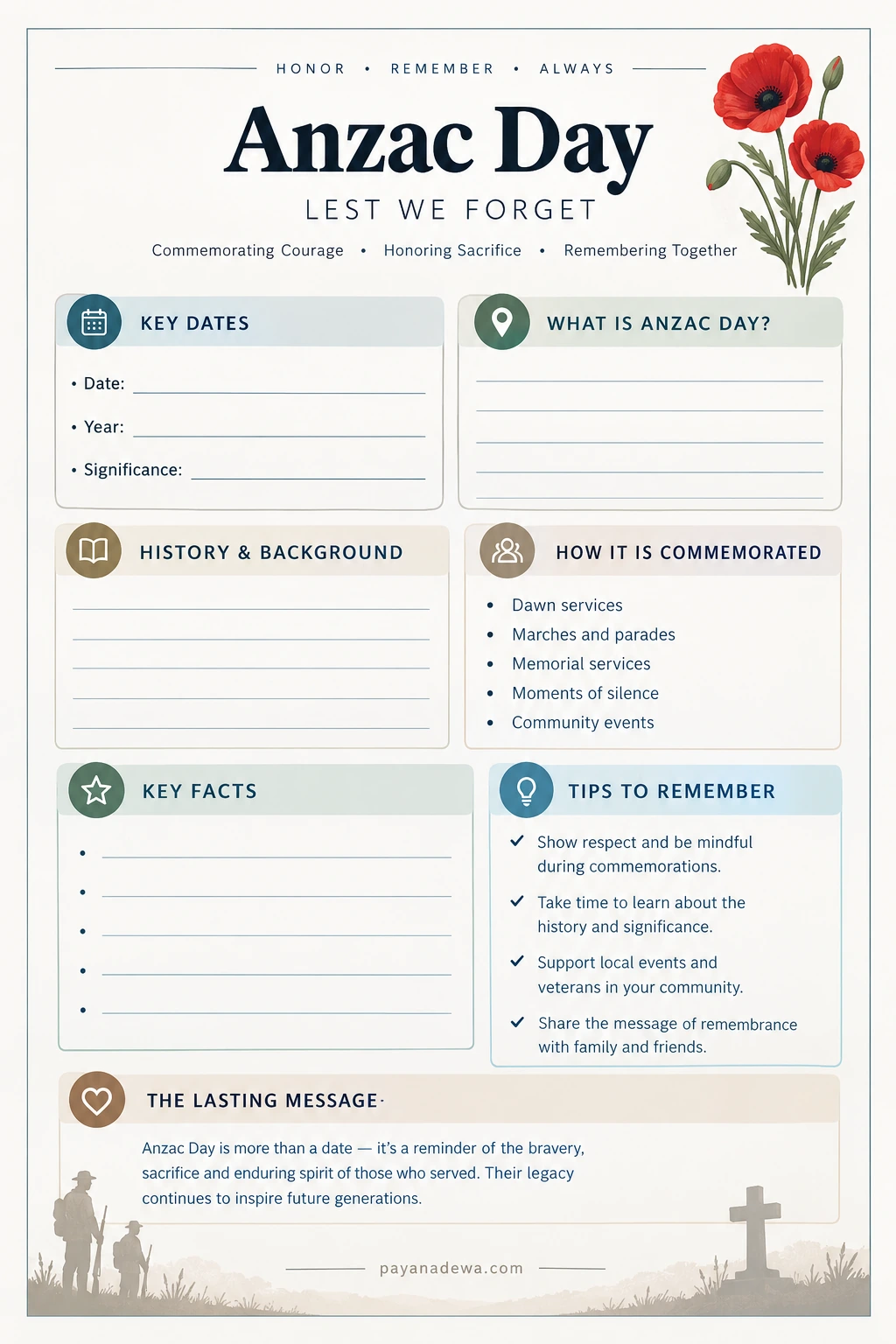
Anzac Day is observed every year on 25 April and is one of Australia’s most significant national days of remembrance. It began as a commemoration of the Australian and New Zealand soldiers who landed at Gallipoli during the First World War in 1915. Today, its meaning has expanded to honour Australians who have served in wars, conflicts, peacekeeping missions, and other military operations.
For many Australians, Anzac Day is a time to pause, remember sacrifice, attend a dawn service, watch a commemorative march, learn about military history, and reflect on the experiences of service members and their families. Understanding the history behind the day helps explain why 25 April continues to hold such an important place in Australian life.
This guide explains what Anzac Day means, where it came from, its major traditions, and practical ways to commemorate it respectfully.
What Is Anzac Day?
Anzac Day is held on 25 April each year. The word ANZAC originally referred to the Australian and New Zealand Army Corps, the military formation whose soldiers served together during the First World War.
The date commemorates the landing of Australian and New Zealand forces at Gallipoli on 25 April 1915. Although the Gallipoli campaign did not achieve its military objectives, the experiences of the soldiers became an important part of Australian and New Zealand history.
Modern Anzac Day is broader than a remembrance of Gallipoli. It provides an opportunity to recognise the service and sacrifice of Australians across generations, including those who served in later conflicts and peace operations.
It is important to understand that Anzac Day is a day of commemoration rather than a celebration of war or military victory. The Australian War Memorial describes its development as a commemoration of courage and sacrifice following the Gallipoli campaign.
The History Behind Anzac Day
The Gallipoli Landing of 1915
On 25 April 1915, Australian and New Zealand troops landed on the Gallipoli Peninsula as part of a larger Allied operation during the First World War. The campaign was intended to help open the Dardanelles and advance Allied strategic objectives in the region.
The landing met fierce resistance from Ottoman forces. What had been planned as a major military operation developed into an eight-month campaign marked by difficult conditions, heavy casualties, and hardship. Allied forces were eventually evacuated from the peninsula at the end of 1915. More than 8,000 Australian soldiers died during the Gallipoli campaign.
The First Anzac Day in 1916
The first anniversary of the Gallipoli landing was commemorated in 1916. Services, marches, and other events took place in Australia and among Australian and New Zealand personnel overseas. More than 2,000 Australian and New Zealand troops also marched through London that year.
Over the following decade, Anzac Day became increasingly established as a national day of remembrance. By 1927, every Australian state observed some form of public holiday on Anzac Day, while the familiar traditions associated with the day became firmly established during the 1930s.
What Does Anzac Day Mean Today?
The meaning of Anzac Day has developed considerably since 1915. While Gallipoli remains central to its history, contemporary commemorations recognise service across a much broader period.
The Australian Government’s Anzac Portal states that the day recognises people who have served Australia in conflicts, wars, and peace operations since 1914. It also remembers Australians who lost their lives while serving.
This broader meaning means that Anzac Day can be understood through several themes:
- Remembrance: remembering those who died while serving.
- Service: recognising the contribution of service members across generations.
- Sacrifice: reflecting on the personal and national cost of conflict.
- Community: bringing people together through ceremonies and shared remembrance.
- History: learning about Australia’s military experiences and their consequences.
How Is Anzac Day Commemorated?
Dawn Services
The Anzac Day Dawn Service is one of the best-known traditions. Services are commonly held around dawn, reflecting the time of the original Gallipoli landing.
Dawn services generally involve speeches, prayers or readings, hymns, remembrance ceremonies, the playing of military music, and moments of silence. The exact program can vary between locations.
At the Australian War Memorial, the Dawn Service is part of the national commemorative program held in Canberra.
Marches and Parades
Marches are another important Anzac Day tradition. Current and former service members, veterans’ organisations, families, and community groups may participate in commemorative marches.
These events provide an opportunity for communities to publicly recognise service and remember those who served. Marches have been part of Anzac Day culture since the earliest commemorations in 1916.
Memorial Services
Memorial services are held at war memorials and other community locations throughout Australia. They can include readings, wreath-laying ceremonies, the Last Post, the Ode of Remembrance, a minute or period of silence, and the playing of the Australian national anthem.
The Last Post and Silence
The Last Post and periods of silence are familiar elements of formal military remembrance ceremonies. They create a quiet opportunity for attendees to reflect on the people and stories being remembered.
Why Are Red Poppies Associated With Anzac Day?
Red poppies have become strongly associated with remembrance of military service and war. Their symbolism is particularly connected with the First World War and remembrance traditions that developed after the conflict.
For people attending an Anzac Day ceremony, wearing or displaying a poppy can be one way of participating in remembrance. However, the most important part of commemorating Anzac Day is understanding the significance of the day rather than focusing solely on symbols.
Anzac Day Traditions and Customs
Different communities observe Anzac Day in different ways, but several customs have become widely recognised.
- Attending a dawn service.
- Participating in or watching an Anzac Day march.
- Visiting a local war memorial.
- Laying a wreath or floral tribute.
- Observing a moment of silence.
- Reading about the experiences of Australian and New Zealand service members.
- Listening to commemorative speeches and readings.
- Gathering with family or community members after a service.
- Learning about military history through museums, archives, and educational resources.
How to Commemorate Anzac Day Respectfully
1. Learn the History
One of the simplest ways to mark Anzac Day is to learn why it exists. Reading reliable historical resources can provide context about Gallipoli, the First World War, later conflicts, and the experiences of service members.
2. Attend a Local Ceremony
Check your local council, veterans’ organisation, or community announcements for details about nearby dawn services and commemorative events. Arrive early because popular services can attract large crowds.
3. Observe the Ceremony Quietly
Formal commemorations are generally solemn occasions. Follow instructions from organisers, keep conversations quiet during official proceedings, and avoid behaviour that could distract from the ceremony.
4. Talk With Younger Generations
Anzac Day can provide a valuable opportunity for parents, teachers, and grandparents to discuss history with children. Focus on factual information, personal stories, remembrance, and the human consequences of war.
5. Support Remembrance and Community Activities
Community museums, veterans’ organisations, historical societies, and educational programs can offer ways to explore Anzac history beyond 25 April.
Anzac Day for Children and Students
Anzac Day can be introduced to children through age-appropriate history activities. Rather than focusing only on battles and dates, educators can explore themes such as remembrance, family stories, community, courage, service, and the effects of conflict.
Useful classroom activities include:
- Creating a simple Anzac Day timeline.
- Researching the meaning of the word ANZAC.
- Studying photographs and historical documents.
- Writing a respectful remembrance message.
- Learning about the Gallipoli campaign.
- Discussing why communities preserve war memorials.
- Creating a printable Anzac Day worksheet or fact sheet.
The Australian War Memorial also provides educational resources and classroom materials relating to Anzac Day.
Common Questions About Anzac Day
When is Anzac Day?
Anzac Day is observed every year on 25 April. The date marks the anniversary of the Australian and New Zealand landing at Gallipoli in 1915.
What does ANZAC stand for?
ANZAC stands for Australian and New Zealand Army Corps. The soldiers serving in this formation became known as Anzacs.
Why is Anzac Day important?
Anzac Day provides an annual opportunity to remember those who died while serving and to recognise the service and sacrifice of Australians across generations. Its meaning now extends beyond the Gallipoli campaign to Australia’s broader military and peacekeeping history.
Is Anzac Day a celebration?
Anzac Day is primarily a day of remembrance and commemoration. It is not intended simply as a celebration of military victory. The Gallipoli campaign itself ended without achieving its military objectives, yet its history became deeply significant to Australian and New Zealand remembrance traditions.
Why Anzac Day Continues to Matter
More than a century after the Gallipoli landing, Anzac Day remains an important occasion for remembering Australia’s military history. The day connects historical events with the experiences of service members, veterans, families, and communities.
Its traditions also provide a structured way for people to pause and reflect. A dawn service, a march, a visit to a memorial, or simply learning about a historical event can become an opportunity to understand the human stories behind Australia’s military history.
The Australian War Memorial’s 2026 commemorative address continued this broad approach by remembering Australians who served in conflicts, peace operations, and humanitarian missions as well as those who lost their lives.
Conclusion
Anzac Day is observed on 25 April as a national day of remembrance in Australia. Its origins lie in the Gallipoli landing of 1915 and the first anniversary commemorations held in 1916. Over time, its purpose expanded to recognise Australians who served and sacrificed in later conflicts, peacekeeping operations, and other forms of service.
Whether you attend a dawn service, watch a commemorative march, visit a memorial, teach children about history, or spend a quiet moment remembering, Anzac Day offers an opportunity to connect with Australia’s past and reflect on the human cost of conflict.
Lest we forget.