A Supply Agreement is a written contract between a supplier and a buyer that establishes the terms for providing goods or services. It can define everything from product specifications and pricing to delivery schedules, payment terms, quality standards, warranties, and termination rights. For businesses that rely on regular purchasing or ongoing supply relationships, a well-written agreement can create clarity and reduce the risk of costly misunderstandings.
Whether you are a manufacturer, wholesaler, retailer, distributor, contractor, or service provider, understanding how a supply contract works can help you build stronger commercial relationships. This guide explains the essential elements of a Supply Agreement, what to include, common mistakes to avoid, and practical tips for creating an agreement that works for both parties.
What Is a Supply Agreement?
A Supply Agreement is a legal contract that sets out the terms under which one party, known as the supplier, agrees to provide products or services to another party, known as the buyer. Unlike a one-time purchase order, a supply contract is often designed for an ongoing business relationship.
The agreement may cover a fixed period or continue until one party terminates it according to the agreed terms. It can also establish procedures for individual orders, meaning the main contract provides the general rules while purchase orders specify the quantity and timing of particular deliveries.
A typical supply agreement may address:
- The goods or services being supplied
- Product specifications and quality standards
- Quantity and minimum order requirements
- Pricing and price adjustment mechanisms
- Payment and invoicing terms
- Delivery schedules and shipping responsibilities
- Inspection and acceptance procedures
- Warranties and product guarantees
- Confidentiality obligations
- Intellectual property rights
- Liability and indemnification
- Contract duration and termination
- Dispute resolution and governing law
Why Is a Supply Agreement Important?
A clear supplier agreement gives both parties a shared understanding of their commercial responsibilities. Without written terms, businesses may have different expectations about pricing, delivery dates, product quality, payment deadlines, or what happens when an order cannot be fulfilled.
A properly structured agreement can provide several practical benefits.
1. Clear Business Expectations
The contract establishes what the supplier must deliver and what the buyer must pay or otherwise provide in return. Clear expectations can reduce confusion during day-to-day transactions.
2. Consistent Pricing and Payment Terms
A supply contract can specify the agreed price, currency, invoicing process, payment deadline, taxes, discounts, and circumstances under which prices may change.
3. Better Delivery Management
Delivery requirements can be documented in advance, including delivery locations, lead times, shipping responsibilities, packaging standards, and procedures for delayed shipments.
4. Risk Management
The agreement can establish what happens if products are defective, deliveries are late, payment is missed, or either party breaches an important contractual obligation.
5. Stronger Long-Term Relationships
When responsibilities and expectations are documented clearly, both parties have a practical framework for managing an ongoing business relationship.
Key Elements of a Supply Agreement
Although the exact structure varies by industry and transaction, most effective supply agreements contain several important sections.
Parties and Effective Date
Start by identifying the supplier and buyer using their complete legal business names and relevant addresses. The agreement should also state the date it becomes effective.
If a company is signing through a representative, the document should identify the person’s role or authority where appropriate.
Description of Goods or Services
Clearly describe what the supplier is expected to provide. Product descriptions should be specific enough that both parties can determine whether the delivered goods meet the agreed requirements.
Depending on the transaction, an exhibit or product schedule can contain detailed specifications, product codes, technical requirements, packaging instructions, or service descriptions.
Quantity and Ordering Requirements
Explain how quantities will be determined and how orders will be submitted. The agreement may establish minimum order quantities, maximum volumes, forecasts, purchase order procedures, or recurring delivery schedules.
Pricing and Payment Terms
Price provisions should be easy to understand. State the applicable prices and explain how invoices will be issued and paid.
Important details may include:
- Unit prices or fixed contract prices
- Currency
- Taxes and applicable charges
- Invoice requirements
- Payment deadlines
- Late payment consequences
- Discounts or volume pricing
- Rules for future price changes
Delivery and Shipping
Delivery provisions are especially important when products must arrive at specific locations or within strict timeframes. Identify the delivery location, expected delivery dates, shipping responsibilities, and any applicable delivery terms.
The agreement should also address what happens when a shipment is delayed, damaged, incomplete, or delivered to the wrong location.
Quality Control and Inspection
A strong supply contract explains how the buyer can inspect delivered goods and how defects will be reported. It can establish a reasonable inspection period and define the supplier’s obligations when products fail to meet agreed specifications.
Warranties and Remedies
Warranty provisions describe the supplier’s commitments concerning product quality, specifications, performance, or compliance with applicable requirements.
The agreement can also explain available remedies, such as repair, replacement, credit, refund, or another agreed solution when products do not conform to the contract.
Term and Termination
State how long the Supply Agreement will remain effective. Some contracts have a fixed term, while others automatically renew unless one party provides notice of non-renewal.
Termination provisions should explain when either party can end the agreement and what happens to outstanding orders after termination.
Supply Agreement Template: What Should It Include?
A Supply Agreement template can provide a useful starting point for organizing the commercial terms of a supplier relationship. A basic template commonly includes the parties’ information, product or service description, pricing, payment, delivery, quality requirements, termination provisions, and signature sections.
Here is a visual example of a clean printable supply agreement template:
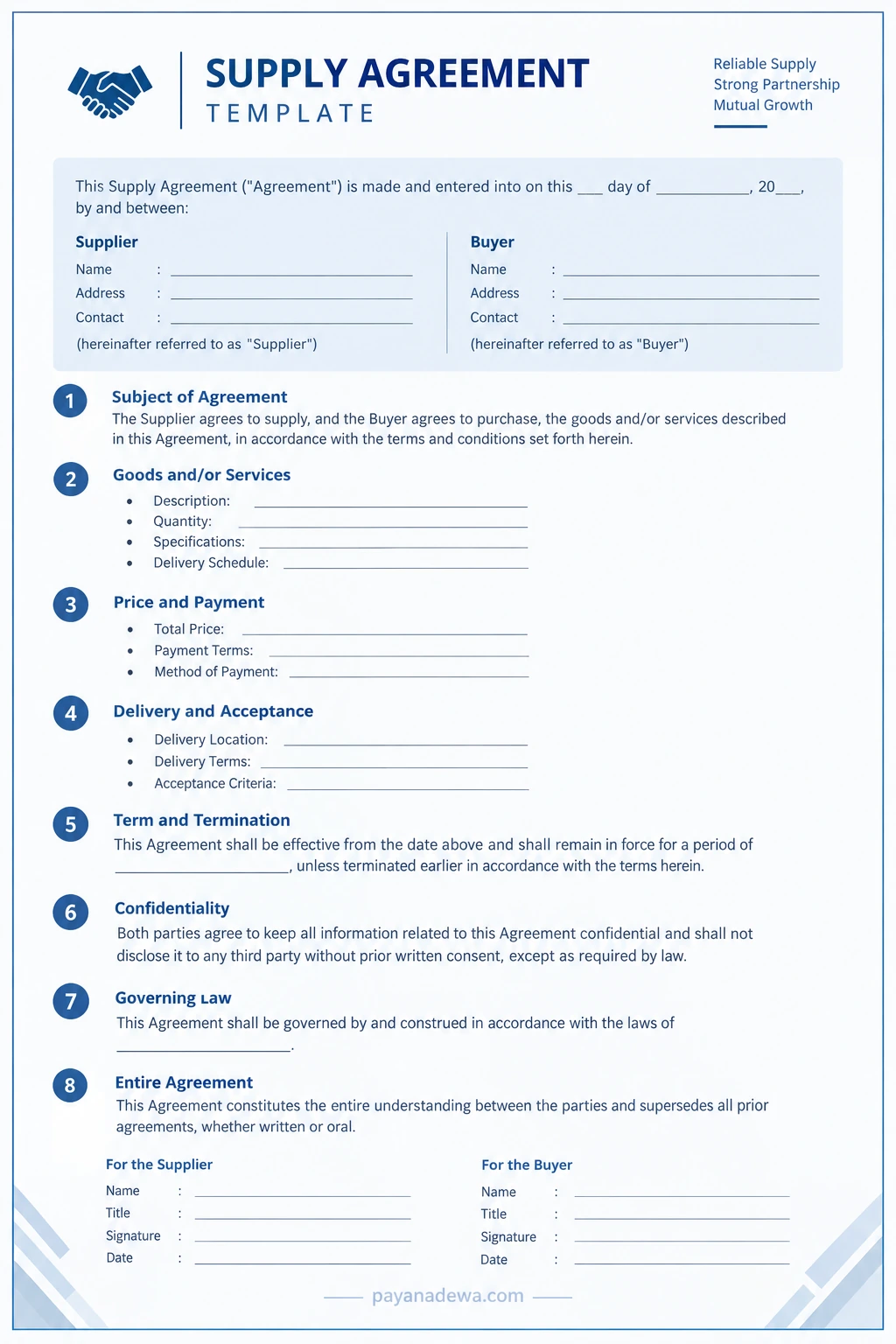
A template should be customized to reflect the actual transaction rather than used unchanged for every business situation. Different industries can have substantially different requirements, particularly where products are regulated, highly technical, international, or safety-sensitive.
Supply Agreement vs Purchase Order
A Supply Agreement and a purchase order are related but serve different purposes.
A Supply Agreement generally establishes the broader rules governing the business relationship. It may remain in effect for months or years and apply to multiple transactions.
A purchase order, by contrast, usually identifies the specific goods or services being ordered, quantities, prices, and requested delivery for a particular transaction.
For example, a manufacturer might sign a one-year supply contract with a component supplier. The contract establishes general pricing, quality standards, warranties, and delivery rules. The manufacturer can then issue individual purchase orders whenever additional components are required.
Common Mistakes to Avoid
Even when a business uses a written contract, unclear provisions can create problems. Several mistakes are particularly common.
Using Vague Product Specifications
Terms such as “high quality” or “standard product” may be open to interpretation. Whenever possible, use measurable specifications, product codes, technical standards, or attached schedules.
Ignoring Price Changes
Long-term supply relationships may be affected by changes in material costs, labor expenses, currency exchange rates, or market conditions. If prices may change, explain when and how adjustments can occur.
Leaving Delivery Responsibilities Unclear
Specify who is responsible for transportation, insurance, customs requirements where applicable, and delivery costs. Ambiguity can become particularly problematic for cross-border transactions.
Failing to Address Defective Products
A contract should not simply state that goods must meet quality standards. It should also explain the process for reporting defects and the supplier’s responsibilities when a product fails inspection.
Overlooking Termination Procedures
Both parties should understand how the agreement can end, how much notice is required, and how existing orders and outstanding payments will be handled.
Practical Tips for Creating a Better Supply Contract
Before signing a supplier agreement, review the document from both an operational and commercial perspective.
- Be specific: Replace vague descriptions with measurable requirements whenever possible.
- Define responsibilities: Make it clear which party is responsible for each important task.
- Document exceptions: Explain how delays, shortages, defective goods, and unexpected events will be handled.
- Use schedules: Put detailed product specifications or pricing tables into exhibits when the main agreement would become difficult to read.
- Review renewal terms: Make sure automatic renewal provisions and notice periods are understood.
- Keep records: Maintain signed agreements, purchase orders, amendments, and relevant correspondence.
- Review local requirements: Contract rules can vary by jurisdiction and industry.
When Should You Use a Supply Agreement?
A supply contract can be particularly useful when a business expects repeated transactions with the same supplier. It may be appropriate for manufacturing relationships, wholesale arrangements, recurring inventory purchases, equipment supply, raw materials, packaging, technology products, or ongoing commercial services.
For a single low-value transaction, a purchase order or simpler written agreement may sometimes be sufficient. However, recurring or strategically important supply relationships generally benefit from clearly documented terms.
Final Thoughts on Supply Agreements
A well-prepared Supply Agreement provides a practical framework for managing an ongoing relationship between a buyer and supplier. By clearly addressing products, quantities, pricing, payment, delivery, quality, warranties, termination, and dispute procedures, businesses can establish clearer expectations before problems arise.
A Supply Agreement template can make the drafting process more efficient, but the final contract should reflect the specific transaction, industry, and applicable legal requirements. For significant or complex transactions, having the agreement reviewed by a qualified legal professional can help identify issues that a generic template may not address.
Ultimately, the goal is not simply to create a longer contract. The goal is to create a clear, practical document that both parties can understand and use throughout the business relationship.