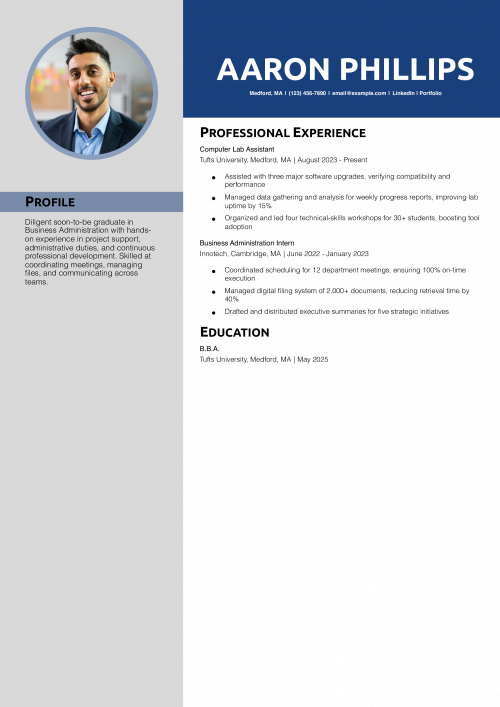
Starting an internship can be an exciting step toward building real-world experience, but creating a resume without much professional history can feel challenging. An internship resume template gives students and recent graduates a practical starting point for presenting their education, skills, projects, achievements, and interests in a clear format. Instead of worrying about having a long employment history, you can focus on showing employers what you can contribute and what you are eager to learn. A well-organized resume also makes it easier for recruiters to quickly understand your background and identify the qualities that match an internship opportunity.
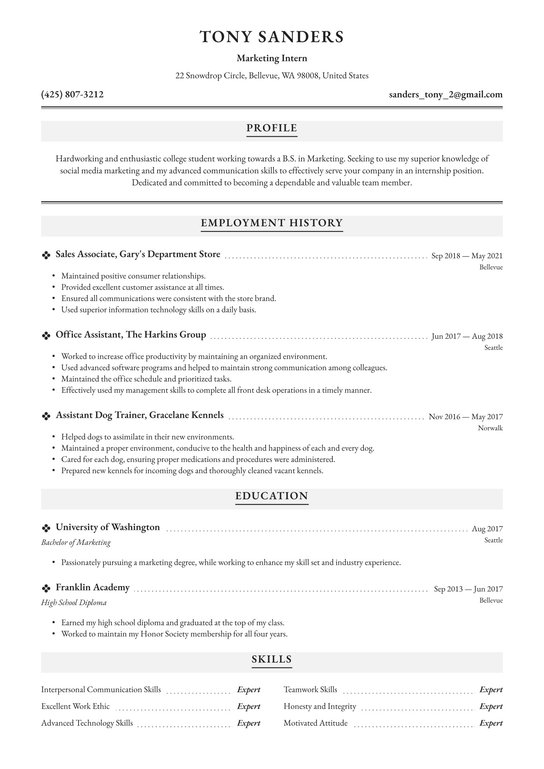
A good internship resume should be simple, focused, and easy to scan. Recruiters often review many applications, so your resume needs to communicate important information without unnecessary details. The best template usually includes contact information, a short professional summary or objective, education, relevant skills, projects, activities, certifications, and experience when available. Even if you have never held a formal job, school assignments, volunteer activities, student organizations, freelance projects, and personal achievements can demonstrate useful abilities. Choosing the right structure helps turn these experiences into a convincing story about your potential.
Using an internship resume template does not mean every applicant should submit exactly the same document. A template should work as a framework that you customize for each position. Read the internship description carefully and identify keywords, technical skills, communication abilities, or qualifications that the employer values. Then adjust your resume so the most relevant information stands out. Keep the design professional, use consistent formatting, and proofread every section before submitting it. With thoughtful customization, even a student with limited work experience can create a resume that looks polished, confident, and ready for a professional environment.
How to Structure an Internship Resume
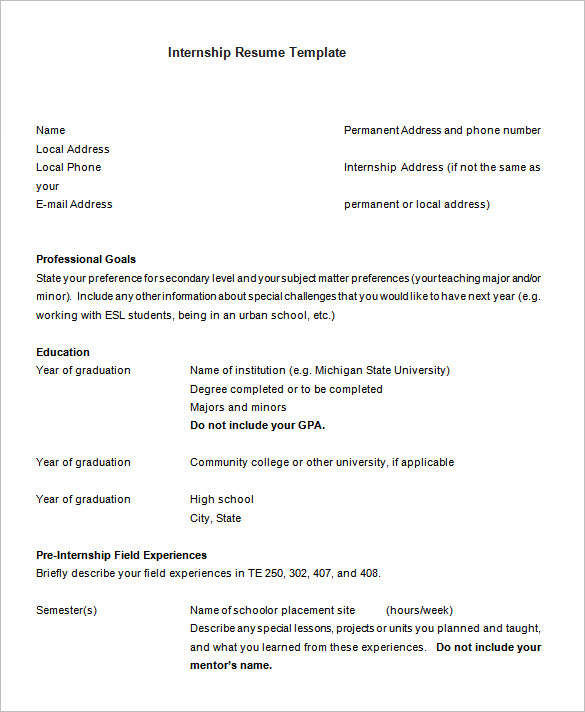
Essential Resume Sections
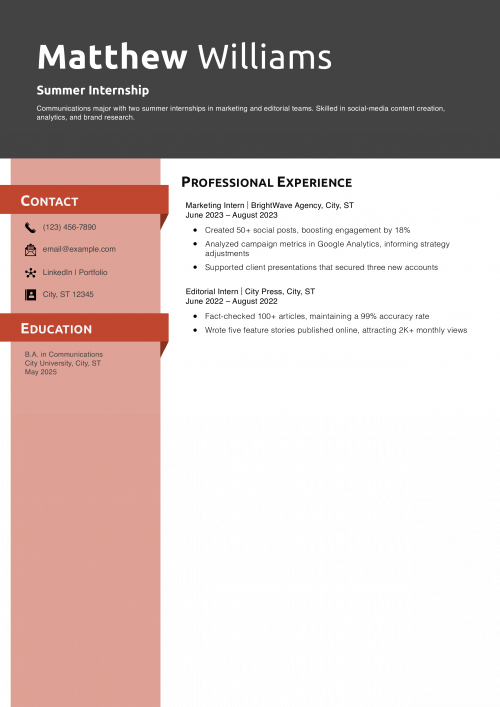
The first step is deciding which sections belong in your internship resume. Start with your full name and professional contact information, followed by a concise resume objective or summary. Your education section can be especially important when you are still studying because it demonstrates your academic background and relevant coursework. Include your degree, school, expected graduation date, and notable academic achievements when appropriate. Next, highlight skills that relate directly to the internship. Depending on your field, these might include software knowledge, research, writing, design, data analysis, communication, organization, or problem-solving abilities.
Projects can make an internship resume much stronger, particularly when you have limited employment experience. Describe meaningful academic, personal, or team projects and explain what you accomplished rather than simply listing the project name. For example, a marketing student might mention developing a social media campaign for a class project, while a computer science student could describe building a website or programming application. Whenever possible, include measurable results, tools used, responsibilities, and outcomes. This approach gives employers evidence that you can apply your knowledge in practical situations and work toward specific goals.
Additional sections can include certifications, volunteer experience, student organizations, leadership activities, awards, languages, and relevant interests. The key is relevance. You do not need to include every activity you have ever completed. Instead, select experiences that demonstrate qualities connected to the internship. A leadership role in a campus organization may show teamwork and responsibility, while volunteering can demonstrate communication and community involvement. Keep each section easy to read and use consistent headings, spacing, fonts, and bullet points. A clean structure allows recruiters to find important information quickly and gives your application a more professional appearance.
Tips for Creating a Strong Internship Resume
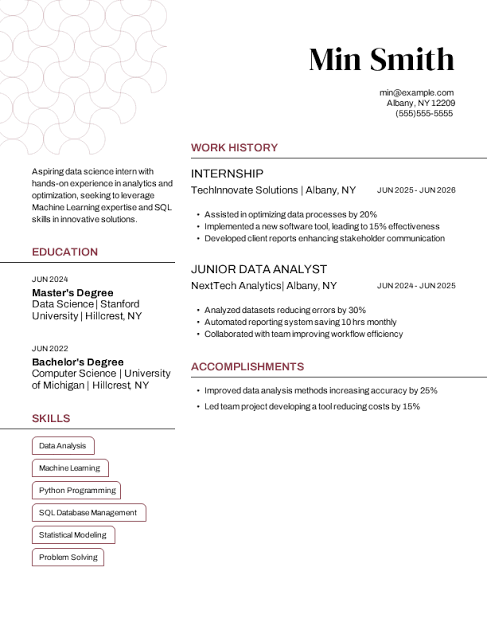
Customize Your Resume for Every Opportunity
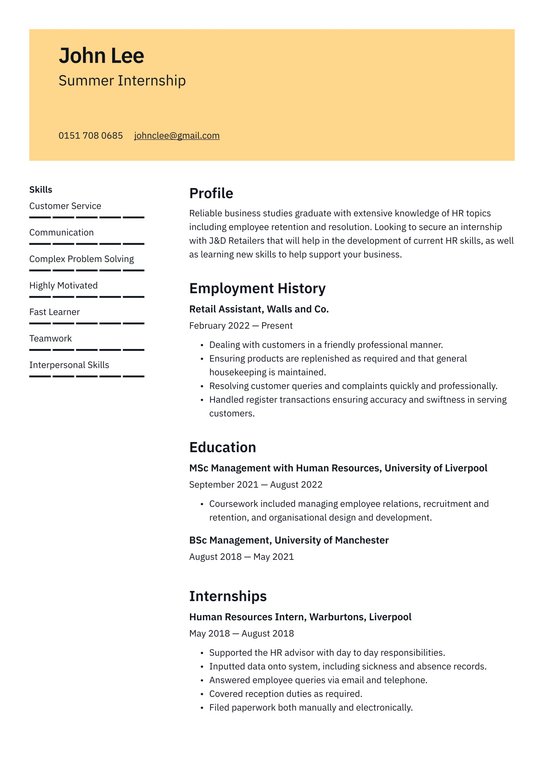
One of the most effective ways to improve an internship resume is to customize it for the position you want. Avoid sending the same generic resume to every company. Instead, compare your skills and experiences with the requirements in the internship description. If the employer emphasizes teamwork, highlight group projects, leadership activities, or collaborative assignments. If the position requires specific software, place your relevant technical skills where recruiters can easily see them. Naturally incorporating relevant terminology can also help your resume communicate that your background matches the opportunity while keeping the content readable and authentic.
Another important tip is to use strong action-oriented language when describing your experience. Rather than writing vague statements such as “responsible for a class project,” explain what you actually did. Words such as created, analyzed, organized, designed, researched, coordinated, developed, presented, and improved can make descriptions more specific. Whenever you can, add numbers or concrete results. For example, saying that you “created a presentation for a 20-person class project” provides more context than simply stating that you “made presentations.” Specific details help recruiters understand your abilities and make your accomplishments easier to remember.
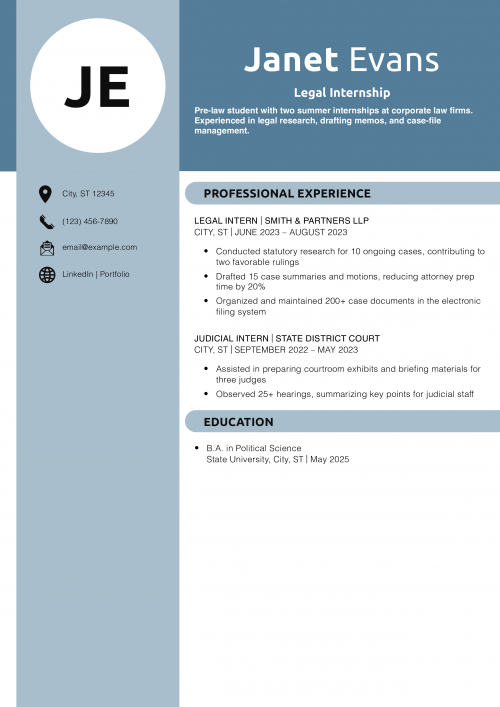
Finally, review your internship resume carefully before submitting it. Check spelling, grammar, dates, formatting, contact information, and consistency. Save the final version in a professional file format unless the employer requests something different, and use a clear filename that includes your name and the position when appropriate. Avoid overly complicated graphics, excessive colors, long paragraphs, and irrelevant personal information. Most importantly, make sure the resume represents you honestly. A strong internship application does not require years of experience; it requires a clear presentation of your potential, relevant abilities, willingness to learn, and enthusiasm for contributing to the organization.
Conclusion
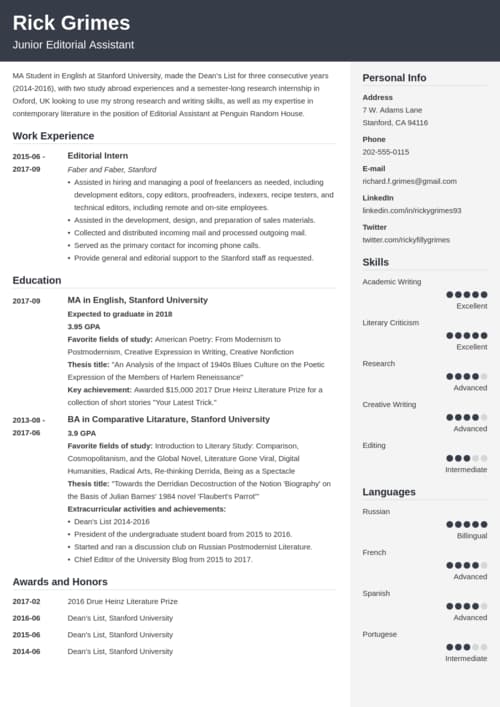
An internship resume template can make the resume-writing process much easier for students and graduates who are preparing for their first professional opportunity. The template provides a clear structure while giving you room to highlight education, skills, projects, activities, achievements, and other relevant experiences. Remember that the goal is not simply to fill a page with information. Your goal is to create a focused document that shows why your background and potential make you a good fit for the internship. Keep the design clean, prioritize relevant information, and make every section useful.
Before sending your resume, take time to customize it for the specific internship and carefully check the final document. A thoughtful resume can help you make a stronger first impression and give employers a better understanding of what you can bring to their team. If you have found a resume format that works especially well for your field, consider sharing your experience or tips with other students. What sections do you think are most important in an internship resume? Feel free to discuss your ideas and share this guide with anyone preparing for an internship application.