A Master Service Agreement (MSA) is a business contract that sets the main terms between a client and a service provider. It creates a clear framework for an ongoing business relationship.
Instead of negotiating the same terms for every project, both parties can agree on the main conditions once. Then, they can use Statements of Work (SOWs) or service orders for individual projects.
This approach can save time and reduce confusion. It also gives both parties a consistent set of rules for future work. For companies that manage recurring services, an MSA can make contract administration much easier.
Whether you work with consultants, agencies, freelancers, technology providers, or contractors, a clear MSA can support a smoother working relationship.
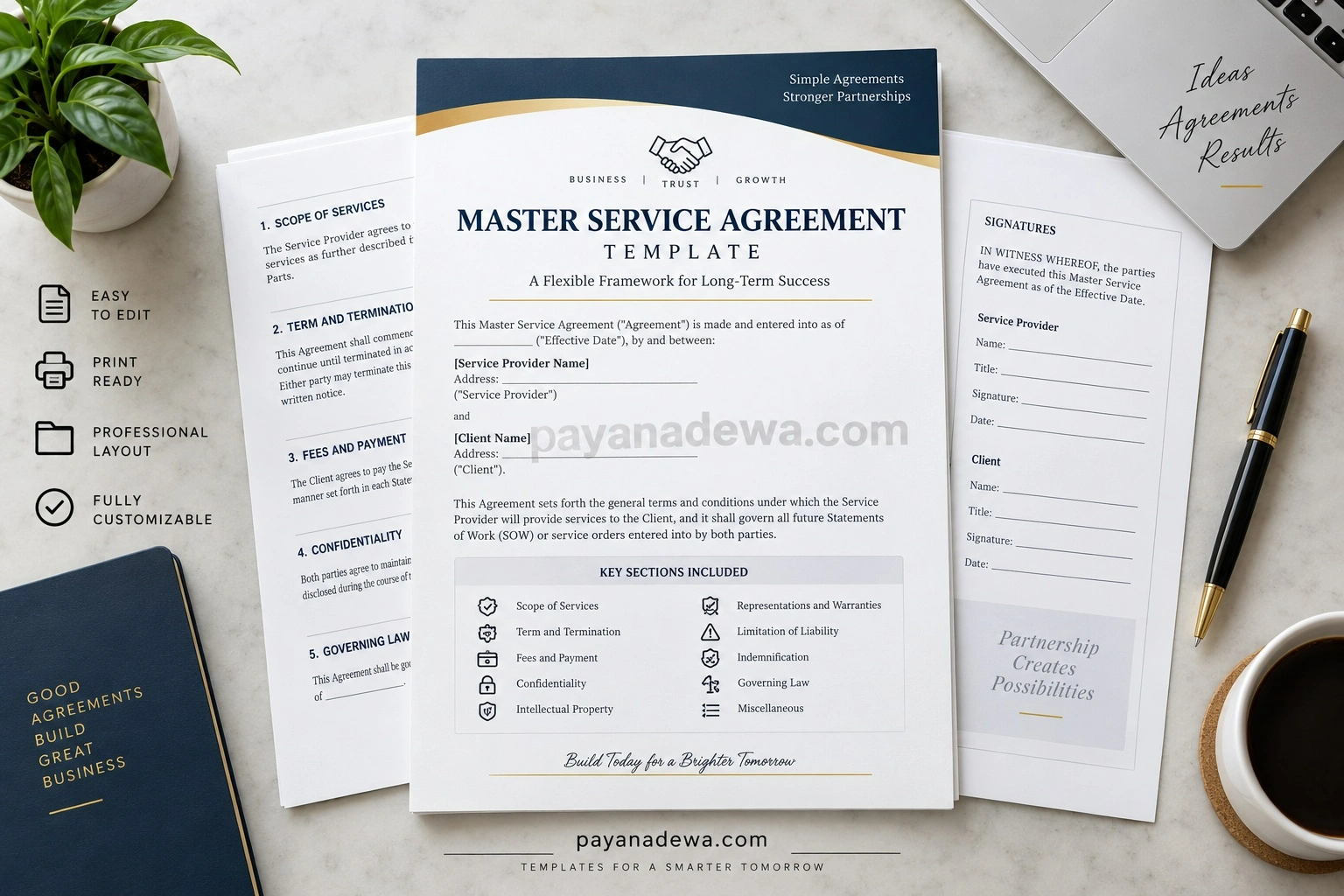
What Is a Master Service Agreement?
A Master Service Agreement defines the general terms that govern a business relationship. The agreement usually involves a client and a service provider. However, businesses can adapt the structure for many types of professional relationships.
The MSA covers broad contractual rules. Individual projects can then use separate documents to describe specific work. These documents may include an SOW, work order, or service order.
For example, a company may hire a digital agency for several projects during one year. The company and agency can sign one MSA first. Each new project can then use an SOW with its own scope, deadline, price, and deliverables.
Why Does an MSA Matter?
An MSA creates a common framework before work begins. As a result, both parties can understand their main responsibilities from the start.
It can also reduce repeated contract negotiations. Instead of reviewing every standard clause for each project, the parties can focus on the details that change from one project to another.
Key Sections of a Master Service Agreement
Every business relationship has different needs. Still, most comprehensive service agreements include several important sections.
1. Parties and Effective Date
The agreement should identify the legal names of the parties. It should also include relevant business information and the effective date.
Accurate information matters because the contract should clearly identify who has entered into the relationship.
2. Scope of Services
The scope section explains the general services covered by the agreement. It does not always need to list every project detail.
Instead, specific deliverables can appear in an SOW. This structure keeps the MSA flexible while giving each project enough detail.
3. Fees and Payment Terms
Payment terms explain how the client will pay for services. Clear payment language can prevent unnecessary disputes later.
- Service rates and pricing structures
- Invoice requirements
- Payment deadlines
- Accepted payment methods
- Taxes and applicable charges
- Approved business expenses
- Late payment procedures
The agreement should also explain which pricing terms belong in the MSA and which terms should appear in each SOW.
4. Term and Termination
The term section states when the agreement starts. It also explains how long the relationship will continue.
The termination section should explain how either party can end the agreement. It may cover termination for convenience, termination for breach, notice periods, and obligations that continue after termination.
5. Confidentiality
Service relationships often involve sensitive information. For example, a client may share financial information, customer data, business plans, product details, or technical information.
A confidentiality clause explains how the parties should protect this information. It can also identify permitted uses and situations where disclosure may be allowed.
6. Intellectual Property
Intellectual property can become an important issue in creative and technology projects. Therefore, the MSA should address ownership and usage rights when appropriate.
The agreement can distinguish between materials that already belong to a party and materials created during a project. It can also explain whether the client receives ownership, a license, or another type of usage right.
7. Representations and Warranties
Representations and warranties contain specific statements or promises made by the parties. Their content depends on the services and business relationship.
For example, provisions may address authority to sign the contract, compliance requirements, or agreed service standards.
8. Limitation of Liability
A limitation of liability clause can define certain limits on financial responsibility. The exact wording depends on the agreement and applicable law.
Because liability provisions can have significant legal consequences, businesses should review them carefully. Professional legal advice may be appropriate for important or high-value agreements.
9. Indemnification
An indemnification provision can explain responsibility for certain third-party claims, losses, or expenses.
The parties should make sure the scope of this provision matches the actual risks of the services. Broad or unclear indemnification language can create unexpected obligations.
10. Governing Law and Dispute Resolution
The MSA may identify the law that governs the agreement. It can also explain how the parties will handle disputes.
Depending on the contract, dispute procedures may include negotiation, mediation, arbitration, or court proceedings.
Master Service Agreement vs. Statement of Work
An MSA and an SOW serve different purposes. However, they often work together.
What Does the MSA Cover?
The MSA establishes the general relationship. It can cover confidentiality, payment rules, intellectual property, liability, termination, and other standard provisions.
What Does an SOW Cover?
An SOW focuses on a specific project. It can describe the exact work that the service provider must complete.
- Project scope
- Specific deliverables
- Project schedule
- Milestones
- Project fees
- Performance requirements
- Special project conditions
For example, a software company could use one MSA with a client. The company could then create separate SOWs for website development, maintenance, testing, and technical support.
Benefits of Using a Master Service Agreement
A well-designed MSA can provide several practical benefits. These benefits become more useful when the same parties expect to work together repeatedly.
Faster Contract Negotiations
Once both parties agree on the standard terms, future projects can move forward faster. The teams can focus on project-specific details instead of starting the entire contract process again.
Better Consistency
An MSA creates a common framework for recurring work. Therefore, important provisions can remain consistent across multiple projects.
Clearer Responsibilities
Clear contract language helps each party understand its responsibilities. This can reduce misunderstandings about payment, deliverables, confidentiality, and intellectual property.
Easier Project Management
Separating general terms from project details can make contract management easier. Teams can use the MSA as the foundation and use individual SOWs for project information.
How to Create a Master Service Agreement
Creating an effective MSA starts with understanding the business relationship. A template can provide a useful structure. However, businesses should customize it before signing.
Step 1: Identify the Contracting Parties
Start by confirming the legal names of both parties. Include the necessary business information and identify the effective date.
Step 2: Define the General Relationship
Explain the type of services that the provider may deliver. Then, describe how future projects will be documented.
Step 3: Establish Payment Rules
Set clear rules for invoices, payment deadlines, expenses, taxes, and other commercial terms. Keep project-specific pricing in the relevant SOW when necessary.
Step 4: Address Important Risks
Review confidentiality, intellectual property, warranties, liability, indemnification, termination, and dispute resolution provisions.
The right provisions depend on the services. Therefore, avoid using a generic clause without considering the actual relationship.
Step 5: Explain Document Priority
An MSA may work alongside several SOWs or service orders. For this reason, the agreement should explain what happens if two documents contain conflicting terms.
A clear priority clause can reduce uncertainty when project-specific requirements differ from standard terms.
Tips for Using a Master Service Agreement Template
A Master Service Agreement template can save time during the drafting process. However, a template should serve as a starting point rather than a final contract.
- Replace every placeholder before signing.
- Verify the legal names of the parties.
- Match payment terms with your actual billing process.
- Define intellectual property rights clearly.
- Explain how SOWs relate to the MSA.
- Review confidentiality requirements.
- Check termination procedures and notice periods.
- Review liability and indemnification provisions.
- Keep important project details in the correct SOW.
- Ask qualified legal counsel to review significant agreements.
Common Master Service Agreement Mistakes
Even a professional contract can create problems when important details remain unclear. One common mistake is using a generic template without adapting it to the business relationship.
Another mistake is failing to define the relationship between the MSA and SOW. If both documents contain conflicting provisions, the parties may disagree about which terms apply.
Businesses should also check for incomplete placeholders, inconsistent definitions, unclear payment rules, and missing intellectual property provisions.
Avoid Unclear Project Requirements
An MSA should not replace detailed project documentation. Instead, use an SOW to define the work for each project.
Clear project requirements can help both parties understand what must be delivered, when it must be delivered, and how the client will pay for it.
When Should You Use a Master Service Agreement?
An MSA can be useful when a client and service provider expect to work together more than once. It is especially practical when future projects share many standard contractual requirements.
Common examples include consulting, marketing, software development, IT support, design, professional services, staffing, maintenance, and other recurring business services.
However, not every business relationship requires an MSA. A simple one-time project may only need a single service contract. The appropriate structure depends on the parties, services, risks, and commercial requirements.
Master Service Agreement Checklist
Before signing an MSA, review the agreement carefully. The following checklist can help identify important areas that need attention.
- Are both parties correctly identified?
- Is the effective date clear?
- Are the general services defined?
- Are payment terms understandable?
- Is the contract term clear?
- Are termination procedures included?
- Are confidentiality obligations addressed?
- Are intellectual property rights defined?
- Are liability provisions appropriate?
- Are indemnification responsibilities clear?
- Is the governing law identified?
- Are dispute procedures explained?
- Does the MSA clearly interact with future SOWs?
- Are document priority rules included?
Final Thoughts on Master Service Agreements
A Master Service Agreement provides a structured foundation for recurring business relationships. It establishes general rules while allowing individual projects to have their own requirements.
When used correctly, an MSA can simplify contract administration. It can also create clearer expectations for services, payments, confidentiality, intellectual property, and other important areas.
The key is customization. Start with a well-organized Master Service Agreement template, then adapt it to the actual business relationship.
Finally, review important legal provisions carefully. For agreements involving significant financial commitments, intellectual property, regulatory requirements, or complex risks, professional legal review can help ensure that the final contract fits the intended relationship and applicable law.